
Yiyang City
Yiyang CityYiyang City, also known as "Silver City" (Yincheng) and "Lidu," is a prefecture-level city in Hunan Province, located in the central-northern part of the province on the southern shore of Dongting Lake. It sits at the northern se
Yiyang City
Yiyang City, also known as "Silver City" (Yincheng) and "Lidu," is a prefecture-level city in Hunan Province, located in the central-northern part of the province on the southern shore of Dongting Lake. It sits at the northern section of Xuefeng Mountain, with the Yangtze River to the north bordering Shishou City in Hubei Province. To the west and southwest it borders Changde and Huaihua; to the south it adjoins Loudi; and to the east and southeast it is close to Yueyang and Changsha. As of April 2026, Yiyang administers two districts, three counties, and one county-level city, with a total area of 12,320 square kilometers. As of end 2025, the resident population was 3.6919 million. Yiyang is an important member of the Changsha-Zhuzhou-Xiangtan urban agglomeration and a core city of the Dongting Lake Ecological Economic Zone. The city has never changed its name since being established as a county in the Qin Dynasty, blending Chu culture, Three Kingdoms culture, and Huxiang culture. It has been recognized as a National Outstanding Green Ecological City, National Excellent Tourism City, National Forest City, National Hygiene City, and National Civilized City. Yiyang is known as the "Hometown of Badminton," with athletes winning 116 world championship titles. In 2025, Yiyang achieved a regional GDP of 238.146 billion yuan (approximately US$33.1 billion), up 5.5 percent year-on-year.
Historical Evolution
Approximately 200,000 years ago, early humans were already living in the Yiyang area. Three Paleolithic sites discovered on Chishan Island in Yuanjiang City yielded over 300 stone tool specimens including choppers, hand axes, and scrapers. Archaeological excavations at the Tujiatai site in Nan County show that Yiyang entered the Neolithic Age around 7,000 years ago. By the Bronze Age, settlements had become densely concentrated across areas including Majitang and Huishangang in Taojiang County, Lianzitang in Yuanjiang, and Xinqiaohe and Changchun in Ziyang District.
According to the "Yu Gong" chapter of the Book of Documents, the Yiyang area anciently belonged to Jingzhou. During the Spring and Autumn period, it was part of the State of Chu, and during the Warring States period, it fell under Qianzhong Commandery of Chu. In 221 BCE, the Qin Dynasty conquered Chu and established Changsha Commandery, setting up Yiyang as one of nine counties. The name "Yiyang" derives from its location on the north bank of the Yishui (now the Zishui River), with "yang" meaning the sunny north side of a river. The name has remained unchanged for over 2,000 years despite frequent jurisdictional changes, a rarity among Chinese place names.
During the Three Kingdoms period, the famous "Single Sword Meeting" between Guan Yu and Lu Su took place in Yiyang in 215 CE. The earth city walls were built by Lu Su for troop garrisoning. Throughout the Southern and Northern Dynasties, Sui, Tang, Song, Yuan, Ming, and Qing dynasties, Yiyang's administrative affiliation changed frequently. During the Qing Xianfeng era (1852), the Taiping army briefly renamed Yiyang County "Desheng County" (Victory County), the only temporary name change in its history. In 1949, Yiyang was liberated and the Yiyang Prefecture was established. In March 1994, the State Council approved the establishment of the prefecture-level Yiyang City, with the original Yiyang County and City divided into Heshan District (south of the Zishui River) and Ziyang District (north of the river).
Administrative Divisions
Division History
In 1950, the Yiyang county seat was elevated to a county-level city. In 1951, Taojiang County was established within the Yiyang Prefecture. The prefecture was abolished in 1952 and restored in 1962. In December 2000, Datonghu District was created from the merger of five state farms. In 1994, the prefecture-level Yiyang City was formally established with its current administrative structure.
Division Details
As of April 2026, Yiyang City administers two districts (Ziyang and Heshan), three counties (Anhua, Taojiang, and Nan), and one county-level city (Yuanjiang), along with one management district (Datonghu) and one national-level high-tech industrial development zone. The city has nine townships, 72 towns, and 11 sub-districts, with 1,126 villages and 317 communities. The municipal government is located at No. 1 Zishan Road, Heshan District.
Geographic Environment
Location and Boundaries
Yiyang is located in central and northern Hunan, straddling the middle and lower reaches of the Zishui River. Its geographic coordinates are 110 degrees 43 minutes 02 seconds to 112 degrees 55 minutes 48 seconds east longitude, and 27 degrees 58 minutes 38 seconds to 29 degrees 31 minutes 42 seconds north latitude. The maximum east-west distance is 217 kilometers, and the maximum north-south distance is 173 kilometers, with a total area of 12,320 square kilometers.
Terrain and Topography
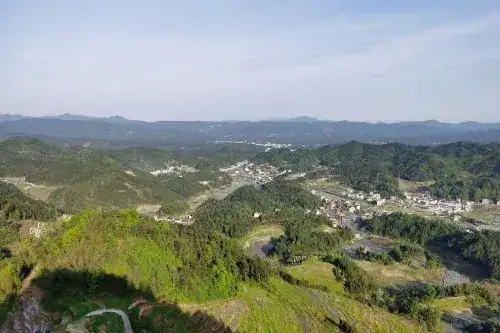
Yiyang's terrain is high in the southwest and low in the northeast, sloping from the Xuefeng Mountains toward Dongting Lake. The Zishui River flows from southwest to northeast through Anhua and Taojiang. The highest point is 1,621 meters above sea level, and the lowest is 26 meters.
Climate
Yiyang has a subtropical monsoon climate with four distinct seasons, abundant light and heat, and plentiful rainfall. The average annual rainfall is 1,523.6 millimeters, concentrated mainly from April to July. The average annual temperature is 17.4 degrees Celsius, with January averaging 5.0 degrees and July averaging 28.6 degrees. Average annual sunshine totals 1,420.3 hours.
Natural Resources
Water Resources
Yiyang has rich hydropower resources with a total reserve of 2.1194 million kilowatts. As of end 2024, 114 hydropower stations had been built with a total installed capacity of 1.5398 million kilowatts. The seven cascade stations below Zhaxi on the Zishui River account for 1.4505 million kilowatts.
Land Resources
Yiyang has 575,400 hectares of forest land, 299,900 hectares of arable land, and 211,800 hectares of water surface. The lakeside plains are fertile and suitable for various crops, making the city a major national production base for grain, cotton, hemp, and oil. Ramie production ranks first nationally.
Plant Resources
Yiyang's plant resources span six categories including algae, fungi, mosses, ferns, gymnosperms, and angiosperms, widely distributed across mountains, plains, and water areas. Wildlife includes turtledoves, pheasants, wild boars, badgers, raccoon dogs, and snakes.
Mineral Resources
Yiyang has discovered 61 mineral types (65 subtypes), representing 50.41 percent of the province's total. These include seven energy minerals, 27 metallic minerals, and 26 non-metallic minerals. The city ranks among the top five in the province for reserves of manganese, vanadium, tungsten, antimony, and cement limestone, while ceramsite shale reserves rank first in the province.
Population
Population Size
According to the seventh national census (November 1, 2020), Yiyang's resident population was 3,851,564, a decrease of 456,369 from 2010. As of end 2025, the resident population was 3.6919 million, down 43,300 year-on-year. The urban population was 2.0245 million, with an urbanization rate of 54.84 percent.
Ethnic Composition
Yiyang is a typical area of scattered ethnic minority residence in Hunan, with 45 ethnic minority groups totaling over 18,000 people. The Hui people account for approximately 75 percent of the minority population, mainly distributed in Taojiang, Ziyang, Nan County, and Datonghu District. The city has one ethnic township, Zhabu Hui Township in Taojiang County.
Politics
Yiyang City operates under the leadership of the CPC Yiyang Municipal Committee, with the Yiyang Municipal People's Congress, People's Government, and CPPCC Municipal Committee as the principal governance bodies.
Economy
Overview
In 2025, Yiyang's regional GDP reached 238.146 billion yuan (approximately US$33.1 billion), up 5.5 percent. The primary industry contributed 37.989 billion yuan (approximately US$5.3 billion, up 4.4 percent), the secondary industry 102.692 billion yuan (approximately US$14.3 billion, up 6.1 percent), and the tertiary industry 97.465 billion yuan (approximately US$13.5 billion, up 5.2 percent). Per capita GDP was 64,128 yuan (approximately US$8,900), up 6.4 percent. The three-sector structure was 16.0:43.1:40.9.
Local general public budget revenue reached 11.385 billion yuan (approximately US$1.6 billion), up 5.28 percent. Per capita disposable income was 34,503 yuan (approximately US$4,800), up 5.5 percent, with urban residents at 43,096 yuan (approximately US$5,980) and rural residents at 26,404 yuan (approximately US$3,670). Total fixed asset investment declined 4.9 percent.
Primary Industry
In 2025, total agricultural, forestry, animal husbandry, and fishery output reached 71.441 billion yuan (approximately US$9.9 billion), up 4.6 percent. Grain production totaled 2.3688 million tons, tea output was 109,400 tons, and hog slaughter reached 3.896 million head. Aquatic product output was 530,600 tons.
Secondary Industry
In 2025, 1,530 above-scale industrial enterprises achieved value-added growth of 8.2 percent. Major products included 11.1759 million square meters of printed circuit boards (up 29.9 percent) and 48.292 billion electronic components (up 1.0 percent). Above-scale industrial profits reached 14.178 billion yuan (approximately US$2.0 billion), up 4.0 percent. Construction industry added value was 15.06 billion yuan (approximately US$2.1 billion).
Tertiary Industry
In 2025, total retail sales of consumer goods reached 101.342 billion yuan (approximately US$14.1 billion), up 2.9 percent. Import and export volume totaled 8.312 billion yuan (approximately US$1.15 billion), up 32.6 percent. The city received 55.7391 million tourists, with total tourism spending of 53.776 billion yuan (approximately US$7.5 billion), up 9.0 percent. Financial institution deposits reached 377.295 billion yuan (approximately US$52.4 billion), and loan balances totaled 275.064 billion yuan (approximately US$38.2 billion). The city had eight domestic listed companies with a combined market capitalization of 50.844 billion yuan (approximately US$7.1 billion).
Specialized Economic Industries
Anhua dark tea is a flagship industry, with 360,000 mu of tea gardens and a comprehensive output value of 26.8 billion yuan (approximately US$3.7 billion) in 2024. Taojiang County has 1.15 million mu of bamboo forest, ranking third nationally, with a comprehensive output value of 31 billion yuan (approximately US$4.3 billion). The Heshan aluminum electrolytic capacitor cluster was recognized as a national SME specialized industrial cluster in 2023, reaching an output value of 23.45 billion yuan (approximately US$3.3 billion) in 2024. Yuanjiang's shipbuilding industry achieved an output value of 11.45 billion yuan (approximately US$1.6 billion) in 2024.
Social Services
Science and Technology
In 2025, 145 new high-tech enterprises were recognized and 2,506 technology-based SMEs were registered. Technology contract transaction volume reached 25.114 billion yuan (approximately US$3.5 billion), up 8.3 percent.
Education
Yiyang has five higher education institutions and 1,250 schools of all types, including 684 kindergartens, 326 primary schools, 170 junior high schools, 41 regular high schools, and 24 vocational schools, serving 533,900 students with 71,900 staff.
Culture
Over 1,800 large-scale cultural activities were held, serving more than 26 million attendees. The city hosted the Hunan main event for International Museum Day. Seven hundred and eighty-one cultural relics were newly classified, and eight sites in Anhua were selected as key heritage elements of the "Ten Thousand Li Tea Road" World Heritage application.
Healthcare
Yiyang has 30,075 medical institution beds, 11,825 licensed physicians, and 14,005 registered nurses. The city operates 15 medical-nursing integrated institutions and 77 elderly care service organizations with 34,876 beds.
Sports
The Yiyang Marathon attracted over 7,000 runners, with 71.8 percent from outside the city. The "Xiang Super" football league hosted eight sold-out home matches with over 180,000 spectators, driving consumption exceeding 1 billion yuan (approximately US$139 million). Jia Yifan won bronze in women's badminton doubles at the 15th National Games.
Social Security
In 2025, 39,300 new urban jobs were created, with the urban survey unemployment rate controlled below 5.4 percent. Urban employee pension insurance covered 522,200 people, urban-rural resident pension insurance covered 2.2438 million, and unemployment insurance covered 264,600.
Transportation
Overview
In 2025, the G9907 Expressway (Yiyang section) began trial construction. Several highway expansion and waterway projects are advancing, including the Yilu and Lizhi waterways and the Taohuajiang navigation-power hub. Civil vehicle ownership reached 978,300, including 631,400 automobiles.
Highways
Six national highways, 26 provincial highways, and multiple expressways including the Changsha-Changde and Erguang routes crisscross the city.
Railways
Six railway lines serve Yiyang, with stations at Yiyang, Anhua, and Yiyang South.
Aviation
Yiyang is approximately 70 kilometers from both Changsha Huanghua International Airport and Changde Taohuayuan Airport.
Historical Culture
Dialects
The Yiyang dialect belongs to the Xiang dialect group, specifically the Chang-Yi sub-area of the Changsha-Yiyang division. It is closely related to the Changsha dialect but retains distinctive features, including the lateralization of ancient voiced initials. Speakers can freely communicate with other New Xiang dialect areas.
Folk Customs
Yiyang dragon boats date back over 200 years to the Qing Daoguang period. The boats are long and narrow with dragon heads and tails, painted with scales and decorated with colorful canopies. The "double-oar dragon boat" from Lanxi, dating to the Three Kingdoms period, features two layers of rowers, seated and standing. In 2016, it was listed as a provincial intangible cultural heritage.
Religion
Yiyang is a key city for religious affairs in Hunan, with five major religions: Buddhism, Daoism, Islam, Catholicism, and Protestantism.
Historical Sites
The Tuzishan Site in Heshan District was named one of China's Top Ten Archaeological Discoveries of 2013. Over 13,000 bamboo and wooden slips from the late Warring States to the Three Kingdoms Sun Wu period were unearthed, confirmed as official documents of the Yiyang county government. The discovery of a proclamation by Qin Ershi and a "Zhangchu" era gu vessel are considered extraordinary finds.
Intangible Cultural Heritage
As of May 2025, Yiyang has five national-level and 38 provincial-level intangible cultural heritage items, including Anhua dark tea making techniques and Lanxi double-oar dragon boat racing.
Scenic Spots
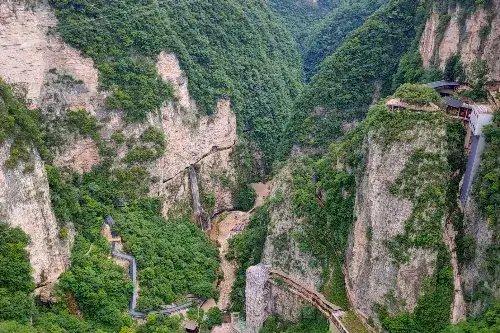
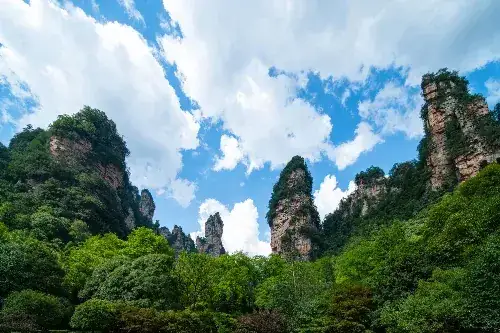
Yiyang's scenic areas include historical sites along the Zishui River, Dongting Lake wetlands, and cultural tourism districts combining natural landscapes with historical heritage.
Local Specialties
Local specialties include sesame-scented cakes, bamboo ware, oil-paper umbrellas, Xiangzhong iron woks, preserved duck eggs, Anhua lei tea, water bamboo mats, Anhua dark tea, Nan County spicy pork, Nan County crayfish, Datonghu hairy crabs, and Yuanjiang asparagus.
Notable Figures
Yiyang has produced 14 academicians of the Chinese Academy of Sciences and Chinese Academy of Engineering, 4 foreign academicians, 18 Yangtze River Scholars, and 4 Olympic champions. Notable historical figures include Tao Shu, Hu Linyi, and Huang Ziyuan.
International Exchange
Yiyang has established friendly-city relationships with Namhae County (South Korea, 2004), Petah Tikva (Israel, 2011), Penza (Russia, 2013), Oskemen (Kazakhstan, 2013), Fremont (United States, 2014), Mizil (Romania, 2016), Klatovy (Czech Republic, 2017), Rajshahi (Bangladesh, 2018), and Stavanger (Norway, 2019).
Honorary Titles
Yiyang has been awarded titles including China's Outstanding Green Ecological City, National Excellent Tourism City, National Forest City, National Hygiene City, National Civilized City, and National Rule of Law Government Demonstration City.
Travel information can change. Check current opening hours, reservations and entry requirements before you travel.
Traveller discussion
Start the conversation with a helpful tip or a question.