
Xianning City
Xianning CityXianning City, named in the fourth year of the Jingde reign of Emperor Zhenzong of Song (1007 CE) after the phrase "all nations enjoy peace" from the Book of Changes, also known as the City of Osmanthus, is a prefecture-level c
Xianning City
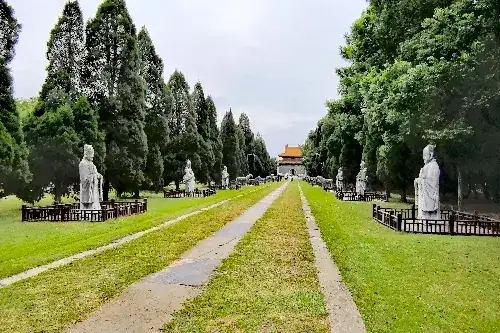
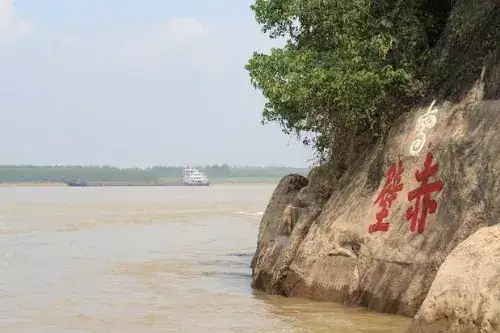
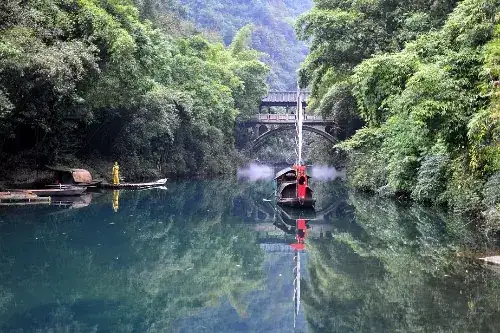
Xianning City, named in the fourth year of the Jingde reign of Emperor Zhenzong of Song (1007 CE) after the phrase "all nations enjoy peace" from the Book of Changes, also known as the City of Osmanthus, is a prefecture-level city under Hubei Province. Located in southeastern Hubei on the south bank of the middle reaches of the Yangtze River, it borders Hunan and Jiangxi provinces. The climate is mild with abundant rainfall, sufficient sunshine, distinct seasons, and a long frost-free period; the terrain is higher in the south and lower in the north. As of August 2025, Xianning administers one municipal district, four counties, and one county-level city, with a total area of 10,033 square kilometers. As of the end of 2025, the permanent population was 2.5893 million. Known as the "South Gate of Hubei," Xianning is an important member of the Wuhan Metropolitan Circle and the Middle Yangtze River Urban Cluster. It has received honors including the China Habitat Environment Award, National Most Livable City, China Charming City, National Forest City, and National Hygiene City. Key attractions include the Southern Hubei Grand Bamboo Sea, Chibi Huanggai Lake, Li Zicheng's Tomb in Tongshan, Jiugong Mountain, and the Northern Expedition battle sites at Heshengqiao and Tingsiqiao. The city is well-positioned with convenient transportation: 128 kilometers of the Yangtze River golden waterway flows along its eastern border, and the Beijing-Guangzhou Railway, National Highways 106 and 107, and the Jingzhu Expressway connect north and south. In 2025, Xianning achieved a GDP of 203.331 billion CNY (approximately 28.24 billion US dollars), up 6.2% at constant prices.
Administrative History
Xianning's administrative establishment came relatively late, but its constituent counties have a long and rich history. The area was part of Chu territory during the Zhou Dynasty under Nan Commandery, belonged to Jiangxia Commandery of Jingzhou during the Han Dynasty, and fell under Eastern Wu at the end of the Eastern Han.
In the early Han Dynasty, Shayi County was established, incorporating Xianning, Jiayu, and Puqi; Chongyang and Tongcheng belonged to Xiajun County under Nan Commandery. During the Three Kingdoms period, the area belonged to Wu. In 223 CE, Puqi County was established. In 768 CE, Yongan Town was established under the Tang Dynasty. In 953 CE, Jiayu County was established under Southern Tang, and in 955 CE it was elevated to Yongan County.
During the Northern Song Dynasty, Tongshan County was established in 964 CE, Chongyang County in 975 CE, Tongcheng County in 1072 CE, and the name was changed to Xianning County in 1007 CE. During the Yuan Dynasty, the counties belonged to Wuchang Circuit under the Huguang Secretariat. Under the Ming and Qing dynasties, the area was part of Wuchang Prefecture. In 1932, Tongshan was assigned to the Second Administrative Supervision District of Hubei Province.
From 1949 to 1952, Xianning, Chongyang, Tongshan, and Tongcheng belonged to the Daye Special District; Jiayu and Puqi belonged to the Mianyang Special District. In 1952, these were reassigned to the Xiaogan Region. In December 1959, the area came under Wuhan City, then returned to the Xiaogan Region in 1961. In June 1965, the Xianning Special District was established, administering nine counties. In 1983, Xianning County was abolished and Xianning City was established. In 1998, Puqi City was renamed Chibi City with State Council approval, and on December 6, 1998, prefecture-level Xianning City was formally established with Xian'an District.
Administrative Divisions
As of August 2025, Xianning administers six county-level divisions: one municipal district (Xian'an District), four counties (Jiayu, Tongcheng, Chongyang, and Tongshan), and one county-level city (Chibi City). The municipal government is located at No. 16 Shuanghe Road, Xian'an District.
Geography
Location
Xianning is located in southeastern Hubei Province, spanning 113 degrees 32 minutes to 114 degrees 58 minutes east longitude and 29 degrees 2 minutes to 30 degrees 19 minutes north latitude. It borders northern Jiangxi to the east, Xiaoxiang to the south, Jingchu to the west, and Wuhan to the north, with a total area of 9,861 square kilometers.
Topography
The terrain is higher in the south and lower in the north, divisible into three landform regions: the alluvial plain along the Yangtze River in the northwest, the Damu Mountain to Yu Mountain low mountain and hilly area in the central part, and the Mufu Mountain eroded structural mountain area in the south.
Geology
Xianning sits on the south bank of the middle Yangtze River at the northern foot of the Mufu Mountains. Tectonically, it occupies the eastern end of the Yangzi Paraplatform, within the Liangzi Lake Depression, the Xianning Platform Fold Belt, and the Tongshan Platform Fold Belt. The area exposes strata from the Proterozoic to the Cenozoic, with magmatic activity concentrated around Jiugong Mountain in Tongshan.
Climate
Xianning has a subtropical continental monsoon climate with mild temperatures, abundant rainfall, sufficient sunshine, distinct seasons, and a long frost-free period. Winters feature prevailing northerly winds with cold, dry conditions; summers bring prevailing southerly winds with high temperatures and heavy rainfall. The annual average temperature is 17.7 degrees Celsius, with extreme highs of 38.4 degrees and extreme lows of minus 6.2 degrees. Average annual precipitation is 2,126.3 millimeters, and average annual sunshine totals 1,400.7 hours. Major hazardous weather includes late spring cold spells, heavy rainstorms, floods, and summer droughts.
Natural Resources
Water Resources
Xianning has four major water systems: the Fushui, Lushui, Jinshui, and Huanggai Lake. There are 19 lakes of 30 hectares or more with a total storage capacity of 3.1523 billion cubic meters, along with 246 rivers. The Yangtze River flows 138 kilometers through the area. Total surface water resources amount to 7.9455 billion cubic meters, with groundwater resources of 2.449 billion cubic meters. The city has approximately 18,244 spring openings, with about 60 geothermal wells yielding an average daily extraction of 30,000 cubic meters.
Soil Resources
Xianning's soils are classified into 8 soil types, 20 subtypes, 70 soil genera, and 241 soil species. Red soil covers 641,030 hectares, accounting for 54.65% of the total area. Paddy soil covers 136,000 hectares (11.72%), while other types include fluvo-aquic soil, limestone soil, purple soil, yellow-brown soil, meadow soil, and marshy soil.
Animal Resources
Xianning has over 460 species of terrestrial wildlife across 30 orders, including amphibians, reptiles, birds, arthropods, and mammals. Notable species include the Chinese giant salamander (a Class II protected animal found in Jiugong Mountain), various birds of prey, the silver pheasant, and the white-crowned long-tailed pheasant. Aquatic animals include turtles, the finless porpoise, and freshwater shrimp.
Plant Resources
Xianning has 1,114 tree species across 112 families and 354 genera, including 100 bamboo species. Major timber species include Chinese fir, Masson pine, moso bamboo, and camphor. Economic tree species include tea, osmanthus, oil-tea camellia, and citrus. Rare protected species include the southern yew, sweetgum, and dawn redwood. The city also has 357 wild medicinal plants and numerous ornamental flowers.
Mineral Resources
Xianning has discovered 59 types of mineral resources, with 44 having proven reserves. Nine types rank first in Hubei Province, including tantalum, beryllium, antimony, monazite, feldspar, albite, muscovite, magnesium, and geothermal energy. The Jiayu Shewushan Gold Mine is Hubei's first large-scale independent gold mine.
Population
Population Size
According to the Seventh National Census, as of November 1, 2020, the permanent population was 2,658,316. As of the end of 2025, the registered population was 2.9837 million, and the permanent population was 2.5893 million, with 1.5784 million in urban areas and 1.0109 million in rural areas, yielding an urbanization rate of 60.96%.
Ethnic Composition
Xianning has a scattered minority population, with the main ethnic minorities being the Hui, Manchu, Zhuang, Tujia, and Miao peoples.
Politics
The Xianning Municipal People's Government serves as the administrative authority of the city, based in Xian'an District.
Economy
Overview
In 2025, Xianning achieved a regional GDP of 203.331 billion CNY (approximately 28.24 billion US dollars), up 6.2% from the previous year. The primary industry added value of 29.059 billion CNY (approximately 4.03 billion US dollars), up 3.5%; the secondary industry reached 65.673 billion CNY (approximately 9.12 billion US dollars), up 6.4%; and the tertiary industry reached 108.599 billion CNY (approximately 15.08 billion US dollars), up 6.7%. The three-sector structure ratio was 14.3 to 32.3 to 53.4. Per capita GDP was 78,359 CNY (approximately 10,883 US dollars), up 6.5%.
Fixed asset investment grew 4.4%, with high-tech industry investment surging 19.0%. Local fiscal revenue totaled 19.558 billion CNY (approximately 2.72 billion US dollars), up 8.6%. Per capita disposable income was 35,827 CNY (approximately 4,976 US dollars), up 5.6%, with urban residents at 44,295 CNY (approximately 6,152 US dollars) and rural residents at 24,253 CNY (approximately 3,369 US dollars).
Primary Industry
In 2025, the agriculture, forestry, animal husbandry, and fishery sectors achieved an added value of 31.377 billion CNY (approximately 4.36 billion US dollars), up 3.8%. Total grain output was 1.2204 million tons, up 0.6%. Tea production was 104,700 tons, up 4.8%. Pork output was 213,800 tons, up 8.8%, and aquatic products totaled 276,300 tons, up 4.3%.
Secondary Industry
In 2025, total industrial added value was 51.791 billion CNY (approximately 7.19 billion US dollars), up 7.2%. Above-scale industrial added value grew 8.9%. The construction industry achieved an added value of 13.958 billion CNY (approximately 1.94 billion US dollars), up 3.0%.
Tertiary Industry
In 2025, total retail sales of consumer goods reached 97.815 billion CNY (approximately 13.59 billion US dollars), up 4.3%. Total import and export trade was 16.78 billion CNY (approximately 2.33 billion US dollars), up 16.9%. Actual foreign direct investment was 22.53 million US dollars, down 45.1%. Financial institution deposits reached 286.586 billion CNY (approximately 39.80 billion US dollars), and loans totaled 233.530 billion CNY (approximately 32.43 billion US dollars). Insurance premium income was 6.339 billion CNY (approximately 880.4 million US dollars), up 9.9%.
Social Affairs
Science and Technology
In 2025, Xianning registered 161 provincial and ministerial-level scientific achievements. A total of 2,675 patents were authorized, including 347 invention patents. The city had 593 above-scale high-tech enterprises, up 26.2%, with high-tech industry added value of 33.547 billion CNY (approximately 4.66 billion US dollars), accounting for 16.5% of GDP.
Education
In 2025, regular universities enrolled 17,300 students with 78,100 enrolled and 22,300 graduates. Universities include Hubei University of Science and Technology, Xianning Vocational Technical College, and Hubei Health Vocational College. Key secondary schools include Enan High School (one of Hubei's Eight Schools), Xianning High School, Wenquan High School, and others across all districts and counties.
Culture
As of the end of 2025, Xianning had 7 public art centers, 5 theater troupes, 7 public libraries with 3.7222 million volumes, 6 broadcasting stations, and 7 archives. Revenue from cultural and related industries reached 14.459 billion CNY (approximately 2.01 billion US dollars), up 9.9%.
Healthcare
Xianning had 1,564 health institutions, including 65 hospitals and 1,471 primary healthcare institutions. There were 24,000 health professionals and 21,100 hospital beds. Annual medical visits totaled 16.61 million.
Sports
Xianning had 9,974 sports venues, with 3.32 square meters of sports space per capita. Athletes won 8 championships in Asian competitions and 29 in national competitions. Sports lottery sales reached 630 million CNY (approximately 87.5 million US dollars).
Social Security
As of the end of 2025, urban new employment reached 47,100. The city had 621,300 participants in urban employee basic pension insurance, 1.2513 million in urban-rural resident pension insurance, and 2.1729 million in basic medical insurance. There were 14,200 urban and 81,500 rural residents receiving minimum living guarantees. Elderly care institutions had 17,900 beds.
Transportation
Overview
Xianning is located in the heart of central China along the middle Yangtze River, along the Beijing-Guangzhou Railway, Wuhan-Guangzhou High-Speed Railway, G4 Beijing-Hong Kong-Macau Expressway, G56 Hangzhou-Ruili Expressway, and G45 Daguang Expressway. The area has a comprehensive transportation network of highways, railways, and waterways, with highway transport as the primary mode. As of the end of 2025, Xianning's highway mileage reached 17,568.77 kilometers, up 0.9%. Annual freight turnover was 6.576 billion ton-kilometers, and passenger turnover was 1.349 billion person-kilometers. Civilian motor vehicles numbered 381,000, with 356,400 private cars.
Highways
Xianning has 30 passenger stations and 4 freight stations. The highway network is built around the G4 Beijing-Hong Kong-Macau Expressway, supplemented by national and provincial highways. There are 3 national highways (106, 107, and 316) totaling 285.775 kilometers, and 10 provincial highways totaling 466.261 kilometers, connecting all 69 townships and 89.6% of administrative villages.
Railway Construction
Key railway projects include the Xianning-Wuhan Intercity Railway, Xianning-Yichun-Ji'an Railway, and the Wuhan-Xianning Railway, connecting to the broader national railway network.
Shipping
Xianning relies on the Yangtze River main stream and inland waterways, with a total navigable mileage of 564.4 kilometers, including 118 kilometers of Yangtze River main channel. The city has 12 ports, including 6 Yangtze River ports and 6 inland ports, with 58 berths and an annual cargo throughput of 1.3402 million tons.
Historical Culture
Early Culture
Xianning's cultural heritage includes Shang and Zhou bronze culture represented by bronze drums, Three Kingdoms culture represented by the Battle of Chibi, revolutionary culture from the Northern Expedition, and ecological culture centered on hot springs, Jiugong Mountain, and Lushui Lake. Folk arts, including music, dance, paper-cutting, and cloth applique, have been exhibited in over a dozen European countries. The wudu and gaotong tiqin are unique folk instruments, and tiqin opera is a unique local theatrical genre.
Cultural Relics
Xianning has nationally protected cultural sites including the Northern Expedition Tingsiqiao Battle Site and Li Zicheng's Tomb. Provincial-level protected sites are distributed across all districts and counties, including historical residences, ancient bridges, city walls, and archaeological sites. The city's museum collection exceeds 20,000 items, with ancient bridges, pagodas, and traditional residences holding significant historical and artistic value.
Religion
Five major religions (Buddhism, Taoism, Islam, Catholicism, and Christianity) are all present in Xianning. The Huangpao Lanruo Temple in Tongcheng is the earliest Buddhist temple discovered in Hubei. The Wu Liangshou Chan Temple is the grandest temple in the province, and the Ruiqing Temple on Jiugong Mountain is one of China's five major Taoist centers. The Puqi Catholic Diocese administers Catholic affairs for Xianning, Huanggang, Huangshi, and Ezhou.
Origin of the Name
The term "Xianning" first appeared in Zhou Dynasty texts. The Book of Changes states: "The Way of Heaven transforms, all lives find their proper place... all nations enjoy peace." The name was formally established in 1007 CE when Emperor Zhenzong of Song renamed Yongan County to Xianning County to avoid the naming taboo of Emperor Taizu's Yongan Mausoleum, choosing the near-synonymous phrase from the classic text.
Regional Symbols
Xianning is the only city in China designated as the "Hometown of Osmanthus." In October 2024, the city officially released its China Osmanthus City Logo, a symbolic expression of Xianning's osmanthus spirit, conveying the city's brand identity and cultural heritage to the world.
Scenic Spots
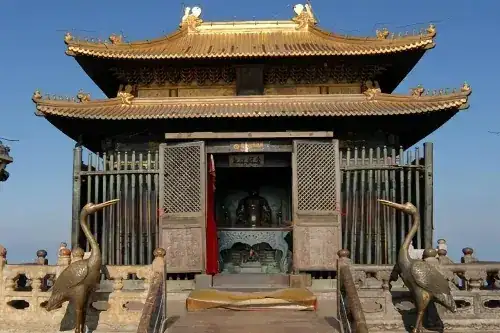
Jiugong Mountain, located in Tongshan County at an elevation of 1,657 meters, is the highest peak of the Mufu Mountains and a national AAAA-level scenic area and nature reserve, featuring the tomb of the rebel leader Li Zicheng. The Xianning Hot Spring Valley Resort is located at the entrance of the Qianshan National Forest Park, approximately one hour from Wuhan. The Yinshui Cave Geological Park in Tongshan features a 5,158-meter-long karst cave with magnificent stalactites. Liu Family Bridge preserves Ming and Qing dynasty residential complexes with over 2,000 rooms. Other notable sites include Huanglong Mountain (elevation 1,528.3 meters, a provincial nature reserve), Daxi Wetland Park in Tongcheng, and the Bifeng Pagoda in Xian'an, a seven-story octagonal stone tower originally built in the Tang-Song period and rebuilt in 1838.
Famous Local Products
Rougao (meat cake) is a signature dish of the Xianning region, particularly beloved in Chibi, where it is said that "no banquet is complete without cake." Heshengqiao Chicken Soup is renowned for its nourishing properties, made from local free-range chickens. Baotuo, a dumpling-like snack from Tongshan made with sweet potato flour, comes in both pure sweet potato and sweet potato-taro varieties. Paizhou Bay Fish Balls from Jiayu are prized for their refined preparation using only the finest white fish meat, pork fat, and egg whites. Qingzhuan Tea (green brick tea), produced in Puqi and surrounding counties, has over a century of production history and was a major trade commodity transported to northern China.
Notable Figures
Notable historical figures from Xianning include Zhong Renjie (1803 to 1842), a Qing Dynasty uprising leader from Chongyang who led an anti-grain-tax revolt; Qian Yishi (1889 to 1938), an early Communist Party member from Xianning who studied in Japan and the Soviet Union; Shi Ying (1879 to 1943), a politician and educator from Tongshan who served as mayor of Nanjing and president of Wuhan University; Wang Shijie (1891 to 1981), a scholar and government official from Chongyang who served as president of Wuhan University and minister of education; and Qian Ying (1903 to 1973), a female revolutionary who served as deputy secretary of the Central Commission for Discipline Inspection and minister of supervision in the People's Republic of China.
Honorary Titles
Xianning has received numerous honorary titles, including the second batch of Social Credit System Construction Demonstration Cities (2019), National Hygiene City (2015, reconfirmed in 2021), National Anti-Drug Demonstration City (2021), and the seventh National Civilized City (2025). In 2023, Xianning won the sixth Guangzhou International Urban Innovation Award for its child-friendly and traffic improvement initiative.
Travel information can change. Check current opening hours, reservations and entry requirements before you travel.
Traveller discussion
Start the conversation with a helpful tip or a question.