
Xiangyang City
Xiangyang CityXiangyang, formerly known as Xiangfan, is a prefecture-level city in Hubei Province, located in central China's Huazhong region. Situated in northwestern Hubei along the middle reaches of the Han River, it borders Suizhou to t
Xiangyang City
Xiangyang, formerly known as Xiangfan, is a prefecture-level city in Hubei Province, located in central China's Huazhong region. Situated in northwestern Hubei along the middle reaches of the Han River, it borders Suizhou to the east, Jingmen and Yichang to the south, Shennongjia Forestry District and Shiyan to the west, and Nanyang (Henan Province) to the north. As of 2022, the city administers 3 municipal districts, 3 counties, and 3 county-level cities, covering 19,700 square kilometers. At the end of 2023, the registered population was 5.8366 million and the resident population was 5.2785 million. Named for its location on the sunny side of the Xiang River, Xiangyang has over 2,800 years of history as a strategic economic and military stronghold. The old city is the core of the National Historical and Cultural City, renowned as the greatest city in China. It is a cradle of Chu culture, Han culture, and Three Kingdoms culture. Xiangyang has a subtropical monsoon climate and sits along the middle reaches of the Han River, a Yangtze tributary. It is a National Historical and Cultural City, a provincial sub-center, and a key city in the Han River Basin. In 2024, the regional GDP reached 610.241 billion CNY (approximately 84.75 billion US dollars), up 5.9% year-on-year.
Name Origin
In the early Western Han Dynasty (202 BCE), Xiangyang County was established, named for its location on the sunny (yang) side of the Xiang River (present-day Nanqu). In December 2010, the city was renamed Xiangyang.
History
Pre-Qin Period
Xiangyang's earliest cultural remains are concentrated on the north bank of the Han River, including Paleolithic sites at Junyingpo, Gongjiazhou, Jinjizui, and Shanwan, dating roughly 100,000 years. During the Neolithic period about 10,000 years ago, ancestors began polishing stone tools and practicing slash-and-burn agriculture. Over 180 Neolithic sites have been found along the Han River. During the Xia Dynasty, the area belonged to Jing and Yu provinces. In the Shang and Western Zhou, vassal states including Chu, Deng, Ruo, and Luo were established. By the Eastern Zhou, the area was entirely Chu territory. In 223 BCE, Qin conquered Chu.
Qin, Han, and Southern and Northern Dynasties
Under Qin, the area was divided between Nanjun and Nanyangjun commanderies. During the Western Han, Xiangyang City and County were established. In the Eastern Han, Liu Biao moved his administration to Xiangyang, making it the political and military center of eight commanderies. During the Three Kingdoms, the area belonged to Wei. The Western and Eastern Jin and Southern Dynasties saw various reorganizations, with Xiangyang serving as the seat of Yongzhou.
Sui, Tang, and Five Dynasties
Under the Sui, the area was under Xiangyang Commandery. In the Tang, it belonged to Shannandong Circuit with the prefectural seat at Xiangyang County. The Five Dynasties largely followed Tang divisions.
Song and Yuan Periods
During the Northern Song, Xiangzhou was under Jingxi Circuit. In 1119, it was elevated to Xiangyang Prefecture. Under the Yuan Dynasty, Xiangyang Route was part of Henan Jiangbei Province.
Ming and Qing Periods
Under the Ming, the area belonged to Xiangyang Prefecture of Huguang Province. The Qing maintained the same county structure under Hubei Province after 1664.
Republic of China Period
In 1912, Xiangyang Prefecture was abolished. In 1914, Xiangyang Circuit was established, administering 20 counties.
After the Founding of the PRC
In 1949, Xiangfan City was established. In 1979, it was elevated to a province-governed city. In 1983, Xiangyang Prefecture was merged into Xiangfan City. On November 26, 2010, the State Council approved renaming Xiangfan to Xiangyang. The city now administers Xiangcheng, Fancheng, and Xiangzhou districts; Nanzhang, Gucheng, and Baokang counties; and Zaoyang, Yicheng, and Laohekou county-level cities.
Administrative Divisions
As of March 2023, Xiangyang administers 9 county-level divisions: 3 districts (Xiangcheng, Fancheng, Xiangzhou), 3 county-level cities (Laohekou, Zaoyang, Yicheng), and 3 counties (Nanzhang, Gucheng, Baokang). The municipal government is located at No. 219 Tanxi Road, Xiangcheng District.
Geography
Location
Xiangyang is in northwestern Hubei on the middle Han River, spanning 110 degrees 45 minutes to 113 degrees 6 minutes east longitude and 31 degrees 13 minutes to 32 degrees 37 minutes north latitude. It borders Nanyang (Henan) to the north, Jingmen to the south, Suizhou to the east, and Shiyan to the west. Total area is 19,700 square kilometers with boundary lines totaling 1,332.8 kilometers.
Climate
Xiangyang has a northern subtropical monsoon climate with distinct seasons. Annual average temperature ranges 15 to 16 degrees Celsius, with January at 2 to 3 degrees and July at 27 to 28 degrees. Frost-free period lasts 228 to 249 days. Annual precipitation is 820 to 1,100 mm, with summer receiving 400 to 450 mm. Annual sunshine totals 1,800 to 2,100 hours.
Geology
The city straddles the Yangtze Platform and Qinling Geosyncline, with geological evolution through three stages: pan-geosynclinal, platform-trough separation, and crustal activation.
Topography
Terrain divides into western mountains, central hills and plains, and eastern low hills. Mountains belong to Wudang, Jingshan, Tongbai, and Dahongshan systems. Rivers belong to Han River and Juzhang River systems. Soils include yellow-brown earth, paddy soil, limestone soil, alluvial soil, purple soil, and mountain brown soil.
Hydrology and Water Conservancy
Xiangyang has 985 rivers, including 66 with catchment areas exceeding 100 square kilometers, all part of the Yangtze system. The Han River system covers 16,893 square kilometers (85.63% of the city). As of 2022, the city has 1,200 reservoirs, 1,199 irrigation districts, 505 km of river levees, and 131 hydropower stations.
Soil
The city has 6 soil types: yellow-brown earth (65.31%), paddy soil (14.70%), limestone soil (12.19%), alluvial soil (3.54%), purple soil (3.37%), and mountain brown soil (0.83%).
Natural Resources
Water Resources
Average annual precipitation is 835.1 mm, totaling 16.466 billion cubic meters. Total water resources amount to 5.465 billion cubic meters. Total inflow is 17.429 billion cubic meters, with the Han River contributing 14.85 billion, regulated by the South-to-North Water Diversion Project and Danjiangkou Reservoir.
Soil Resources
Of the total area, cultivated land accounts for 703,816.81 hectares (35.68%), forest land 845,333.86 hectares (42.85%), and water bodies 148,895.59 hectares (7.55%).
Mineral Resources
Xiangyang has identified 57 mineral types across over 520 sites, with 24 having proven reserves totaling over 1.964 billion tons. Rutile reserves rank first nationally; bauxite and soft refractory clay rank first provincially.
Biological Resources
The city has 1,698 vascular plant species across 189 families, and 268 terrestrial vertebrate species including 151 bird and 60 mammal species. Ten species are under national first-class protection and 50 under second-class. There are 2 national and 1 provincial nature reserves.
Population
Population Size
According to the Seventh National Census (2020), the resident population was 5,260,951, down 4.35% from 2010. At end-2023, registered population was 5.8366 million; resident population was 5.2785 million with an urbanization rate of 64.15%.
Ethnic Groups
Xiangyang has 40 minority ethnic groups including Hui, Manchu, Tujia, Mongolian, Miao, Zhuang, Tibetan, Uyghur, and others.
Language
The local dialect belongs to the Southwest Mandarin group, specifically the Ebei sub-branch. Influenced by both Qinba and Central Plains dialects, it differs from Standard Chinese mainly in pronunciation. Due to the 1960s-70s Third Front Construction, Wu and Northeast Mandarin dialect islands exist in the urban area.
Politics
Economy
Overview
In 2024, regional GDP reached 610.241 billion CNY (approximately 84.75 billion US dollars), up 5.9%. Fixed asset investment grew 8.4%, with industrial investment up 21.4%. In 2023, per capita disposable income was 37,874 CNY (approximately 5,260 US dollars); urban residents earned 46,110 CNY (approximately 6,404 US dollars) and rural residents 24,174 CNY (approximately 3,357 US dollars). Urban per capita consumption expenditure was 28,389 CNY (approximately 3,943 US dollars); rural per capita consumption was 19,607 CNY (approximately 2,723 US dollars). Fiscal revenue totaled 46.28 billion CNY (approximately 6.43 billion US dollars), with local budget revenue of 26.56 billion CNY (approximately 3.69 billion US dollars). Registered market entities reached 776,900, up 17.3%.
Primary Industry
In 2024, agriculture, forestry, animal husbandry, and fishery added value reached 64.631 billion CNY (approximately 8.98 billion US dollars), up 3.6%. Grain output was 4.736 million tons; hog slaughter reached 6.4503 million head; aquatic products totaled 228,100 tons.
Secondary Industry
In 2024, designated-size industrial value-added grew 8.0%. Auto manufacturing grew 6.8%, chemicals 12.1%. New energy vehicle and lithium battery output grew 125.7% and 50.6% respectively. In 2023, Xiangyang was approved to create a national Internet of Vehicles pilot zone.
Tertiary Industry
In 2024, retail sales of consumer goods reached 230.5 billion CNY (approximately 32.01 billion US dollars), up 4.9%. In 2023, total import-export value was 44.23 billion CNY (approximately 6.14 billion US dollars), up 20.8%. Actual foreign direct investment reached 61.62 million US dollars, up 148.6%. Financial institution deposits reached 575.968 billion CNY (approximately 80.0 billion US dollars); loans reached 402.942 billion CNY (approximately 55.97 billion US dollars). Insurance premium income was 15.242 billion CNY (approximately 2.12 billion US dollars).
Economic Functional Zones
Xiangyang High-tech Zone, approved in 1992 as a national-level zone, ranks 29th nationally. It covers 200 square kilometers with total output of 116 billion CNY (approximately 16.11 billion US dollars) and industrial output of 330.18 billion CNY (approximately 45.86 billion US dollars). It hosts 8 listed companies, 390 high-tech enterprises, and 51,000 talents including 11 academicians.
Social Affairs
Education
In 2023, the city had 1,755 schools with 936,900 students, including 6 universities (89,900 students), 264 middle schools (300,700 students), and 469 primary schools (367,100 students), served by 59,900 teachers.
Science and Technology
In 2023, 217 projects were listed in national or provincial science and technology plans. The city granted 9,067 patents, including 931 invention patents.
Cultural Affairs
As of end-2022, the city had 8 performing arts troupes, 10 cultural centers, 12 museums, and 11 public libraries with 3,825,250 volumes.
Sports
By end-2022, 360 new fitness facilities were built with per capita sports area reaching 2.54 square meters. Xiangyang athletes won 6 world championships, with diver Wang Zongyuan winning 3 golds at the FINA World Championships and 2 at the Diving World Cup.
Healthcare
In 2023, the city had 3,951 health institutions including 272 hospitals, with 46,100 beds and 48,400 health personnel (39,200 technicians, 14,500 physicians, 18,200 nurses).
Social Security
At end-2023, 1.3759 million people participated in urban workers' pension, 2.4304 million in resident pension, and 4.0358 million in basic medical insurance. The city had 18,900 urban and 77,000 rural minimum living allowance recipients, and 189 elderly care institutions with 45,000 beds.
Transportation
Overview
Known since antiquity as the thoroughfare of seven provinces, Xiangyang had 33,490 km of highways (including 816 km of expressways) by end-2023. Highway freight turnover was 57.822 billion ton-km; port cargo throughput was 1.0941 million tons. During the 2025 May Day holiday, 165 institutions provided nearly 28,000 free parking spaces.
Highways
Xiangyang has 833 km of expressways, ranking second in Hubei. Major routes include Xiang-Shi, Xiang-Jing, and Xiao-Xiang expressways. The city is building inner, middle, and outer ring roads, the first prefecture-level city in Hubei (after Wuhan) to do so. Key projects include G316 reconstruction (62.9 km, investment of 1.46 billion CNY or approximately 203 million US dollars) and G207 reconstruction (35.6 km, investment of 630 million CNY or approximately 87.5 million US dollars).
Railways
Xiangyang Station serves trains to Beijing, Shanghai, Guangzhou, and other major cities. Xiangyang East Station, opened in November 2019, has 9 platforms and 20 tracks with nearly 100,000 square meters of building area, making it the largest high-speed rail station among prefecture-level cities. Xiangyang North Station is one of China's top three marshaling yards.
Aviation
Xiangyang Liuji Airport, 18 km from the city center, opened in 1989 as China's first locally-funded civilian airport. In 2023, it handled 18,466 flights (up 32.7%) and 1.7914 million passengers (up 58.1%). Laohekou Airport is one of China's five major military airports.
Water Transport
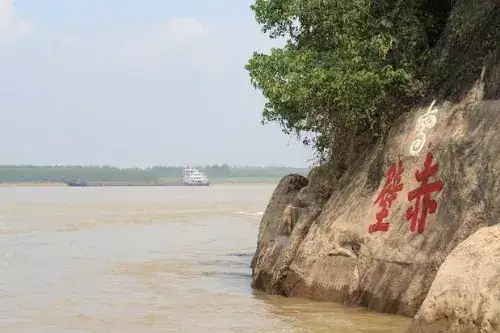
The Han River flows through the city. Xiangyang Port is China's 20th-largest inland port and a key coal transit port, divided into Chenbu and Tangbaihe port areas.
Public Transit
The city operates 2,696 passenger vehicles, 70,000 freight vehicles, 357 commercial vessels, 1,268 buses (1,161 new energy), 2,200 taxis, over 1,300 ride-hailing vehicles, and about 50,000 shared bicycles.
Historical Culture
Cuisine
Xiangyang cuisine is the northern style of Chu cuisine, featuring pork, beef, and mutton with fresh spiciness, distinct from Sichuan's numbing-spicy or Hunan's intense heat. Famous dishes include Sanxiangpan, Xiangyang braised trotters, and Yicheng pan eel. Local snacks include oil tea, beef noodle soup, and Xiangyang yellow wine.
Customs
Dragon boat racing dates back over 2,000 years to the Western Han. From the Ming Dynasty through the 1950s, races peaked along the Han River. Since 2010, the event has been government-organized, drawing huge crowds each Dragon Boat Festival.
Arts
The film Xiangyang depicts Zhuge Liang's decade of seclusion in the city. Xiangyang Huagu Opera evolved from two-person plays into a full opera form with four vocal types accompanied by gongs and drums. Common repertoire includes The White-Haired Girl and Yipin Xiang.
Cultural Activities
The Xiangyang Zhuge Liang Cultural Tourism Festival commemorates the statesman and strategist Zhuge Liang. The China Xiangyang University Student Film Festival, founded in 2011, is hosted by the city government and Hubei University of Arts and Science.
Other Culture
Xiangyang is the birthplace of Jing-Chu culture, producing Song Yu, originator of Chu fu poetry, and giving rise to idioms such as spring snow and highbrow and lowbrow. The city is the source of Chu, Han, and Three Kingdoms culture. Liu Bei's Three Visits to the Thatched Cottage and Zhuge Liang's Longzhong Plan originated here. It is designated China's Three Kingdoms Culture City, with 50-plus historical sites; 32 of 120 chapters in Romance of the Three Kingdoms are set in Xiangyang. The city is also a China Calligraphy City, home to Mi Fu, one of the Four Song Masters. Historically, 172 famous battles occurred here, earning the reputation impregnable Xiangyang. The city has 18 national-level, 112 provincial-level, and 64 municipal-level protected cultural heritage sites, plus 6 national and 18 provincial intangible cultural heritage items.
Scenic Spots
Overview
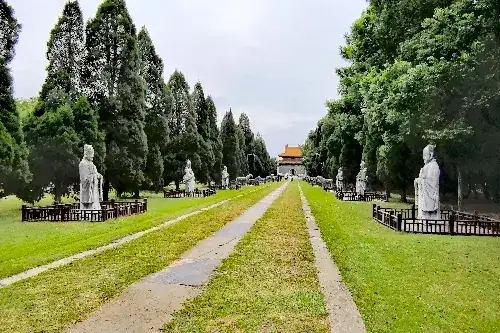
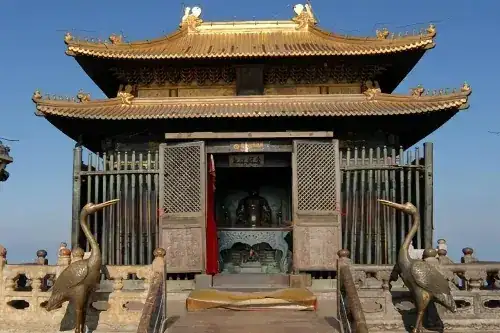
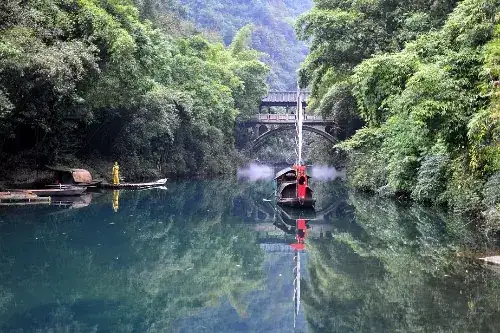
Major attractions include Longzhong Scenic Area (AAAAA), Xiangyang Ancient City, Zhongxuan Tower, Migong Shrine (AAA), Guangde Temple, Xianshan National Forest Park, Wudaoxia Scenic Area (AAAA), Tang City Film Base (AAAA), Xiangshui River Scenic Area (AAAA), and Phoenix Hot Springs (AAAA).
Important Attractions
External Relations
Notable Figures
Major Honors
Travel information can change. Check current opening hours, reservations and entry requirements before you travel.
Traveller discussion
Start the conversation with a helpful tip or a question.