
Huangshi City
Huangshi CityHuangshi is a prefecture-level city under Hubei Province, located in southeastern Hubei on the south bank of the middle Yangtze River, with a total area of 4,583 square kilometers. As of December 2024, Huangshi administers 4 di
Huangshi City
Huangshi is a prefecture-level city under Hubei Province, located in southeastern Hubei on the south bank of the middle Yangtze River, with a total area of 4,583 square kilometers. As of December 2024, Huangshi administers 4 districts, 1 county, and 1 county-level city. The municipal government is seated at No. 1 Hangzhou East Road, Xialu District. As of end-2024, the resident population was 2.4353 million. Local dialects fall into two categories: Gan dialect and Jianghuai Mandarin. Huangshi has a typical subtropical monsoon climate; terrain is higher in the southwest and lower in the northeast, and the Yangtze River flows through the city. During the Western Zhou Dynasty, the area was called E; during the Spring and Autumn and Warring States periods, it belonged to Chu and Qin. In 967 CE, the Southern Tang established Daye County. In 1949, China's first industrial-mining special zone was established. In 1950, the province-administered Huangshi City was founded. Huangshi is a water-land transportation hub in southeastern Hubei, a regional economic center, and a major industrial base along the middle Yangtze. It is also one of China's major old industrial bases and a riverside open city approved by the State Council, designated as a regional center city of the Yangtze River Midstream Urban Cluster. As a national pilot city for transformation of resource-exhausted cities, it is known as the "Ancient Capital of Bronze," "Cradle of Steel," "Hometown of Cement," and "Capital of Jing Wine." In 1890, Zhang Zhidong established the Hanyeping Company, making Huangshi the cradle of China's modern national industry. As of September 2023, the city has 8 national key cultural relics protection units, 1 item of UNESCO intangible cultural heritage, and 4 items of national intangible cultural heritage. In 2025, Huangshi's GDP reached 243.028 billion yuan (approximately $33.75 billion), a year-on-year increase of 6.8%.
Name Derivation
In the Northern Wei Dynasty, Li Daoyuan's Commentary on the Water Classic states: "On the right bank of the river there is Mount Huangshi; the water flows past its northern side, which is Huangshi Ji." The name Huangshi ("Yellow Stone") derives from the fact that "the color of the stones are all yellow," as annotated in the Gazetteer of Hubei.
History
Pre-Qin Period
During the era of Emperor Yao, the area belonged to the Sanmiao people. In the Xia and Shang dynasties, it was part of the Jingzhou region. During the Western Zhou Dynasty, it was called E, the territory of the Marquis of E. In 887 BCE, King Xiong Qu of Chu attacked the Yangyue and reached E (present-day Ezhou and Daye), enfeoffing his middle son Xiong Hong as King of E. During the Spring and Autumn and Warring States periods, it belonged to Chu and then Qin.
Qin, Han to Southern and Northern Dynasties
In 221 CE, Sun Quan relocated his capital to E (present-day Ezhou), renaming it Wuchang, and established Yangxin County. During the Western Jin Dynasty (280 CE), Jiangxia Commandery was renamed Wuchang Commandery. In 412 CE, Xiazhi County was merged into Yangxin County. During the Liu Song Dynasty (454 CE), Yangxin was renamed Fuchuan, then shortly after renamed Yongxing.
Sui, Tang to Song and Yuan
During the Tang Dynasty, the area was within Wuchang and Yongxing counties of Ezhou. In 905 CE, Yang Xingmi, King of Wu, established the Qingshan Foundry for large-scale mining and smelting. In 967 CE, Li Yu, ruler of the Southern Tang, carved out three townships from Wuchang County and merged them with the Qingshan Foundry to establish Daye County, named after the phrase from Zhuangzi: "Heaven and earth are the furnace, creation is the great smelting."
Ming and Qing
In the early Ming Dynasty, Zhu Yuanzhang established the Xingguo Smeltery in Daye and Yangxin. In the Jiajing reign, coal resources were discovered, joining copper and iron ore to form Huangshi's mineral foundation. In the late Ming and early Qing, Huangshi became the only port between Wuhan and Jiujiang, named Huangshigang because of the yellow stones at the port. In 1890, Zhang Zhidong built the Hanyang Iron Works and the Daye Iron Mine, marking the rise of China's modern iron and steel industry.
Republic of China Period
In 1927, Daye County was part of the Hunan-Hubei-Jiangxi revolutionary base area. In 1930, the Daye County Soviet government was established. In 1938, the Japanese army occupied Daye. In 1948, the towns of Shihuiyao and Huangshigang were merged into Shihuang Town. That same year, the Nationalist government dissolved the Hanyeping Company, transferring all assets to the Huazhong Iron and Steel Company. On May 15, 1949, the People's Liberation Army crossed the Yangtze, and Shihuang Town was peacefully liberated.
After the Founding of the PRC
In October 1949, the People's Government of the Hubei Daye Industrial and Mining Special Zone was established. On August 21, 1950, the province-administered Huangshi City was founded — the first prefecture-level city in Hubei after Wuhan. In 1959, Daye County was abolished and incorporated into Huangshi; in 1962, it was restored. In 1997, Yangxin County was placed under Huangshi's administration.
Administrative Divisions
As of December 2024, Huangshi administers 4 districts (Huangshigang, Xialu, Tieshan, and Xisai Mountain), 1 county (Yangxin), and 1 county-level city (Daye). The municipal government is seated at No. 1 Hangzhou East Road, Xialu District.
Physical Geography
Location and Territory
Huangshi is located in southeastern Hubei on the south bank of the middle Yangtze, between 114 degrees 31 minutes to 115 degrees 30 minutes east longitude and 29 degrees 30 minutes to 30 degrees 15 minutes north latitude, with a total area of 4,583 square kilometers. It borders the Yangtze to the northeast, facing Xishui, Qichun, and Wuxue across the river; adjoins Ezhou to the north; borders Wuhan's Jiangxia District and Ezhou's Liangzihu District to the west; neighbors Xianning's Xian'an District and Tongshan County to the southwest; and shares boundaries with Jiangxi Province's Jiujiang, Wuning, and Ruichang to the southeast.
Climate
Huangshi has a typical subtropical continental monsoon climate with cold winters, hot summers, and four distinct seasons. The annual average temperature is 17 degrees Celsius, with the hottest month (July) averaging 29.2 degrees and the coldest (January) averaging 3.9 degrees. The frost-free period averages 264 days, and annual precipitation is 1,382.6 millimeters.
Geology
Magmatic activity was frequent in the Huangshi area, with intermediate to acidic rocks predominating. Intrusive rocks cover approximately 368 square kilometers (19.9% of the city's area), and volcanic rocks cover about 88 square kilometers (4.8%). The area belongs to the Yanshanian tectonic sub-cycle, with magmatic activity divided into early and late phases across five intrusive-eruptive events.
Topography
The terrain is generally higher in the southwest and lower in the northeast. The Mufu Mountains extend along the borders of Hunan, Hubei, and Jiangxi, with 411 peaks within Yangxin County. The highest peak is Nanya Ridge of Qifeng Mountain in Yangxin at 867.7 meters; the lowest point is the bed of the Fushui River at 8.7 meters elevation.
Hydrology
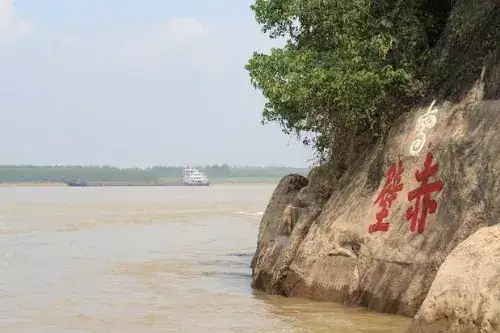
The Yangtze River flows 76.87 kilometers through the city. The water system consists of the Fushui, Dayehu, and Baoanhu systems plus 258 lakes. The largest is the Fushui system in Yangxin, with a total length of 196 kilometers and a basin area of 5,310 square kilometers. There are 266 reservoirs with a total capacity of 2.505 billion cubic meters.
Soil
Soils are classified into 6 types, 13 subtypes, and 229 species, mainly red earth and paddy soil, with a yellowish to reddish-yellow color and neutral pH.
Natural Disasters
As of October 2023, Huangshi's key river and reservoir water levels are generally stable. Geological disaster risk is low overall, though small landslides may occur in hilly areas during intense rainfall. Ground subsidence is possible in mining-concentrated areas like Daye due to groundwater fluctuations.
Natural Resources
Water Resources
Total water resources amount to 4.243 billion cubic meters, including 805 million cubic meters of groundwater.
Land Resources
Huangshi has diverse land types, with hills dominating at 47.88% of the total area. As of 2024, the city has 105,537.63 hectares of cultivated land, 193,879.88 hectares of forest, and a forest coverage rate of 28.02%.
Mineral Resources
Daye is rich in mineral resources, with 79 discovered mineral types. Copper reserves account for 91.8% of Hubei's total; gold reserves 88%; and wollastonite reserves rank first in the world. As of 2024, 43 types have proven reserves. In 2024, 8 exploration rights for iron, copper, and gold were successfully auctioned.
Biological Resources
Vegetation belongs to the subtropical evergreen broadleaf forest zone. Known plant species include over 30 gymnosperm species across 7 families and 18 genera, and over 2,000 angiosperm species across 150+ families and 300+ genera. Fossil discoveries include fish from the Triassic, coral from the Permian, and vertebrate fossils dating back 400,000 to 500,000 years.
Population
Population Size
As of end-2024, the resident population was 2.4353 million, with an urban population of 1.6838 million and an urbanization rate of 69.14%.
Ethnic Composition
Huangshi has 30 ethnic minorities totaling about 4,000 people (0.16% of the population), with Tujia, Manchu, and Hui being the most numerous.
Language
Huangshi dialects fall into two categories: Gan dialect (in Yangxin and Daye, originating from Jiangxi migration during the Ming Dynasty) and Jianghuai Mandarin (in the urban core and Xialu District, influenced by Xishui and Huanggang).
Religion
In 2011, Huangshi had 864 religious activity venues, 583 re-registered, with over 200,000 followers and 12 patriotic religious organizations.
Politics
Huangshi's political governance follows the standard Chinese administrative structure with a municipal Party Committee, People's Congress, and People's Government.
Economy
Overview
In 2025, Huangshi's GDP reached 243.028 billion yuan (approximately $33.75 billion), growing 6.8% year-on-year. The primary, secondary, and tertiary sectors contributed 14.881 billion yuan ($2.07 billion), 112.922 billion yuan ($15.68 billion), and 115.225 billion yuan ($16.0 billion) respectively. Fixed asset investment grew 5.1%, with industrial investment up 25.3%. Local general public budget revenue reached 21.349 billion yuan ($2.97 billion), up 12.3%. As of end-2025, financial institution deposits reached 317.593 billion yuan ($44.1 billion) and loans 288.627 billion yuan ($40.1 billion). Per capita disposable income was 42,534 yuan (approximately $5,908), up 5.3%, with urban residents at 51,385 yuan ($7,137) and rural residents at 24,399 yuan ($3,389).
Primary Industry
In 2024, the farming, forestry, animal husbandry, and fishery sector achieved 16.070 billion yuan ($2.23 billion) in value-added, up 3.8%. Total agricultural output was 26.613 billion yuan ($3.70 billion). Grain output was 551,100 tons; aquatic products 268,100 tons; meat 108,900 tons.
Secondary Industry
Huangshi has been a major industrial center since the late Qing Dynasty. After the founding of the PRC, 27 key industrial projects were established, including Daye Steel, Daye Iron Mine, Huaxin Cement, and Daye Nonferrous Metals. In 2025, above-scale industrial output value exceeded 300 billion yuan for the first time, reaching 300.908 billion yuan ($41.8 billion), up 12.7%. Huangshi has become China's third-largest PCB production base, with companies like Wus, Xinxing, and Shangda establishing operations.
Tertiary Industry
In 2024, total retail sales of consumer goods reached 112.458 billion yuan ($15.62 billion), up 5.1%. Financial institution deposits reached 291.044 billion yuan ($40.42 billion) and loans 259.236 billion yuan ($36.01 billion). In 2025, retail sales reached 125.071 billion yuan ($17.37 billion), up 3.4%. Smart appliances and smartphones saw retail growth of 10.7% and 115.7% respectively.
Economic Development Zones
Key zones include the Huangshi Economic and Technological Development Zone (established 1992, upgraded to national-level in 2010, ranking 49th among national development zones), Yangxin Economic Development Zone (established 2006), and the Chengdong New Area.
Social Services
Education
As of end-2024, Huangshi has 525 kindergartens, 327 primary schools, 111 junior high schools, 29 senior high schools, and 8 secondary vocational schools.
Healthcare
The city has 1,559 health institutions, including 56 hospitals and 30 township health centers, with 20,764 beds and 22,397 health workers.
Science and Technology
As of end-2024, 588 enterprises are included in high-tech statistics, with high-tech industry value-added reaching 56.424 billion yuan ($7.84 billion), accounting for 24.5% of GDP. Patent grants totaled 4,675.
Culture
The city has 7 public libraries, 9 museums and memorials, 3 radio stations, and 3 television stations.
Sports
As of end-2023, Huangshi has 12,500 sports venues covering 7.0868 million square meters, averaging 2.90 square meters per capita.
Social Security
In 2024, urban employment added 51,900 jobs; the registered urban unemployment rate was 1.7%.
Environmental Protection
In 2024, Huangshi recorded 302 days of good air quality (82.5% of effective days), an increase of 7 days from the previous year.
Transportation
Overview
Huangshi sits at the intersection of three major national transportation corridors. It is a national highway transportation hub and regional railway logistics node. In 2024, port cargo throughput reached 103.3874 million tons, up 24.0%.
Highways
Huangshi is one of 179 national highway hub cities, with five national expressways and three provincial expressways crisscrossing the city. Total highway mileage reached 8,689.392 kilometers by end-2024.
Railways
The city is one of 98 regional railway logistics node cities, with 315.3 kilometers of railway. The Wuhan-Jiujiang passenger line operates at 250 km/h. The city has 6 passenger stations and 11 freight stations.
Water Transport
Huangshi New Port is one of 28 major inland ports nationwide, a Class I open port capable of berthing 10,000-ton vessels year-round. Routes connect to Shanghai, Yangshan, Busan (Korea), and transshipment to Europe and the Americas. The port has 47 productive berths. In 2021, Huangshi's multimodal transport project was named a National Multimodal Transport Demonstration Project.
History and Culture
Overview
Archaeological findings confirm Huangshi as one of the birthplaces of Chinese bronze culture. During the Sui Dynasty, ten smelting furnaces were set up at Tieshan. The Southern Song general Yue Fei forged swords at Daye. The area's mining and smelting culture spans over 3,000 years, forming the foundation and soul of Huangshi. As of September 2023, the city has 8 national key cultural relics protection units, 1 item of UNESCO intangible cultural heritage, and 4 items of national intangible cultural heritage.
Cuisine
Local cuisine reflects Hubei culinary traditions with distinctive regional specialties from the Daye and Yangxin areas.
Customs
Traditional customs in Huangshi are influenced by both Chu culture and Jiangxi migration traditions, with distinctive folk practices preserved across generations.
Arts
Cloth carving is acclaimed as unmatched among Chinese folk crafts and ranks first among the Ten Great Skills of Jingchu folk crafts, combining traditional cloth applique with painting and modified tools. Yangxin cloth applique, a traditional folk craft with over 1,500 years of history, is known as magical Eastern art. Yangxin Tea-Picking Opera, a local opera with 200 years of history, was influenced by Anhui and Jiangxi theatrical traditions.
Historical Sites
The Huangshi Mining and Smelting Industrial Heritage comprises four sites: the Tonglushan Ancient Copper Mine Site, the Hanyeping Coal-Iron Works, the Huaxin Cement Factory, and the Daye Iron Mine East Open Pit — together representing over 3,000 years of uninterrupted mining and smelting. In 2012, this was the first industrial heritage site entered into China's World Cultural Heritage Tentative List. Key national-level protected units include the Tonglushan Ancient Copper Mine (the best-preserved ancient copper mine in China), the E King City site (an Eastern Zhou Chu city), the Longgang Revolutionary Site, the Hanyeping Coal-Iron Works, the Daye Uprising Site, the Red Third Army Group Revolutionary Site, and the Dalupu Site (a Neolithic and Shang-Zhou archaeological site with mining and casting relics).
City Symbols
On November 23, 1985, the camphor tree was designated as Huangshi's city tree and the pomegranate flower as the city flower.
Scenic Spots
Overview
Huangshi has established China's only industrial heritage protection zone, with four major industrial sites on the World Cultural Heritage tentative list. Natural and cultural attractions include Xiandao Lake (with 1,002 islands, one of the world's three major Thousand-Island Lakes), the Sky City glass platform at 510 meters elevation, Xisai Mountain (an ancient battlefield), Dongfang Mountain, and the Fenglin Underground Grand Canyon. In 2024, the city received 13.37 million domestic tourists (up 36%), generating tourism revenue of 7.691 billion yuan (approximately $1.07 billion), up 45%.
Key Attractions
As China's City of Ornamental Stones, Huangshi is the world's largest malachite distribution center and one of four major mineral crystal trading hubs. The Huangshi Mineral Expo Park houses five major exhibition halls. The Huangshi National Mine Park, China's first national mine park, features the Mining Canyon — called Asia's Largest Pit — measuring 2.4 kilometers east-west, 1 kilometer north-south, with a maximum depth of 444 meters. Dongfang Mountain is a national AAAA scenic area named after the Han Dynasty scholar Dongfang Shuo. Xisai Mountain, surrounded by water on three sides, is a historic military stronghold where the Tang poet Zhang Zhihe wrote: "White egrets fly before Xisai Mountain." The Sky City holds the Guinness World Record as the largest single glass platform.
External Relations
As of end-2021, Hubei Province had established 106 sister-city relationships with 78 cities and 28 provinces across 44 countries on five continents.
Notable Figures
Huangshi has produced notable historical and contemporary figures across fields of politics, military affairs, industry, and the arts throughout its long history.
Major Honors
Huangshi has received numerous national honors, including designations as a national pilot city for resource-exhausted city transformation, a national industrial green transformation pilot city, and recognition as one of China's top national industrial transformation demonstration zones.
Travel information can change. Check current opening hours, reservations and entry requirements before you travel.
Traveller discussion
Start the conversation with a helpful tip or a question.