
Xuchang City
Xuchang CityXuchang City, a prefecture-level city under Henan Province, was anciently known as Xuzhou and alternately called Lotus City, Xu Capital, Wei Capital, and the Former Capital of Han and Wei. Located in the central part of Henan Pr
Xuchang City
Xuchang City, a prefecture-level city under Henan Province, was anciently known as Xuzhou and alternately called Lotus City, Xu Capital, Wei Capital, and the Former Capital of Han and Wei. Located in the central part of Henan Province, it borders Zhoukou to the east, Luohe to the south, Pingdingshan to the west, and Zhengzhou to the north, with Kaifeng adjacent to the northeast. The terrain is higher in the northwest and lower in the southeast, with abundant rainfall and ample sunshine, covering a total area of 4,979 square kilometers. As of the end of 2023, Xuchang administered 2 districts, 2 counties, and 2 county-level cities. As of the end of 2024, the permanent resident population was 4.357 million. Xuchang is situated in the Central Plains and boasts a long history as an important birthplace of Huaxia culture. It is a core city of the Central Plains Urban Agglomeration and the Central Plains Economic Zone, as well as a core city of the Zhengzhou Metropolitan Circle. Xuchang's ancient cultural heritage includes prehistoric culture, Han Dynasty culture, Three Kingdoms culture, temple architecture culture, and Jun porcelain culture. Xuchang is designated by the Henan provincial government as a regional central city of the Central Plains Urban Agglomeration, a transportation and logistics hub city of the Central Plains Economic Zone, a major national advanced manufacturing base, and a famous historical and cultural city of the Han and Wei dynasties. National Highway 311 and local railways run east-west through Xuchang; the Beijing-Guangzhou Railway, the Beijing-Hong Kong-Macau Expressway, and National Highway 107 run north-south. As a regional political, economic, and cultural center in central Henan, Xuchang holds an important position in the province's economic and social development and is known as the "Wenzhou of Henan," being one of the most dynamic areas for private economy in Henan Province and the nation. In 2025, Xuchang's regional GDP reached 358.34 billion yuan (approximately US$49.8 billion), a year-on-year increase of 6.3% at constant prices. In 2025, the "2025 China Top 100 Cities Index Report" compiled by GYBrand Global Brand Research Institute was officially released, ranking Xuchang 88th among third-tier cities. In October 2025, Xuchang was awarded the title of National Demonstration City for Rule-of-Law Government Construction.
History
During the reign of Emperor Yao, Xuchang was anciently called "Xu," derived from the story of the recluse Xu You, who herded and farmed in this land and washed his ears by the banks of the Ying River.
During the Xia Dynasty, the capital was established at Yangdi (present-day Yuzhou City, Xuchang).
During the Shang Dynasty, the vassal states and tribes in the Xu area included Li (in present-day Yuzhou City), Youxiongshi (in present-day Changge City), Kunwu (in present-day Jian'an District), and Kang (in present-day Yuzhou City).
During the Western Zhou Dynasty, the vassal states and cities in the Xu area included Li (in present-day Yuzhou City), Kang (in present-day Yuzhou City), Xu (around Gucheng Village, Zhangpan Town, present-day Jian'an District), and Yan (the ancient city of Pengdian Town, present-day Yanling County), among others.
During the Spring and Autumn and Warring States periods, the Xu area was successively occupied by the Zheng and Chu states, and later divided among the Han, Wei, and Chu states. In the 17th year of King Zheng of Qin (230 BC), the Qin established Yingchuan Commandery, headquartered at Yangdi (present-day Yuzhou City). Yingchuan Commandery administered 12 counties, including Xu County (present-day Jian'an District), Yangdi County (present-day Yuzhou City), Changshe County (present-day Changge City), Yanling County, and Xiangcheng County.
During the Western Han Dynasty, in the 6th year of Emperor Gaozu (201 BC), Xu County was split to establish Yingyin County (headquartered in present-day Weidu District). Xu County, Yingyin County, Yangdi County, Changshe County (headquartered in present-day Changge Old City), Yanling County (headquartered in present-day Gucheng Village, Pengdian Town, Yanling County), and Xiangcheng County all belonged to Yingchuan Commandery.
During the Xin Dynasty, Yingchuan Commandery was renamed Zuo Dui, Yangdi County was renamed Yingchuan County, and Yanling County was renamed Zuoting and merged into Xu County.
During the Eastern Han Dynasty, in the 1st year of the Jian'an era (196 AD), Cao Cao went to the Eastern Han capital Luoyang to welcome Emperor Xian, and relocated the capital to Xudu in Xu County (present-day eastern Xuchang, Henan), the last capital of the Han Dynasty.
During the Three Kingdoms period, the Wei state called it Yingchuan Commandery, under Yuzhou. Jian'an District, Yingyin County, Yanling County, and Changshe County all belonged to Yingchuan Commandery. Xuchang was one of the Five Capitals of Wei. In the 2nd year of the Huangchu era of Wei (221 AD), Emperor Wen of Wei, Cao Pi, citing "Han fell at Xu, and the foundation of Wei flourishes at Xu," renamed Xu County as "Xuchang County."
During the Two Jin Dynasties, the Western Jin followed the Wei system. During the Eastern Jin, the Sixteen Kingdoms of the north were in constant warfare, and the Xu area was successively occupied by Later Zhao, Former Yan, Former Qin, Later Yan, and Later Qin.
During the Southern and Northern Dynasties, in the 2nd year of Yongchu of the Liu Song Dynasty (421 AD), Xuchang Commandery was established (headquartered at the old city of Zhangpan in present-day Jian'an District). In the 1st year of Jingping (423 AD), the city of Xuchang Commandery was razed to the ground by the Northern Wei general Zhou Ji, and the area came under Northern Wei control. During the Northern Wei, Yingchuan Commandery was established, headquartered at Changshe (present-day Changge Old City). During the Western Wei, Xuchang Commandery was established (present-day Changge Old City). In the 1st year of Tianping of the Eastern Wei (534 AD), it was renamed Yingzhou. In the 7th year of Wuding (549 AD), Yingzhou was renamed Zhengzhou, and the seat was moved to Yingyin (present-day Weidu District), overseeing the three commanderies of Yangdi, Yingchuan, and Xuchang. The Northern Qi merged Yingyin County into Changshe, making Changshe the seat of Yingchuan Commandery. In the 1st year of Dading of the Northern Zhou (581 AD), Zhengzhou was renamed Xuzhou, headquartered at Changshe (present-day Weidu District).
During the Sui Dynasty, Xuzhou was renamed Yingchuan Commandery, administering 14 counties including Yingchuan (present-day Yuzhou City), Changge, Xuchang, Qiang (present-day Taocheng, Yanling), Yanling, and Xiangcheng.
During the Tang Dynasty, in the 4th year of Wude (621 AD), Yingchuan Commandery was renamed Xuzhou, with Yanling, Changge, Yangdi, and Xuchang counties under its jurisdiction. In the 1st year of Tianbao (742 AD), Xuzhou was renamed Yingchuan Commandery, under Henan Circuit. In the 1st year of Qianyuan (758 AD), it was renamed back to Xuzhou.
During the Five Dynasties, the Later Liang renamed Xuzhou as Xuzhou Kuangguo Army. The Later Tang, Later Jin, Later Han, and Later Zhou all called it Xuzhou Zhongwu Army.
In the early Northern Song Dynasty, Xuzhou Zhongwu Army was renamed Xuzhou, under the Jingxi North Circuit. In the 3rd year of Yuanfeng (1080 AD), Xuzhou was elevated to Yingchang Prefecture. In the 4th year of Daguan (1110 AD), it was called Xuzhou, under the Jingxi Circuit.
During the Jin Dynasty, Xuzhou was renamed Changwu Army Xuzhou, headquartered at Changshe (present-day Weidu District), with Changshe and Changge under its jurisdiction, under the Nanjing Circuit (present-day Kaifeng). Yangdi County was elevated to Yingchuan Army, later renamed Yingchuan Prefecture, and then renamed Junzhou, also under the Nanjing Circuit. Yanling belonged to Kaifeng Prefecture of the Nanjing Circuit.
During the Yuan Dynasty, Xu remained a prefecture, with Changshe, Changge, and Xiangcheng County under its jurisdiction. Yanling belonged to Kaifeng Prefecture.
In the 1st year of Hongwu of the Ming Dynasty (1368 AD), Changshe County was abolished and merged into Xuzhou, which administered 4 counties including Changge and Xiangcheng. Both Xuzhou and Junzhou were under Kaifeng Prefecture. In the 3rd year of Wanli (1575 AD), Junzhou was renamed Yuzhou. At the end of the Ming Dynasty, Li Zicheng's rebel army renamed Yuzhou as Junping Prefecture.
In the early Qing Dynasty, Xuzhou and Yuzhou belonged to Henan Province. In the 2nd year of Yongzheng (1724 AD), Xuzhou was elevated to a directly administered prefecture, with Changge under its jurisdiction. Yanling belonged to Kaifeng Prefecture. In the 13th year of Yongzheng (1735 AD), Xuzhou was elevated to Xuzhou Prefecture, overseeing Linying, Yancheng, Xiangcheng, Changge, Mixian (present-day Xinmi City), and Xinzheng. Both Xuzhou Prefecture and Kaifeng Prefecture were under Henan Province.
During the Republic of China period, after its establishment, Xuzhou was renamed Xuchang County, Yuzhou was renamed Yuxian County, and both Changge County and Yuxian County belonged to the Yudong Circuit of Henan Province. Yanling County was directly under Henan Province. In the 15th year of the Republic (1926 AD), the circuit system was abolished and replaced with districts, and Xuchang became the Second Administrative District of Henan Province, headquartered at Xuchang (present-day Weidu District). Changge and Yuxian belonged to the First Administrative District of Henan Province, headquartered at Zhengxian (present-day Zhengzhou City). Yanling was directly under Henan Province. In the 21st year of the Republic (1932 AD), Xuchang became the Fifth Administrative District of Henan Province, with the Inspector General's Office stationed in Xuchang, overseeing 9 counties including Xuchang, Yanling, and Xiangcheng. Changge and Yuxian belonged to the First Administrative District of Henan Province.
After the outbreak of the War of Resistance Against Japan, in May of the 33rd year of the Republic (1944 AD), Changge, Xuchang, Yanling, and Yuxian were successively occupied by Japanese invading forces. In October of the same year, the Eighth Route Army entered western Henan, establishing the Yu-Mi-Xin and Yu-Jia anti-Japanese base areas, and setting up the Yu-Mi-Xin Office and the Yu-Jia County Anti-Japanese Democratic Government. In May of the 34th year of the Republic (1945 AD), the Eighth Route Army's Hebei-Shandong-Henan Military Region forces established the Shuixi Anti-Japanese Base Area at the junction of Yanling and Fugou, and set up the Yanfu County Anti-Japanese Democratic Government. In August, Japan surrendered, and Xuchang reverted to the Fifth Administrative District of Henan Province under the Nationalist Government, with the Inspector General's Office stationed in Xuchang (present-day Weidu District), overseeing 9 counties including Xu County, Yanling, and Xiangcheng. Changge and Yuxian still belonged to the First Administrative District of Henan Province. On June 7, 1948, the Central Plains Field Army and the Fifth Military Sub-district of the Henan-Anhui-Jiangsu Military Region liberated Xuchang.
In February 1949, the Second and Fifth Special Districts of the Western Henan Administrative Office were merged to form the Xuchang Special District (with the Commissioner's Office in present-day Weidu District), overseeing Xuchang City (present-day Weidu District), Xuchang County, Changge, Yanling, Linying, Luohe City, Yancheng County, Wuyang, Ye County, Xiangcheng, Yuxian, Jia County, Baofeng, Lushan, Linru, Fugou, Xihua, Shangshui, and Pingdingshan City, among other counties and cities. By the end of the year, provisional people's governments were successively established for Xuchang County, Xuxi County, Shabei County, Changwei County, and Yanling County, along with the Xuchang City People's Democratic Government.
In October 1954, Linru County was transferred to the Luoyang Special District. In March 1964, Pingdingshan City was renamed Pingdingshan Special District and separated from the Xuchang Special District. In May 1965, Fugou, Xihua, and Shangshui counties were transferred to the Zhoukou Special District. In 1979, Wugang District was transferred from Pingdingshan City to the Xuchang Region. In November 1982, it was transferred back to Pingdingshan City. In October 1983, Lushan, Baofeng, and Ye County of the Xuchang Region were transferred to Pingdingshan City. On January 18, 1986, with State Council approval, the Xuchang Region was abolished and elevated to a prefecture-level city, administering Weidu District, Xuchang County, Changge County, Yanling County, and Yuxian County. Xiangcheng County and Jia County were transferred to Pingdingshan City. Wuyang County, Linying County, and Yancheng County were transferred to Luohe City. On June 25, 1988, Yuxian County was renamed Yuzhou City. On December 14, 1993, Changge County was renamed Changge City. On August 25, 1997, Xiangcheng County was transferred from Pingdingshan City to Xuchang City. On December 11, 2016, the State Council approved the abolition of Xuchang County and the establishment of Jian'an District in Xuchang City.
Administrative Divisions
As of the end of 2023, Xuchang City administered 2 districts, 2 counties, and 2 county-level cities: Weidu District, Jian'an District, Yuzhou City, Changge City, Yanling County, and Xiangcheng County. The Municipal People's Government is located at No. 1516 Jian'an Avenue, Weidu District.
Geography
Location and Territory
Xuchang City is located in the central part of Henan Province, between 113°03'-114°19' E longitude and 33°42'-34°24' N latitude, covering a total area of 4,979 square kilometers. It borders Zhoukou to the east, Luohe to the south, Pingdingshan to the west, and Zhengzhou to the north, with Kaifeng adjacent to the northeast.
Topography
The western part of Xuchang features low mountains and hills, with a maximum elevation of 1,150 meters; the eastern part is at the western edge of the Huaihai Plain, with a minimum elevation of 50 meters. The terrain is higher in the northwest and lower in the southeast, gradually sloping from northwest to southeast. The landscape is characterized by east-west zonal distribution and can be classified into three major categories by origin and morphology: plains, mountains, and terrace lands.
Climate
Xuchang falls within the northern warm temperate monsoon climate zone, with abundant thermal resources, plentiful rainfall, ample sunshine, and a long frost-free period. Being a continental monsoon climate, it is prone to meteorological disasters such as droughts, floods, winds, and hail. The general characteristics of the four seasons are: dry and windy springs with frequent dust storms; hot summers with concentrated rainfall; clear and pleasant autumns with long sunshine hours; and cold winters with little rain and snow. The annual average temperature ranges from 14.3 degrees Celsius to 14.6 degrees Celsius, with Weidu District being the highest at 14.6 degrees Celsius (related to urban effects). The warmest year was 1961, with an annual average temperature of 15.4-15.9 degrees Celsius. The coldest year was 1984, with an annual average temperature of 13.4-13.7 degrees Celsius. The annual extreme maximum temperature was 44 degrees Celsius, recorded on July 19, 1966 (Yanling County), and the annual extreme minimum temperature was -17.4 degrees Celsius, recorded on January 6, 1955 (present-day Weidu District). The hottest month is July, with an average temperature of 27.2-27.4 degrees Celsius; the coldest month is January, with an average temperature of 0-0.5 degrees Celsius.
Hydrology
Xuchang has numerous rivers, belonging to the Shaying River system of the Huai River Basin. There are 24 rivers with a drainage area exceeding 1,000 square kilometers, including the Beiru River, Ying River, Shuangji River, Qingyi River, and Qingni River, and 19 rivers with drainage areas between 100 and 1,000 square kilometers, including the Kanggou River, Baling River, and Xiaoni River, with a total channel length of approximately 677 kilometers.
Natural Resources
Water Resources
Xuchang's surface water mainly comes from natural precipitation, with a multi-year average rainfall of 671-736 millimeters, concentrated from June to September, accounting for 65% of annual precipitation. There are 3 large sluices, 34 medium sluices, 1 large reservoir (the province-managed Baisha Reservoir), 2 medium reservoirs, and 21 small reservoirs, with a total storage capacity of 476.87 million cubic meters. The Middle Route of the South-to-North Water Diversion Project covers 54 kilometers in Xuchang, including 42.60 kilometers in Yuzhou City and 11.40 kilometers in Changge City.
Biological Resources
Xuchang's fauna belongs to the Huanghuai Plain sub-region of the North China region. The city has 135 main animal species. Surveys have identified 124 families, 411 genera, and 719 species of vascular plants, including 448 wild species and 271 cultivated species. Xuchang is a major national production and processing base for tobacco and Chinese medicinal materials, producing wheat, corn, soybeans, sweet potatoes, and vegetables.
Mineral Resources
Known mineral deposits in Xuchang mainly include coal, bauxite, iron, silica, refractory clay, limestone, marble, and chalk. Coal, bauxite, and iron ore resources are relatively abundant, with raw coal reserves of 6.4 billion tons, proven bauxite reserves of 140 million tons, and proven iron ore reserves of 420 million tons.
Population
Population Size
As of the end of 2024, Xuchang had a permanent resident population of 4.357 million, including 2.495 million urban residents and 1.862 million rural residents, with an urbanization rate of 57.26%, an increase of 1.14 percentage points from the previous year. There were 28,000 births, with a birth rate of 6.48 per thousand; 37,000 deaths, with a death rate of 8.54 per thousand; and a natural growth rate of -2.06 per thousand.
Ethnic Composition
Xuchang has 41 ethnic minorities totaling over 75,000 people, of which more than 95% are Hui.
Politics
Economy
Overview
In 2024, Xuchang's regional GDP was 344.11 billion yuan (approximately US$47.8 billion), an increase of 6.0% over the previous year. The primary industry's value-added was 21.89 billion yuan, up 3.0%; the secondary industry's value-added was 150.81 billion yuan, up 6.3%; and the tertiary industry's value-added was 171.42 billion yuan, up 6.1%. The primary, secondary, and tertiary industries accounted for 6.4%, 43.8%, and 49.8% of GDP, respectively. Per capita GDP was 78,744 yuan, up 6.3%.
In 2024, fixed asset investment grew by 8.5%, with secondary industry investment growing 47.6% and tertiary industry investment declining 3.3%. Infrastructure investment fell 12.7%, private investment grew 14.4%, and industrial investment grew 47.6%.
In 2024, general public budget revenue was 18.39 billion yuan (approximately US$2.6 billion), down 13.2%, of which tax revenue was 12.14 billion yuan, down 14.7%, accounting for 66.0% of general public budget revenue. General public budget expenditure was 36.41 billion yuan (approximately US$5.1 billion), up 4.6%.
Primary Industry
In 2024, Xuchang's grain planting area was 6.7497 million mu, a decrease of 0.2%. Wheat covered 3.4581 million mu, corn 2.3555 million mu, cotton 2,700 mu, tobacco 190,600 mu, oil crops 337,400 mu, vegetables 660,400 mu, flowers 606,600 mu, and Chinese medicinal materials 212,400 mu.
Grain output was 2.9492 million tons, up 2.0%. Summer grain was 1.7051 million tons (up 7.6%), and autumn grain was 1.2442 million tons (down 4.8%). Pork, beef, mutton, and poultry meat output was 237,400 tons (down 11.1%), poultry eggs 146,700 tons (down 6.0%), and milk 37,200 tons (down 1.3%).
Secondary Industry
Xuchang has formed one 100-billion-yuan industrial cluster in intelligent electrical equipment, and several multi-billion-yuan clusters in recycled metals and products, silicon-carbon new materials, and other sectors.
In 2024, above-scale industrial value-added grew 7.0%. By ownership, state-controlled enterprises grew 10.4%; joint-stock enterprises grew 7.1%; and foreign, Hong Kong, Macau, and Taiwan-invested enterprises grew 3.1%. By sector, mining grew 10.3%, manufacturing grew 6.9%, and power, heat, gas, and water production and supply grew 2.2%. High-tech industry value-added grew 47.3%. Above-scale industrial enterprises had revenue of 208.964 billion yuan and total profits of 8.562 billion yuan.
In 2024, construction enterprises with general contracting and professional contracting qualifications completed a total construction output value of 13.038 billion yuan, up 5.4%.
Tertiary Industry
In 2024, total retail sales of consumer goods reached 148.52 billion yuan (approximately US$20.6 billion), up 8.2%. Urban retail sales were 116.33 billion yuan (up 8.1%), and rural retail sales were 32.19 billion yuan (up 8.5%). Total import-export value was 25.02 billion yuan (approximately US$3.5 billion), down 7.9%, with exports at 21.72 billion yuan (down 8.5%) and imports at 3.3 billion yuan (down 3.9%). Private enterprises accounted for 97.6% of total import-export value. Hair product exports were 16.4 billion yuan (approximately US$2.3 billion).
Seven new foreign-invested enterprises were established, with contractual foreign investment of US$6.71 million and actual utilized foreign investment of US$3.93 million. Actual out-of-province funds received totaled 68.01 billion yuan (approximately US$9.4 billion), up 6.3%.
As of the end of 2024, RMB deposits in financial institutions totaled 383.86 billion yuan (approximately US$53.3 billion), up 8.6%, with household deposits at 309.8 billion yuan (up 11.2%). RMB loans totaled 301.23 billion yuan (approximately US$41.8 billion), up 5.8%. There were 11 domestic and overseas listed companies and 14 NEEQ-listed enterprises. Insurance premium income was 9.303 billion yuan, with total claim payouts of 4.224 billion yuan.
Social Affairs
Science and Technology
As of the end of 2024, Xuchang had 1 national-level engineering technology research center, 192 provincial-level engineering technology research centers, 890 municipal enterprise technology innovation centers, 1 provincial laboratory, 5 provincial key laboratories, 102 municipal key laboratories, 549 national high-tech enterprises, 1,549 national technology-based SMEs, 8 Henan innovation leading enterprises, and 18 "gazelle" enterprises. 203 scientific and technological achievements won the Henan Provincial Science and Technology Award.
Xuchang had 6 national and 5 provincial quality supervision and inspection centers. It held 3,923 valid invention patents (up 9.67%), with 8.96 valid invention patents per 10,000 people. The city had 71,032 valid registered trademarks (up 11.23%), 9 national geographical indication protection products, 4 geographical indication certification trademarks, and 17 China Well-Known Trademarks.
Education
As of the end of 2024, Xuchang had 4 institutions of higher education, 21 vocational secondary technical schools, 45 regular high schools, 196 regular junior high schools, 751 primary schools, 917 kindergartens, and 6 special education schools. Enrollment included 90,700 in higher education, 36,600 in vocational secondary technical schools, 73,700 in high schools, 212,400 in junior high schools, 374,100 in primary schools, 115,400 in kindergartens, and 523 in special education. The enrollment rate for school-age children in kindergarten, primary, and junior high stages all reached 100%.
Cultural Affairs
As of the end of 2024, Xuchang had 7 public-owned art performance troupes, 8 cultural centers, 7 public libraries, and 18 museums. It had 27 national-level, 67 provincial-level, 89 municipal-level, and 184 county-level protected cultural heritage sites. 43 projects were included in the provincial intangible cultural heritage list, and 3 in the national list. There were 6 radio stations and 6 television stations, both with 100% population coverage. The city center had 35 smart reading spaces and 110 e-book lending machines.
Healthcare
As of the end of 2024, Xuchang had 4,506 medical and health institutions, including 111 hospitals, 77 township health centers, 3,206 village clinics, 6 maternal and child health centers, 8 disease prevention and control centers, and 3 health supervision institutes. There were 35,603 health technical personnel, including 14,853 licensed physicians and assistant physicians, and 15,602 registered nurses. Medical institutions had 29,348 beds, including 21,883 in hospitals and 5,619 in township health centers.
Sports
As of the end of 2024, Xuchang had 691 public sports and children's playground facilities, with 2.72 square meters of sports space per capita. Athletes won 2 gold medals at the 2024 National Youth Taekwondo Championships, 1 bronze medal at the 2024 East Asian Judo Championships, and 28 gold, 43 silver, and 79 bronze medals at the Henan Youth Championships. Sports lottery sales reached 1.025 billion yuan.
Social Security
As of the end of 2024, 822,200 people participated in enterprise employee basic pension insurance, 2.4618 million in urban-rural resident basic pension insurance, 171,000 in government institution basic pension insurance, 348,100 in unemployment insurance, and 376,100 in work-related injury insurance. 4.1417 million people participated in basic medical insurance. The city spent 120.18 million yuan on medical assistance, assisting 328,800 person-times. There were 20,660 urban and 61,385 rural minimum living standard recipients, with cumulative disbursements of 83.69 million yuan and 179.94 million yuan, respectively. The city constructed 1,170 units of affordable rental housing and began renovating 58 old residential communities involving 2,977 households.
Transportation
Overview
Xuchang has convenient transportation, with the city center 80 kilometers from the provincial capital Zhengzhou and 50 kilometers from Xinzheng International Airport. A "rice-shaped" expressway network is taking shape, supported by 6 expressways. As of the end of 2022, the total expressway mileage was 281.3 kilometers, achieving the goal of reaching an expressway within 10 minutes from any county. The city has 1,205.3 kilometers of national and provincial trunk roads.
The "Chuan"-shaped high-speed rail era has begun, with the Beijing-Guangzhou, Mengping, and Sanyang national trunk railways passing through. The Zhengzhou-Xuchang intercity railway is in operation. The Zhengzhou-Wanzhou and Zhengzhou-Hefei high-speed rails and the Beijing-Guangzhou high-speed rail form a "Chuan" shape in Xuchang.
In 2024, highway freight transport reached 114.75 million tons (up 3.0%), and passenger transport was 23.48 million (down 8.0%). The total highway network was 10,490.49 kilometers, including 7 expressways (286.91 kilometers), 23 national and provincial trunk roads (1,223.34 kilometers), and 8,980.25 kilometers of rural roads.
Railways
The Zhengzhou-Xuchang intercity railway is China's first intercity railway connecting the core areas of two cities. Starting from Xuchang East Station on the Beijing-Guangzhou high-speed railway, it passes through Weidu District, Jian'an District, Changge City, and the Zhengzhou Airport Economic Zone, ultimately entering the Xinzheng International Airport GTC transfer center. Using a light rail DC system with Type B 4-car trains, it has a design speed of 120 kilometers per hour and a full journey of about 75 minutes. Peak interval is approximately 10 minutes and off-peak 15 minutes. The maximum single-trip fare is 10 yuan, with stations supporting QR code and facial recognition entry. Henan Zhengxu Rail Transit Co., Ltd. is responsible for operations.
Highways
The Beijing-Hong Kong-Macau Expressway is 40 kilometers from Zhengzhou International Airport. National Highway 107 runs north-south and National Highway 311 runs east-west. The "rice-shaped" expressway network (Xuchang to Beijing, Xuchang to Hong Kong-Macau, Xuchang to Nanyang, Xuchang to Kaifeng, Xuchang to Luoyang, and Xuchang to Bozhou) has been formed.
Scenic Spots
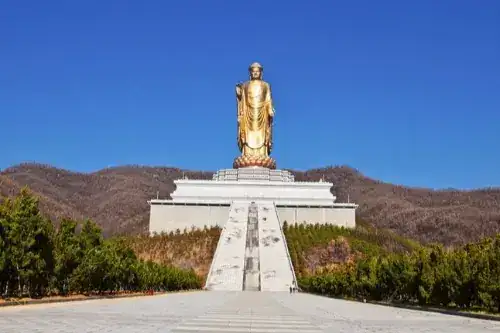
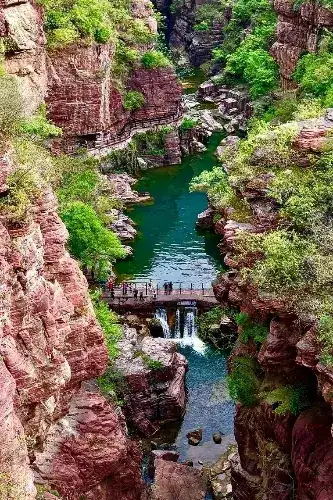
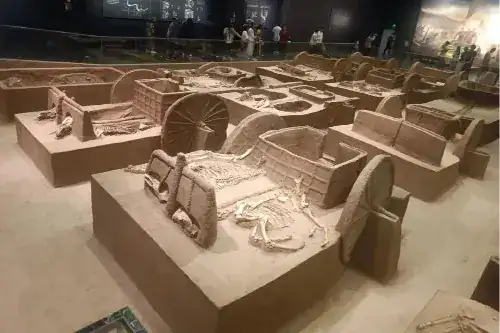
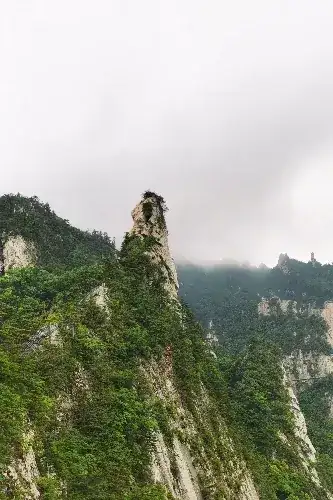
As of the end of 2024, Xuchang had 42 A-level tourist attractions, including 11 4A-level, 22 3A-level, and 9 2A-level scenic areas.
Local Specialties
Notable Figures
Honorary Titles
Travel information can change. Check current opening hours, reservations and entry requirements before you travel.
Traveller discussion
Start the conversation with a helpful tip or a question.