
Hebi City
Hebi CityHebi City, formerly known as Zhaoge, is a prefecture-level city under the jurisdiction of Henan Province, located in the northern part of the province in the transitional zone from the eastern foothills of the Taihang Mountains to
Hebi City
Hebi City, formerly known as Zhaoge, is a prefecture-level city under the jurisdiction of Henan Province, located in the northern part of the province in the transitional zone from the eastern foothills of the Taihang Mountains to the North China Plain. The total area is 2,182 square kilometers. As of the end of 2025, Hebi administers 3 districts and 2 counties. The Municipal People's Government is seated at No. 131 Jiuzhou Road, Qibin District. The permanent population was 1.554 million as of the end of 2025. Hebi is the setting of the Investiture of the Gods; the Shang Dynasty capital of Zhaoge and the capital of Zhongmou of the State of Zhao, one of the Seven Warring States, were both located within the present-day urban area. The surnames Lin, Shi, Wei, Kang, and Yin, as well as the Kang and Qin clans of Korea (Joseon), originated here, making Hebi an important birthplace of East Asian surnames. It is also the hometown of Duanmu Zigong, the founding figure of Confucian merchants. Yunmeng Mountain within Hebi is home to China's first ancient military academy, where Guiguzi trained diplomatic and military strategists including Su Qin, Zhang Yi, Sun Bin, Pang Juan, and Mao Sui. Hebi's advanced electronics industry has provided communication equipment and technical support for China's manned space program, and core components of FAST, the world's largest radio telescope, were manufactured in Hebi. As the world's largest magnesium metal base, Hebi's magnesium new materials are applied in smartphones, aerospace, and missile systems. In 2025, the city achieved a regional GDP of 114.412 billion yuan (approximately 15.89 billion US dollars), up 6.6% at constant prices. In October 2025, it was named a National Model City for Rule-of-Law Government Construction.
History
Hebi's history traces back over 3,000 years to the reign of Emperor Wu Ding of the Shang Dynasty (1238-1180 BC), the founder of the Shang capital at Zhaoge. In the early Zhou Dynasty, the capital of the largest vassal state, the State of Wei, remained at Zhaoge. Duke Yi of Wei, the 18th ruler, was fond of cranes and raised them in the northwestern areas of the palace. The name Hebi (literally "crane wall") derives from the phrase "cranes perched on the steep cliffs of the southern hills."
During the Xia Dynasty, the present-day Hebi area was divided among the three provinces of Yu, Ji, and Yan. During the Shang Dynasty, it was part of the royal domain, with four successive kings making Zhaoge their capital. During the Zhou Dynasty, Zhaoge served as the capital of the State of Wei for 403 years. In the Spring and Autumn period, the area belonged to the states of Wei and Jin; in the Warring States period, it passed to Zhao and Wei. In 510 BC, Duke Huan of Qi established the settlement of Zhongmou west of Hebi. In 425 BC, the State of Zhao moved its capital to Zhongmou in Hebi for 39 years.
In the early Western Han Dynasty, the counties of Liyang (present-day Xunxian), Zhaoge (present-day Qixian), and Dangyin were established. A Western Zhou ritual bronze vessel unearthed at Xincun in Qibin District is now housed in the British Museum. In 543 AD, Dangyin County was merged into Ye under the Eastern Wei. In 586 AD, the Sui Dynasty re-established Dangyin County, renaming it Dangyuan in 596 AD. During the Tang, Song, and Yuan, Liyang and Zhaoge served as administrative seats. In the early Ming Dynasty, Xunxian, Qixian, and Tangyin were established under Daming, Weihui, and Zhangde Prefectures respectively.
During the Republic of China era, the three counties belonged to the Hebei Circuit of Henan Province. In July 1943, the Hebei-Shandong-Henan Military Region launched the Weinan Campaign and established a border-area anti-Japanese democratic regime. After the founding of the PRC, the counties were under Pingyuan Province before being transferred to Henan in 1953. In 1954, Qixian was merged into Tangyin (restored in 1962). In March 1957, Hebi City was established as a province-governed city. In January 1986, Xunxian and Qixian were placed under Hebi's jurisdiction.
Administrative Divisions
The urban center has relocated three times: from Hebiji Town (1957) to Zhongshan (December 1957) to Shancheng District (1959), as mining subsidence constrained growth. In 1992, the Qibin Economic Development Zone was established, and in May 1999 the political center moved to Qibin District. As of the end of 2025, Hebi administers 3 districts and 2 counties, plus 3 functional zones: Hebi National Economic and Technological Development Zone, Hebi Urban-Rural Integration Demonstration Zone, and Baoshan Economic and Technological Development Zone.
Geography
Location and Boundaries
Hebi is located in northern Henan at the junction of the eastern foothills of the Taihang Mountains and the North China Plain, at coordinates 35 degrees 26 minutes to 36 degrees 02 minutes 54 seconds N, 113 degrees 05 minutes 23 seconds to 114 degrees 45 minutes 12 seconds E. It borders Anyang to the east, west, and north, and is adjacent to Xinxiang to the south. The total area of 2,182 square kilometers accounts for about 1.3% of Henan Province.
Topography and Landforms
The area's landforms comprise four types: mountainous, hilly, plain, and fluvial. Mountains extend from Qingmei Mountain to Huashan Nao at 500-800 meters elevation, composed of Cambrian oolitic limestone and Ordovician limestone and dolomite. The hilly area covers the central and eastern parts, with elevations declining from 500 m west to 150 m east. Plains include the Pangcun Plain (about 15 sq km) and the Xiaozhuang Plain (about 8 sq km). Rivers form V-shaped valleys upstream and U-shaped valleys in the eastern hills.
Climate
Hebi has a warm temperate semi-humid monsoon climate with four distinct seasons. Springs are windy and dry; summers hot and humid; autumns clear and crisp; winters cold and foggy. The annual average temperature is 14.2-15.5 degrees Celsius, annual precipitation 349.2-970.1 mm, and annual sunshine 1,787.2-2,566.7 hours.
Hydrology
Hebi's rivers belong to the Hai River Basin. Major tributaries from south to north include the Qi River, Yongtong River, Tang River, You River, Huan River, and Jinxian River, all flowing east into the Wei River system. The Qi River is 42 km long within the city with a drainage area of 288 sq km and a multi-year average runoff of 461 million cubic meters. Other rivers include the Yongtong (13 km, intermittent), Tang (25 km), You (20 km), Jinxian (10 km, intermittent), and Huan rivers.
Natural Resources
Water Resources
Among 60 major urban rivers in Henan, the Qi River consistently maintains water quality above national Class II, ranking first. The Panshitou Reservoir stores 608 million cubic meters.
Plant Resources
Hebi has 114 families, over 300 genera, and 800+ species of higher plants, including 200+ cultivated species. Notable specialties include the Three Treasures of the Qi River: Qi River crucian carp, twisted-silk duck eggs, and seedless jujubes. Other products include persimmons, walnuts, Chinese toon, Xiaohe cabbage, Danian radish, and Wangqiao tofu.
Animal Resources
Hebi has 12 wild mammal species, 86 bird species, 6 reptile species, and 19 aquatic and amphibian species. The Hebi section of the Qi River has 64 fish species, more than the Yellow River (46) or Huai River (50+), the most of any river in the province. The Qi River crucian carp is a provincially protected species, listed first in Henan's 1990 wildlife protection catalogue.
Mineral Resources
Hebi's mineral resources feature good geographic combinations, high grades, and easy exploitability. Proven deposits include coal, coalbed gas, cement limestone, dolomite, quartz sandstone, and refractory clay, totaling over 30 varieties. Coal reserves reach 1.6 billion tons, dolomite about 1 billion tons, and cement limestone 50 billion tons.
Population
Population Size
As of the end of 2025, the permanent population was 1.554 million: 1.012 million urban and 542,000 rural. The urbanization rate was 65.10%, up 0.76 percentage points. There were 10,000 births (birth rate 6.42 per mille), 12,400 deaths (death rate 7.97 per mille), and a natural growth rate of minus 1.54 per mille.
Ethnic Composition
Besides the Han majority, Hebi has 30 ethnic minorities including Zhuang, Mongolian, Manchu, Hui, Gaoshan, Miao, Buyi, Gelao, Yi, Yao, Tujia, Naxi, Lisu, Li, Jing, Dong, Korean, Tibetan, Bai, Mulao, Tajik, She, Shui, Qiang, Hani, Uyghur, Dai, Lahu, Tu, and Pumi. The Hui are the largest (1,963 people), followed by Mongolians (316); the smallest groups have just one member each.
Politics
The Hebi Municipal People's Government serves as the city's principal administrative authority, headquartered at No. 131 Jiuzhou Road, Qibin District.
Economy
Overview
In 2024, Hebi's GDP was 109.439 billion yuan (approximately 15.20 billion US dollars), up 5.5%. The primary, secondary, and tertiary industries added 7.693 billion, 55.443 billion, and 46.303 billion yuan respectively, with a three-sector structure of 7.0:50.7:42.3. Per capita GDP was 69,996 yuan (approximately 9,722 US dollars), up 5.9%.
In 2025, GDP reached 114.412 billion yuan (approximately 15.89 billion US dollars), up 6.6%. The three sectors added 7.811 billion, 55.881 billion, and 50.720 billion yuan. Per capita GDP was 73,506 yuan (approximately 10,209 US dollars), up 7.1%. General public budget revenue was 8.450 billion yuan (approximately 1.17 billion US dollars), up 3.6%. Per capita disposable income was 36,910 yuan (approximately 5,126 US dollars), up 5.7%, with urban residents at 43,014 yuan and rural residents at 28,358 yuan.
Primary Industry
The Hebi Academy of Agricultural Sciences developed the maize variety Xundan 20, winning the 2011 National Science and Technology Progress First Prize. Hebi has 430,000 mu of grass slopes and is a major hog, broiler, and laying hen production base. Per capita livestock output has ranked first among the province's 18 prefecture-level cities for 13 consecutive years. In 2025, total grain output was 1.2729 million tons; meat output was 253,400 tons, up 12.3%; poultry eggs 141,900 tons; and milk 71,000 tons.
Secondary Industry
Four industrial agglomeration zones and three specialty parks encompass modern chemicals, food, auto parts, magnesium, and digital electronics. Hebi is a key modern chemical base, magnesium processing base, and food cluster in central China. The food industry covers 17 sectors. Hebi is one of China's 30 key electronic industrial cities, with 150+ electronics enterprises. As the world's largest magnesium powder and sacrificial anode export base, Hebi's magnesium products serve rail transit, aerospace, and military applications. In 2025, above-scale industrial value-added grew 8.2%, with high-tech industry up 18.0% and industrial profits up 240.3%.
Tertiary Industry
In 2025, total retail sales of consumer goods reached 45.242 billion yuan, up 6.2%. Import and export totaled 4.281 billion yuan, down 28.3%. Postal business grew 32.6% and telecom 8.4%. Mobile phone users reached 1.8044 million. The city received 23.0267 million domestic tourists, with tourism revenue of 9.084 billion yuan. Financial institution deposits totaled 149.116 billion yuan (up 9.5%) and loans 118.741 billion yuan (up 6.9%). Insurance premium income was 3.239 billion yuan, up 5.4%.
Social Affairs
Science and Technology
Key technologies including the super suspended-bed demonstration unit, FAST radio telescope reflective panels, and high-performance optoelectronic materials have reached world-leading levels. In 2020, Piesat established its Central China satellite operations center in Hebi, launching the Nuwa Constellation plan for 38 satellites by 2025. As of the end of 2025, the city had 55 provincial-level or higher enterprise technology centers, 1,255 patents granted, and 31.6 billion yuan in technology contract transactions.
Education
In 2025, Hebi had 3 higher education institutions (34,212 students), 5 vocational schools (14,958 students), 22 senior high schools (45,128 students), 51 junior high schools (76,829 students), 223 primary schools (119,003 students), and 3 special education schools.
Culture
As of the end of 2025, Hebi had 2 art troupes, 6 cultural centers, 6 public libraries, and 5 museums, with 13 national key cultural relic sites and 4 national intangible cultural heritage entries. Radio and TV coverage reached 99.9%.
Healthcare
As of the end of 2025, Hebi had 1,995 health institutions including 71 hospitals and township health centers, with 9,629 beds and 13,890 health professionals. There were 6 disease prevention centers and 5 maternal and child health centers.
Sports
Hebi is designated China's Boccia Hometown with world-leading boccia levels. Hebi athletes won 2 championships and 3 runner-up finishes internationally, including the 2002 International Boccia Invitational team title. The Dance of a Thousand Cranes Gymnasium (4,688 seats) has hosted national boxing and NBA challenge events. At the 19th Asian Games in Hangzhou, Hebi athlete Guo Runmin won an esports gold medal.
Social Security
As of the end of 2025, Hebi added 31,300 urban jobs. Pension insurance participants totaled 586,900; medical insurance 1,183,600; unemployment insurance 170,400. Minimum living allowances covered 7,856 urban and 26,888 rural residents.
Transportation
Overview
The Beijing-Guangzhou Railway, Beijing-Hong Kong High-Speed Railway, and Beijing-Hong Kong-Macau Expressway run north-south through Hebi, along with National Highway 107. The West-East Gas Pipeline and South-to-North Water Diversion Project pass the western urban area. High-speed rail reaches most major cities within 3 hours. In 2025, highway freight totaled 105.37 million tons (up 9.0%), passengers 19.59 million (up 6.7%), expressway mileage 97.0 km, and railway mileage 192.8 km.
Highways
Hebi has 4,283 km of roads (74 km national, 368 km provincial, 2,604 km village) with a density of 196.28 km per 100 sq km. The city operates 225 passenger routes and 29,791 commercial vehicles.
Railways
Hebi Station (built 1904, formerly Xunxian Station) is 543 km from Beijing West and 1,751 km from Guangzhou. Hebi East Station opened December 26, 2012, in Qibin District. Huaxun Station (opened June 20, 2022) is China's first railway station spanning two cities and counties, on the Zhengzhou-Jinan High-Speed Railway.
Water Transport
The Wei River evolved from ancient waterways including the Qing River, Baigou, and Yongji Canal. It became the Yongji Canal during the Sui and Tang dynasties. Water transport has been essentially suspended since the 1960s.
History and Culture
The Hebi Yu Opera Troupe, originally the Yellow River Art Troupe of the Ministry of Water Resources, relocated to Hebi in 1958 and performed at the PRC's 10th anniversary in 1959. Its production The Seventh-Rank Magistrate Sells Sweet Potatoes won the Huabiao Award, China's highest film honor. The Xunxian Ancient Temple Fair, known as the foremost ancient temple fair in North China, runs from the first day of the first lunar month to the second day of the second month and was listed as a national folk culture protection project in 2004. The Hebi Kiln (also called Hebiji Kiln) produced white, yellow, and black-glazed porcelain from the Tang through Yuan dynasties; its white-glazed brown-painted dragon-pattern vase (a Yuan artifact unearthed in 1978) is in the Henan Museum. The film industry has developed in Shancheng District, leveraging the century-old coal mining industrial landscape for location shoots.
Cultural Relics Protection
Hebi has 13 nationally protected cultural relic sites, including the Lutai ruins and ancient kiln sites.
Intangible Cultural Heritage
Four items are inscribed on the national intangible cultural heritage list, including the Xunxian temple fair and clay figurine crafts.
Religion
Five religions are practiced in Hebi (Buddhism, Taoism, Islam, Catholicism, and Protestant Christianity), with over 80,000 believers. There are 391 registered clergy, 16 Buddhist temples, 10 Taoist temples, 2 mosques, 1 Catholic church, and 97 Protestant venues. The city has 20 patriotic religious organizations.
Scenic Spots
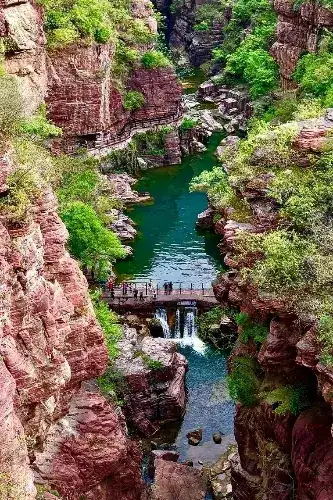
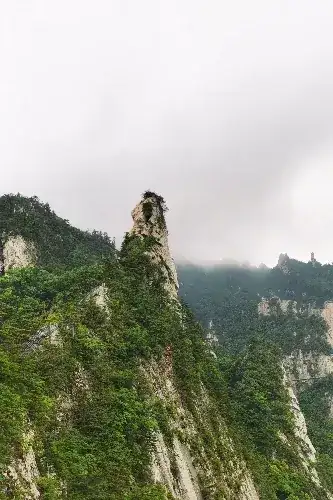
Notable scenic areas include the Qi River National Wetland Park, Yunmeng Mountain, and the Lutai ruins of the ancient Zhaoge capital.
Local Specialties
Famous products include the Three Treasures of the Qi River (crucian carp, twisted-silk duck eggs, and seedless jujubes), as well as local agricultural specialties from various districts and counties.
Notable Figures
Historical figures associated with Hebi include Guiguzi, the legendary military strategist who taught at Yunmeng Mountain, and Duanmu Zigong, a prominent disciple of Confucius and pioneer of Confucian commerce.
Honorary Titles
Hebi has been recognized as a National Model City for Rule-of-Law Government Construction and designated China's Boccia Hometown by the General Administration of Sport.
Sister Cities
Travel information can change. Check current opening hours, reservations and entry requirements before you travel.
Traveller discussion
Start the conversation with a helpful tip or a question.