
Pingdingshan City
Pingdingshan CityPingdingshan, known in ancient times as the State of Ying, took the eagle as its totem. Since the character for "Ying" and the character for "eagle" were phonetically interchangeable, the city came to be known as "Eagle Cit
Pingdingshan City
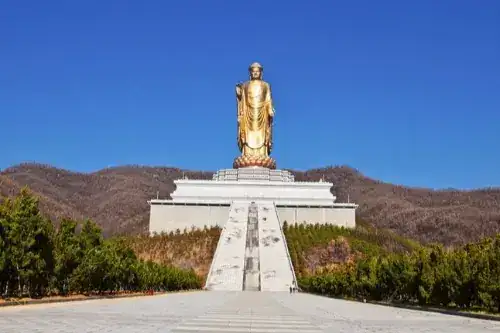
Pingdingshan, known in ancient times as the State of Ying, took the eagle as its totem. Since the character for "Ying" and the character for "eagle" were phonetically interchangeable, the city came to be known as "Eagle City." It is a prefecture-level city in Henan Province, with terrain descending from west to east in a staircase pattern, bordered by the Funiu Mountains to the west and the Huang-Huai Plain to the east. Situated at the transitional zone between warm temperate and northern subtropical climates, it features cold winters, hot summers, large annual temperature ranges, low precipitation, and distinct seasons, with a total area of 7,910 square kilometers. As of January 2026, Pingdingshan administers 4 districts, 4 counties, and 2 county-level cities. As of the end of 2025, the resident population was 4.844 million. Founded in 1957, Pingdingshan is an industrial new city established in the 1950s. It is both a resource-based industrial city and a National Civilized City, China Excellent Tourism City, National Health City, National Garden City, National Forest City, and China's Hometown of Ru Kiln Ceramic Art. It serves as an important energy and heavy industry base in the Central Plains Economic Zone and a central city in the central Henan region, located between the Beijing-Guangzhou and Jiaozuo-Zhicheng railway trunk lines, with a "two-horizontal, five-vertical" expressway network including the Ningluo and Lannan expressways. The city has two national wetland parks: Bailuzhou and Baigui Lake. The Yaoshan-Central Plains Great Buddha Scenic Area is a national 5A tourist attraction, featuring a hot spring belt stretching over a hundred li (approximately 50 kilometers) and the world's tallest copper standing Buddha. In 2025, Pingdingshan's regional GDP was 292.94 billion yuan (approximately 40.7 billion US dollars), up 5.4% year-on-year. The three-industry structure ratio was 6.7:41.3:52.0, and per capita regional GDP was 60,276 yuan (approximately 8,372 US dollars), up 6.2%.
History
Pingdingshan was the ancient State of Ying, which took the eagle as its totem, giving the city its alternate name "Eagle City." The area was part of Yuzhou in ancient times. During the Shang Dynasty, it was home to the Ying and Jie tribes. In the Western Zhou Dynasty, it was the fiefdom of the Marquis of Ying, a clansman of King Wu. During the Spring and Autumn and Warring States periods, it was divided among the states of Han, Wei, Jin, Zheng, and Chu. After Qin's unification, the area belonged to Yingchuan, Sanchuan, and Nanyang commanderies. In the Han Dynasty, Sanchuan Commandery was renamed Henan Commandery. During the Southern and Northern Dynasties, it successively belonged to Luyang, Xiangcheng, Nan'an, Rubei, Runan, Shunyang, and Hanguang commanderies. In the Sui Dynasty, it was divided between Xiangcheng and Yingchuan commanderies. In the Tang Dynasty, it belonged to Ruzhou, Xuzhou, and Xiangcheng commanderies. From the Song-Yuan through the Ming-Qing dynasties, it was divided among Ruzhou, Xuzhou, and Yuzhou. In 1912, it was divided among the Henan South, East, and West circuits.
During the War of Resistance Against Japan, the western Henan and central Henan anti-Japanese base areas were established, connecting with the Hebei-Shandong-Henan military region. During the War of Liberation, from late 1947 to early 1948, Linru, Lushan, Baofeng, Jia County, Ye County, and Wuyang were successively liberated. In June 1948, the CPC Western Henan District Committee, Administrative Office, and Military Region were established in Lushan.
After the founding of the People's Republic of China, the area was divided between the Luoyang and Xuchang special districts. In 1953, exploration of the Pingdingshan coalfield began. In March 1957, Pingdingshan City was established as a province-administered city with State Council approval. In 1964, it was reorganized as the Pingdingshan Special District under dual leadership, primarily led by the Ministry of Coal. In 1968, the city was restored and a revolutionary committee established. In 1969, Xinhua and Weidong districts were created. In 1977, Wugang District was transferred to Pingdingshan. In 1981, the Municipal People's Government was established. In 1983, Lushan, Baofeng, and Ye counties were transferred from Xuchang to Pingdingshan. In 1986, Xiangcheng and Jia counties from Xuchang and Linru County from Luoyang were also transferred. In 1988, Linru County was replaced by Ruzhou City. In 1990, Wugang District became Wugang City. In 1994, the suburb was renamed Zhanhe District. In 1997, Shilong District was established.
Administrative Divisions
As of January 2026, Pingdingshan administers 4 districts, 4 counties, and 2 county-level cities: Ye County, Jia County, Baofeng County, Lushan County, Xinhua District, Weidong District, Zhanhe District, Shilong District, Wugang City, and Ruzhou City, plus 1 national-level high-tech zone and 1 urban-rural integration demonstration zone. There are 31 townships, 52 towns, and 61 sub-districts. The municipal government is headquartered in Xinhua District.
Geography
Location
Pingdingshan is located in south-central Henan Province, between 33 degrees 08 minutes and 34 degrees 20 minutes north latitude and 112 degrees 14 minutes and 113 degrees 45 minutes east longitude, extending 150 km east-to-west and 140 km north-to-south. It borders the municipalities of Xuchang, Luohe, Zhumadian, Luoyang, Nanyang, and Zhengzhou. The total area is 7,882 square kilometers.
Topography
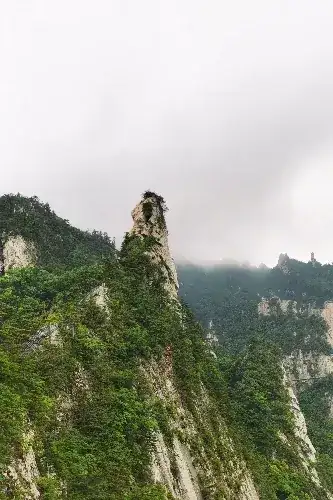
The city lies in the transitional zone between the western Henan mountains and the Huai River Plain. The terrain descends from west to east. The western area is predominantly mountainous, with the highest peak being Yuhuangding, the main summit of Mount Yao in Lushan County, at 2,153.1 meters. The eastern area is mainly plains with rolling hills in between.
Climate
Pingdingshan sits at the transitional edge between the warm temperate and northern subtropical zones, with cold winters, hot summers, and distinct seasons. In 2020, the average annual temperature was 15.8 degrees Celsius, precipitation was 855.9 mm, and sunshine hours totaled 1,742.7.
Hydrology
The city's rivers all belong to the Shaying River system of the Huai River Basin. Total water resources amount to 1.834 billion cubic meters, including 1.566 billion cubic meters of surface runoff and 785 million cubic meters of groundwater. There are 170 reservoirs of various types.
Natural Resources
Water Resources
There are 25 rivers with basin areas exceeding 100 square kilometers, with the main rivers being the Beiru, Sha, Li, Ganjiang, and Gun. Five large reservoirs include Baiguishan, Zhaopingtai, Shimantan, Gushitan, and Yanshan.
Plant Resources
Pingdingshan has 2,376 plant species across 248 families and 1,014 genera, with over 1,000 species of significant economic value. Forest coverage is 16.9%. The flue-cured tobacco base is one of China's four major high-quality tobacco bases.
Animal Resources
The city has 226 terrestrial vertebrate species (46.6% of Henan's total), with 31 under national or provincial protection, including leopards, otters, golden eagles, and giant salamanders. Jia County red cattle is one of China's eight fine livestock breeds.
Mineral Resources
Pingdingshan has 58 known mineral types. Coal reserves total 10.3 billion tons with retained reserves of 3.25 billion tons (51% of Henan's total), earning the title "Coal Capital of the Central Plains." The Ye County Salt Field has proven rock salt reserves of 2.09 billion tons, making it China's second-largest well salt field. Iron ore reserves total 970 million tons (76.3% of the provincial total), ranking among China's ten major iron mines.
Population
Population Quantity
As of the end of 2025, the resident population was 4.844 million, with an urbanization rate of 57.99%, up 0.75 percentage points. The birth rate was 5.88 per thousand, death rate 8.58 per thousand, and natural growth rate minus 2.70 per thousand.
Ethnic Composition
Pingdingshan has 48 ethnic minority groups, with the Hui people being the most numerous, followed by Manchu and Mongolian.
Politics
Economy
Overview
In 2025, the regional GDP was 292.94 billion yuan (approximately 40.7 billion US dollars), up 5.4%. The primary, secondary, and tertiary industries contributed 19.771 billion yuan (+3.9%), 120.915 billion yuan (+5.4%), and 152.254 billion yuan (+5.6%) respectively, with a structure ratio of 6.7:41.3:52.0. Per capita regional GDP was 60,276 yuan (approximately 8,372 US dollars), up 6.2%. Total fiscal revenue was 29.816 billion yuan (approximately 4.14 billion US dollars), up 2.4%. Fixed asset investment grew 3.1%, with infrastructure investment up 27.7%. There were 295 projects with investment of 100 million yuan or above.
Primary Industry
In 2025, grain output was 2.3026 million tons, with wheat at 1.2104 million tons. Peanut output was 140,000 tons, vegetables 2.2794 million tons, and edible mushrooms 122,300 tons. Total meat output was 337,800 tons (+10.2%), including pork at 260,500 tons (+12.2%). Year-end live pig inventory was 2.2863 million head.
Secondary Industry
Above-scale industrial value-added grew 8.3% in 2025. By sector: mining +10.9%, manufacturing +7.8%, and power, heat, gas, and water +1.5%. Total installed power generation capacity was 11.0254 million kW, with clean renewable energy at 54.9%. Construction industry output was 16.884 billion yuan, up 2.7%.
Tertiary Industry
Total retail sales of consumer goods reached 124.58 billion yuan, up 3.7%. Total import and export value was 6.068 billion yuan, with exports of 5.019 billion yuan. Actual foreign investment was 15.918 million US dollars. Financial institutions' RMB deposit balance was 488.58 billion yuan (+6.8%), loan balance 346.013 billion yuan (+3.7%). The city received 62.7432 million tourists, with tourism revenue of 40.783 billion yuan.
Social Services
Science and Technology
The city had 56 provincial-level or above enterprise technology centers (3 national-level), 141 provincial engineering technology research centers, and 1 national key laboratory. A total of 292 patents were authorized, with 3,318 valid invention patents. Technology contract transactions totaled 6.217 billion yuan.
Education
Regular higher education enrolled 37,600 students with 108,600 in attendance. Regular high schools had 156,400 students, junior high schools 260,500, and primary schools 438,200. Kindergartens served 132,100 children.
Culture
The city had 6 art performance troupes, 13 cultural centers, 12 public libraries, and 19 museums. There are 31 national key cultural relics protection units and 9 items on the national intangible cultural heritage list. Radio and TV coverage reached 99.4% and 99.0% respectively.
Healthcare
The city had 4,566 medical institutions, including 122 hospitals, 94 township health centers, and 2,814 village clinics. There were 35,196 hospital beds and 49,188 health professionals, including 18,186 licensed physicians and 24,730 registered nurses.
Sports
Athletes won 4 national championships and 397 medals at provincial and above competitions (134 gold, 121 silver, 142 bronze). The city had 19,305 sports venues with 2.92 square meters per capita.
Social Security
In 2025, 74,800 new urban jobs were created. Per capita disposable income was 32,933 yuan (+5.2%), with urban residents at 43,081 yuan and rural residents at 21,458 yuan. The urban-to-rural income ratio was 2.01. A total of 3.5424 million people participated in basic pension insurance and 4.6491 million in basic medical insurance.
Environmental Protection
In 2025, average PM10 was 70 micrograms per cubic meter and PM2.5 was 39 micrograms per cubic meter. Of 26 surface water assessment sections, 88.5% met Class I to III standards. The city had 2 nature reserves and 6 forest parks, with 1.56 thousand hectares of afforestation completed.
Transportation
Overview
Pingdingshan is located between the Beijing-Guangzhou and Jiaozuo-Zhicheng railway lines, 100 km from Zhengzhou Xinzheng International Airport. Five expressways pass through, totaling 550 km, with general roads reaching 15,000 km. Total railway operating mileage is 680 km. Pingdingshan Port opened for navigation, making it Henan's fourth navigable city. In 2025, highway freight totaled 93 million tons (+5.8%), and passengers 53 million person-trips (-0.6%).
Highways
Railways
The city has 400 km of railway, with stations at Pingdingshan East, Pingdingshan, Pingdingshan West, Baofeng, Lushan, and Jia County. The Zhengzhou-Wanzhou high-speed railway has been operational since December 2019, with a design speed of 350 km/h. The Pingdingshan-Luohe-Zhoukou high-speed railway is under construction, running 199.679 km through three cities.
Airport
Construction of the Lushan civil-military dual-use airport is underway, with plans for general aviation airports in Jia County, Ye County, and Ruzhou, forming a "one-main, three-auxiliary" aviation layout.
History and Culture
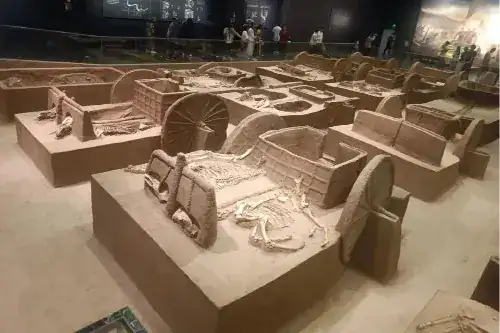
Pingdingshan has 25 national key cultural relics protection units, including Xiangshan Temple (ancestral temple of the Thousand-Hand Guanyin), the ancient Fengxue Temple, the Ru Official Kiln Site (a major national archaeological discovery), Sansu Park (resting place of the three Su scholars), and the best-preserved Ming Dynasty county yamen at Ye County. The Majie Storytelling Festival is a national intangible cultural heritage. The city is the birthplace of Quju opera and the ancestral home of the Ye, Liu, Ying, and Shen surnames worldwide.
Scenic Spots
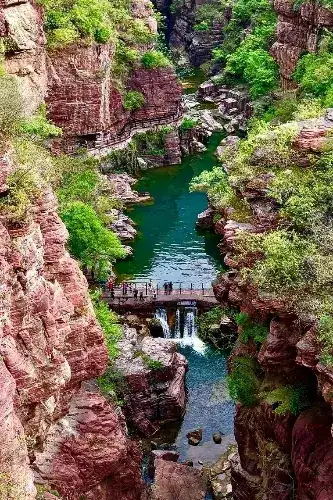
As of the end of 2025, the city had 71 A-level tourist attractions, including 17 at 4A level or above.
Famous People
Honorary Titles
Pingdingshan has been named a National Civilized City, China Excellent Tourism City, National Garden City, National Forest City, and National Health City. In 2017, it was selected as one of the first batch of national agricultural sustainable development trial zones. In 2020, it was named a National Double Support Model City. In 2021, it was designated a National Water-Saving City. In 2025, it was again designated a National Double Support Model City and commended as a National Civilized City.
Travel information can change. Check current opening hours, reservations and entry requirements before you travel.
Traveller discussion
Start the conversation with a helpful tip or a question.