
Weifang City
Weifang CityWeifang City, formerly known as Weizhou and Weixian, is a prefecture-level city in Shandong Province. Designated as a Type II large city and a National Famous Historical and Cultural City, it is located in central Shandong Provi
Weifang City
Weifang City, formerly known as Weizhou and Weixian, is a prefecture-level city in Shandong Province. Designated as a Type II large city and a National Famous Historical and Cultural City, it is located in central Shandong Province on the western part of the Shandong Peninsula. It borders Qingdao and Yantai to the east, Zibo and Dongying to the west, Linyi and Rizhao to the south, and faces the Laizhou Bay of the Bohai Sea to the north. The climate is a warm temperate semi-humid continental monsoon climate, with terrain rising from north to south and a total area of 16,167.23 square kilometers. As of June 2026, the city administers 4 districts, 2 counties, and 6 county-level cities. As of end 2025, the permanent population was 9.2712 million. Weifang is designated by the State Council as a regional central city of the Shandong Peninsula Urban Agglomeration. As the World Kite Capital, it serves as a global center for kite cultural exchange and hosts China's first high-speed rail freight logistics base. Qingzhou, under its jurisdiction, is a National Famous Historical and Cultural City, one of the "Ancient Nine Provinces." Weifang is the core of Dongyi culture, the heartland of Qi culture, a major center of Han Dynasty Confucian classics, and a literary center during the Ming and Qing dynasties. During the Qianlong reign, it was known as "Suzhou in the south, Weixian in the north." In 1904, Weixian opened as a treaty port and established Guangwen University. As a central point on the Jiaoji Railway, Fangzi Town was the birthplace of Weifang's modern industry. The Zhucheng School of Guqin and Gaomi Paper Cutting are listed on the UNESCO Intangible Cultural Heritage list. In 2025, Weifang's regional GDP reached 858.736 billion yuan (approximately $119.3 billion), up 5.5%. On July 21, 2026, the State Council approved Weifang as a National Famous Historical and Cultural City.
History
During the Xia and Shang dynasties, the area contained vassal states such as Zhenguang, Zhenxun, Han, and Sanshou. In the early Zhou Dynasty, King Wu enfeoffed Taigong Wang in Qi, with the capital at Yingqiu (modern-day Changle, later moved to Linzi). During the Spring and Autumn Period, the area belonged to Qi, Lu, and Ju states. During the Warring States Period, most of the territory was under Qi, while Wulian and Zhucheng belonged to Lu.
During the Qin Dynasty, the area was divided among the Jiaodong, Linzi, and Langya commanderies. During the Western Han, it comprised 53 counties across Beihai, Langya, and Qi commanderies. During the Eastern Han, the area belonged to the Beihai, Le'an, Qi, and Langya kingdoms. During the Three Kingdoms period, it was part of the Wei state. During the Jin and Sixteen Kingdoms periods, the area was successively occupied by Later Zhao, Former Yan, Former Qin, and Later Yan, falling to Southern Yan by 400 CE.
During the Southern and Northern Dynasties, the area was split between Liu Song and Northern Wei. Under the Sui, it belonged to Beihai, Gaomi, and Langya commanderies. During the Tang Dynasty (741 CE), it was part of Henan Circuit. Under the Northern Song, it belonged to Jingdong East Circuit. Under the Jin, it was part of Shandong East Circuit with Yidu Prefecture. Under the Yuan, it belonged to the Zhongshu Province. Under the Ming, it comprised Qingzhou and Laizhou prefectures. Under the Qing, it was administered by Qingzhou, Laizhou, and Yizhou prefectures.
During the Republic of China period, nine counties including Weixian, Changyi, Gaomi, Yidu, Shouguang, Changle, Linqu, Anqiu, and Zhucheng belonged to the Jiaodong Circuit. In 1927, all counties came under direct provincial administration. After the outbreak of the War of Resistance Against Japan, the Chinese Communist Party established the Shandong Anti-Japanese Base Area. On April 27, 1948, Weixian was liberated, and Weifang Special Municipality was established. In 1949, it was renamed Weifang City. After the founding of the People's Republic of China, the administrative structure evolved through Changwei Special District, Changwei Region, and Weifang Region. In October 1983, the Weifang Region was reorganized into a prefecture-level city implementing the city-administering-county system.
Administrative Divisions
Administrative Evolution
In 1950, the Changwei Special District headquarters moved from Yidu to Weifang. Counties were repeatedly reassigned among districts over subsequent decades. In 1956, counties from the dissolved Jiaozhou Special District were absorbed. In 1967, Changwei Special District became Changwei Region, renamed Weifang Region in 1981. In 1983, Pingdu County was transferred to Qingdao, and Weicheng, Hanting, and Fangzi districts were established. Between 1986 and 1994, several counties were upgraded to county-level cities: Yidu to Qingzhou, Zhucheng, Shouguang, Anqiu, Gaomi, and Changyi. In 1992, Wulian County was transferred to Rizhao City, and Kuiwen District was established in 1994.
Administrative Details
As of June 2026, Weifang City administers 4 districts, 2 counties, and 6 county-level cities. The city contains five functional zones: Weifang High-Tech Industrial Development Zone, Weifang Binhai Economic and Technological Development Zone, Weifang Comprehensive Bonded Zone, Weifang Xiashan Ecological Economic Development Zone, and Shandong Weifang Economic Development Zone. The municipal government is seated at No. 99 Shengli East Street, Kuiwen District.
Geographical Environment
Location
Weifang is located in central Shandong Province on the western part of the Shandong Peninsula, at the center of the peninsula's urban agglomeration. It spans east longitude 118 degrees 10 minutes to 120 degrees 01 minutes and north latitude 35 degrees 41 minutes to 37 degrees 26 minutes. The straight-line distance to Jinan is 183 km west, and 410 km to Beijing northwest. Total area: 16,167.23 square kilometers.
Topography
The terrain rises from north to south in a series of steps, divided into lowland, plain, and low mountain-hill areas with 18 landform types. The northern coastal area near Laizhou Bay has elevations below 7 meters, covering 2,631.91 square kilometers, about 15% of the total area. The city's geological structure spans the Luxi and Ludong uplift zones and the Yishu Fault Zone, creating structural diversity.
Climate
Weifang has a warm temperate semi-humid continental monsoon climate with four distinct seasons: windy springs with little rain, hot and rainy summers, clear and dry autumns, and cold winters with frequent winds. The annual average temperature is 12.3 degrees Celsius. January averages -3.3 degrees Celsius; July averages 26.0 degrees Celsius.
Hydrology
Weifang has six major surface water systems: the Wei River, Mi River, Bailang River, South Jiaolai River, North Jiaolai River, and Zi River, with hundreds of tributaries. The Xiaoqing River is the only transiting river. The multi-year average runoff depth is 177.3 mm, 3% above the provincial average, with total average surface runoff of 3.067 billion cubic meters. All major rivers flow into the Bohai Sea, with a total controlled area of 10,509 square kilometers, 66.3% of the city's total.
Natural Resources
Land Resources
Weifang's total land area is 1,616,723.99 hectares, of which agricultural land accounts for 71.22% (including 790,137 hectares of cultivated land), construction land 19.59%, and unused land 9.19%. Forest land covers 274,375 hectares.
Plant Resources
The city has 58 families, 127 genera, and 243 species of trees. Notable ancient trees include 108 specimens over 500 years old and 14 over 1,000 years old. There are 22 families and 43 genera of fruit trees, mainly including apples, pears, hawthorns, apricots, peaches, cherries, jujubes, and grapes. The city has 988 species of medicinal plants, with wild medicinal material reserves of approximately 48,180 tons.
Animal Resources
Weifang has 212 bird species across 16 orders and 42 families, including 34 resident, 55 summer visitor, 24 winter visitor, and 99 passage migrant species. Coastal waters host 150 marine species, with crustaceans being the most diverse. Inland waters contain 46 fish species across 12 families, including carp, crucian carp, and mandarin fish.
Mineral Resources
Weifang has discovered 80 mineral types with 46 having proven reserves. Thirteen minerals rank first in the province, including natural brine, sapphire, oil shale, barite, bentonite, perlite, zeolite, and mica. Natural brine and sapphire reserves rank first nationally.
Population
As of end 2024, Weifang's permanent population was 9.3199 million with an urbanization rate of 67.08%. As of end 2025, it was 9.2712 million with an urbanization rate of 68.09%. The city is home to 50 ethnic minorities, with the Hui being the most numerous, followed by Manchu, Yi, Mongolian, Dai, Miao, Korean, and others.
Politics
Economy
Overview
In 2025, Weifang's regional GDP reached 858.736 billion yuan (approximately $119.3 billion), up 5.5%. The primary industry added value of 72.573 billion yuan (approximately $10.1 billion), up 4%; secondary industry 353.967 billion yuan (approximately $49.2 billion), up 4.6%; tertiary industry 432.196 billion yuan (approximately $60.0 billion), up 6.5%. The three-sector structure was 8.5:41.2:50.3. General public budget revenue was 63.05 billion yuan (approximately $8.8 billion), up 1.8%. General public budget expenditure was 90.9 billion yuan (approximately $12.6 billion), with livelihood spending at 82.2%.
Primary Industry
In 2025, the total output value of agriculture, forestry, animal husbandry, and fisheries was 140.97 billion yuan (approximately $19.6 billion), up 4.6%. Grain output was 4.517 million tons, maintaining above 4.5 million tons for two consecutive years. Major livestock meat, egg, and milk production reached 2.2853 million tons, up 9.3%. Aquatic product output was 559,100 tons, up 4.1%. The city had 6.27 million mu of high-standard farmland.
Secondary Industry
In 2025, value-added of designated industrial enterprises grew 7.5%. By sector: chemical raw materials manufacturing grew 11.4%, general equipment manufacturing 13.3%, food manufacturing 16%, and agricultural food processing 12.1%. Total construction output was 121.57 billion yuan (approximately $16.9 billion).
Tertiary Industry
In 2025, the service sector reached 432.2 billion yuan (approximately $60.0 billion), up 6.5%, accounting for 50.3% of GDP. Total retail sales of consumer goods reached 358.49 billion yuan (approximately $49.8 billion), up 6.3%. Total import and export value was 379.76 billion yuan (approximately $52.7 billion), up 6.8%, with exports of 252.75 billion yuan (approximately $35.1 billion) and imports of 127.01 billion yuan (approximately $17.6 billion). Actual foreign investment utilized was $731.3 million. Financial institution deposits reached 1,655.46 billion yuan (approximately $229.9 billion), up 10.2%; loan balance was 1,275.77 billion yuan (approximately $177.2 billion), up 7.7%. Insurance premium income was 36.07 billion yuan (approximately $5.0 billion), up 9.2%. The city received 107.4364 million tourists with tourism revenue of 103.62 billion yuan (approximately $14.4 billion).
Social Affairs
Science and Technology
In 2025, Weifang added 4,744 invention patents, reaching 28,000 effective patents. R&D expenditure reached 20.66 billion yuan (approximately $2.9 billion), up 11.2%, making Weifang the fourth city in the province to surpass 20 billion yuan. High-tech industry output accounted for 61.1%. The city had 2,037 high-tech enterprises and 4,034 technology-based SMEs.
Education
As of end 2025, Weifang had 2,407 schools with 1.8279 million students, including 1,429 kindergartens, 537 primary schools, 301 junior high schools, 73 senior high schools, 33 vocational schools, and 18 higher education institutions. Four vocational colleges were selected for the national "Double High Plan."
Culture
In 2025, Weifang added 2 UNESCO intangible cultural heritage items, reaching 4 total. The city built the largest municipal intangible cultural heritage museum north of the Yangtze River and the nation's first provincial cultural relic safety satellite remote sensing monitoring center. Museums increased to 116.
Healthcare
As of end 2025, Weifang had 9,211 medical institutions, including 319 hospitals. The city built 35 county-level medical service sub-centers and 663 central village clinics, with 84 medical-nursing integrated institutions.
Sports
In 2025, Weifang won 9 gold, 13 silver, and 6 bronze medals at the 15th National Games. The city became the first prefecture-level city nationwide to host a full home-away format football league. The Weifang Marathon attracted 20,000 participants, with over 10,000 mass sporting events held.
Social Security
In 2025, urban employment increased by 105,100. Per capita disposable income was 45,794 yuan (approximately $6,358), up 4.6%. Urban residents' per capita income was 55,875 yuan (approximately $7,761); rural residents' was 30,643 yuan (approximately $4,256). Basic pension insurance covered 7.319 million people at 96.66% participation rate.
Environmental Protection
In 2025, all 9 binding environmental indicators were met, with air quality reaching its best on record. PM2.5 concentration entered the "20+" range for the first time. Renewable energy generation capacity reached 15.78 million kW. Contaminated farmland and key construction land safety utilization rates both maintained 100%.
Urban Construction
In 2025, Weifang built 30 new pocket parks, 20.15 km of urban greenways, and 30 co-built gardens. Old heating networks were renovated for 47.2 km, and 5,800 household gas meters were replaced. Construction began on 9,252 units of affordable rental housing and 9,597 units of urban village renovation housing.
Transportation
Overview
As of end 2022, Weifang had 8 expressways, 6 national highways, and 14 provincial highways, with total highway mileage of 29,513.2 km. Weifang Port had 45 berths, including 20 of 10,000-ton class and above. In 2025, port cargo throughput was 46.904 million tons, with container volume of 830,000 TEUs.
Aviation
Weifang Airport, built in 1995 and opened in 1996, is a 4D-class civil-military dual-use airport. It serves as one of China's four major air mail processing centers, operating routes to Beijing, Shanghai, Guangzhou, Shenzhen, and Dalian.
Railways
Weifang Station, established in 1902, is a first-class station. Its 2007 building features a butterfly kite design, a landmark of the World Kite Capital. Weifang North Station is a key node on the national high-speed railway network. Major lines include the Jiaoji Railway, Jiaoji Passenger Dedicated Line, Dalailong Railway, and Weisu High-Speed Railway.
Water Transport
Weifang Port, at the bottom of Laizhou Bay, was established in 1985 and opened as a national first-class port in 2009. It has 7 berths of 3,000-5,000-ton class. In 2025, throughput reached 46.904 million tons with 830,000 TEUs.
Highway
Major passenger stations include Weifang General Bus Station, Weifang Joint Transport Terminal, Weifang North Bus Station, and Weifang South Bus Station.
History and Culture
Puhui New Year Paintings
Originating in the early Ming Dynasty, this folk art uses willow charcoal to draft line drawings, then dusts copies onto paper. One draft yields multiple copies, hence the name Puhui, meaning ash-dusting. The painting then undergoes meticulous steps including bold coloring, fine detailing, face painting, eye opening, gold outlining, and oil application.
Gaomi Paper Cutting
During the Hongwu reign of the Ming Dynasty, immigration brought external paper-cutting traditions that merged with local styles. Its characteristics include: blocks and lines creating black-white-gray tonal contrast with strong visual impact; vigorous, bold lines with a rich metallic-stone character; and designs excelling in ingenious composition.
Scenic Spots
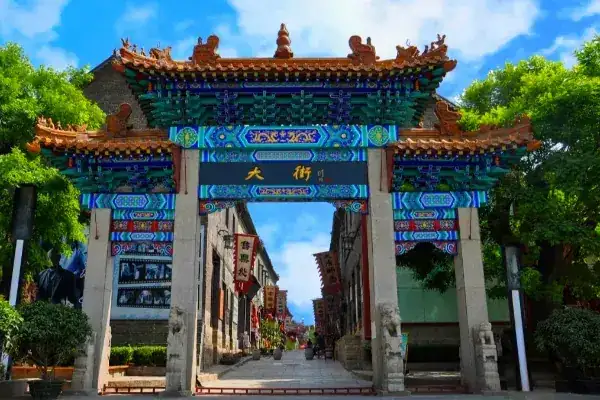
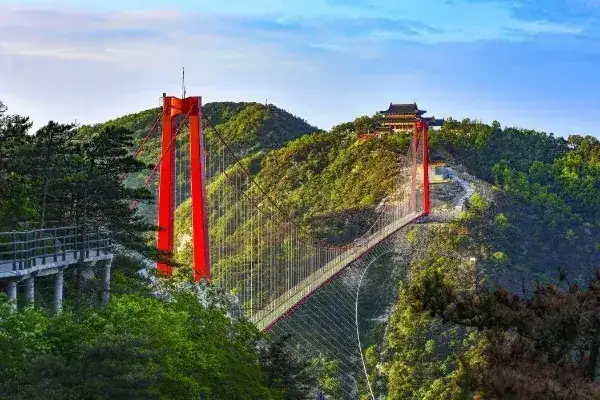
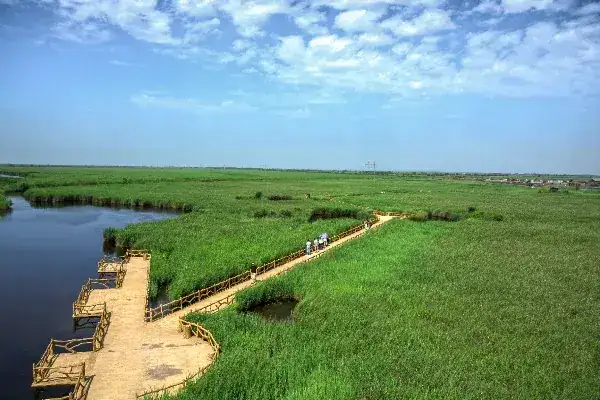
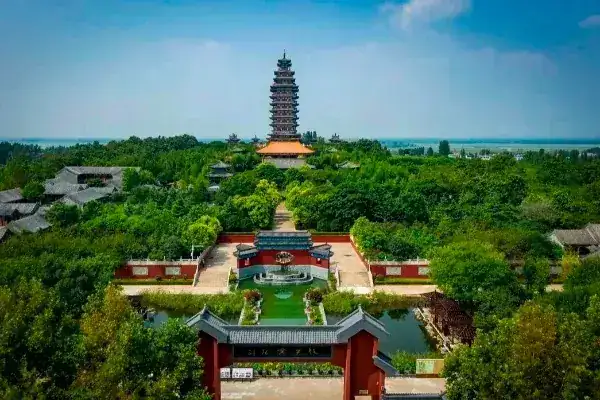
In 2022, Weifang received 6 provincial-characteristic towns, 3 new 4A-level tourist attractions, 18 provincial scenic villages, and 1 national key rural tourism town.
Local Specialties
Notable local specialties include Linqu scorpion, Dongfang pipa duck, and mung bean cake.
Famous People
Su Shi and Li Qingzhao left immortal poems in this region. Su Shi's Four Poems of Mizhou serve as a cultural calling card for Weifang.
Honorary Titles
Weifang holds numerous titles including National Hygienic City, National Garden City, National Civilized City, China's Most Livable City, International Peace City, and UNESCO City of Crafts and Folk Art. In 2022, it was selected as the 2024 East Asian Cultural Capital. In 2016, it was awarded National Forest City. In 2026, the State Council approved Weifang as a National Famous Historical and Cultural City.
Sister Cities
Travel information can change. Check current opening hours, reservations and entry requirements before you travel.
Traveller discussion
Start the conversation with a helpful tip or a question.