
Zaozhuang
ZaozhuangZaozhuang is a prefecture-level city under Shandong Province, classified as a Tier-3 city. Located in southern Shandong, it borders Pingyi County, Feixian, and Lanling County of Linyi City to the east; Tongshan District, Jiawang Di
Zaozhuang
Zaozhuang is a prefecture-level city under Shandong Province, classified as a Tier-3 city. Located in southern Shandong, it borders Pingyi County, Feixian, and Lanling County of Linyi City to the east; Tongshan District, Jiawang District, and Pizhou City of Xuzhou, Jiangsu Province to the south; Weishan Lake to the west; and Zoucheng City of Jining City to the north. The total area covers 4,564 square kilometers, accounting for 2.97% of Shandong Province's total area. As of May 2025, Zaozhuang administers 5 municipal districts and 1 county-level city. As of end-2025, the permanent population stood at 3.8004 million. Known as the "Coal City," Zaozhuang lies in a mid-latitude warm temperate monsoon continental climate zone, characterized by abundant sunlight, high accumulated temperature, rich heat resources, and ample rainfall. The terrain descends from north to south and from east to west, tilting from northeast to southwest. Human settlement in the Zaozhuang area dates back to the Neolithic Age, approximately 7,300 years ago. In 1961, Zaozhuang was restructured as a province-administered city. The city's key pillar industries include coal mining and washing, chemical raw materials and chemical products manufacturing, petroleum coal and other fuel processing, and high-end chemical industries. Zaozhuang is committed to building the largest lithium battery electrolyte production base in northern China. In 2025, the city achieved a regional GDP of 250.252 billion yuan (approximately US$34.5 billion), with primary industry value added of 20.993 billion yuan (approximately US$2.9 billion), secondary industry value added of 94.070 billion yuan (approximately US$13.0 billion), and tertiary industry value added of 135.189 billion yuan (approximately US$18.6 billion).
Historical Evolution
During the Xia Dynasty, the southern part of the territory belonged to the State of Zeng, while the north and west were part of the States of Teng and Xue. Over the centuries, the area was controlled by various states including Lu, Qi, Song, and Chu. In 254 BC, the entire territory came under the State of Chu.
During the Qin Dynasty's abolition of the fief system, the area was organized into counties under the Tan, Fu, and Xue commanderies. The Han Dynasty established Cheng County, Zeng County, and Yinping County, all under Donghai Commandery. During the Three Kingdoms period, the area belonged to the State of Wei. The Sui Dynasty renamed Lanling County as Cheng County and later reverted the name. The Tang Dynasty, in 621 AD, placed Cheng County under Yizhou Langya Commandery and Teng County under Pengcheng Commandery. During the Ming Dynasty, Teng County was established in the north and Yizhou in the south, later downgraded to Yicheng County, under Yanzhou Prefecture. During the Republic of China period, the area consisted of Yicheng and Teng counties.
During the Anti-Japanese War, anti-Japanese democratic governments were established in Yicheng County in November 1939. After the founding of the People's Republic of China in October 1949, the two counties were placed under different special districts. In 1958, the Yicheng County government relocated to Zaozhuang Town. In 1960, Yicheng County was converted into the county-level Zaozhuang City. On September 12, 1961, Zaozhuang was established as a prefecture-level city, administering Qicun, Tai'erzhuang, Yicheng, and Xuecheng districts plus Zaozhuang Town, with 56 people's communes. In 1976, Shizhong District was established. Teng County was transferred to Zaozhuang in 1979. In 1983, Qicun District was renamed Shanting District. In 1988, Teng County was converted into Tengzhou City (county-level). In 2001, a major administrative reorganization reduced the number of townships by 30 (33%). Zaozhuang now administers 6 districts and cities — Shizhong, Xuecheng, Yicheng, Tai'erzhuang, Shanting, and Tengzhou — plus the national-level Zaozhuang High-Tech Zone.
Administrative Divisions
As of May 2025, Zaozhuang administers 5 municipal districts — Shizhong District, Xuecheng District, Yicheng District, Tai'erzhuang District, and Shanting District — and manages 1 county-level city, Tengzhou City. The Zaozhuang Municipal People's Government is located at 2621 Guangming Avenue.
Physical Geography
Location and Territory
Zaozhuang is located in southern Shandong on the Huanghuai alluvial plain, between 116 degrees 48 minutes and 117 degrees 49 minutes east longitude and 34 degrees 27 minutes and 35 degrees 19 minutes north latitude. It borders Weishan Lake to the west, Linyi's Lanling, Fei, and Pingyi counties to the east, Xuzhou's Pizhou, Jiawang, and Tongshan districts to the south, and Jining's Zoucheng to the north, with a total area of approximately 4,564 square kilometers.
Geological Structure
Zaozhuang is located in the North China stratigraphic region, Luxi sub-region. The strata range from the Neoarchean Taishan Rock Group to Quaternary deposits. Structurally, most of Zaozhuang sits on the southwest margin of the Luxi Uplift within the North China Plate. Faulting is the dominant structural feature, with the Zaozhuang Fault, Caowangmu Fault, and Yicheng Fault as representative structures.
Topography and Landforms
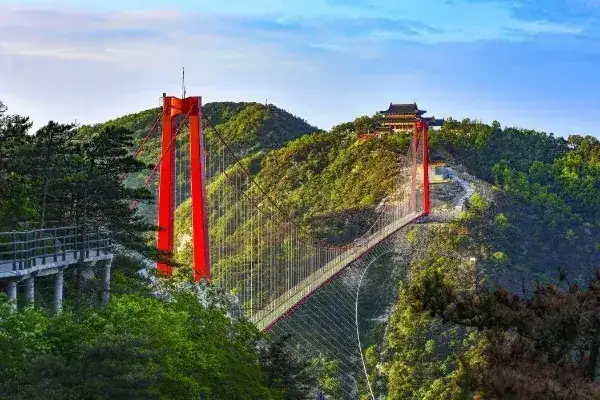
The terrain descends from north to south and from east to west. The highest point, Gaoshan in Shanting District, reaches 620 meters. Baodugu at 580 meters, known as "the foremost of the seventy-two peaks of the Yimeng Mountains," and Lianqingshan at over 500 meters form mountain chains across the north. The lowest areas, at 30 to 40 meters elevation (minimum 24.5 meters), lie along the western lakeshores and canal zones. The landscape features low mountains (54.6% of total area), plains (26.6%), and depressions (18.8%).
Climate Characteristics
Zaozhuang has a mid-latitude warm temperate monsoon continental climate. The average annual temperature is 13 to 14 degrees Celsius, with summer averages around 26 degrees and spring/autumn averages of 15 to 16 degrees. Annual precipitation ranges from 750 to 950 millimeters, making it one of the wettest areas in Shandong. Summer receives 60 to 75% of annual precipitation.
Hydrology
The Beijing-Hangzhou Grand Canal's Zaozhuang section, 39 kilometers long, serves as the flood discharge channel for the South Four Lakes. The Yijia River, Yicheng Dasha River, and Chengguo River all originate in the northeastern mountains and flow into the South Four Lakes and the Grand Canal. The Yijia River is the main navigable channel.
Soil Types
Zaozhuang has 5 major soil types — cinnamon soil, brown soil, fluvo-aquic soil, shajiang black soil, and paddy soil — across 80 varieties. Cinnamon soil covers 2,049 square kilometers (58.9%), brown soil 527 square kilometers (15.2%), fluvo-aquic soil 443 square kilometers (12.8%), shajiang black soil 441 square kilometers (12.7%), and paddy soil 15 square kilometers (0.4%).
Natural Disasters
Major natural disasters include floods, droughts, meteorological events, earthquakes, geological hazards, biological disasters, and forest fires. In June 2024, severe heat and drought caused riverbeds to dry up, affecting urban water supply and agriculture. Geological hazards include rockfalls, landslides, and mining-induced subsidence, with 80 hazard sites identified as of end-2023.
Natural Resources
Water Resources
Average annual precipitation is 803.5 millimeters, with total water resources of 1.443 billion cubic meters and utilizable volume of 1.043 billion cubic meters. The city has 12 main channels, 142 reservoirs (3 large, 3 medium), 906 ponds, and 82 dams.
Land Resources
As of end-2023, Zaozhuang had 3.0733 million mu of arable land, with net increases for three consecutive years. Forest land covers 59,575 hectares, orchard land 50,297 hectares, and grassland 5,433 hectares.
Plant Resources
Zaozhuang has 655 vascular plant species across 118 families and 377 genera, including 14 nationally protected species (4 Class I, 10 Class II). Forest coverage is 11.29% with 773,100 mu of forest area.
Animal Resources
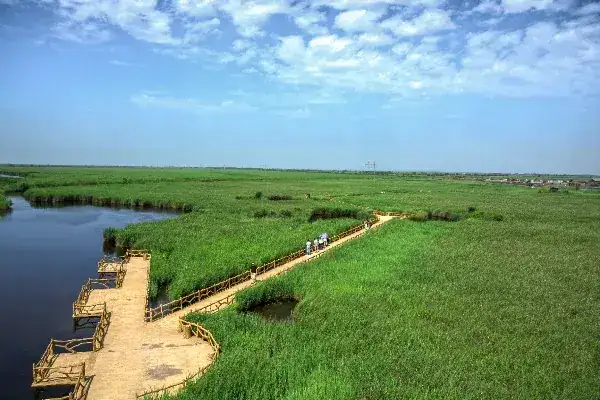
The city has 165 terrestrial vertebrate species, including 23 nationally protected species (3 Class I, 20 Class II). Notable sightings include Oriental White Storks and the critically endangered Baer's Pochard.
Mineral Resources
As of end-2020, 57 mineral types had been discovered, with 13 having proven reserves including coal, iron ore, copper, bauxite, gypsum, limestone, and phosphorite. A total of 98 mining areas and 172 mineral occurrences have been identified.
Population
As of end-2025, the permanent population was 3.8004 million, including 2.4305 million urban residents. The urbanization rate reached 63.95%, up 1.12 percentage points from the previous year.
Politics
Economy
Overview
In 2025, Zaozhuang achieved a regional GDP of 250.252 billion yuan (approximately US$34.5 billion, up 5.7%). Primary industry value added was 20.993 billion yuan (approximately US$2.9 billion, up 3.8%), secondary industry 94.070 billion yuan (approximately US$13.0 billion, up 4.9%), and tertiary industry 135.189 billion yuan (approximately US$18.6 billion, up 6.5%). Fixed asset investment grew 1.9%, with primary industry investment up 10.7% and secondary industry investment up 20.4%. General public budget revenue was 20.020 billion yuan (approximately US$2.8 billion, up 4.5%), and expenditure was 36.916 billion yuan (approximately US$5.1 billion, up 4.2%). Per capita disposable income was 37,334 yuan (approximately US$5,150), with urban residents at 46,328 yuan (approximately US$6,390) and rural residents at 25,266 yuan (approximately US$3,485). Per capita consumption expenditure was 21,116 yuan (approximately US$2,915).
Primary Industry
Total agricultural, forestry, animal husbandry, and fishery output value reached 42.047 billion yuan (approximately US$5.8 billion, up 4.5%). Total grain output was 1.8928 million tons. Vegetable and edible mushroom production was 6.1853 million tons, orchard fruit production 339,000 tons, meat output 220,600 tons, and aquatic products 78,500 tons.
Secondary Industry
Above-scale industrial value added grew 7.5%, with light industry up 11.9% and heavy industry up 6.1%. Key sectors — chemical raw materials and products (up 10.0%), general equipment (up 16.5%), agricultural and sideline food processing (up 15.0%), and non-metallic mineral products (up 6.2%) — drove growth. Major product growth: synthetic ammonia up 62.6%, lithium-ion batteries up 34.8%, primary plastics up 18.9%, metal-cutting machine tools up 17.8%. Construction industry total output value was 40.89 billion yuan (approximately US$5.6 billion).
Tertiary Industry
The service sector achieved value added of 135.189 billion yuan (approximately US$18.6 billion, up 6.5%), accounting for 54.0% of GDP with a 61.6% contribution to growth. Total retail sales of consumer goods reached 140.50 billion yuan (approximately US$19.4 billion, up 5.4%). Import-export value was 41.764 billion yuan (approximately US$5.8 billion, up 18.8%), with exports of 39.635 billion yuan (approximately US$5.5 billion). Actual foreign investment utilized was US$256.46 million (up 3.9%). Real estate development investment was 25.505 billion yuan (approximately US$3.5 billion, down 11.0%). Postal revenue was 2.092 billion yuan (approximately US$289 million). Domestic tourism received 28.94 million visitors with consumption of 26.430 billion yuan (approximately US$3.6 billion). Financial institution loan balances reached 338.328 billion yuan (approximately US$46.7 billion), and deposit balances 418.068 billion yuan (approximately US$57.7 billion). Insurance premium revenue was 11.383 billion yuan (approximately US$1.6 billion).
Social Services
Science and Technology
In 2025, Zaozhuang had 694 high-tech enterprises (up 2.7%). The Lunan Research Institute of Beijing Institute of Technology led a project that passed preliminary evaluation for the National Technological Invention Award (Second Prize).
Education
The city completed layout optimization for 35 small rural schools and nap renovations for 120 schools. 3,700 additional high school seats were added, and one new private higher vocational college was established.
Culture
As of end-2025, Zaozhuang had 3 performing arts troupes, 28 museums, 7 public libraries, and 7 cultural centers.
Sports
In 2025, Zaozhuang hosted 38 provincial-level or above events including the Women's Super League and National Volleyball Championship. 223 villages and communities had fitness equipment upgraded, and 11 public sports venues offered free or low-cost access.
Health
As of end-2025, Zaozhuang had 2,820 health institutions including 142 hospitals and health centers, with 36,020 health professionals and 29,846 beds.
Social Security
In 2025, 34,200 new urban jobs were created. Pension, medical, work injury, and unemployment insurance covered 910,800, 766,600, 504,100, and 470,300 people respectively. The city had 24 public and 82 private eldercare facilities with 18,353 beds.
Transportation
Overview
In 2025, highway freight volume reached 90.99 million tons. The Yiyun Airport, Ji-Zao High-Speed Railway, and Grand Canal waterway upgrade projects progressed steadily. 8 national and provincial road maintenance projects were completed.
Highways
As of March 2025, total highway mileage reached 9,335 kilometers, including 1,655 kilometers of Class II or above, with road density ranking second in the province.
Railways
The Beijing-Shanghai Railway, Beijing-Shanghai High-Speed Railway, and Zao-Lin Railway traverse Zaozhuang, with 5 railway stations including Zaozhuang Station and Tengzhou East Station on the HSR line.
Aviation
Zaozhuang Yiyun Airport, located in Xiji Town, Shanting District, began construction in December 2022. With an estimated investment of 2.186 billion yuan (approximately US$301 million), the 4C-class airport features a 2,600-meter runway designed for 1.2 million annual passengers and 13,000 aircraft movements.
Water Transport
Zaozhuang is developing its inland waterway system under the "one port, four port areas, six operation zones" master plan. In 2025, waterway freight volume reached 13.69 million tons.
Public Transit
Zaozhuang optimized 15 bus routes and upgraded 561 bus stops. The city has 18 taxi companies with 1,540 cruising taxis and 23 ride-hailing companies with 386 vehicles.
History and Culture
Overview
Zaozhuang is a city with rich historical layers, from the Neolithic Beixin Site to the famous Battle of Tai'erzhuang, reflecting local development from ancient times to the modern era.
Origin of the Name
During the early Ming Dynasty, locals were permitted to mine coal in the Yicheng area. As coal mining developed, migrants settled around the "Yibei Kiln Field" forming villages. According to legend, the area had large jujube orchards to the east and west, hence the name "Zaozhuang" (literally "Jujube Village"). The name dates to 1628, and Zaozhuang Town was formally established in 1928.
Cuisine
Zaozhuang cuisine is characterized by salty and spicy flavors. Representative dishes include Zaozhuang Spicy Chicken, Vegetable Jianbing, Four-Nostril Carp, and Nanshi Donkey Meat. The "three famous dishes" — lamb soup, spicy chicken, and vegetable jianbing — have become everyday meals.
Customs
Zaozhuang folk embroidery is a distinctive craft using cloth, silk, and satin, featuring bold colors and diverse styles. The Lunan Flower Drum, originating in the Jiaqing era (1796 to 1820) of the Qing Dynasty, is a song-and-dance performance with percussion accompaniment traditionally performed around the Lantern Festival.
City Symbols
The jujube tree is the city tree. The ancient jujube forest in Dianzi Town, Shanting District spans 80,000 mu with a core reserve of 1,800 mu, containing over 7,200 trees aged over 100 years, 1,186 aged over 500 years, and 372 aged over 1,000 years — the largest and best-preserved ancient jujube forest in Shandong. The pomegranate flower is the city flower. The million-mu pomegranate garden in Yicheng District has centuries of cultivation history, with some trees over 400 years old.
Red Culture
Zaozhuang is a red culture landmark — the site of the Battle of Tai'erzhuang and the birthplace of the Railway Guerrillas. The Railway Guerrillas operated along railway lines and around Weishan Lake during the Anti-Japanese War, employing diverse guerrilla tactics against Japanese forces. The city has established the Railway Guerrillas Party Spirit Education Base and the Tai'erzhuang Battle Memorial as red culture education sites.
Cultural Relics and Monuments
As of October 2021, Zaozhuang has 1 World Cultural Heritage site (the Zhonghe Tai'erzhuang section of the Grand Canal), 11 national-level key cultural relic protection units, and 117 provincial-level or above protection units.
Intangible Cultural Heritage
Language
The Zaozhuang dialect belongs to the Central Plains Mandarin group of Northern dialects, specifically the Xilu sub-branch of Shandong dialect. It shares common features with other Xilu sub-dialects while maintaining distinctive local characteristics.
Scenic Spots
Overview
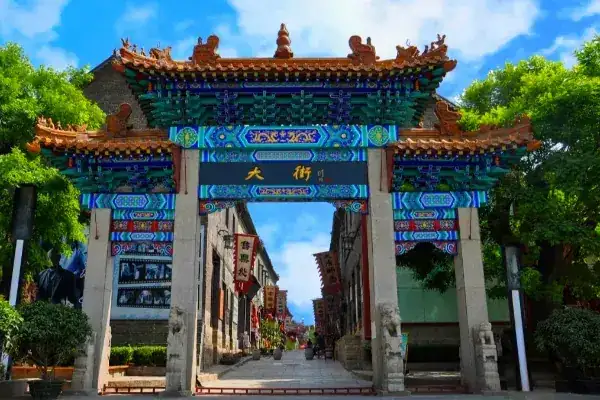
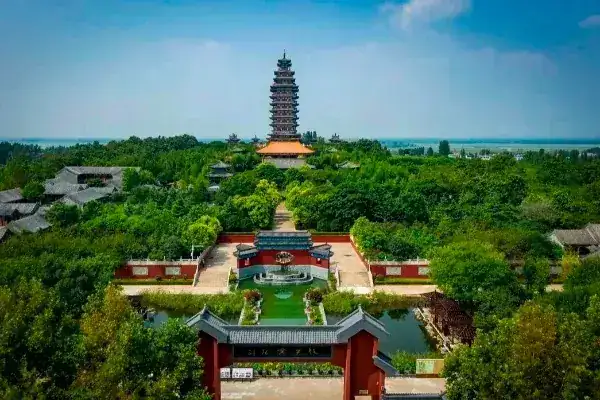
Zaozhuang has 67 national A-level tourist attractions, including 1 5A-level site. Key natural attractions include the Yicheng Guanshi Pomegranate Garden and Baodugu National Forest Park. Zaozhuang is known as a "Chinese Red Classic City." The Tai'erzhuang Battle Memorial Hall recreates the epic battle. In 2005, Zaozhuang was designated as one of 20 key red tourism cities nationwide, alongside Jinggangshan, Xibaipo, and Yan'an.
Key Attractions
As of 2018, Zaozhuang has 2 provincial-level nature reserves: the Pomegranate Garden Reserve and the Baodugu Reserve.
External Relations
Notable Figures
Major Honors
Travel information can change. Check current opening hours, reservations and entry requirements before you travel.
Traveller discussion
Start the conversation with a helpful tip or a question.