
Zibo City
Zibo CityZibo City, abbreviated as "Zi," is the former capital of the Qi State and a prefecture-level city in Shandong Province. Designated by the State Council as a regional center city and modern industrial city, it is an important petroc
Zibo City
Zibo City, abbreviated as "Zi," is the former capital of the Qi State and a prefecture-level city in Shandong Province. Designated by the State Council as a regional center city and modern industrial city, it is an important petrochemical base. Located in eastern China's central Shandong, Zibo borders Linyi to the south, Dongying and Binzhou to the north, Weifang to the east, and Jinan to the west. It sits at the intersection of the Yellow River Delta Efficient Ecological Economic Zone, the Shandong Peninsula Blue Economic Zone, and the Jinan Metropolitan Circle. As of 2023, the city administers 5 districts, 3 counties, and 3 functional zones, covering 5,965 square kilometers with 341.9 square kilometers of built-up area. As of end-2024, the permanent population was 4.6367 million. Linzi District is a National Famous Historical and Cultural City. As the ancient capital of the Qi State, Zibo is the birthplace of Qi culture and is recognized by FIFA as the origin of football, earning the nickname "Ancient Rome of the East." "Zibo BBQ" has become the city's new calling card, with the Zibo BBQ Festival held around the May Day holiday annually. The name "Zibo" emerged in the early 1920s, combining Zichuan and Boshan. In 2025, Zibo achieved a regional GDP of 508.889 billion yuan (approximately $71.2 billion USD), up 5.6% at constant prices.
History
Historical Overview
Zibo's history spans over 8,000 years. Neolithic cultures including the Houli, Beixin, Dawenkou, and Longshan cultures flourished here. During the Xia and Shang dynasties, ancient states such as Shuangjiu, Jize, Pangboling, and Pugu existed in the region. Through the Western Zhou and Spring and Autumn-Warring States periods, the area belonged to the Qi State. For over two millennia after the Qin dynasty, the area was administered under various commanderies and prefectures without unified local governance.
Ancient Era
In 1046 BCE, King Wu of Zhou established the Qi State, enfeoffing Jiang Shang (Taigong) with the capital at Yingqiu, later renamed Linzi by Duke Xian of Qi. In 386 BCE, Qi chancellor Tian He replaced the Jiang clan as rulers. In 221 BCE, Qin Shi Huang unified China, establishing Linzi County under Qi Commandery. During the Han dynasty, Liu Fei was enfeoffed as King of Qi, with over a dozen succeeding kings ruling from Linzi. Through the Northern and Southern Dynasties, Sui, Tang, Song, Jin, Yuan, Ming, and Qing dynasties, the area underwent numerous administrative reorganizations.
Modern Era
The name "Zibo" emerged in the early 1920s alongside coal mining development in Zichuan and Boshan. In 1945, the CPC established the Zibo Special District, the first use of "Zibo" as an administrative name. In 1954, Zibo became Shandong's third prefecture-level city. In 1961, the municipal government relocated from Boshan to Zhangdian District. In 1992, the State Council designated Zibo a "larger city" with local legislative power. In 1994, Linzi District was approved as a National Famous Historical and Cultural City.
Administrative Divisions
Division History
From 1955 to 1969, Zibo administered four districts: Zichuan, Boshan, Zhangdian, and Zhoucun. Linzi District was added in 1970, Huantai County in 1983, and Gaoqing and Yiyuan counties in 1990. The city's master plan (2011-2020) designated a 2,989 square kilometer urban planning area with a central city population cap of 3.06 million.
Division Details
As of January 2022, Zibo's 5 districts and 3 counties comprise 30 sub-districts and 58 designated towns. Zhangdian District (seat of city government) has 8 sub-districts and 5 towns; Zichuan has 4 and 9; Boshan has 3 and 7; Zhoucun has 5 and 5; Linzi has 5 and 7; Huantai County has 2 and 7; Gaoqing County has 2 and 7; and Yiyuan County has 2 and 10.
Geography
Location
Zibo lies between 35 degree 55 minute 20 second to 37 degree 17 minute 14 second north latitude and 117 degree 32 minute 15 second to 118 degree 31 minute 00 second east longitude, at the junction of the Luzhong Mountains and the North China Plain. It borders Linyi, Dongying, Binzhou, Weifang, Jinan, and Tai'an. The total area of 5,965 square kilometers represents 3.8% of Shandong Province. The city is elongated north-south, with maximum distances of 151 km and 87 km respectively.
Topography
The terrain rises from north to south, with over 1,000 meters of elevation difference. South of the Jiaoji Railway lies mountainous and hilly terrain with developed karst features; north of it lies alluvial plains and Yellow River floodplains. Mountains, hills, and plains account for 42.0%, 29.9%, and 28.1% of the city's area respectively.
Climate
Zibo has a warm-temperate, semi-humid continental monsoon climate. Average annual precipitation is 650 mm, temperatures range from 12.5 degrees Celsius to 14.2 degrees Celsius, and the frost-free period lasts 190 to 210 days.
Hydrology
Zibo's rivers are rain-fed. Major systems include the Yi River and the Xiaoqing River system (Zi, Xiaofu, Wu, Zhulong, and Fuzi rivers). There are 78 rivers exceeding 10 km in length. The city has four main lakes - Matahu, Jinqiu, Qingsha, and Dalu - covering 13,926.8 hectares. Karst spring clusters once flowed abundantly but most dried up after the 1980s due to excessive groundwater extraction.
Natural Resources
Mineral Resources
Zibo has identified 50 mineral types with proven reserves in 28. There are 157 proven deposits (14 large, 50 medium, 93 small). Coal, iron, bauxite, and refractory clay concentrate in the central region. The city also possesses petroleum and natural gas resources, including the Gaoqing and Jinjia oil fields.
Land Resources
As of 2019, Zibo's 5,965 square kilometers include 6.205 million mu of agricultural land, 1.878 million mu of construction land, and 864,000 mu of unused land. Major soil types are cinnamon soil (62.5%), fluvo-aquic soil (16.2%), and brown soil (13.6%).
Biological Resources
Zibo has 615 families and 3,753 species, including 618 microorganism species, 1,645 plant species, and 1,490 animal species. Notable resources include over 30 edible fungi types, 421 woody plants, 778 medicinal plants, and 265 bird species.
Water Resources
Surface water and groundwater are primarily recharged by precipitation. Average annual rainfall of 657.8 mm yields 3.906 billion cubic meters of water, with total recharge of 1.411 billion cubic meters and extractable groundwater of 945 million cubic meters.
Population
Population Size
The seventh national census (November 2020) recorded 4,704,138 permanent residents. As of end-2022, the population was 4.7059 million, with an urbanization rate of 74.88%. In 2023, the rate rose to 75.66%, ranking second among Shandong's 16 cities. Zhangdian District led at 96.17%, followed by the High-tech Zone at 92.77% and Boshan District at 81.22%.
Ethnic Composition
Zibo has 48 ethnic minority groups totaling approximately 25,000 people. The Hui exceed 10,000; Manchu and Mongol exceed 1,000 each. The city has one ethnic town (Jinling Hui Town in Linzi District) and seven ethnic villages.
Politics
Economy
Overview
Zibo's leading industries include petrochemicals, fine chemicals, electromechanical products, pharmaceuticals, textiles, building materials, metallurgy, information technology, and new materials. It is a national production base designated as China's Ceramic City, China's New Materials Capital, and multiple national industry bases. In 2025, regional GDP reached 508.889 billion yuan (approximately $71.2 billion USD, +5.6%): primary industry 20.553 billion yuan (approximately $2.87 billion USD, +3.7%), secondary industry 231.854 billion yuan (approximately $32.4 billion USD, +4.4%), and tertiary industry 256.482 billion yuan (approximately $35.9 billion USD, +6.8%). In 2024, GDP was 488.408 billion yuan (approximately $68.3 billion USD, +5.5%).
Primary Industry
In 2024, total agricultural, forestry, animal husbandry, and fishery output reached 37.71 billion yuan (approximately $5.27 billion USD, +3.8%). Grain area, yield, and per-unit yield grew for five consecutive years. Vegetable and fruit outputs were 2.039 million and 1.152 million tons respectively (+3.4% and +4.1%). Poultry sales reached 60.102 million birds (+26.1%).
Secondary Industry
Zibo is a resource-based city and national old industrial base with over a century of industrial history. In 2024, above-scale industrial value added grew 7.1%, with 25 of 38 industry categories achieving positive growth.
Tertiary Industry
From January to November 2024, above-scale service industry revenue reached 55.86 billion yuan (approximately $7.81 billion USD, +6.2%). Total retail sales of consumer goods reached 147.87 billion yuan (approximately $20.7 billion USD, +4.3%). In 2022, Zibo received 36.486 million domestic tourists with tourism revenue of 39.159 billion yuan (approximately $5.48 billion USD). The city has 70 national A-level tourist attractions, including 14 AAAA-level sites. By end-2022, financial deposits reached 686.87 billion yuan (approximately $96.1 billion USD, +11.4%) and loans reached 471.67 billion yuan (approximately $66.0 billion USD, +10%). The city has 34 listed companies. Insurance premium income was 19.37 billion yuan (approximately $2.71 billion USD), with claims of 5.9 billion yuan (approximately $830 million USD).
Transportation
Overview
In 2022, highway passenger volume was 660,000 (-62.7%) and freight volume was 176.8 million tons (-4%). Total highway mileage reached 11,500.7 km, including 264.7 km of expressways. The city operates 251 bus routes, 3,164 buses, and 6,519 taxis. Motor vehicle ownership reached 1.541 million (+5.6%).
Railway
The Jiaoji Railway, Ji-Qing High-Speed Railway, Jinan-Yubei Railway, and Shouping Railway run east-west, while the Zidong, Xintai, and Zhangbo railways run north-south. Zibo Railway Station (built 1903) is a first-class station. Zibo North and Linzi North stations are operational.
Highway
National Highways 205 and 309, the Qingdao-Yinchuan Expressway (G20), Qingdao-Lanzhou Expressway (G22), Binlai Expressway (S29), and Changchun-Shenzhen Expressway (G25) converge in Zibo, connecting to Beijing and Shanghai.
Aviation
Zibo's center is about 70 km from Jinan International Airport and 210 km from Qingdao International Airport. Zibo Airport has been included in the National Civil Airport Layout Plan. The Gaoqing General Airport is among 30 planned civil airports in Shandong by 2030.
Water Transport
Zibo Port is an inland river port along the Xiaoqing River, planned with 2.217 million square meters of land and 27 berths with 24 million tons total capacity, comprising Huantai and Gaoqing port areas.
Public Transit
As of 2017, Zibo has 282 bus routes with 2,791 vehicles covering all designated towns. Total route length reaches 10,627 km with 241 million annual ridership. The Zibo light rail system, proposed in 2008, envisions a 4-line network totaling 161.4 km with 63 stations including 9 transfer stations.
Social Affairs
Education
As of end-2022, Zibo has 7 universities, 194 secondary schools, and 263 primary schools, with 138,000, 247,000, and 232,000 students respectively. The city employs 72,700 teaching staff and graduated 231,000 students. Thirty new kindergartens opened, including 21 public ones.
Science and Technology
Zibo is a national pilot city for science-driven development. In 2017, the city had 317 provincial-level or above R&D platforms, 48 postdoctoral research platforms, and 87 academician workstations. In 2022, Zibo won 16 provincial or above science and technology awards. Technology contract transactions totaled 31.12 billion yuan (approximately $4.35 billion USD), up 43.6% in volume and 56.6% in value. The city has 1,027 high-tech enterprises, an increase of 324.
Cultural Affairs
As of 2022, Zibo has 248 performing arts groups, 88 cultural stations, 9 cultural centers, 9 public libraries, and 70 museums. It has 20 national key cultural heritage sites and 103 provincial-level sites. Radio and TV coverage reached 100% and 99.7% respectively.
Healthcare
In 2022, Zibo had 4,715 healthcare institutions including 154 hospitals, 169 community health centers, and 83 township clinics, with 34,200 beds and 45,400 health professionals, including 18,600 licensed physicians and 19,300 registered nurses.
Sports
Zibo features the Zibo Sports Center and various public sports facilities.
Social Security
As of end-2022, pension insurance covered 1.465 million urban workers and 1.465 million urban residents. Medical insurance covered 2.773 million urban-rural residents and 1.523 million urban workers. Urban pension contributions totaled 14.06 billion yuan (approximately $1.97 billion USD), with disbursements of 20.29 billion yuan (approximately $2.84 billion USD). The urban monthly minimum living standard was 800 yuan (approximately $112 USD), and the rural annual minimum was 7,560 yuan (approximately $1,058 USD). The city has 149 eldercare institutions with 18,700 beds.
Infrastructure
In 2022, Zibo built 5,398 5G base stations and opened China's first highway hydrogen refueling station. Total municipal infrastructure investment reached 11.5 billion yuan (approximately $1.61 billion USD). The city completed 5.98 million square meters of green buildings. Natural gas reached 1.384 million households, and centralized heating covered 93 million square meters.
Rule of Law
On July 31, 2020, Zibo was named among the first batch of national rule-of-law government demonstration projects for its administrative review standardization system.
History and Culture
Zibo is the birthplace of Qi culture and a National Famous Historical and Cultural City. As the leading state of the Spring and Autumn Five Hegemons, Qi pioneered cuju (ancient football), and Linzi was recognized by FIFA as the origin of football. Zibo produced China's first treatises on handicrafts (Kaogongji), agriculture (Qimin Yaoshu), and services (Guanzi). As of 2017, the city has 18 national key cultural heritage sites and 105 provincial-level sites.
Intangible Cultural Heritage
As of 2017, Zibo has 13 national-level, 54 provincial-level, 102 municipal-level, and 504 district-level intangible cultural heritage items.
Customs and Folklore
Ceramic Culture
Zibo is one of China's earliest pottery-producing regions. From the Shang to Western Zhou dynasties, pottery craftsmanship advanced significantly, producing glazed ware. By the Shang dynasty, primitive celadon appeared in the Zhaili area. By the 21st century, Zibo had formed six major ceramic industry bases: export ceramics, premium hotel porcelain, architectural ceramics, decorative materials, high-tech ceramics, and glass ceramics and refractory materials.
Scenic Spots
Zibo is a China Excellent Tourist City with 70 national A level tourist attractions (14 AAAA level, 42 AAA level, 14 AA level). The Zibo BBQ Festival is held around the May Day holiday annually.
Eastern
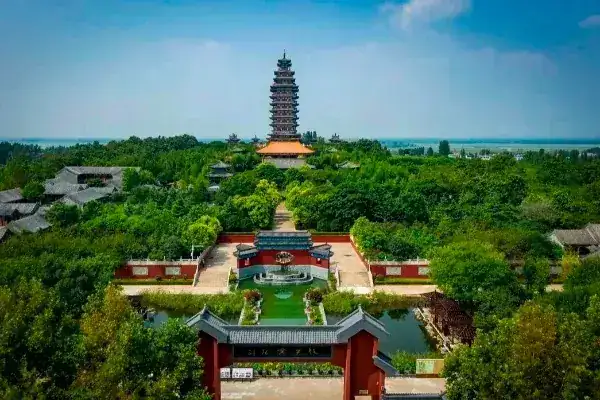
Linzi District's ancient Qi capital ruins are known as an "underground museum," with 48 key heritage sites including the Houli Site, Tonglin (Tianwang) Site, Eastern Zhou Horse Sacrifice Pit, Tian Qi Royal Tombs, and Xitian Temple Statues.
Western
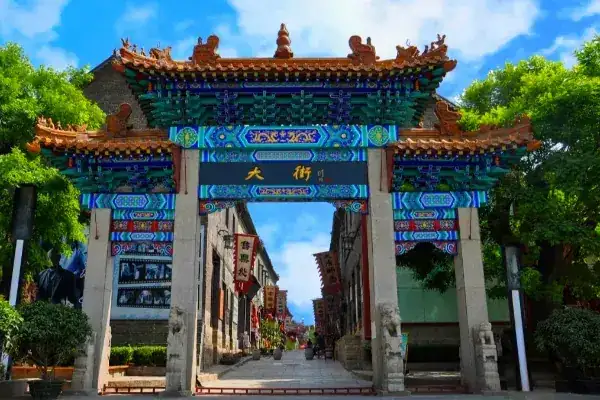
Zhoucun District, a century-old commercial hub known as "Golden Zhoucun" and "Dry Port," features the well-preserved Zhoucun Ancient Commercial City, filming location for several TV dramas and Zhang Yimou's film "To Live."
Southern
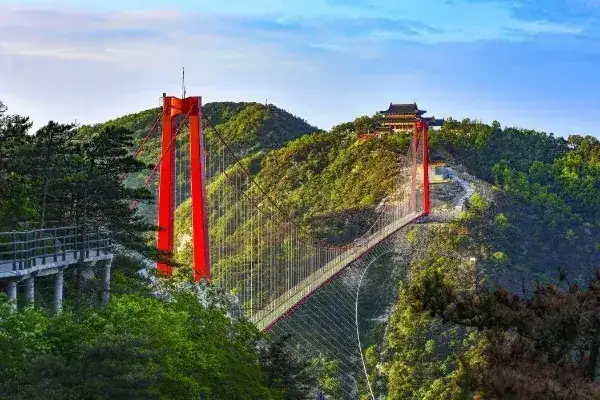
The Boshan and Yiyuan areas feature the Boshan National Scenic Area, Yuanshan and Lushan National Forest Parks, Lushan National Geopark, Wuyang Lake National Wetland Park, extensive karst cave systems (Kaiyuan, Qiaolingqian, and Yiyuan caves), and the Qi Great Wall and Yiyuan Ape Man ruins.
Northern
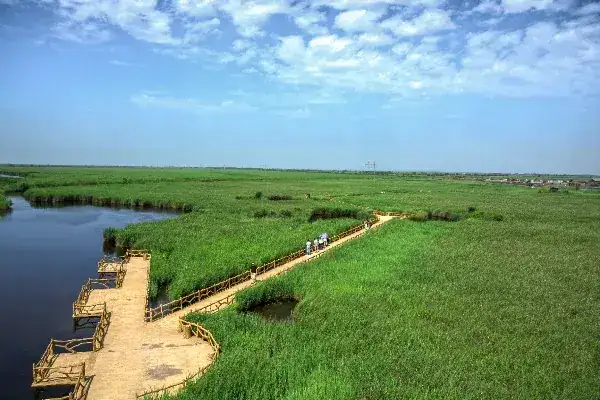
The Huantai and Gaoqing areas feature 47 km of Yellow River frontage, with Dalu Lake and Mata Lake National Wetland Parks known as the "Jiangnan of the North."
Central
Zichuan District has the former residence of Pu Songling, author of "Strange Tales from a Chinese Studio," and the Ezhuang Ancient Village National Forest Park. Zhangdian District hosts the China Ceramics Hall and Zibo Museum. The Wenchang Lake area is a provincial level tourist resort.
Local Specialties
Famous Figures
City Honors
Sister Cities
As of February 2025, Zibo has established sister city relationships with 44 Chinese and foreign cities and maintains economic cooperation and trade relations with over 180 countries and regions worldwide.
Travel information can change. Check current opening hours, reservations and entry requirements before you travel.
Traveller discussion
Start the conversation with a helpful tip or a question.