
Yichun City
Yichun CityYichun, historically known as Yuanzhou, is a prefecture-level city in Jiangxi Province, located in the northwestern part of the province. It borders Nanchang to the east, Fuzhou to the southeast, Ji'an and Xinyu to the south, Pin
Yichun City
Yichun, historically known as Yuanzhou, is a prefecture-level city in Jiangxi Province, located in the northwestern part of the province. It borders Nanchang to the east, Fuzhou to the southeast, Ji'an and Xinyu to the south, Pingxiang to the southwest, Changsha and Yueyang (Hunan) to the northwest, and Jiujiang to the north. As of the end of 2025, the city administers 1 district, 6 counties, and 3 county-level cities. Total area: 18,700 square kilometers. As of the end of 2025, the permanent resident population was 4,821,000. The terrain transitions from the Ganxi mountainous area to the Ganfu Plain, with complex and diverse topography sloping from northwest to southeast. The climate is subtropical humid with four distinct seasons. Yichun was established as a county in 201 BCE, and the name derives from "a warm spring flows beside the county, clear as a mirror, beautiful as spring, pleasant to drink—hence Yichun." In 2025, GDP was 393.024 billion yuan, up 5.6%.
Name Evolution
According to the Song Dynasty Taiping Huanyu Ji: In 201 BCE, Liu Bang established 18 counties in Jiangxi under Yuzhang Commandery, including Yichun County (present-day Yuanzhou District). The name "Yichun" comes from "a warm spring flows beside the county seat, emerging from the ground—cool in summer, warm in winter, clear as a mirror, beautiful as spring, pleasant to drink—hence Yichun."
History
Qin to Southern and Northern Dynasties
During the Qin Dynasty (221–206 BCE), the area was under Jiujiang Commandery. In 201 BCE, Yichun County was established under Yuzhang Commandery. In 267 CE, Ancheng Commandery was established. In 280, the Western Jin renamed it Yiyang. During the Southern Dynasties, Bashan and Yuning commanderies were established.
Sui-Tang to Five Dynasties
In 591, the Sui Dynasty (581–618) established Yuanzhou (seat at Yichun County). The Tang Dynasty (618–907) maintained the area under Hong, Yuan, and Ji prefectures. In 622, Jingzhou was established (seat at Gao'an), later renamed Mizhou and then Junzhou. During the Five Dynasties period (907–960), the area was under the Wu and Southern Tang states.
Song-Yuan Period
The Song Dynasty (960–1279) saw the area under Yuan, Hong, Jun, and Linjiang circuits/prefectures. The Yuan Dynasty (1271–1368) converted these to circuits (Lu). The Ming Dynasty (1368–1644) reorganized into 13 prefectures, with Yichun and Wanzai under Yuanzhou Prefecture.
Ming-Qing Period
The Qing Dynasty (1644–1912) maintained the Ming system. In 1914, the Republic of China reorganized into 4 circuits. On July 10, 1949, the Yuanzhou Administrative Area was established. In 1978, it became Yichun Prefecture. In August 2000, the prefecture was converted to the prefecture-level Yichun City.
After the Founding of the PRC
In 1952, the Yuanzhou Administrative Area merged into the Nanchang Administrative Area. In 1959, it was renamed the Yichun Commissioner's Office. In 1979, Yichun City was established from Yichun County. In 2000, the prefecture was converted to the prefecture-level Yichun City, with the former county-level Yichun City becoming Yuanzhou District.
Administrative Divisions
As of end 2025: 1 district (Yuanzhou), 6 counties (Jing'an, Fengxin, Shanggao, Yifeng, Tonggu, Wanzai), 3 county-level cities (Gao'an, Zhangshu, Fengcheng). Government: Yiyang Building, Fubei Road, Yuanzhou District.
Physical Geography
Location and Boundaries
Northwestern Jiangxi, between 113°54′–116°27′E and 27°33′–29°06′N. East-west: ~222.75 km; north-sorth: ~174 km. Total area: 18,700 km².
Climate
Subtropical humid climate at low latitude. Spring: early warming but variable weather; summer-autumn transition: hot and dry; winter: cold but short frost period. Four distinct seasons, with short spring/autumn and long summer/winter. Average annual temperature: 17.2°C (July 28.8°C, January 5.3°C). Average frost-free period: 267.9 days. Average annual precipitation: 1,680.2 mm (50% in April–June, 25% in October–February). Average annual sunshine: 1,737.1 hours.
Geology
The city straddles two tectonic units: the Yangtze Paraplatform (north of the Zhejiang-Jiangxi Railway) and the South China Fold System (south). Well-developed stratigraphy from the Pre-Sinian to Quaternary, making it an important area for stratigraphic and paleontological research.
Landforms
Transitional zone from Ganxi mountains to Ganfu Plain. Complex terrain with mountains (35.46%), hills (39.05%), and plains (25.49%). The highest point is Jiulingjian (1,794.3m) in Jing'an; the lowest is at 18m in Fengcheng's Yaohu. The Jiuling Mountains run northeast-southwest through the northern area, extending to Lushan in the east and into Hunan in the southwest. Wugong Mountain rises in the southwest. Between these ranges, rolling hills and basins with the Liao, Jinjiang, and Yuan rivers.
Hydrology
134 rivers with drainage areas exceeding 50 km² (54 exceeding 100 km²). All rivers belong to the Poyang Lake system. The Yuan River (279 km, average flow 187 m³/s) flows through Yichun and Xinyu into the Ganjiang. The Jinjiang River (294 km) has a basin covering 7,115.44 km² (93% of its total) within the city. The Liao River has a basin of 3,154.1 km² (72.8% of its total). 1,919 reservoirs with 2.746 billion m³ total storage (5 large, 44 medium).
Soil
10 soil types, 16 subtypes, 64 genera, 162 species. Red soil dominates (1.0909 million ha, 63.63% of total—8.44% above the provincial average). Paddy soil covers 470,000 ha (27.42%).
Natural Disasters
In 2023: 71 natural disaster events (floods, wind/hail, drought, frost) and 13 geological disasters, with zero fatalities. Direct economic losses decreased for three consecutive years. Zero forest fires.
Natural Resources
Land Resources
Arable land: 482,200 ha (0.09 ha per capita), including 321,700 ha irrigated paddy. Forest: 1,049,100 ha. Orchard: 25,400 ha. Water: 63,944 ha. Unused: 100,100 ha.
Mineral Resources
72 mineral types discovered (38.71% of provincial total), 63 with proven reserves (41.98%). 296 mineral occurrences (11.89% of provincial total). 12 minerals ranking #1 in Jiangxi: coal, tantalum, rubidium, cesium, lithium, cobalt, beryllium, bauxite, rock salt, flux limestone, wollastonite, and feldspar. 5 ranking #2: niobium, zinc, metallurgical dolomite, kaolinite, and quartz powder. The 414 Mine in Yichun has the world's largest lithium mica deposit (70%+ of global production). Tantalum reserves: 16,119 tonnes (19.06% national, 12.43% global). Rock salt: 103.71 billion tonnes (89.8% of provincial total).
Energy Resources
Hydropower: theoretical 600,200 kW (10.4% of provincial); developable 380,700 kW (1.738 billion kWh/year). Solar: average sunshine 1,620.2 hours/year (Fengcheng highest at 1,935.7; Tonggu lowest at 1,496.8). Wind energy: estimated 2.88 million kW potential development capacity, concentrated in eastern counties.
Water Resources
Multi-year average water resources: 18.251 billion m³. Groundwater: 4.96 billion m³. The city is known for its hot springs—19 known occurrences across all 10 county-level areas ("Ten Springs, Ten Beauties").
Biological Resources
Nearly 3,000 higher plant species (60% of Jiangxi's total): 101 families, 381 genera, 1,178 woody species (584 trees, 424 shrubs, 85 vines). 156 macrofungi species. 183 rare and endangered plant species (56 nationally protected, 3 Class I). 9,126 ancient trees (846 Class I, 2,119 Class II, 6,161 Class III) across 473 groups, with the largest being a camphor tree (1,413 cm girth). 160+ medicinal plant species. Wildlife: 362 species (57.07% of provincial total): 59 mammals, 237 birds, 10 amphibians, 37 reptiles. 53 national key protected animals (5 Class I, 48 Class II). Forest coverage: 57.12% (Tonggu County: 88.07%).
Population
Population Numbers
As of end 2025: 4,821,000 (down 77,800). Urban: 2,917,600 (60.52% urbanization rate, up 0.67 percentage points). Birth rate: 5.60‰; death rate: 8.28‰; natural growth rate: -2.69‰.
Ethnic Groups
Han: 99.73%; 43 ethnic minorities totaling 13,287 (0.27%). Top 5: Miao, Zhuang, Tujia, Dong, Yi (63.21% of minority population).
Language
Yichun dialect belongs to the Gan Chinese, Yiliu (Yichun-Liuyang) sub-group, formed during the Tang Dynasty. Characterized by tonal split in the departing tone and mostly undifferentiated entering tone.
Religious Beliefs
Yichun holds a unique position in Chan (Zen) Buddhist history: three of the five major Chan sects originated here—the Weiyang Sect at Yangshan (Yuanzhou), the Caodong Sect at Dongshan (Yifeng), and the Linji Sect at Huangbo (Yifeng). In Daoism, Geyao Mountain in Zhangshu is the ancestral court of the Lingbao sect—one of the three great Daoist mountains of southern China, designated as the "33rd Blessed Land Under Heaven" by imperial decree in 676–678 CE.
Buddhism arrived during the Han Dynasty. Catholicism was introduced by Matteo Ricci in 1594, with the first church built during the Kangxi reign (1662–1722).
Politics
Economy
Overview
In 2025, GDP was 393.024 billion yuan (up 5.6%). Primary: 38.606 billion (up 4.4%); secondary: 153.221 billion (up 5.4%); tertiary: 201.197 billion (up 6.1%). Structure: 9.8:39.0:51.2. Per capita GDP: 80,871 yuan (up 7.0%). Non-public economy: 260.085 billion (66.2% of GDP). General public budget revenue: 27.63 billion (down 2.7%). Fixed asset investment grew 4.1%. Urban per capita disposable income: 47,817 yuan (up 4.7%); rural: 24,360 yuan (up 5.7%).
Primary Industry
In 2025: agricultural output 67.48 billion yuan (up 4.7%). Grain sown area: 9.221 million mu; grain output: 7.627 billion jin (3.8135 million tonnes, up 1.51%). Oil crops: 311,300 tonnes. Vegetables: 2.432 million tonnes. Meat: 552,200 tonnes; pig slaughter: 5.0011 million; inventory: 2.5661 million. Aquatic products: 417,800 tonnes.
Secondary Industry
Eight key industries: lithium battery new energy, biopharmaceuticals, electronic information, advanced equipment manufacturing, building materials and furniture, textiles and footwear, green food, and energy conservation and environmental protection. 13 provincial industrial clusters. In 2025: above-designated-size industry grew 6.1%; manufacturing grew 8.2%. High-tech manufacturing grew 11.7% (25.2% of total); equipment manufacturing grew 18.1% (29.7% of total). Non-public industry grew 7.5% (92.2% of total, contributing 111.3%). Construction: 895 qualified enterprises, output 54.85 billion (up 2.6%).
Economic Functional Zones
Yichun Economic and Technological Development Zone: Established 2003, upgraded to national-level in 2013. 262 "Four-Above" enterprises (125 industrial), 136,000 residents, ~28 km² built area. National lithium battery new energy industrial base.
Social Undertakings
Education
As of 2025: 1,413 schools, 991,600 students, 80,736 staff (68,437 teachers). 7 higher education institutions (81,389 students), 25 secondary vocational (42,605), 56 general high schools (145,760), 224 junior high (239,932), 442 primary (373,712), 649 kindergartens (106,334), 9 special education (1,722). Nine-year compulsory education retention: 99.69%; high school gross enrollment: 95.12%.
Healthcare
As of end 2025: 4,298 medical institutions (111 hospitals, 178 township health centers, 57 community centers), 39,045 beds, 44,615 health workers (16,486 physicians, 22,479 nurses).
Science and Technology
As of end 2025: 156,000 professional technicians (53,900 intermediate, 25,000 senior). 2024 R&D expenditure: 7.377 billion (1.99% of GDP, up 0.09 percentage points). 801 high-tech enterprises, 2,279 national technology-based SMEs. 3,717 patents authorized (906 invention). 4,387 valid invention patents (8.76 per 10,000 people).
Culture
As of end 2025: 11 state-owned troupes, 11 cultural centers, 11 public libraries, 11 museums. 359 above-designated-size cultural enterprises, revenue 19.079 billion yuan.
Sports
Sports venue area: 14.936 million m² (3.05 m² per capita). 7,664 registered athletes. At the 15th National Games: 2 first prizes, 1 second. Yichun football team: provincial runner-up. Hosted 254 events with 3.5 million participants. Resident sports consumption: 95.54 billion yuan. 4 ski resorts with 1 million+ winter visitors (3.85 billion yuan consumption).
Social Security
In 2025: 46,900 new urban jobs; 76,900 rural labor transfers. Employee pension: 1.5029 million; resident pension: 2.2266 million; unemployment: 414,900; work injury: 601,000. 28,343 urban and 162,883 rural minimum living allowance recipients.
Environmental Protection
In 2025: air quality good days 97.3%; PM2.5: 26 μg/m³ (national Class II standard for 6 consecutive years).
Transportation
Overview
Yichun is the common hinterland of the Changsha-Zhuzhou-Xiangtan, Pearl River Delta, and Minnan economic zones. 6 railways (Zhegan, Jingjiu, Xiangpu, Shanghai-Kunming HSR, Haoji, Changjigan HSR), 11 expressways (county-wide coverage, 806 km total, 2nd in province), and Yichun Mingyueshan Airport (flights to 20 cities). Water transport via the Ganjiang to the Yangtze.
Highways
10 expressways including Shanghai-Kunming, Daguang, Changtong, Zhangji, Changli, Changning, Tongwan, Wanyi, Yisui, and Dongchang. "Three verticals, three horizontals, two links" network. In 2025: highway passengers 40.71 million; freight 568.99 million tonnes.
Railways
6 operating railways totaling 515.04 km (323.7 km conventional, 191.34 km HSR). Yichun Station (Yichun New Railway Station Comprehensive Transport Hub): integrated HSR, conventional rail, long-distance bus, public bus, and taxi station—"five-in-one" hub. Yichun West Station (built 1937): freight station.
Aviation
Yichun Mingyueshan Airport: 4C standard (4D planned), 1,921 mu site, 3 parking positions, 7,160 m² terminal. Serves 34,000 km² and 10 million+ people. In 2025: 5,248 aircraft movements, 478,269 passengers.
Waterways
Container water-water intermodal service from Zhangshu to Jiujiang. Routes to Anhui, Shanghai, Jiangsu, Hubei, Zhejiang. 7 port enterprises, 8 freight wharves, 42 berths (30 at 1,000-ton class). In 2025: waterway freight 46.977 million tonnes.
Public Transit
As of March 2024: 1,931 city buses (1,650 new energy, 85.45%). 51 urban routes with 516 buses (393 new energy, 76.2%).
Humanities
Overview
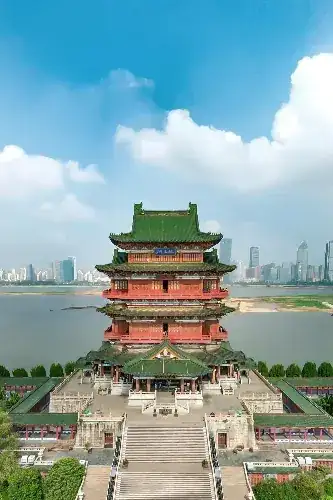
Yichun has a long history and rich cultural heritage. The Tang Dynasty writer Wang Bo's famous phrase "divine treasures and outstanding talents" in the Preface to the Pavilion of Prince Teng references people, events, and objects from Yichun. Han Yu, who served as prefect here, wrote "Do not think Yichun is far, its rivers and mountains invite many a pleasant outing." The city has 486 historical cultural sites and 54 scenic spots. Three of the five major Chan Buddhist sects originated in Yichun.
Cuisine
Yichun cuisine is predominantly spicy, with a fondness for ginger (pickled ginger eaten as snack). Representative dishes: Cihua Chicken, Nanmiao Tofu, Binjiang Beef.
Customs
Spring Ox Picture (Chunniu Tu): Around the Beginning of Spring, farmers receive spring ox pictures showing a herd boy driving an ox, with the year's solar terms and auspicious phrases. The boy's position relative to the ox indicates whether spring falls before, during, or after the Lunar New Year.
Bench Dragon (Bandeng Long): In Fengcheng, bench dragons are made of bamboo lanterns strung together. In Yuanzhou's Mingyue Mountain, dragons have complete heads, bodies, and tails with detailed decorative features, carried by hundreds of people in processions extending hundreds of meters during Mid-Autumn and Lantern Festival.
Bullfighting Festival: In Gao'an, a 400-year-old tradition of bullfighting during the Dragon Boat Festival period, originating from a rivalry between two wealthy families.
"Living Water" Dragon Boat Ceremony: A thousand-year-old tradition of the Dragon Boat Festival, listed as provincial intangible cultural heritage in 2011. After the "living water" ceremony, dragon boat teams paddle upstream along the Yuan River system to their villages.
Scholar Culture (Zhuangyuan)
Yichun has produced multiple top imperial examination scholars (zhuangyuan): Lu Zhao (843 CE, Jiangxi's first zhuangyuan), Yi Zhong (845 CE), Yao Mian (1253 CE, Yifeng), Zhu Shan (1372 CE, Fengcheng), and Liu Zizhuang (1649 CE, Qingjiang). The saying "half of Jiangxi's jinshi are from Yuanzhou" reflects the region's scholarly prominence.
Hot Spring Culture
All 10 county-level areas have hot springs (19 known occurrences—"Ten Springs, Ten Beauties"). The Wentang selenium-rich hot spring in Mingyue Mountain has 2,000+ years of history, with 10,000+ tonnes daily output at 68–72°C year-round—"the First Selenium Spring in China."
Chan Buddhist Culture
Yichun holds a uniquely prominent position in Chan Buddhist history. Three of the five major Chan sects originated here: Linji (at Huangbo, Yifeng), Caodong (at Dongshan, Yifeng), and Weiyang (at Yangshan, Mingyue Mountain). The famous phrase "Mazu established monasteries, Baizhang established rules" comes from Baofeng Temple (Jing'an) and Baizhang Temple (Fengxin).
Moon Culture
Mingyue (Bright Moon) Mountain is the origin of Yichun's moon culture. The city has hosted the annual Moon Culture Festival since 2007, with activities including Mid-Autumn moon worship, fire dragon moon-chasing, and lotus lantern floating. CCTV's 2009 Mid-Autumn Gala was held in Yichun.
Red Culture
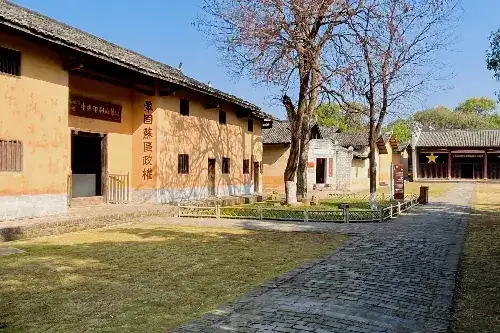
Tonggu County is a "National Red Tourism Classic Scenic Area." The Autumn Harvest Uprising Memorial and the Hunan-Hubei-Jiangxi Revolutionary Martyrs Cemetery recreate the historic scenes of Mao Zedong's Autumn Harvest Uprising. Wanzai County was a red base area where Peng Dehuai and Teng Daiyuan operated for years. Shanggao County was the site of the Battle of Shanggao.
Cultural Relics
Yuanzhou Observatory: The world's oldest surviving local astronomical observatory. Wucheng Shang Dynasty Site (Zhangshu): Rewrote the academic consensus that "Shang culture did not cross the Yangtze." Jing'an Eastern Zhou Tomb: One of China's top 10 archaeological discoveries of 2007. Tianbao Ancient Village (Yifeng): "Jiangxi's First Ancient Village" with 2.5 km of surviving moat and 1.5 km of ancient city wall. 19 national key cultural heritage units and 100 provincial units.
Intangible Cultural Heritage
As of June 2022: 9 national, 89 provincial, 211 municipal, 508 county-level items. 11 provincial production protection bases, 7 transmission/research bases.
City Symbols
City tree: osmanthus tree (sweet olive)—widely planted, evergreen, symbolizing auspiciousness and hospitality, linked to the "Moon Capital" cultural identity. City flower: Huamulian (Manglietia decidua)—a rare species endemic to Yichun, listed as a national Class I protected plant, the only one of its kind in the world.
Scenic Spots
Overview
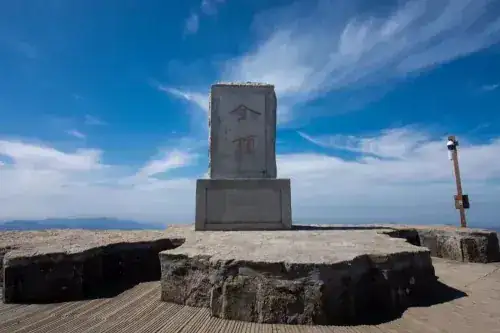
As of June 2022: 1 national 5A scenic area, 21 national 4A scenic areas, 91 provincial rural tourism sites, 3 national key rural tourism villages, 3 national red tourism classic scenic areas, 1 national cultural industry demonstration base.
Important Attractions
External Exchange
Famous Figures
Important Honors
Travel information can change. Check current opening hours, reservations and entry requirements before you travel.
Traveller discussion
Start the conversation with a helpful tip or a question.