
Pingxiang City
Pingxiang CityPingxiang is a prefecture-level city in Jiangxi Province and an important member of the urban agglomeration in the middle reaches of the Yangtze River. Located in western Jiangxi, it borders Yichun and Ji'an to the east, Ji'an
Pingxiang City
Pingxiang is a prefecture-level city in Jiangxi Province and an important member of the urban agglomeration in the middle reaches of the Yangtze River. Located in western Jiangxi, it borders Yichun and Ji'an to the east, Ji'an and Zhuzhou (Hunan) to the south, Zhuzhou to the west, and Liuyang (Hunan) to the north. The terrain is complex, with a subtropical humid monsoon climate and four distinct seasons. Total area: 3,823.99 square kilometers. As of January 2023, the city administers 2 districts and 3 counties. As of the end of 2024, the permanent resident population was 1,797,000, with an urbanization rate of 70.80%. Pingxiang is known as the "West Gate of Jiangxi," occupying a central position in the Ganxi economic development framework, historically called the "Thoroughfare between Hunan and Jiangxi" and the "Throat of Wu and Chu." The city is within the radiation core of the Changsha-Zhuzhou-Xiangtan Economic Circle. The Shanghai-Kunming Railway crosses the city, connecting to the Beijing-Guangzhou and Beijing-Kowloon trunk lines. The urban center is only 120 km from Changsha Huanghua Airport. Anyuan in Pingxiang was an early focal area for the Chinese Communist Party; Mao Zedong visited Pingxiang and Anyuan 9 times. Anyuan saw the birth of the CCP's first industrial worker branch and the first group of the Chinese Socialist Youth League. In 2025, GDP was 127.604 billion yuan, up 5.3%.
History
Human activity dates back 5,000+ years to the Neolithic period with the Sanmiao tribe. During the Western Zhou Dynasty (1046–771 BCE), it belonged to Yangzhou. During the Spring and Autumn period (770–476 BCE), to the Wu State. During the Warring States period (475–221 BCE), to Chu. During the Qin Dynasty (221–206 BCE), under Jiujiang Commandery. In 267 CE, during the Three Kingdoms period, Pingxiang County was established. During the Tang Dynasty (618–907), the county seat moved to Fenghuangchi (present-day urban area). The Song, Yuan, Ming, and Qing dynasties maintained it under Yuanzhou. In 1970, it was elevated to a prefecture-level city. In 1992, Lianhua County was transferred from Ji'an Prefecture to Pingxiang.
Administrative Divisions
Divisional History
In 1971, four districts were established. In 1993, Chengguan District was renamed Anyuan District. In 1997, Shangli District became Shangli County and Luxi District became Luxi County. In 2016, the municipal government moved to Yuhu East Road, Baiyuan Sub-district, Anyuan District.
Division Details
As of January 2023: 2 districts (Anyuan, Xiangdong), 3 counties (Luxi, Shangli, Lianhua). 28 towns, 19 townships, 9 sub-districts, 136 community committees, 640 village committees. Government: Yuhu East Road, Baiyuan Sub-district, Anyuan District.
Geographical Environment
Location and Boundaries
Western Jiangxi, due west of Nanchang. Between 26°57′–28°01′N and 113°35′–114°17′E. North-south: 127 km; east-west: 67 km. Total area: 3,823.99 km².
Landforms
Located in the Jiangnan hilly region with complex terrain of interlocking mountains, hills, and basins. Wugong Mountain to the east/south is the highest at 1,918.3m (main peak Jinding)—the city's highest peak. Yangqi Mountain to the north reaches 947.6m. The central area has rolling hills with the dividing ridge between the Yuan River (Ganjiang system) and Lushui River (Xiangjiang system). The lowest point is at 65.4m in western Pitouzhou. The overall terrain is a saddle shape: high in north and south, slightly lower in the center.
Climate
Subtropical humid monsoon climate with four distinct seasons, mild temperatures, ample sunlight, short frost period, and long growing season. Spring (70 days): humid and mild but variable. Summer (99 days): hot with frequent showers and thunderstorms. Autumn (61 days): cool, dry, with little rain. Winter (135 days): cold with frequent rain/snow. Summer is the peak rainfall season; autumn transitions often bring drought.
Hydrology
The water system belongs to both the Dongting Lake and Poyang Lake systems of the Yangtze basin. Five main rivers: Pingshui, Lishui, Caoshui, Yuanshui, and Lianshui. Yuanshui and Lianshui originate from the Luoxiao Mountains and Wugong Mountain, flowing into the Ganjiang River. Pingshui, Lishui, and Caoshui originate between Wugong Mountain and Yangqi Mountain, flowing into the Xiangjiang River.
Natural Resources
Water Resources
Five main rivers with a total drainage area of 3,877.5 km². 203 reservoirs of all types (6 medium, 27 small-I, 170 small-II), with 209 million m³ total effective storage capacity.
Animal Resources
40 mammal species (leopard, wolf, Siberian weasel, large Indian civet, small Indian civet, masked palm civet, wild goat, hedgehog, pangolin, Chinese hare, bamboo rat, wild boar, water deer, macaque, Tibetan macaque, bat). 18 reptile species (turtle, big-headed turtle, softshell, gecko, grass lizard, viper, bamboo viper, ratsnake, cobra, pit viper, banded krait). 9 amphibian species (Chinese giant salamander, toad, tree frog, tiger frog, black-spotted frog, bullfrog). 173 bird species (swallow, goose, nightjar, magpie, cuckoo, silver pheasant, woodpecker, oriole, sparrow, thrush, owl, kingfisher, mandarin duck, crane, etc.). National Class I protected: leopard, clouded leopard, Cabot's tragopan, white-necked long-tailed pheasant. Class II: 12 species. Provincial protected: 17 species.
Plant Resources
Gymnosperms: 9 families, 20 genera, 30 species. Angiosperms: 157 families, 645 genera, 1,295 species. 7 national Class I protected plant species (ginkgo, dawn redwood, Amentotaxus, southern yew, cycad, Bretschneidera sinensis). 12 Class II protected species. 42 provincial Class III protected species.
Mineral Resources
44 useful mineral types discovered: coal, iron (hematite, magnetite, limonite, manganese), copper, molybdenum, tungsten, tin, lead, zinc, cobalt, antimony, arsenic, mercury, gold, silver, limestone, dolomite, quartz powder, kaolinite, refractory clay, talc, sepiolite, bentonite, tremolite, marble, granite, pyrite, chrysanthemum stone, gypsum, silica, and mineral water. 285 mineral occurrences, 87 proven industrial deposits (6 medium, 81 small, 162 occurrences, 36 mineralized points).
Population
Population Numbers
As of end 2024: 1,797,000, urbanization rate 70.80%. As of end 2023: 1,801,600 (down 7,200). Urban: 1,268,700 (70.42%, up 1.06 percentage points). Birth rate: 6.56‰; death rate: 8.47‰; natural growth rate: -1.91‰. Sex ratio: 103.95. Age structure: 0–15: 19.12%, 16–59: 59.49%, 60+: 21.39%.
Ethnic Composition
32 ethnic groups including Han, Mongolian, Hui, Tibetan, Uyghur, Miao, Yi, Zhuang, Bouyei, Korean, Manchu, Dong, Yao, Bai, Tujia, Hani, Dai, Li, Lisu, Va, She, and others.
Politics
Economy
Overview
In 2025, GDP was 127.604 billion yuan (up 5.3%). Primary: 7.98 billion (up 2.7%); secondary: 48.135 billion (up 6.2%); tertiary: 71.488 billion (up 5.0%). General public budget revenue: 11.766 billion (up 2.0%). Fixed asset investment grew 3.1%. Urban per capita disposable income: 48,739 yuan (up 3.9%); rural: 27,462 yuan (up 5.8%). CPI: +0.1%.
Primary Industry
In 2025: agricultural output 12.908 billion yuan (up 3.1%). Vegetables: 776,400 tonnes (up 3.5%). Fruits: 32,200 tonnes (up 7.3%). Aquatic products: 47,500 tonnes (up 4.9%). Eggs: 18,400 tonnes (up 28.4%). Pig slaughter: 1.1597 million (up 2.5%).
Secondary Industry
In 2025: above-designated-size industry grew 7.7%. 22 of 34 industry categories grew (64.7%). Non-metallic mineral products +15.8%, food manufacturing +20.7%, automobile manufacturing +51.6%. Four new growth industries grew 14.9% (electronic information +7.6%, food +10.1%, new materials +12.0%, intelligent manufacturing +25.9%). 6 industrial parks with 700 enterprises, revenue 92.195 billion (up 6.0%). Construction: output 22.057 billion (up 1.2%).
Tertiary Industry
In 2024: service industry grew 4.5%. Wholesale/retail +7.8%, accommodation/catering +4.7%, financial +5.9%, for-profit services +11.2%. In 2025: retail sales 53.789 billion (up 5.3%). Online retail +45.0%. Financial deposits: 244.947 billion (up 10.4%); loans: 225.197 billion (up 8.9%). Insurance premiums: 3.891 billion (up 4.9%).
Social Undertakings
Science and Technology
In 2023: 1,497 patents authorized (242 invention, down 17.7%). 1,246 valid invention patents (6.92 per 10,000 people, up 1.27).
Education
In 2023: higher education enrollment 16,565 (53,262 total); general high school 13,415 (41,112); junior high 24,685 (75,204); primary 22,596 (141,643); secondary vocational 6,216 (19,792). Kindergarten: 52,231. Notable institutions: Pingxiang University, Jiangxi Industrial Engineering Vocational College, Jiangxi Applied Engineering Vocational College, Pingxiang Health Vocational College.
Culture
As of end 2023: 2 performing troupes, 6 cultural centers, 6 public libraries, 7 museums. 4 radio stations, 4 TV stations. 100% TV coverage. National Class I libraries: Pingxiang City Library, Lianhua County Library.
Healthcare
As of end 2023: 1,495 medical institutions (85 hospitals/health centers, 6 maternal/child centers, 17 disease prevention centers, 6 health supervision institutes). 19,623 health workers (4,961 physicians, 978 assistant physicians, 7,793 nurses). 13,158 beds.
Sports
As of end 2023: 11 youth clubs, 1,170 fitness activity sites, 765 rural sports fitness projects. 2 million annual fitness participants.
Social Security
In 2023: 1.127 billion yuan in entrepreneurship guarantee loans, supporting 4,517 entrepreneurs and 26,000 jobs. Employee pension: 653,700 (up 6.12%). Unemployment insurance: 187,400. Urban minimum living allowance: 184 million yuan (573 yuan/month per capita); rural: 350 million yuan (441 yuan/month). 80 residential welfare institutions (77 elderly care), 10,095 beds. Welfare lottery: 107 million yuan.
Transportation
Transportation Data
In 2023: railway freight 4.692 million tonnes (down 5.8%); railway passengers 4.98 million (down 25.0%). Highway freight 57.97 million tonnes (up 5.0%); highway passengers 4.58 million (down 60.3%). Total highway mileage: 9,108 km (197 km expressways). 321,600 civilian automobiles (up 4.3%). Postal revenue 739 million yuan (up 14.9%). 1.981 million mobile phone users.
Highways
Pingxiang is the Gan-Xiang transportation hub. National Highways 319, 320, and 322, plus expressways G60 (Shanghai-Kunming), G72 (Quannan), S89 (Shanglian), and S38 (Changli), form a "grand cross" trunk network.
Railways
The Shanghai-Kunming Railway crosses east-west. The Shanghai-Kunming High-Speed Railway (opened 2014) has Pingxiang North Station, reaching Shanghai in 3 hours, Wuhan/Guangzhou in 4 hours, Nanchang in under 1 hour, and Changsha in 30 minutes. Main railways: Shanghai-Kunming Railway, Shanghai-Kunming High-Speed Railway, Ji-Heng Railway.
Historical Culture
City Symbols
City tree: camphor tree (designated 2017). City flower: azalea/rhododendron (designated 2017).
Dialect
Pingxiang dialect is a transitional dialect between Gan and Xiang Chinese, originating from the Chu State. It features unique characteristics influenced by neighboring dialects: Xuanfeng influenced by Yichun, Matian/Zhangjiafang by Anfu, Shangli by Liuyang, Laoguan by Liling. The city's dialect sits between Luxi, Xiangdong, and Shangli dialects, softer and more melodious than surrounding variants.
Intangible Cultural Heritage
As of 2017: 4 national and 20 provincial intangible cultural heritage items.
Religion
Yangqi Mountain is the birthplace of the Yangqi Sect, one of the five houses and seven schools of Chinese Chan (Zen) Buddhism, with religious cultural influence extending domestically and internationally.
Name Origin
The name "Pingxiang" dates to 267 CE. Three theories exist: (1) King Zhao of Chu obtained a pingshi (duckweed fruit) here; (2) the area had abundant duckweed plants; (3) the name was brought by northern migrants from Pingxiang in the Central Plains. The first theory, from the Confucian Family Sayings, tells of King Zhao of Chu finding a red, sweet fruit floating on a river, which Confucius identified as the auspicious "pingshi." The area was thus called "Pingshili" (Duckweed Fruit Village), later shortened to Pingxiang.
Scenic Spots
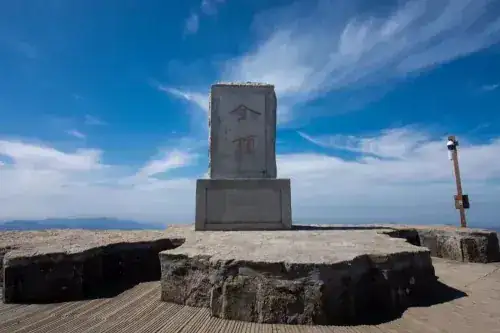
Wugong Mountain Scenic Area: National 5A scenic area, national key scenic area, national geopark, national natural heritage, national forest park. Located at the junction of Pingxiang, Yichun, and Ji'an, in the northern Luoxiao Mountains. Main peak Baihe (White Crane) at 1,918.3m. Total area: 183 km², forest coverage 88.1%. Designated as provincial scenic area in 1985, national scenic area in 2005, national 5A in 2020. Features alpine meadow grasslands—known as "the grassland above the clouds."
Yangqi Mountain: Birthplace of the Yangqi Sect of Chan Buddhism, and source of the Lishui and Pingshui rivers. Provincial scenic area (1995), national 4A scenic area (2014), national key scenic area (2017). Includes Yangqi Putong Temple, Nielong Cave, and Fengming Lake across 57.2 km².
Nielong (Evil Dragon) Cave: A natural limestone cave in Shangli County, formed 180 million years ago. Total length: 4.2 km, constant temperature 18°C. Over 100 scenic features including the "Cave Waterfall" (9m high, 7m wide). Legend says the cave imprisoned an evil dragon from Poyang Lake, subdued by Daoist master Xu Zhenjun.
Yangqi Putong Temple: Founded in 753 CE by Chan Master Chengguang. In the Song Dynasty (960–1279), Master Fanghui established the Yangqi Sect here—one of the five houses of Linji Chan Buddhism. Calligraphy by Zhao Puchu (former president of the Buddhist Association of China) graces the temple plaque.
Pingxiang Confucian Temple: Among the earliest of China's 22 known Confucian temples and the best-preserved in Jiangxi. Originally built during the Tang Dynasty (618–907), rebuilt in 1734 during the Qing Dynasty (1644–1912). Provincial cultural heritage site since 1987. Previously housed the Pingxiang Museum, including a rare giant 1,000-year-old lingzhi mushroom and Cretaceous dinosaur egg fossils.
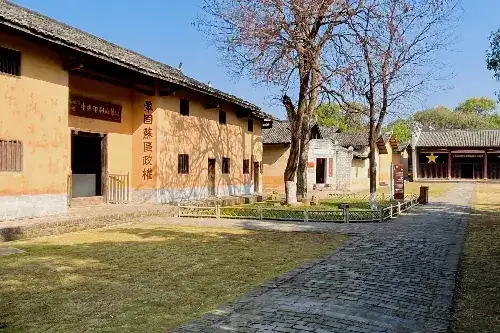
Anyuan Railway and Mine Workers' Movement Memorial: National Class I museum in Anyuan District, 6 km from downtown. Founded in 1956, the current building opened in 1969. commemorates the historic Anyuan workers' movement. 200 mu site, 3,245 m² building area.
Anyuan Jinxiu City: A film/TV production set recreating 1920s–30s Anyuan streetscape, including teahouses, opium dens, ancestral halls, and worker's clubs.
Famous Figures
Honorary Titles
Travel information can change. Check current opening hours, reservations and entry requirements before you travel.
Traveller discussion
Start the conversation with a helpful tip or a question.