
Quanzhou City
Quanzhou CityQuanzhou City, abbreviated as "Li," also known as Citong City (Zaiton) and Wenling, is a prefecture-level city under Fujian Province, a city in the Xiamen-Zhangzhou-Quanzhou Metropolitan Circle. Located on the southeastern Fuji
Quanzhou City
Quanzhou City, abbreviated as "Li," also known as Citong City (Zaiton) and Wenling, is a prefecture-level city under Fujian Province, a city in the Xiamen-Zhangzhou-Quanzhou Metropolitan Circle. Located on the southeastern Fujian coast, it borders Fuzhou and Putian (north), Xiamen (south), Taiwan (east), and Zhangzhou, Longyan, Sanming (west). Land area: 11,295.57 square kilometers. As of end 2024: 4 districts, 5 counties, 3 county-level cities. Population: 8,914,000 (#1 in Fujian). Quanzhou is a first-batch National Historical and Cultural City, first "East Asian Culture Capital," and UNESCO World Heritage site ("Quanzhou: Emporium of the World Ocean Trade Center in Song-Yuan China," 2021). It is the birthplace of Minnan culture, Southern Shaolin martial arts, a famous overseas Chinese hometown, and the main ancestral homeland of Taiwan's Han population. It created the "Quanzhou Model" of economic development. In 2025, the gross regional product was 1,377.834 billion yuan, up 5.3%.
Name Evolution
During the Western Jin's Yongjia era, Central Plains people fled south along the river, giving it the name "Jinjiang" (Jin River). In 684, Wurong Zhou was established. In 711, renamed Quanzhou after Quanshan (Spring Mountain) north of the city.
History
Pre-Qin Period
Economic development since Zhou-Qin period. Xia-Shang: Yangzhou. Western Zhou: Seven Min. Late Spring and Autumn to early Warring States: Yue territory. After Yue's fall in 323 BC, Yue people migrated to Min.
Qin-Han to Northern and Southern Dynasties
In 221 BC, Minzhong Commandery established. In 202 BC, Wuzhu enfeoffed as King of Minyue. In 110 BC, Han abolished Minyue. In 85 BC, Ye County established under Kuaiji Commandery. In 260, Eastern Wu established Jian'an Commandery, setting up Dong'an County (first county in the Quanzhou area). In 282, Western Jin established Jin'an Commandery. In 502-519, Southern Liang established Nan'an Commandery.
Sui-Tang to Song-Yuan
In 589, Fengzhou renamed Quanzhou (first appearance of "Quanzhou" in history, seat at present-day Fuzhou). In 711, Wurong Zhou renamed Quanzhou (referring to present-day Quanzhou). In 718, Jinjiang County established. Tang: 5 counties. Five Dynasties: 6 counties. Song: 7 counties by 981. In 1086, Zhu Xi lectured in Quanzhou. Yuan: Quanzhou Route, seat of Fujian Province at times, with Penghu patrol office established (1290) governing Penghu and Taiwan.
Ming-Qing
In 1369, Quanzhou Route became Quanzhou Prefecture. Ming mid-period: Taiwan under Quanzhou jurisdiction. Qing: In 1734, Yongchun elevated to a directly administered department. In 1775, Maxiang Department established. Quanzhou Prefecture governed 5 counties and 1 department.
Republic of China
1912: prefectures/departments abolished. 1913-1949: multiple administrative reorganizations. 1933: Fujian Incident, Xingquan Province established (abolished 1934). 1937: Japanese occupied Kinmen. 1949: liberation (August-September).
After the Founding of the People's Republic of China
1950: renamed Quanzhou Administrative Inspection District, then Jinjiang District. 1951: Quanzhou City (county-level) established. 1955: Jinjiang Commissioner's Office. 1968: Jinjiang Special District Revolutionary Committee. 1971: renamed Jinjiang Region. 1985: prefecture-level Quanzhou City established, county-level Quanzhou became Licheng District. 1987: Shishi City established. 1992: Jinjiang City established. 1997: Fengze and Luojiang districts established. 2000: Quangang District established. 2010: Quanzhou Taiwan Merchant Investment Zone established (national level, 2012).
Natural Geography
Location
Southeastern Fujian coast, between 117°25'-119°05' E and 24°22'-25°56' N. Spans 153 km east-west, 157 km north-south. Nearest point to Taiwan: 97 nautical miles. Land: 11,295.57 km². Sea: 11,360 km².
Climate
Subtropical oceanic monsoon climate. "Four seasons with flowers and frequent rain, one winter without snow but thunder." Average: 18.3-21.3°C. Extreme maximum: 40.4°C (Anxi). Extreme minimum: -13.6°C (Dehua Jiuxian Mountain). Annual precipitation: 1,132-1,823.8 mm (increasing from SE coast to NW mountains). Maximum: 2,515.2 mm (Yongchun, 1990). Minimum: 650.9 mm (Chongwu, 1991). Average rainy days: 150.5/year.
Geology
Southeastern part of the South China Fold System, central-southern section of the Mindong Volcanic Fault Depression. 80%+ of area covered by Mesozoic volcanic and intrusive rocks. Daiyun Mountains (main peak 1,856m, Fujian's 2nd highest) run NE-SW in the northwest.
Topography
NW high, SE low, descending from medium mountains through low mountains, hills, terraces, to plains. Mountains/hills: 79% of total. Coastline: 421 km (12.7% of provincial total), tortuosity ratio 1:5.03.
Hydrology
34 streams, 1,620 km total. 35 rivers with basins over 100 km². 3 main rivers: Jinjiang (Quanzhou's largest, 404.8 km, 5,629 km² basin), Luoyangjiang, Dazhangxi. 466 reservoirs (2 large, 17 medium, 91 small-I, 356 small-II).
Soil
10 soil types. Red soil: 52.77% (largest, in mid-low mountains and high hills). Paddy soil, latosolic red soil, yellow soil also significant.
Natural Disasters
Typhoons: main hazard (7-9 months, average 5.7/year, max 8 in 1961). 1999: 19 deaths, 1.59 billion yuan direct losses. Heavy rain: average 6.0 times/year, max 17 days (Anxi, 1990). 1997 May: 32 deaths, 320 million yuan losses. 1,504 geological hazard points, 5,902 steep slopes, threatening 13,615 households/51,232 people/820.84 million yuan property.
Natural Resources
Water Resources
Surface water: 8.76 billion m³. Available: 1.456 billion m³. Hydropower potential: 430,000 kW. 2023: urban water supply 480.83 million m³. 12 drinking water sources: 100% Class III compliance. Main streams: 100% Class I-III. Near-shore: 91.7% Class I-II.
Land Resources
Forest: ~6,773 km² (60% of total, largest category). Cultivated: ~1,923 km² (17.3%). 2019 survey: cultivated 102,173 hectares, orchard 130,417, forest 620,980, grassland 11,431, wetland 26,371, construction 157,254, transportation 31,151, water 31,811.
Mineral Resources
46 mineral types discovered, 29 with proven reserves (2 energy, 8 metallic, 18 non-metallic, 1 water-gas). 339 mining sites (13 large, 27 medium, 299 small). Main: iron, manganese, copper, lead, zinc, molybdenum, gold, silver, coal, pyrite, limestone, pyrophyllite, wollastonite, alunite, fluorite, graphite, kaolin, ceramic clay, granite, diabase, quartz, sand, geothermal, mineral water.
Biological Resources
32 amphibian, 61 reptile, 314 bird, 32 mammal species. 28 national Class I protected (clouded leopard, leopard, tiger, black muntjac, pangolin, dhole, large civet, small civet, golden cat, black stork, ibis, eagle, yellow-bellied pheasant, white-crowned pheasant, white crane, etc.). 84 Class II protected. 2024: 480 terrestrial vertebrate species (28 orders, 85 families). 2025: white-throated flycatcher first recorded (403rd bird species). 2026: Northern Boobook owl (421st bird species). 104 national I/II protected birds (25.8% of total, #1 in Fujian).
2,497 wild vascular plant species (191 families, 1,003 genera). 18 national protected plant species (1 Class I: tree fern; 6 Class II; 11 Class III). Forest standing timber: 43.385 million m³. 5 nature reserves (2 national: Shenhu Bay submarine ancient forest, Daiyun Mountain; 3 provincial). 24 forest parks (1 national, 23 provincial). 2.35 million hectares total. Quanzhou Bay Wetland Reserve: 7,065.31 hectares, 3 mangrove species at Pacific western coast's northern limit, 197 bird species, 61 nationally protected animals. Shenhu Bay: 2,700 hectares, 7,000+ year old submarine ancient forest and 9,000-25,000 year old oyster reef, China's only national reserve for submarine ancient forest.
Administrative Divisions
As of end 2024: 4 districts (Licheng, Fengze, Luojiang, Quangang), 5 counties (Hui'an, Anxi, Yongchun, Dehua, Jinmen [pending reunification]), 3 county-level cities (Jinjiang, Shishi, Nan'an), plus 1 economic development zone and 1 Taiwan merchant investment zone. City Government at Building 2, Donghai Administrative Center.
Politics
Population
Population Size
As of end 2024: 8,914,000 (#1 in Fujian, +31,000). Urban: 6,346,000 (71.19%). Male: 4,673,000, female: 4,241,000 (ratio 110.2). 0-15: 19.7%, 16-59: 64.6%, 60+: 15.7%, 65+: 10.9%. Birth rate: 7.70 per mille; death rate: 7.08 per mille; natural growth: 0.62 per mille. Registered elderly (60+): 1,364,500. Centenarians: 593, oldest: 116.
Ethnic Groups
56 ethnic groups (Han 96.47%, minorities 3.53%). Main minorities: Hui (Jinjiang, Taiwan Investment Zone, Quangang), She (Nan'an, Anxi, Quangang), Tujia (Jinjiang, Nan'an).
Language
Mandarin Chinese as common language, Minnan (Southern Min) as main local dialect, with Puxian and Hakka also present. Quanzhou is the birthplace of Minnan language. Quanzhou prefectural city speech (literary pronunciation) serves as one of the standard pronunciations of Minnan. Minnan is called "living fossil of ancient Chinese."
Religious Beliefs
"World Museum of Religions." 5 major religions all present. 40 registered religious organizations, 898 venues (466 Buddhist, 223 Taoist, 2 Islamic, 6 Catholic, 201 Protestant). 6,962 folk belief venues (10+ m² each), 128 managed pilot points. 1,621 clergy. ~700,000 believers (~10% of population, excluding folk beliefs).
Economy
Overview
"Quanzhou Model": market-oriented, private economy + export-oriented economy mutually reinforcing, county-level economy prominent, branding as advantage. One of China's 18 reform and opening typical regions. Specialty industries: Jinjiang "China Shoe Capital," Shishi "China Clothing City," Nan'an "China Building Materials Hometown," Quangang petrochemical base, Hui'an "World Stone Carving Capital," Dehua "World Ceramic Capital," Anxi "World Vine Iron Craft Capital." In 2024: GDP 1,309.487 billion yuan, up 6.5%. By industry: primary 26.367 billion (2.0%), secondary 677.489 billion (51.8%), tertiary 605.632 billion (46.2%). Per capita: 147,158 yuan. In 2025: 1,377.834 billion yuan, up 5.3%.
Primary Industry
Modern agriculture: tea, vegetables, mushrooms, fruits, livestock, aquaculture, flowers. 10 specialty industries with total chain output value exceeding 200 billion yuan. Brands: Anxi Tieguanyin tea, Yongchun citrus, Dehua "three blacks, three yellows, three treasures." 2024: total agricultural output 48.738 billion yuan, up 4.0%. Grain: 516,000 tons. Aquaculture: 1,149,300 tons (+4.4%).
Secondary Industry
National 9 major refining bases. 5 "China Top 100 Industrial Clusters" (bags, sports shoes, casual clothing, hardware/sanitary, ceramics). "Quanzhou Chip Valley" Nanan sub-park: national first compound semiconductor high-tech park. 2024: industrial added value up 7.2%. Above-scale up 7.8% (light +9.8%, heavy +4.9%; 26/36 industries growing). Textiles +12.1%, leather/shoes +15.1%, chemical fiber +27.8%, non-metallic +15.4%, electronics +15.7%. Profits +9.5%.
Tertiary Industry
Modern logistics hub (national logistics hub city). 2024: wholesale/retail 212.289 billion (+10.6%), finance 51.707 billion (+1.1%), real estate 50.727 billion (-10.7%). Total retail sales: 616.407 billion (+5.2%). Foreign trade: 271.501 billion yuan (+4.5%). Belt and Road trade: 184.179 billion (+3.5%). Total deposits: 1,255.8 billion (+4.9%). Total loans: 1,226.474 billion (+5.1%). Insurance: 31.061 billion (+5.4%).
Economic Functional Zones
Quanzhou Economic Development Zone: national level (2010), 31.5 km², "one zone, four parks," UNIDO "Green Development Zone."
Social Affairs
Education
18 full-time universities. 89 qualified high schools (#1 in Fujian). 138 high schools, 41 vocational, 198 junior high, 1,178 primary, 1,548 kindergartens. Compulsory education consolidation: high. 312,200 migrant children in compulsory education.
Healthcare
5,697 health institutions: 132 hospitals (40 public, 92 private), 5,520 grassroots (125 township, 41 community, 1,831 clinics, 2,970 village clinics), 32 professional public health (13 CDCs, 13 maternal/child). 59,603 health workers (23,478 physicians, 26,170 nurses). 50,043 actual beds (35,309 hospitals, 10,154 township).
Science and Technology
2 provincial innovation labs, 11 provincial key labs. 11 national makerspaces, 94 provincial, 131 municipal. 24 incubators. 3,100 high-tech enterprises, 1,614 technology-based SMEs. 37,901 patent authorizations (4,659 inventions). 20,823 valid invention patents (23.36 per 10,000). 1,414 technology contracts worth 2.016 billion yuan. 811,600 valid trademarks (159 well-known, national #1).
Culture
12 art troupes, 1 mass art center, 11 cultural centers, 19 museums, 163 cultural stations, 13 public libraries (12.41 million volumes + 4.56 million electronic). 80 cinemas, 418 screens. Radio/TV coverage: 99.96%.
Sports
29,023 sports venues (2,699.05 million m², 3.04 m² per capita). 7 athletes + 1 coach at Paris Olympics: 1 gold, 1 silver, 1 Olympic record broken. Lottery: 3.206 billion yuan.
Environmental Protection
All cities/counties meet Class II air quality. 351 excellent days (95.9%). 12 drinking water sources: 100% Class III. Main streams: 100% Class I-III. Small watersheds: 97.4% Class I-III.
Social Security
Pension: 6,423,300 (+138,200). Enterprise: 2,462,000 (+145,700). Urban-rural: 3,745,700 (-11,100). Medical: 1,290,600 employees + 5,971,100 residents. Unemployment: 1,029,400. Work injury: 1,693,800. Maternity: 993,000. Urban minimum living: 10,257. Rural: 82,213. 56,437 elderly care beds. 2,561 community stations. Lottery: 1.635 billion yuan.
Transportation
Overview
"1 ring, 2 vertical, 3 horizontal + connecting lines" expressway skeleton. Quanzhou Jinjiang International Airport: one of first 18 "Belt and Road" immigration facilitation ports. 2020: ring expressway closed. 2024: freight 407.2574 million tons (+3.4%), passengers 50.97 million (+19.1%). Port: 116.8605 million tons (-6.0%), containers 2.0425 million TEU (+6.4%).
Highways
Total: 20,081 km (+202). Expressway: 684 km. Class II+: 3,064 km. Density: 182.56 km/100 km². 89% of townships within 30 minutes of expressway. Ring expressway: 137 km (fully connected). "1 ring, 3 vertical, 2 horizontal" expressway network.
Railways
Xingquan Railway and Fuxia HSR under construction. "2 horizontal, 3 vertical" trunk railway network forming. 10 railway stations. 2024: 541.39 km total (188.36 km HSR).
Aviation
Quanzhou Jinjiang International Airport: one of Fujian's 3 international airports. Originally military (1955), converted to civilian (1996). Aviation port opened 2012. "Belt and Road" immigration facilitation port (2019). 2023: 33 airlines, 72 destinations (63 domestic, 9 international). 2024 Feb: 800,000+ monthly passengers (28-year record).
Water Transport
4 major harbors: Meizhou, Quanzhou, Shenhu, Weitou. Quanzhou Port ("Citong Port"): 1,500+ years old, ancient Maritime Silk Road starting point, "World's Largest Port" in Song-Yuan. 451.2 km coastline. 3 port areas: Quanzhou Bay, Shenhu Bay, Weitou Bay. 49 berths (14 over 10,000 tons, 3 over 100,000 tons). 41 container routes (6 international, 30 domestic). 2023: throughput 63.0284 million tons, 1.9078 million TEU.
Public Transportation
340 bus routes (+175 from 2022), 7,962.3 km. Community bus service for narrow streets (first in Fujian). "Bus + slow traffic" system: regular bus, community bus, micro-circulation bus, public bicycles. 16,000+ compliant ride-hailing vehicles. 3,244 buses, 2,520 cruising taxis, 11,712.14 million annual bus ridership.
Culture
Overview
Ancient Maritime Silk Road node, first-batch National Historical and Cultural City, first East Asian Culture Capital. Famous overseas Chinese hometown and Taiwan Han ancestral homeland. "Five South" culture: Nanyin (music), Nanxi (opera), Nan architecture, Nanquan (martial arts), Nan crafts. Opera heritage: Liyuan Opera (Song-Yuan "living fossil"), Gaojia Opera, Dacheng Opera, string puppet show. Southern Shaolin martial arts birthplace.
Food
Minnan cuisine origin. Rice as staple (sweet potato since Ming). Spring rolls (runbing): meat, carrots, cabbage, tofu, oysters. Noodle paste (mianxian hu): hand-made noodles in seafood broth. Oyster omelet (ezai jian): "gold and silver full bowl." Gelatinous sand worm (tusun dong): "marine Cordyceps," Anhai specialty.
Customs
Dragon Boat Festival: Anhai Soliolian custom, Shishi Min-Tai cross-strait water-splashing. Lantern Festival: Min-Tai Dongzhai lantern custom, Yingdu "Baba Lantern." Xunpu women's floral headdress (hairpin flower circles, Song-Yuan Arab influence). Hui'an women's clothing (ancient Baiyue + marine culture). Mid-Autumn Bobing (dice game, 6 dice, 63 pieces, "zhuangyuan" winner). Wangchuan ceremony (UNESCO 2020). Chest-slapping dance ("Oriental Disco," ancient Minyue snake totem).
Arts
Liyuan Opera: "Song-Yuan Southern Opera echo," oldest living opera tradition. String puppet show ("Jiali Opera"): Tang-Five Dynasties origin, 1,000+ years. Gaojia Opera: widest circulation in Minnan. Southern Shaolin Five Ancestor Fist: 20+ fist styles, short and practical routines. Red brick and white stone architecture with swallowtail ridges (status symbol for imperial examination success).
City Symbol
City tree and flower: Erythrina (Citong), tropical deciduous tree with bright red flowers ("flame flower"). Quanzhou has been planted with Erythrina since ancient times, hence "Citong City" and "Citong Port."
Local Specialties
Anxi Tieguanyin tea: "China Top 10 Famous Teas," Qing Dynasty origin (1725-1735), "Guanyin charm," world top 10. Lychee: "Fujian fruit champion." Longan (guiyuan): Kaiyuan Temple "Dongbi" variety with yellow tiger-stripe skin. Lao Fanzhi Wanying Shenqu: created 1733, imperial tribute, "world's effective patent medicine." Wuyi Qingyuan Tea Cake: tea + herbs, 100+ years. Yongchun Old Vinegar: one of "China's Four Famous Vinegars," 800+ day fermentation.
Cultural Relics
945 protected cultural heritage sites: 44 national, 104 provincial, 797 municipal. Including: Anping Bridge (longest ancient beam stone bridge, 2,255 m, 1138-1152), Qingjing Mosque, Kaiyuan Temple, Zheng Chenggong's tomb, Tianhou Temple, Confucian Temple. "Fujian Anxi Tieguanyin Tea Culture" listed as Globally Important Agricultural Heritage (2022).
Intangible Cultural Heritage
Only Chinese city with all 3 UNESCO "intangible cultural heritage" categories. 733 items total: 7 world-level, 36 national, 128 provincial, 333 municipal. World-level: Nanyin, Chinese wooden structure building (Minnan), watertight bulkhead Fuchuan shipbuilding, Fujian puppet show inheritor training, Wangchuan ceremony.
Other Culture
Overseas Chinese: 9.5+ million Quanzhou-origin overseas Chinese (60%+ of Fujian's total, 170+ countries). "Qiaopi" (overseas Chinese letters): 100-year archive in Quanzhou, recording politics, economics, culture, and daily life exchanges with Southeast Asia. Ming-Qing sea ban drove large-scale migration to Southeast Asia ("going to Nanyang"). Minnan culture: Minyue + Central Plains + marine + overseas Chinese cultures, with marine culture as main characteristic.
Song-Yuan (10th-14th century): Quanzhou rose as "Citong" to become "Oriental's Largest Port," World Ocean Trade Center, and Maritime Silk Road starting point. Minnan region developed outward-oriented marine economy and inclusive cultural mindset.
Scenic Spots
Overview
In Fujian's "one zone, one mountain, one line" tourism plan, Minnan Golden Triangle. 11 national, 17 provincial protected sites. 22 museums/memorials.
Important Scenic Spots
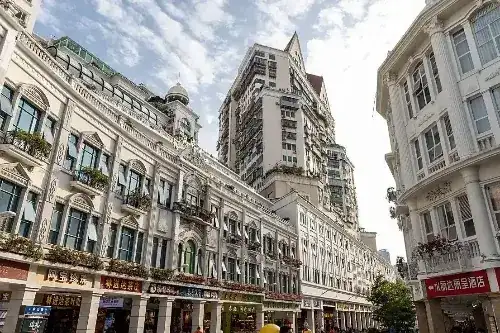
Tumen Street: 1,005 m, 13 Song-Yuan cultural relics (Qingjing Mosque, Confucian Temple, Guanyue Temple). Donghu Park: "Star Lake Lotus Fragrance" site. Anping Bridge: 2,255 m, world's longest medieval beam stone bridge ("No bridge in the world is as long"). Cai Family Mansions: 16 Qing Dynasty residences, "Minnan Architecture Grand View Garden." Quanzhou Confucian Temple: China's largest extant Confucian temple. Kaiyuan Temple: 80,000 m², Song-Yuan largest Buddhist temple with East-West stone pagodas. Chongwu Ancient City: China's best-preserved T-shaped stone-walled city. Luoyang Bridge: China's first sea-crossing beam stone bridge (1053-1059, "First Bridge Under Heaven"). Yongchun Niumulin: "Minnan Xishuangbanna," best-preserved primeval forest. Anxi Qingshui Rock: 950+ years, "Qingshui Master" cultivation site, "Emperor"-shaped temple on cliff. Golden Coast (Shishi): provincial top 10 scenic area. West Lake Park: Fujian's tallest water music fountain. Shenhu Bay: national submarine ancient forest reserve. Daiyun Mountain: "Central Fujian Roof," 1,856m peak, Fujian's highest. Jiuxian Mountain: "Strange as Huangshan, beautiful as Taishan, peril as Huashan." Shiniu Mountain: 1,782m, ancient volcanic crater, natural volcanic model. Qingyuan Mountain: "First Mountain of Minhai Penglai." Tianhou Temple: largest extant Mazu temple, 1196 origin. Xianggong Mountain: 758.5m, 25 km², "Eight Min Matchless Scenic Spot." Daixian Waterfall: "East China's First Waterfall." Zhongshan Road: 2,392 m, China's best-preserved arcade commercial street, national historical-cultural street.
External Exchange
Famous People
Important Honors
Travel information can change. Check current opening hours, reservations and entry requirements before you travel.
Traveller discussion
Start the conversation with a helpful tip or a question.