
Huangshan City
Huangshan CityHuangshan City, abbreviated "Huang" or "Hui," is a prefecture-level city at the southernmost tip of Anhui Province, at the junction of Anhui, Zhejiang, and Jiangxi provinces, covering a total area of 9,678 square kilometers. A
Huangshan City
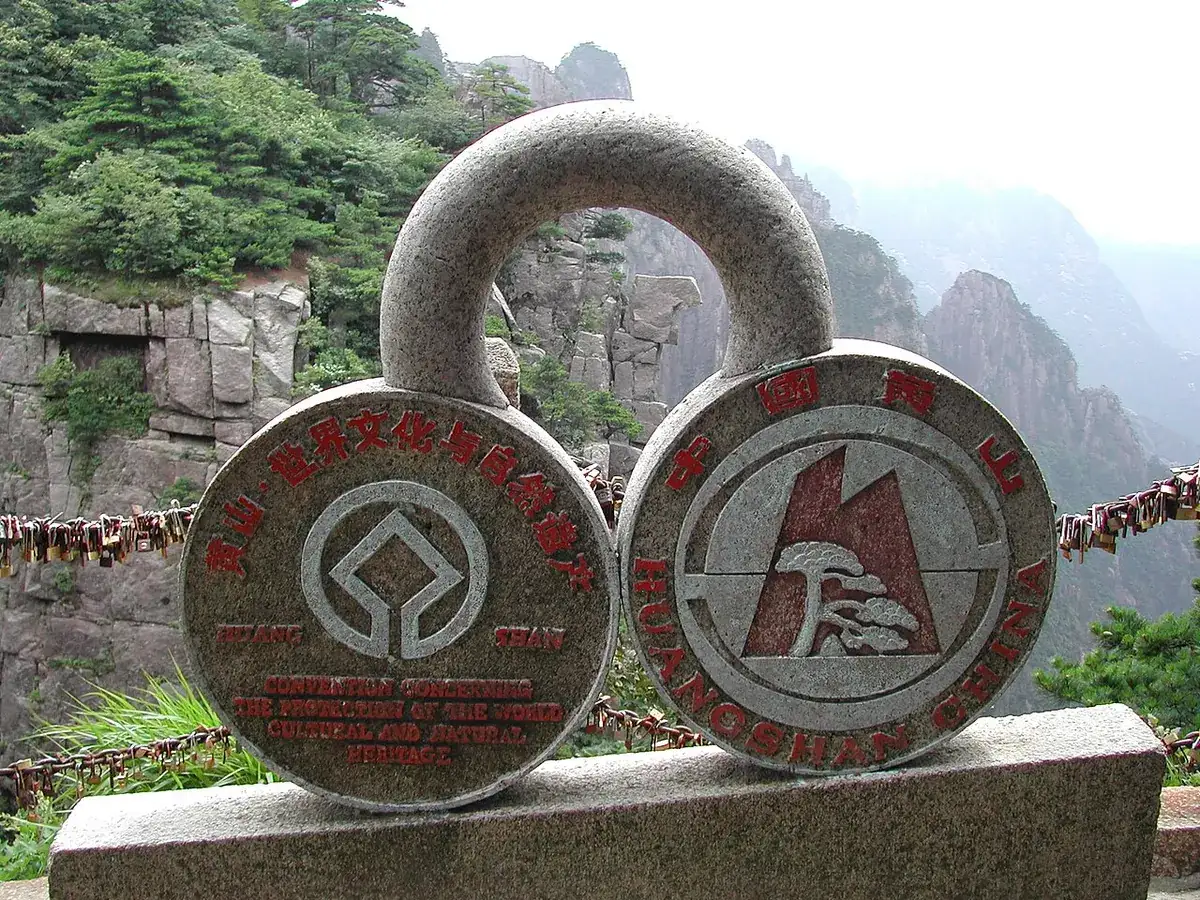
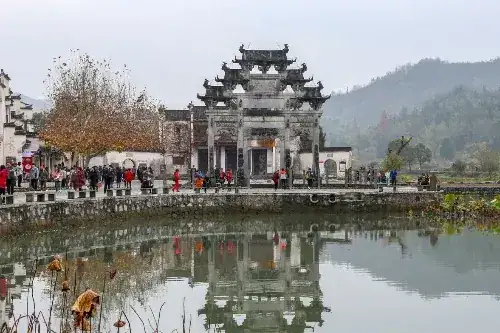
Huangshan City, abbreviated "Huang" or "Hui," is a prefecture-level city at the southernmost tip of Anhui Province, at the junction of Anhui, Zhejiang, and Jiangxi provinces, covering a total area of 9,678 square kilometers. As of April 2025, it administers 3 districts and 4 counties. As of end-2024, the resident population is 1.317 million. Historically known as Xin'an, Shezhou, and Huizhou, the city was officially established as a prefecture-level city in April 1988. Huangshan City is the core of the national-level Huizhou Cultural Ecology Protection Zone and the birthplace of Hui cuisine. Mount Huangshan is a World Cultural and Natural Heritage site, and the ancient villages of Xidi and Hongcun are World Cultural Heritage sites. In 2025, the city's GDP reached 120.49 billion yuan (approximately $17.1 billion), up 6.4% year-on-year.
Historical Evolution
The origins of Huangshan civilization trace back over 5,000 years. Artifacts from Shexian and Qimen indicate human habitation since the Paleolithic period. During the Western Zhou Dynasty (c. 1046-771 BCE), the ancient Yue people had already developed a flourishing culture here, as evidenced by eight tumulus burials excavated near Yiqi Village in Tunxi. The region belonged successively to the Wu, Yue, and Chu states during the Spring and Autumn and Warring States periods. In 221 BCE, Qin Shi Huang established the commandery-county system, placing the area under Kuaiji Commandery. In 210 BCE, settlers were relocated to the upper Xin'an River basin, and the counties of You (later Yi) and She were established, marking the earliest administrative structure in the region. In 208 CE, Sun Quan of Eastern Wu conquered the Shanyue tribes and established Xindu Commandery with six counties. In 280 CE, the Western Jin renamed it Xin'an Commandery. The name "Huizhou" was adopted during the Northern Song Dynasty after the suppression of the Fang La uprising. In November 1987, the State Council approved the establishment of prefecture-level Huangshan City, formally established in April 1988.
Administrative Divisions
As of April 2025, Huangshan City administers 3 districts -- Tunxi, Huangshan, and Huizhou -- and 4 counties: Shexian, Xiuning, Yixian, and Qimen. The municipal government is seated at 1 Tiandu Avenue, Tunxi District.
Geography
Location
Huangshan City is located between 117 degrees 02 minutes and 118 degrees 55 minutes east longitude, and 29 degrees 24 minutes and 30 degrees 24 minutes north latitude, at the southernmost tip of Anhui Province. It borders Jiangxi Province to the southwest (Fuliang County, Wuyuan County) and Zhejiang Province to the southeast (Kaihua County, Chun'an County, Lin'an District). The city spans 164 km east to west and 123 km north to south, covering 9,678 square kilometers.
Topography
A mountainous region described as "eight parts mountain, one part water, one part farmland." The Tianmu Mountains and Huangshan Range form natural boundaries with Zhejiang and Jiangxi. The highest peak, Lianhua Peak, reaches 1,864.8 meters. The terrain features layered topography transitioning from valley plains through hills to medium mountains.
Climate
The city has a subtropical monsoon climate with four distinct seasons, characterized by abundant heat and rainfall, high humidity, and frequent cloud cover. Average annual temperature ranges 15.5-16.4 degrees Celsius, with annual precipitation of 1,395-1,702 mm concentrated in May-August. Extreme highs can reach 41.6 degrees Celsius, while extreme lows can drop to -16.1 degrees Celsius.
Hydrology
The main river is the Xin'an River (Qiantang River system), with a mainstream length of 44 km and a catchment area of 5,944 square kilometers. Other rivers include the Qingyi River, which flows north into the Yangtze, and the Chang River, which flows south into Poyang Lake. Taiping Lake sits on the upper Qingyi River.
Natural Disasters
The city's primary meteorological hazards are floods and droughts. Droughts occur on average every 2-3 years and floods every 4-5 years. Floods typically result from torrential rainfall during the plum rain season. From 650 CE to 1919, approximately 402 major floods were recorded. Since the mid-20th century, increased human activity has worsened soil erosion and exacerbated flood risks.
Natural Resources
Water Resources
The multi-year average water resource total is 10.318 billion cubic meters, with per capita water resources of 8,126 cubic meters -- approximately four times the national average.
Biological Resources
The city hosts over 1,000 tree species, with nationally protected species including Emmenopterys henryi, Machilus thunbergii, and Ormosia henryi. The forest coverage rate reaches 82.9%, with forest land covering 1.111 million mu (about 74,000 hectares). Huangshan is an important timber production base in eastern China and a renowned tea-producing region.
Mineral Resources
Thirty-seven types of minerals have been discovered across 89 mining areas, including building materials such as limestone, granite, and porcelain clay; non-ferrous and rare metals including gold, copper, tungsten, molybdenum, and antimony; and non-metallic minerals such as bentonite and barite. Deposits are classified as 5 large-scale, 10 medium-scale, and 36 small-scale.
Population
As of end-2024, the resident population is 1.317 million, an increase of 0.08% from 2023. The urban population is 805,000 (61.11%) and the rural population is 512,000 (38.89%). The sex ratio is 102.98 males per 100 females.
Politics
Huangshan City is a prefecture-level city under the jurisdiction of Anhui Province. The Municipal People's Government is seated in Tunxi District. In October 2025, the city was awarded the title of National Demonstration City for Rule-of-Law Government Construction.
Economy
In 2024, the GDP reached 113.40 billion yuan (approximately $16.1 billion), up 5.9% year-on-year. The primary, secondary, and tertiary sectors contributed 8.25 billion yuan (approximately $1.2 billion), 36.52 billion yuan (approximately $5.2 billion), and 68.63 billion yuan (approximately $9.7 billion) respectively, with a structural ratio of 7.3:32.2:60.5. Per capita GDP was 86,140 yuan (approximately $12,095). In 2025, GDP reached 120.49 billion yuan (approximately $17.1 billion), up 6.4%. The primary industry grew 4.8%, secondary industry 6.7%, and tertiary industry 5.6%.
Tertiary Industry
In 2025, the wholesale and retail sector grew 7.1%, transportation and logistics 4.3%, accommodation and catering 5.1%, finance 8.0%, and real estate 3.2%. Total retail sales of consumer goods reached 56.81 billion yuan (approximately $8.1 billion), up 3.9%. Total import and export value stood at $1.257 billion. Online retail sales through public networks grew 9.5%.
Social Services
Education
The city has 3 universities with 29,791 students, 20 senior high schools, 81 junior high schools, and 95 primary schools. The nine-year compulsory education retention rate is 101.24%, and the gross enrollment rate for senior high school is 100.81%.
Culture
Huangshan has 8 cultural centers, 11 public libraries, and 51 museums. There are 49 national-level and 151 provincial-level protected cultural heritage sites. The city holds 24 national-level intangible cultural heritage items, ranking first among Anhui cities. Five items are inscribed on UNESCO Representative List of Intangible Cultural Heritage of Humanity.
Health
The city has 1,099 medical institutions with 10,626 beds and 12,468 health professionals, including 4,953 licensed physicians. Annual medical consultations totaled 9.0091 million visits.
Environmental Protection
Air quality excellent-day rate: 98.4%. PM2.5 average concentration: 21.7 micrograms per cubic meter; PM10: 36.6 micrograms per cubic meter.
Safety Production
In 2025, 16 production safety accidents occurred with 18 fatalities. The production safety accident death rate per 100 million yuan GDP was 1.49%. Additionally, 380 traffic accidents and 877 fire incidents were recorded.
Transportation
Huangshan has formed a cross-shaped national comprehensive transport corridor integrating high-speed rail, expressways, national highways, and aviation. The city has 5 high-speed rail lines (Hefu, Hanghuang, Changjinghuang, Chihuang, and Xuanji) and 1 conventional railway (Wangan), with approximately 264 km of rail operating mileage. Huangshan has been designated as one of China 50-plus-4 railway hub cities. Huangshan Tunxi International Airport operates 31 routes, including 6 international and regional routes. The expressway network spans 451 km. In 2025, total freight reached 31.295 million tons (up 2.1%) and passenger volume reached 25.557 million (up 10.3%).
Public Transportation
The city operates 471 registered buses, of which 445 (94.48%) are new energy vehicles, along with 850 taxis. Five bus hub stations were completed during the 13th Five-Year Plan period with a total investment of 72 million yuan (approximately $10.2 million).
History and Culture
Huizhou Culture
Huangshan is the core of the Huizhou Cultural Ecology Protection Zone, encompassing cultural traditions including Xin'an Neo-Confucianism, Huizhou Evidential Scholarship, Xin'an Medicine, Huizhou merchants, Hui opera, Hui-style architecture, Hui woodblock prints, Hui seal carving, Xin'an painting school, and Hui bonsai. In April 2024, the Anhui provincial government officially designated Huangshan as a Provincial Famous Historical and Cultural City.
Place Name Origins
The county names You (later Yi) and She derive from ancient Yue-language place names. Xin'an may refer to Xin'an Mountain in Qimen or signify stability. The name Huizhou was adopted after the Song court suppressed the Fang La uprising -- the character Hui originally meant rope or binding, symbolizing the dynasty desire to strengthen control over the region.
Customs
Traditional Huizhou weddings followed nine ceremonial procedures, from matchmaking to the bride return visit. The Chongyang Temple Fair in Linxi Town, held on the ninth day of the ninth lunar month, is a centuries-old tradition combining religious worship with trade.
City Symbols
The city tree is the Huangshan pine, the city flower is the Huangshan rhododendron, and the city bird is the red-billed leiothrix, all selected through public vote in 2006.
Language
The Hui dialect belongs to the Chinese language family and is one of China ten major dialects, spoken by approximately 4 million people. It comprises six sub-dialects: Shexian, Xiuning, Yixian, Qimen, Jixi, and Wuyuan.
Scenic Attractions
As of 2024, the city has 53 A-level tourist attractions across 58 sites, including 3 five-A-level attractions (8 sites). There are 25 star-rated hotels (15 four-star and above) and 264 travel agencies.
Key Attractions
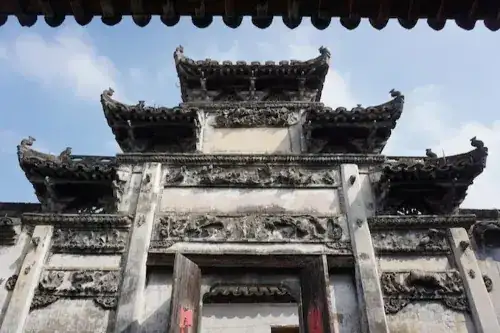
Mount Huangshan is a World Cultural and Natural Heritage, World Geopark, and World Biosphere Reserve, renowned for its five wonders: peculiar pines, strange rocks, sea of clouds, hot springs, and winter snow. Its three main peaks -- Lianhua, Guangmingding, and Tiandu -- all exceed 1,800 meters. The Ming Dynasty traveler Xu Xiake praised it: After seeing the Five Sacred Mountains, one needs see no other; after Mount Huangshan, one needs see no mountain at all. Xidi Village in Yixian County, founded during the Northern Song Dynasty, was named one of the first World Best Tourism Villages by the UNWTO in 2021. Together with Hongcun, these villages form the Ancient Villages in Southern Anhui World Cultural Heritage site.
Local Cuisine and Specialties
Hui cuisine, one of China eight major culinary traditions, originated in the Huizhou area during the Southern Song Dynasty. With the rise of Huizhou merchants, it spread across Jiangsu, Zhejiang, Jiangxi, Fujian, Shanghai, and Hubei. The region is also a major tea producer, famous for Huangshan Maofeng, Taiping Houkui, and Keemun black tea -- all listed on UNESCO intangible cultural heritage list.
External Relations
Huangshan City joined the Hangzhou Metropolitan Circle in 2018 and is part of the Yangtze River Delta region. It became a core area of the Southern Anhui International Cultural Tourism Demonstration Zone in 2014.
Notable Figures
A Millennium Huizhou Outstanding Historical Figures poll in 1999 selected the top ten: educator Tao Xingzhi, philosopher Zhu Xi, writer Hu Shi, thinker Dai Zhen, Father of Chinese Railways Zhan Tianyou, painter Huang Binhong, abacus master Cheng Dawei, Xin'an painting school founder Jianjiang, Wang Maoyin (the only Chinese mentioned in Marx Das Kapital), and Zhang Xiaoquan, inventor of the eponymous scissors. These figures were all products of the well-developed Huizhou education system.
Famous People
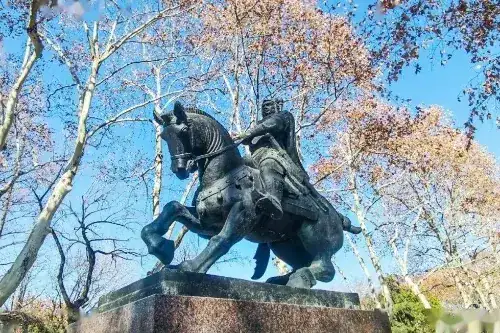
Bi Sheng (d. c. 1051) was a Northern Song inventor of movable-type printing, regarded as one of the most significant technological innovators in world history. Fang La (d. 1121) was a late Northern Song peasant uprising leader from Shexian who established a short-lived regime before being defeated by imperial forces.
Honors and Titles
In October 2025, Huangshan City was awarded the title of National Demonstration City for Rule-of-Law Government Construction.
Travel information can change. Check current opening hours, reservations and entry requirements before you travel.
Traveller discussion
Start the conversation with a helpful tip or a question.