
Yichun
YichunYichun is a prefecture-level city in northeastern Heilongjiang Province, designated by the State Council as an important northern ecological tourism city and a central city in northeastern Heilongjiang. Located between 46°28′–49°26′N
Yichun
Yichun is a prefecture-level city in northeastern Heilongjiang Province, designated by the State Council as an important northern ecological tourism city and a central city in northeastern Heilongjiang. Located between 46°28′–49°26′N and 127°37′–130°46′E, it covers 32,800 square kilometers. The climate is northern temperate continental monsoon, classified as the "Lesser Khingan Cold and Rainy Zone." As of the end of 2024, the resident population was 810,000. The city administers 4 districts, 5 counties, and 1 county-level city, with the municipal government at No. 3 Xing'an Street, Yimei District. Yichun has a long history dating back to the Zhou dynasty. Large-scale development began in 1948. The city became a prefecture-level city in 1979. Yichun is an important forest ecological tourism area with 72 geological landscape sites, including Tangwanghe Forest Sea Bizarre Rocks, Jiayin Maolangou, and the Jiayin Dinosaur National Geopark. In 2025, GDP was 38.089 billion yuan (approximately US$5.4 billion), up 4.0%.
Historical Evolution
The area traces back to the Zhou dynasty as the territory of the Sushen people. Through successive dynasties—Tang, Liao, Jin, Yuan, Ming, and Qing—the area was administered by various jurisdictions. Large-scale development began in 1948. In 1952, Yichun County was established; in 1957, Yichun City was created; in 1964, the Yichun Special Zone was established under a dual leadership system (forestry ministry + provincial government). In 1970, Yichun Prefecture was created, and in 1979, the prefecture-level city was restored. In 2018, the "government-enterprise integration" system that lasted over half a century ended with the establishment of the Heilongjiang Yichun Forest Industry Group.
Administrative Divisions
Division History
The city underwent numerous reorganizations, with 15 districts at its peak in 1964. In 2019, a major restructuring reduced districts and converted several to counties: Wuyiling and Tangwanghe were merged into Tangwang County; Xinqing, Hongxing, and Wuying into Fenglin County; Dailing into Daqingshan County; Nancha into Nancha County; and several others were consolidated into new districts.
Division Details
Yichun administers 4 districts (Yimei, Wucui, Youhao, Jinlin), 5 counties (Tangwang, Fenglin, Daqingshan, Nancha, Jiayin), and 1 county-level city (Tieli). The municipal government is at No. 3 Xing'an Street, Yimei District.
Physical Geography
Location and Boundaries
Yichun is in northeastern Heilongjiang, between 46°28′–49°26′N and 127°37′–130°46′E. It borders Hegang and Jiamusi to the east, Harbin to the south, Heihe and Suihua to the west, and faces Russia across the Heilongjiang (Amur) River to the north (border length 245.9 km). The city is 354 km by road from Harbin and covers 32,800 km².
Topography and Landforms
The terrain spans three zones of the Lesser Khingan Mountains: southern low mountains and hills, northern low mountains and hills, and eastern alluvial plains. Mountains cover over 80% of the area. The terrain is generally higher in the north and lower in the south.
Climate
Yichun has a northern temperate continental monsoon climate, divided into three sub-zones. Average annual precipitation is 590–770 mm (the highest in Heilongjiang), and average annual temperature is 0.5–1.2°C (among the coldest in the province). The frost-free period is 105–126 days. Winters last about 5 months, summers about 3 months.
Hydrology
Yichun has 702 rivers in two water systems: the Heilongjiang (Amur) system with 56 rivers (all in Jiayin County) and the Songhua River system with 646 rivers (611 in the Tangwang River system). The city has 249.5 km of navigable waterways.
Natural Resources
Land Resources
Total land area: 3.28 million hectares, including 259,100 hectares of cultivated land (7.9%), 2,850,400 hectares of forest land (86.9%), and 26,200 hectares of grassland (0.8%).
Water Resources
Total water resources: 7.585 billion cubic meters (7.514 billion surface water, 1.902 billion groundwater).
Biological Resources
Yichun has 1,390 species of higher plants across 177 families, 67 mammal species, and 274 bird species, including 10 Class I and 54 Class II nationally protected animals. Forest coverage is 83.8% with standing timber stock of 364 million cubic meters. Main tree species include Korean pine, spruce, fir, larch, Manchurian ash, and birch.
Mineral Resources
45 mineral varieties discovered, with 36 having proven reserves and 17 being developed. Gold, molybdenum, iron, lead, zinc, and marble are the dominant minerals.
Population
Population Size
As of the end of 2024, the resident population was 810,000 (down 8,000). Registered population was 1,033,000 (87.1% urban). The birth rate was 2.2‰, death rate 7.3‰, and natural growth rate −5.1‰.
Ethnic Composition
Yichun is a multi-ethnic border forestry city with 33 ethnic minorities totaling 18,702 people (2.12% of the population). The main minorities are Manchu, Hui, Korean, Oroqen, and Russian. The city has one Korean ethnic township (Nianfeng in Tieli) and 13 ethnic villages.
Politics
Economy
Overview
In 2024, GDP was 37.05 billion yuan (approximately US$5.2 billion), up 2.1%. The industrial structure was 33.8:18.9:47.3 (primary:secondary:tertiary). Per capita GDP was 45,512 yuan (approximately US$6,400). General public budget revenue was 3.41 billion yuan (up 20.2%). Fixed asset investment grew 17.0%.
Primary Industry
Green and organic food certification covered 1.45 million mu with 160 products from 48 enterprises. Livestock: 265,000 hogs, 46,000 cattle, 72,000 sheep, and 3.924 million poultry. Total meat output was 50,000 tons.
Secondary Industry
Above-scale industrial added value decreased 4.0%. Mining grew 0.2% while manufacturing declined 10.4%. Above-scale industrial revenue was 20.49 billion yuan (down 10.4%) and profits 3.45 billion yuan (down 9.4%). Construction output was 1.32 billion yuan (up 7.8%).
Tertiary Industry
Real estate investment grew 190%. Total retail sales of consumer goods grew 2.6%. The city received 23.987 million tourists (up 53.0%) with tourism spending of 20.12 billion yuan (up 76.2%). Financial institution deposits reached 128.88 billion yuan and loans 27.93 billion yuan.
Transportation
During the 13th Five-Year Plan, 4.11 billion yuan was invested in highway infrastructure, with the total road network reaching 8,060 km (including 167 km of expressway). All 33 townships and 205 administrative villages are connected by paved roads. In 2024, highway freight was 7.22 million tons (up 1.7%) and passengers 7.61 million (up 451.4%). Air passengers totaled 211,000 (up 25.8%).
Yichun Lindu Airport, upgraded 2018–2022, has a 2,800 m runway and 8 aircraft stands, serving 5 cities with 3 airlines. The Harbin-Yichun HSR station (Yichun West) is under construction.
Social Affairs
Science and Technology
In 2024, 355 patents were granted (45 invention patents). The city has 1 provincial research institute.
Education
Yichun has 2 vocational schools, 8 high schools, 31 junior high schools, 41 primary schools, and 2 special education schools. University entrance rate was 78.0% (3084 students).
Culture and Sports
The city has 11 cultural centers, 11 public libraries (446,922 volumes), 9 museums, and 7 media centers with 100% broadcast coverage. Athletes won 57 medals at provincial competitions.
Healthcare
Yichun has 548 health institutions including 40 hospitals, with 7,369 beds and 7,147 health personnel.
Social Security
Enterprise pension insurance covered 254,500 people (395,400 retirees). Basic medical insurance covered 851,000 people. 39,362 urban and 8,766 rural residents received minimum living assistance. The city has 82 elderly care institutions with 6,558 beds.
History and Culture
Major archaeological sites include petrified wood groups, the Longgu Mountain site, and ancient tomb groups at Hengshan.
Scenic Spots
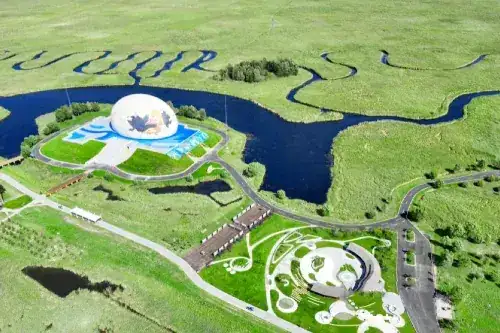
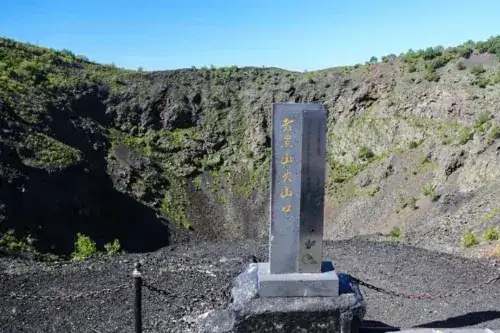
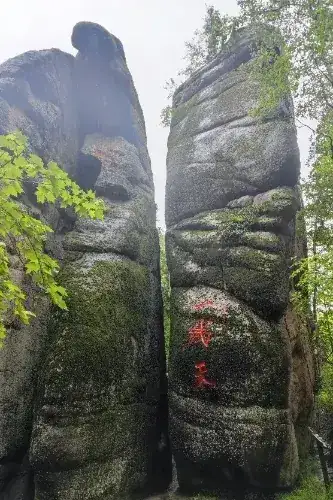
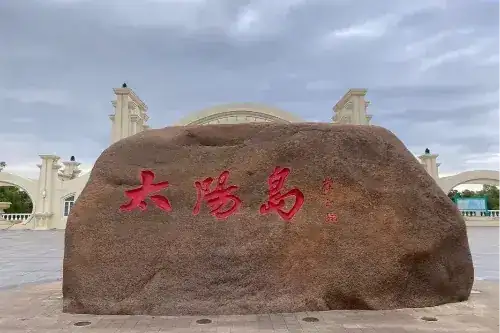
Yichun is a major forest ecological tourism destination with 338 tourism resource entities across 70 types (47% of national standard types). The 72 geological landscape sites include Tangwanghe Forest Sea Bizarre Rocks, Jiayin Maolangou, Jiayin Dinosaur National Geopark, Langxiang Stone Forest, Taoshan Xuanyang Peak, and Nancha Xianweng Mountain.
The city has 30 A-level scenic areas (1 5A-level, 11 4A-level, 18 3A-level), 3 S-level ski resorts, and 5 national nature reserves (Fenglin, Liangshui, Hongxing Wetland, Wuyiling, and Xinqing White-naped Crane).
Local Specialties
Honorary Titles
Sister Cities
Bad Wildungen, Germany; Iwamizawa, Japan; Birobidzhan, Russia.
Travel information can change. Check current opening hours, reservations and entry requirements before you travel.
Traveller discussion
Start the conversation with a helpful tip or a question.