
Tonghua City
Tonghua CityTonghua City, also known as "Northern Mountain City," is a prefecture-level city under Jilin Province, located in southeastern Jilin. It borders Baishan to the east, Liaoning's Benxi, Fushun, and Dandong to the west, North Korea
Tonghua City
Tonghua City, also known as "Northern Mountain City," is a prefecture-level city under Jilin Province, located in southeastern Jilin. It borders Baishan to the east, Liaoning's Benxi, Fushun, and Dandong to the west, North Korea across the Yalu River to the south, and Liaoyuan and Jilin City to the north. Over two-thirds of the area is mountainous, belonging to the Changbai Mountain system. It has a northern temperate continental monsoon climate, with a total area of 15,698 square kilometers. As of October 2022, it administers 2 districts, 3 counties, and 2 county-level cities. As of the end of 2024 (excluding Meihekou), the permanent resident population was 1,169,700. Human settlement dates back 6,000+ years. The city was established in 1877 during the Qing Dynasty (1644–1912). Tonghua has a glorious revolutionary tradition: Yang Jingyu led the Anti-Japanese United Army's First Route Army here, and it was the main battlefield of the "Four Battles to Defend Linjiang." It is the birthplace of Goguryeo culture and Shaman culture, with Goguryeo capital cities, tombs, and noble burials being the only World Cultural Heritage site independently nominated in Northeast China. In 2024 (excluding Meihekou), the gross regional product was 57.679 billion yuan, up 3.9%.
History
Human activity dates back 20,000–40,000 years, with Paleolithic cave sites at Da'an Town. By the Neolithic (5,000–6,000 years ago), humans lived along the Hunjiang River. During the Western Zhou (1046–771 BC), the area belonged to the Sushen. During the Warring States period, it was under the Yan Kingdom's Liaodong Commandery. In 108 BC, Emperor Wu of Han established Xuantu Commandery. In 37 BC, the Goguryeo Kingdom was founded, with its core homeland in the Hunjiang River basin. In 668, the Tang Dynasty (618–907) destroyed Goguryeo and established the Andong Protectorate. In 713, the area came under Balhae. During the Liao (907–1125), Jin (1115–1234), Yuan (1271–1368), and Ming (1368–1644) dynasties, it was under various administrations. In 1877, Tonghua was formally established. During WWII, Yang Jingyu led resistance forces here. In 1948, the city was liberated. In 1954, Tonghua Special District was established. In 1985, the prefecture was abolished and prefecture-level Tonghua City was established.
Administrative Divisions
Evolution
In 1986, Dongchang and Erdaojiang districts were established. In 1988, Ji'an County became county-level Ji'an City. In 2013, Meihekou became a provincial direct-administration pilot city. In 2021, Meihekou New Area was established.
Division Details
As of end 2023: 2 districts (Dongchang, Erdaojiang), 3 counties (Huinan, Liuhe, Tonghua), and 2 county-level cities (Ji'an, Meihekou). The City People's Government is at No. 89 Yuquan Road, Dongchang District. Note: Meihekou is a provincial direct-administered county-level unit with prefecture-level economic and social management authority, but is still classified under Tonghua City in national statistics.
Geographical Environment
Location
Tonghua is in southeastern Jilin, between 125°15'–126°44' east longitude and 40°52'–42°49' north latitude. It borders Baishan, Liaoning Province, North Korea (across the Yalu River), Liaoyuan, and Jilin City. It spans 218 km north-south and 108 km east-west, with a total area of 13,400 square kilometers.
Topography
Over two-thirds mountainous (Changbai system). Southern area: Laoling Mountains between the Yalu and Hunjiang rivers. Central area: Longgang Mountains between the Hunjiang and Huifa rivers. Northern area: low hills transitioning to plains. Highest: Dongtu Dingzi at 1,589 meters; lowest: 108 meters at Ji'an's Yangmulam Village.
Climate
Mid-temperate humid climate. Annual average temperature: 5.5°C. January average: -14°C (extreme: -33°C). July average: 22°C (extreme: 36°C). Annual precipitation: 870 mm (60%+ in June–August). Annual sunshine: 2,200 hours.
Hydrology
Over 1,000 rivers in the Yalu and Songhua systems. Major rivers: Yalu (203.5 km in Tonghua, 32,000 km² basin), Hunjiang (4,371 km² basin), and Huifa (Songhua tributary).
Natural Resources
Water Resources
Shallow groundwater natural recharge: 947.3 million cubic meters. Average depth: 2.56–3.42 meters. Water temperature: 7.8–9.1°C. Mostly fresh bedrock fissure water with mineralization below 1 mg/L.
Plant Resources
Changbai Mountain flora with 1,500+ higher plant species and 800+ lower species. 58 tree species (Korean larch, spruce, pine, elm, birch, linden, poplar, walnut, Manchurian ash, etc.), 500+ medicinal plants (ginseng, Gastrodia, codonopsis, astragalus, Schisandra, Asarum, Fritillaria, Bupleurum), and abundant wild vegetables and fungi (bracken, monkey head mushroom, pine mushroom, wood ear).
Animal Resources
36 species in 22 families: wild boar, roe deer, sable, weasel, squirrel, hazel grouse, black grouse, pheasant, fox, raccoon dog, wolf, rabbit, and various snakes. Also includes 178 bird species, 27 fish species, and bees.
Mineral Resources
105 mineral types discovered (67 with proven reserves, 58 being exploited). Nickel, crystalline graphite, potassium rock, volcanic cinder, medical stone, limestone, garnet, dolomite, and mica reserves rank first in Jilin Province. Phosphorus, calcite, jade, talc, feldspar, and decorative stone rank second. Magnesite, boron, asbestos, diopside, and barite are unique to the city. Abundant high-quality mineral water.
Population
As of end 2024 (excluding Meihekou): 1,169,700, down 30,700. Birth rate: 4.47 per mille; death rate: 11.22 per mille; natural growth rate: -6.75 per mille. Gender ratio: 98.02 (female = 100). 40 ethnic groups including Han, Manchu, Korean, Hui, Mongolian, and Xibe.
Politics
Economy
Overview
In 2024 (excluding Meihekou), the gross regional product was 57.679 billion yuan, up 3.9%. By industry: primary 7.426 billion, up 5.0%; secondary 15.269 billion, up 4.8%; tertiary 34.984 billion, up 3.3%. Structure: 12.9:26.5:60.6. Fixed-asset investment: 23.97 billion, up 1.1%. General public budget revenue: 6.61 billion, down 1.8%. Local revenue: 4.03 billion, up 3.8%. Fiscal expenditure: 21.92 billion, up 8.7%.
Primary Industry
Agricultural added value: 7.83 billion yuan, up 4.9%. Grain area: 216,000 hectares, up 0.2%. Grain output: 1.454 million tons, up 0.5% (corn 1.027 million tons; rice 392,000 tons). Vegetables: 264,000 tons, up 4.9%. Cattle sold: 92,000, up 6.7%. Pigs sold: 330,000, down 1.6%. Poultry sold: 31.136 million, down 2.4%. Pork: 27,000 tons. Beef: 16,000 tons, up 8.9%. Eggs: 26,000 tons. Milk: 1,959 tons.
Secondary Industry
Industrial added value: 10.10 billion yuan, up 3.8%. Above-scale industrial added value up 3.8% (mining up 11.3%; manufacturing up 3.3%; electricity/heat/gas/water up 9.5%). Pharmaceutical manufacturing up 14.0%; metallurgy down 26.2%; food down 6.0%; equipment down 3.6%; building materials up 12.0%; chemicals up 8.1%. Above-scale losses: 2.28 billion yuan (metallurgy lost 2.48 billion; pharmaceuticals earned 700 million). Revenue: 28.97 billion, down 23.7%. Construction output: 7.56 billion, up 9.8%.
Tertiary Industry
Wholesale/retail: 3.454 billion, up 3.6%. Transportation: 3.418 billion, up 0.8%. Accommodation/catering: 753 million, up 9.6%. Finance: 3.282 billion, down 3.4%. Real estate: 2.718 billion, up 1.7%. IT: 2.804 billion, up 8.2%. Total retail sales: 18.888 billion, up 3.3%. Foreign trade: 1.07 billion yuan, up 0.3% (exports 700 million, down 1.3%; imports 370 million, up 3.5%). Actual foreign investment: 168.74 million USD, up 147.7%. Total deposits: 173.08 billion, up 11.25 billion. Total loans: 91.33 billion, up 2.27 billion. Insurance premiums: 4.304 billion, up 5.26%.
Social Affairs
Science and Technology
25 provincial S&T projects. 89 national high-tech enterprises, 45 provincial technology-based SMEs. 564 patent authorizations, 570 valid invention patents (up 1.4%). 65 CMA-certified testing institutions.
Education
2 universities (15,426 students), 16 secondary vocational (6,053), 15 high schools (21,327), 85 junior high (29,122), 82 primary (54,605), 234 kindergartens (17,040), 6 special education (297).
Culture
5 state-owned art troupes, 10 cultural centers, 1 art museum, 7 public libraries (890,000 volumes). 10 FM TV transmitters, 2 medium-wave radio transmitters. TV coverage: 99.83%, radio coverage: 99.20%.
Healthcare
1,633 health institutions: 51 hospitals, 65 health centers, 7 maternal/child centers, 6 specialized disease prevention institutions, 5 CDCs, 646 village clinics, 645 clinics, 116 health stations. 12,030 health workers (4,178 physicians, 706 assistant physicians, 5,356 nurses). 10,903 beds (8,970 hospitals, 1,478 township).
Sports
31 national golds, 16 silvers, 12 bronzes. 199 provincial golds, 173 silvers, 166 bronzes.
Social Security
Urban employee pension: 602,000, up 1.0%. Urban-rural pension: 537,000, down 0.7%. Unemployment: 125,000, up 1.6%. Work injury: 165,000, down 17.9%. Medical insurance: 1,186,000, down 2.2%. Maternity: 148,000. 149 elderly care institutions with 9,156 beds. 6 child welfare institutions with 140 beds. Urban minimum living: 15,000 households, 19,000 people. Rural minimum living: 23,000 households, 35,000 people. 6,284 special hardship recipients.
Transportation
In 2024: railway freight 4.114 million tons, railway passengers 625,000. Highway freight 15.28 million tons, highway passengers 3.13 million. Waterway passengers 251,000. Civil aviation passengers 233,600, cargo 0.9 tons. Total highway mileage: 5,811.3 km (186.3 km Class I, 848 km Class II, 1,159.1 km Class III, 3,617.9 km Class IV, 484 km expressway).
Scenic Spots
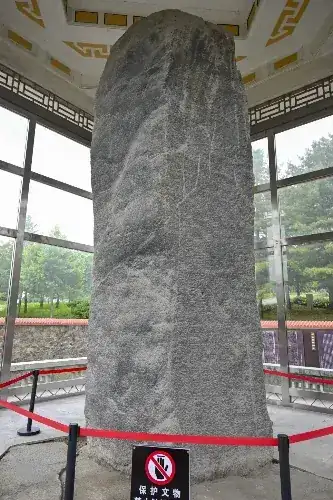
National-level protected sites include the Donggou Ancient Tombs and Wandu Mountain City in Ji'an. Provincial sites include Guonei City, Bawangchao Mountain City, and Changchun Mural Tomb. The Donggou tomb complex has 10,000+ Goguryeo tombs, with the largest, the "General's Tomb," called the "Pyramid of the East." Goguryeo sites are listed as UNESCO World Cultural Heritage.
Local Specialties
Famous People
Honorary Titles
Related Events
On December 30, 2024, the 8th Session of the 8th CPC Tonghua Municipal Committee and Municipal Economic Work Conference was held, requiring efforts to seize new opportunities, lay foundations for stability, maintain momentum for progress, and strive for excellence in comprehensive revitalization.
Travel information can change. Check current opening hours, reservations and entry requirements before you travel.


Traveller discussion
Start the conversation with a helpful tip or a question.