
Changchun City
Changchun CityChangchun City, abbreviated as "Chang," also known as "Spring City of the North," formerly called "Xidu" or "Chaa'chong," is a prefecture-level city, provincial capital, and sub-provincial city under Jilin Province. It is the
Changchun City
Changchun City, abbreviated as "Chang," also known as "Spring City of the North," formerly called "Xidu" or "Chaa'chong," is a prefecture-level city, provincial capital, and sub-provincial city under Jilin Province. It is the core city of the Harbin-Changchun Urban Cluster and Changchun Metropolitan Area, located in Northeast China at the geographic center of the Northeast, with a total area of 24,744 square kilometers. As of June 2026, it administers 7 districts, 1 county, and 3 county-level cities. As of end 2025, the total population was 9,105,000. Changchun is designated by the State Council as an important central city in Northeast China, a national historical and cultural city, and a national comprehensive transportation hub. It is the birthplace of China's earliest automobile industry, film production, railcar manufacturing, optical technology, applied chemistry, and biological products. It is home to FAW Group, CRRC Changchun Railway Vehicles, Changchun Film Studio, and multiple Chinese Academy of Sciences institutes. In 2025, the gross regional product was 800.559 billion yuan, up 4.9%.
History
Human activity dates to the Paleolithic (~40,000 years ago, "Yushu Man"). By the Neolithic, primitive agriculture and textiles appeared. Over 2,000 years ago, the Sushen people lived here. During the Han to Jin Dynasties (202 BC–420 AD), it was Fuyu Kingdom territory. In 494, Fuyu was conquered by the Wuji. During the Tang Dynasty (618–907), it was under Balhae's Fuyu Prefecture. During the Liao (907–1125), it was under Huanglong Prefecture (present-day Nong'an County). The Jin Dynasty (1115–1234) once established its capital at Huanglong. During the Yuan (1271–1368), it was under Liaoyang Branch Secretariat. During the Ming (1368–1644), it was under the Nurhan Regional Military Commission, later Mongolian Khorchin grazing land. During the Qing (1644–1912), it was under the Gorlos Front Banner. In 1800, Changchun Subprefecture was established, marking the formal founding of Changchun. In 1825, the seat moved to Kuanchengzi. In 1932, the puppet Manchukuo established its capital at Changchun, renamed "Xinjing" (New Capital). In 1948, Changchun was peacefully liberated. In 1954, Changchun became the capital of Jilin Province. In 1994, it was designated a sub-provincial city.
Administrative Divisions
Division Details
As of June 2026: 7 districts (Nanguan, Kuancheng, Chaoyang, Erdao, Lvyuan, Shuangyang, Jiutai), 1 county (Nong'an), and 3 county-level cities (Yushu, Dehui, Gongzhuling). The City People's Government is at No. 10111 Renmin Avenue, Nanguan District.
Geographical Environment
Location
Changchun is in the heart of the Northeast Plain (Song-Liao Plain), between 43°05'–45°15' north latitude and 124°18'–127°05' east longitude. Total area: 24,744 square kilometers.
Topography
Relatively flat, in the transition zone from eastern mountains to western Song-Liao Plain. Main type: low mountains and hills (southeast, 250–350 m, part of Dahei Mountain range). Terrace plains cover ~70% of the urban area (200–230 m elevation). Alluvial plains (~30%) along the Yitong River. Volcanic cones in the southwest (Fuzhen and Fanjiatun area).
Climate
Temperate continental semi-humid monsoon climate, transitional between eastern humid and western semi-arid zones. Spring: dry and windy; summer: warm and brief; autumn: clear with large temperature differences; winter: cold and long. Annual average temperature: 4.6°C. Historical maximum: 40°C; minimum: -36.5°C (1970). Annual precipitation: 600–700 mm. Frost-free period: 140–150 days. Frozen period: 5 months.
Hydrology
Surface water belongs to the Songhua River system. Major rivers: Songhua, Yinma, Yitong (main urban river), Mushi, Shuangyang, Wukai, Xinkai, and Kacha. 7 major lakes including Boluo, Aobaotu, and Yuanbao. Groundwater is scarce due to impermeable Cretaceous red bedrock beneath the city.
Natural Resources
Land Resources
Rich black soil (chernozem), meadow soil, and black calcic soil covering 34.5%, 29.06%, and 15.28% of cultivated land respectively. Black soil layer: 0.6–1.0 meters thick. 12 soil types, 38 subtypes, 64 genera, 190 species, with transitional distribution from east (dark brown soil) to west (black calcic soil).
Biological Resources
Forest: 265,000 hectares. Main species: black pine, Scots pine, spruce, fir, Korean larch, walnut, Manchurian ash, Manchurian cork tree, poplar, birch. 300+ economic wild plant species (150 medicinal, 50 industrial raw materials, 30 edible, 50 forage). 34 wildlife species in 5 categories including leopard cat, red fox, swan goose, and wood frog.
Mineral Resources
58 proven mineral types including petroleum, natural gas, CO2 gas, oil shale, coal, limestone, zeolite, bentonite, perlite, ceramic shale, mineral water, and gold.
Population
As of end 2025: 9,105,000 (urban 6,296,500, 69.15% urbanization rate). Birth rate: 3.66 per mille; death rate: 8.53 per mille; natural growth rate: -4.87 per mille. Gender ratio: 100.02 (female = 100). Age 0–14: 10.37%; 15–59: 64.94%.
Politics
Former Leaders
Current Leadership
Economy
Overview
In 2025, the gross regional product was 800.559 billion yuan, up 4.9%. By industry: primary 52.904 billion, up 4.5%; secondary 276.617 billion, up 5.1%; tertiary 471.037 billion, up 4.7%. Structure: 6.6:34.6:58.8. In 2024: 763.219 billion yuan, up 4.8%. Per capita GDP: 83,930 yuan. Local fiscal revenue: 42.417 billion, up 3.1%. Fiscal expenditure: 114.519 billion, up 8.4%.
Primary Industry
Located on one of the world's three golden corn belts and three major black soil regions. Grain output has long ranked first among major Chinese cities. Yushu City is known as "China's #1 Grain Warehouse." Agricultural added value (2025): 54.904 billion yuan, up 4.5%. Grain area: 1,590,500 hectares. Grain output: 13.2915 million tons, up 2.3% (corn 11.6872 million tons; rice 1.4168 million tons). Total meat: 1.255 million tons (pork 624,300 tons; beef 150,100 tons; poultry 468,600 tons). Pig inventory: 3,557,400.
Secondary Industry
Changchun is a traditional industrial base, the cradle of China's automobile, railcar, optoelectronics, applied chemistry, and biological products industries. Home to FAW Group and CRRC Changchun. Industrial added value (2025): 231.574 billion yuan, up 7.6%. Above-scale: automotive up 3.4%; equipment manufacturing up 14.1%; chemicals up 1.7%; electronics up 3.2%. Above-scale profits: 40.111 billion yuan, down 20.1%. Construction added value: 45.944 billion, down 7.3%.
Tertiary Industry
Services added value: 471.037 billion yuan, up 4.7%. Wholesale/retail: 57.335 billion, up 3.3%. Transportation: 58.369 billion, up 1.4%. Finance: 47.12 billion, down 1.5%. Real estate: 54.665 billion, up 1.7%. Total retail sales: 255.117 billion, up 3.9%. Foreign trade: 105.792 billion yuan, down 17.0% (exports 34.943 billion, up 1.4%; imports 70.85 billion, down 23.8%). Tourist arrivals: 230.119 million, up 33.4%. Tourism revenue: 360.99 billion yuan, up 19.3%. Total deposits: 2,090.353 billion, up 75.77 billion. Total loans: 1,919.125 billion, up 46.47 billion. Insurance premiums: 36.17 billion, up 6.4%.
Social Affairs
Education
Changchun has one of China's highest ratios of university students to urban population. Jilin University (China's largest university by enrollment), Changchun University of Science and Technology (optical talent cradle), and PLA Air Force Aviation University (astronaut cradle). 1,137 kindergartens (123,100 children), 666 compulsory education schools (643,500 students), 324 primary (411,800), 342 junior high (231,600), 92 high schools (172,400), 71 secondary vocational (41,300).
Science and Technology
Leading in optics, precision instruments, laser technology, polymer materials, biological products, superconductors, and automotive research. "Jilin-1" satellite (China's first self-developed commercial remote sensing satellite constellation, launched 2015, 108 satellites in orbit by June 2023). 17,669 patent authorizations (9,061 inventions, up 4.8%). 5,681 technology contracts worth 26.8 billion yuan. 1,361 high-tech enterprises.
Culture
317 cultural institutions: 9 art troupes, 13 public libraries (8.4992 million volumes), 33 museums, 218 cultural stations. Changchun Film Festival (China's first national-level film festival named after a city, founded 1992, one of China's four major film festivals, top award: "Golden Deer"). Major events: Vasaloppet Ski Festival, Auto Expo (one of China's top 5 auto shows), Agriculture-Food Expo, Northeast Asia Expo. Radio and TV coverage: 100%.
Healthcare
8,982 health institutions: 423 hospitals and health centers. 68,800 beds. 103,800 health workers. 99 community health centers in urban districts.
Sports
Hosted the 6th Asian Winter Games (2007), 9th and 12th National Winter Games. Home to Changchun Yatai FC and Jilin Northeast Tigers Basketball. Won the right to host the 2027 33rd Winter Universiade. 121 competitive events in 2025 (5 international, 68 national, 17 provincial, 34 municipal). 48,000 athletes, 1.534 million participants/spectators. Sports lottery: 2.231 billion yuan.
Social Security
Per capita disposable income: 35,399 yuan (urban 44,250; rural 23,042). Enterprise pension: 2,917,500 (2,041,000 active). Unemployment: 1,271,400. Medical insurance: 7,916,900. 47,301 urban and 109,375 rural minimum living recipients, 923 million yuan. 521 elderly care institutions with 53,700 beds. 104,700 new urban jobs.
Environment
Energy consumption: 19.7095 million tons standard coal, up 1.2%. Electricity: 36.099 billion kWh, up 5.4%. Air quality excellent: 322 days (88.2%). PM2.5: 35 micrograms/m³. Environmental noise: 57.7 dB(A) daytime. Road traffic noise: 68.4 dB(A).
Urban Construction
Road length: 5,447.29 km. Water supply capacity: 1.94 million m³/day. Natural gas: 896 million m³/year. LPG: 44,449 tons/year. Central heating area: 375.65 million m². Park green space: 7,480.59 hectares. Green coverage: 43.7%.
Transportation
Highways
Highway freight: 201.7046 million tons (down 3.3%). Highway passengers: 57.9374 million (down 6.9%).
Railways
Major railway hub and "Belt and Road" north route node. Changchun International Port (2017) operates China-Europe freight trains (Changchun-Hamburg), the largest Class I railway logistics base in Northeast China.
Aviation
Changchun Longjia International Airport: 4E-level, opened August 27, 2005. One of Northeast China's four international airports. 201,000 m² total area, 2 terminals, 60 stands, 3,200 m runway. Seamless HSR-airport connection. Over 10 million passengers in 2017. 2025: cargo 106,500 tons (up 8.0%); passengers 17.7593 million (up 0.9%).
Public Transportation
233 bus routes (2021). Tram system since 1941 (routes G54 and G55). Changchun was the first Chinese city to plan a metro (1939) and the 5th mainland city to open urban rail transit (2002). Line 3 was the mainland's first light rail. 2023 ridership: 219.068 million. Public bicycle system (2016, 54 stations, ~2,000 bikes).
History and Culture
Literature and Arts
Changchun Film Studio: New China's first film studio, creating "seven firsts" including the first documentary, puppet film, science film, animation, short feature, full-length feature, and dubbed film. Over 1,000 films produced and 1,000+ dubbed. Classic films include "The White-Haired Girl," "Heroic Sons and Daughters," and "Founding Ceremony."
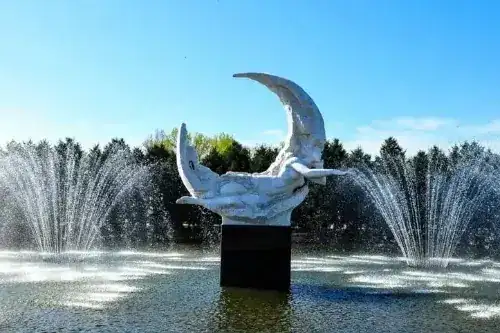
Changchun is known as the "Sculpture City." The Changchun World Sculpture Park holds 1,300+ works from 700 sculptors across 216 countries. It acquired Rodin masterworks including "The Thinker" and "The Age of Bronze," making Changchun the first Asian city to own large Rodin sculptures. The World Sculpture Conference, held 5 times, is known as the "Olympics of Sculpture."
Errenzhuan: Northeast folk performance art originated in the late Qing Dynasty, based on yangge (folk dance), folk songs, and lianhualuo. Deeply loved by Northeast people.
Jiju (Jilin Opera): Developed in the 1950s from Errenzhuan, with nearly 200 plays. Representative works include "Bao Gong Compensates" and "Peach, Plum, and Plum."
Huanglong Opera: Local opera from Nong'an County, created in 1959, based on Northeast shadow puppet music.
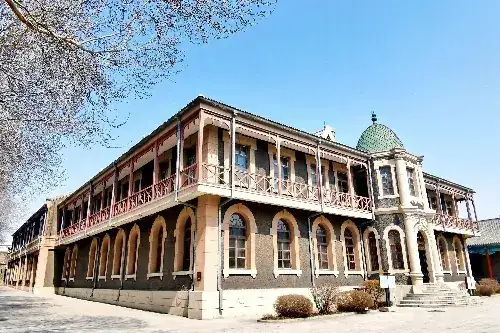
Changchun's urban layout features grand squares and radial axes, representing important modern planning concepts. The puppet Manchukuo palace and "Eight Ministries" buildings are well-preserved historical architecture. 99 designated historical buildings (237 structures), 10 historical-cultural districts (6 provincial-level). Xinmin Street is a China Historical and Cultural Street. FAW early buildings and Changchun Film Studio early buildings are listed as China 20th Century Architectural Heritage.
Religion
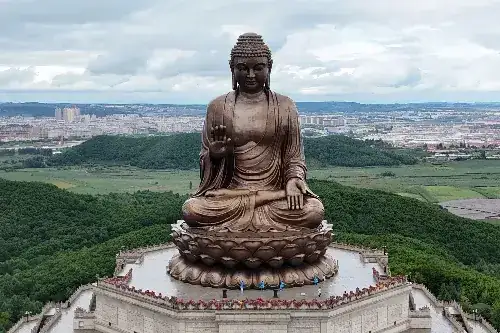
Five major religions: Buddhism, Taoism, Catholicism, Christianity, and Islam. Shamanism was historically practiced by Manchu people. Temples include Banruo Temple, Wanshou Temple, Qingzhen Mosque, and others.
Cultural Relics
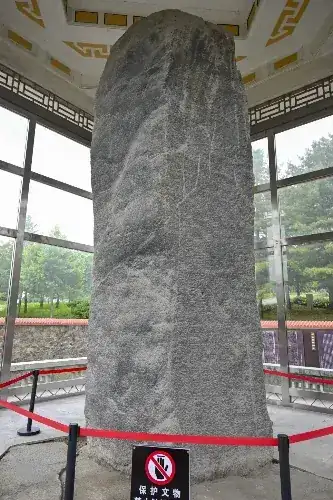
National historical and cultural city with rich industrial heritage. Industrial remnants include railways, trams, FAW, Changchun Film Studio, CRRC Changchun, and Changchun Tractor Factory, all with significant historical, technical, and architectural value.
Dialect
Changchun dialect: Northeastern Mandarin, Jilin-Changchun sub-group. Originated from Hebei and Shandong immigrants mixing with local Han and Manchu. Urban Changchun speech is closer to standard Mandarin due to post-1949 immigration.
Scenic Spots
52 national A-level scenic areas (4 at 5A). Changchun Confucian Temple is one of 14 temples nationwide participating in Confucian ceremonies. "New Fifteen Scenes" include Changchun Film Studio Museum, Jingyuetan National Forest Park, Changchun North Lake Wetland Park, and Changchun Northeast Tiger Park.
Food Specialties
Birthplace of Jilin cuisine, blending Manchu, Korean, Mongolian, and Han traditions. Imperial cuisine from the Manchukuo palace merged with Shandong cuisine to form Jilin cuisine. Famous dishes: Changchun pork tendon threads, Three Fresh Vegetables, Huibaozhen Dumplings, Manchu Eight Bowls, Snow Clothing Red Bean, pickled cabbage pork hotpot, and white meat blood sausage. Time-honored brands: Dingfengzhen, Huibaozhen, Fuyide, Zhengbutong, Chunfahe.
Famous People
External Exchange
20 sister cities in 19 countries and 49 friendly cooperation cities in 27 countries (as of 2022).
Honorary Titles
Honors List
Changchun's Firsts
- First Asian city to comprehensively adopt flush toilets, piped gas, and underground electrical wiring (1930s)
- First Chinese city fully planned by foreign experts, modeled after Paris and Canberra
- Known as "Automobile City," "Film City," "Science and Education City," "Forest City," "Sculpture City," "Optics City," "Green Food City," and "International Rail Transit Capital"
- Cradle of China's automobile, railcar, film, optics, applied chemistry, and biological products industries
- First automobile (1956), first car, first metro train, first maglev (experimental), first commercial remote sensing satellite constellation ("Jilin-1"), first genetic engineering hepatitis B vaccine, first genetic engineering interferon, first monoclonal antibody
Travel information can change. Check current opening hours, reservations and entry requirements before you travel.
Traveller discussion
Start the conversation with a helpful tip or a question.