
Jinzhong City
Jinzhong CityJinzhong is a prefecture-level city in Shanxi Province, located in the central part of the province, with the Taihang Mountains to the east and the Fen River to the west. It borders the provincial capital Taiyuan to the north,
Jinzhong City
Jinzhong is a prefecture-level city in Shanxi Province, located in the central part of the province, with the Taihang Mountains to the east and the Fen River to the west. It borders the provincial capital Taiyuan to the north, Changzhi and Linfen to the south, Yangquan to the northeast, and Lvliang to the southwest. As of June 2023, the city administers 2 districts, 8 counties, and 1 county-level city, covering 16,400 square kilometers. As of the end of 2023, the permanent resident population was 3,376,503. Jinzhong is a national cultural ecology protection zone with over 100 Stone Age cultural sites and many famous historical figures. During the Ming and Qing dynasties, Jinzhong merchants created a commercial network spanning 9,000 kilometers across Eurasia, dominating commerce for 500 years—known for "goods reaching the world, wealth filling the world, integrity spanning the world." The city is part of the Taiyuan metropolitan core area and an important regional transportation hub. The entire city is a national cultural ecology protection zone with 1,127 intangible cultural heritage items (21 national, 128 provincial). In the third national cultural relics census, 5,538 immovable cultural relics were registered. In 2025, GDP was 246.26 billion yuan, up 4.5%.
History
During the Shang Dynasty (c. 1600–1046 BCE), the area had vassal states including Pei, Ji, and Que. During the early Western Zhou Dynasty (1046–771 BCE), it was inhabited by both Huaxia tribes and nomadic Rong-Di peoples. During the Spring and Autumn period (770–476 BCE), the area mostly belonged to the Jin State. In 556 BCE, Duke Ping of Jin enfeoffed the minister Qi Xi with "Zhaoyuqi" (present-day central Shanxi), covering most of Jinzhong. In 514 BCE, Jin divided Qi's territory into 7 counties. During the Warring States period (475–221 BCE), after the Partition of Jin in 403 BCE, the area was divided among Zhao, Wei, and Han, mostly belonging to Zhao.
After the Qin Dynasty unified China in 221 BCE, 7 counties were established under Taiyuan Commandery. During the Western Han Dynasty (206 BCE–9 CE), 7 counties belonged to Taiyuan Commandery, plus Zhanxian under Shangdang and Pingzhou under Xihe. During the Three Kingdoms, the area was under Wei's Bingzhou. During the Northern Wei (386–534), Pingyao County was established (renamed from Pingtao to avoid Emperor Taiwu's name taboo), and the name has been used since. The Sui Dynasty (581–618) established Liao Prefecture and reorganized counties. The Tang Dynasty (618–907) saw further reorganization with provinces including Bingzhou, Fenzhou, and Yizhou under the Hedong Circuit. The Song, Jin, Yuan, Ming, and Qing dynasties maintained the Zezhou/Liaozhou administrative structure with various adjustments. During the Ming and Qing, the "Ten Counties of the Prefecture," "Eight Counties of Fen," and "Four Eastern Counties" system was established. The famous Jin merchants (Shanxi merchants) emerged during this period.
In 1948, Jinzhong was liberated. In 1999, the State Council approved the conversion from Jinzhong Prefecture to Jinzhong City, with Yuci converted from a city to a district. In 2019, Taigu County was converted to Taigu District.
Administrative Divisions
In 1992, Jiexiu County became Jiexiu City. In December 2019, the State Council approved converting Taigu County to Taigu District. As of June 2023, Jinzhong administers 2 districts (Yuci and Taigu), 8 counties (Qi, Pingyao, Lingshi, Shouyang, Xiyang, Heshun, Zuoquan, Yushe), and 1 county-level city (Jiexiu). The Municipal Government is at No. 199 Xinhua Street, Yuci District.
Geographical Environment
Location and Boundaries
Jinzhong is in the central-eastern part of Shanxi, between 111°25′–114°05′E and 36°40′–38°06′N. It borders Hebei Province to the east, Lvliang to the west, Yangquan and Taiyuan to the north, Changzhi and Linfen to the south. Total area: 16,400 square kilometers.
Landforms
The terrain includes mountains, hills, and plains, descending from east to west in a stepped pattern: Taihang Mountains, Qin-Lao Plateau, Taiyue Mountains, and Taiyuan Basin. Mountains and hills predominate. The highest point is Niujiaoma, the main peak of the Taiyue range in Lingshi County, at 2,567 meters. The lowest is at 574 meters where the Fen River exits. 4 major and 13 minor landform types are classified.
Climate
Jinzhong has a warm temperate continental semi-arid monsoon climate at mid-latitude on the Loess Plateau. Four distinct seasons: spring dry and windy, summer hot and rainy, autumn clear and cool, winter cold with little snow. Heat increases from east (mountains) to west (plains); precipitation decreases from east to west, concentrated in summer. 6 climate zones are identified.
Hydrology
Rivers are divided by the Taihang and Taiyue mountain crests into the Yellow River and Hai River basins. Eastern rivers (Songxi, Qingzhang, Zhuozhang) belong to the Hai River's South Canal and Ziya River systems. Western rivers (Xiaohe, Wuma, Changyuan, Huiji, Longfeng, Jingsheng) belong to the Yellow River's Fen River system. The Fen River flows south through the Taiyuan Basin. Three major karst spring systems exist: Niangziguan, Guozhuang, and Hongshan.
Natural Resources
Plant Resources
About 1,000+ wild plant species, including 300 tree/shrub species and 200+ herbaceous species. 8 species are listed in China's Rare and Endangered Plant Protection Catalogue (all national Class III): Manchurian walnut, Manchurian ash, wing-nut oil tree, Siberian ginseng, astragalus, gastrodia, and wild soybean.
Animal Resources
231 terrestrial vertebrate species across 4 classes, 27 orders, 66 families: 172 birds (55.17% of provincial total), 42 mammals (53.16%), 17 amphibians/reptiles (50%). 26 freshwater fish and 688 insect species. National Class I: leopard, forest musk deer, golden eagle, great bustard. Class II: 21 species including otter, marten, whooper swan, mandarin duck, and various raptors. 9 provincial protected species.
Mineral Resources
65 mineral types discovered, with 97 deposits, 400+ occurrences, and 443 mining sites. 13 types have proven reserves listed in the provincial mineral resources table, including coal, gypsum, limestone for cement, limestone for calcium carbide, sandstone for glass, refractory clay, iron ore, bauxite, ilmenite, chromium, pyrite, garnet, and clay for cement. 10+ advantageous minerals include coal, gypsum, limestone, and bauxite.
Population
As of the end of 2023, the permanent resident population was 3,376,503, a decrease of 17,969. Urban population: 2,110,840 (62.52%, up 1.09 percentage points). Birth rate: 5.41‰; death rate: 8.47‰; natural growth rate: -3.06‰. Sex ratio: 103.99.
Politics
Current Leadership
Sister Cities
Economy
Overview
In 2024, GDP was 245.88 billion yuan (up 2.3%). Primary: 15.38 billion (up 3.8%); secondary: 105.17 billion (up 2.0%); tertiary: 125.32 billion (up 2.2%). Per capita disposable income: 33,166 yuan (up 4.2%); urban: 44,434 yuan; rural: 20,669 yuan. General public budget revenue: 17.94 billion (down 7.8%). Fixed asset investment: 68.26 billion (down 1.0%).
Primary Industry
In 2024, agricultural value added was 16.29 billion yuan (up 3.8%). Grain output: 1.518 million tonnes (down 1.8%). Vegetable output: 2.119 million tonnes (up 1.4%). Fruit: 584,000 tonnes (up 2.0%). Meat: 232,000 tonnes (up 8.3%). Eggs: 163,000 tonnes (up 4.3%). Pig slaughter: 1.728 million (up 5.6%); cattle: 124,000 (up 12.4%); sheep: 753,000 (up 4.9%); poultry: 44.922 million (up 8.3%).
Secondary Industry
In 2023, 1,098 industrial enterprises above designated size grew by 4.2%. Mining grew 3.2%, manufacturing 8.3%, and utilities 3.6%. Coal industry grew 3.3%, non-coal 7.5%. In 2024, growth was 0.7%, with non-metallic mineral products up 12.5%, chemicals up 11.7%, and power up 10.3%.
Tertiary Industry
In 2024, service industry value added was 125.32 billion yuan (up 2.2%). Financial industry grew 9.6%, for-profit services 8.0%, accommodation/catering 5.4%, wholesale/retail 2.6%. Service enterprises above designated size (Jan–Nov) had revenue of 41.53 billion (up 6.9%), with internet services up 23.3%.
Retail sales of consumer goods: 69.59 billion yuan (up 1.7%). Import/export: 4.5 billion yuan (up 39.7%). Financial institution deposits: 411.71 billion (up 13.1%); loans: 269.90 billion (up 9.0%). Insurance premium income: 8.66 billion (down 2.0%).
Social Undertakings
Science and Technology
In 2023, 2,386 patents authorized, 1,308 valid invention patents. 344 high-tech enterprises with sales of 65.02 billion yuan. 22 provincial-level and above key laboratories, 17 provincial maker spaces, and 6 provincial and above technology business incubators.
Education
As of the end of 2023: 17 regular higher education institutions, 201 general secondary schools, 401 primary schools, and 617 kindergartens.
Culture
As of the end of 2023: 12 cultural centers, 93 performing troupes, 12 public libraries (2.5135 million books), 1,067 cultural heritage protection units, 12 theaters, 33 cinemas. 11 TV stations, 12 broadcast/TV programs, with 99.7% broadcast and 99.81% TV coverage. In August 2024, the city launched the "Yiran Jian Jinzhong" cultural tourism brand.
Healthcare
As of the end of 2023: 3,501 medical institutions, including 103 hospitals, 12 maternal/child health centers, 12 disease prevention centers. 18,559 beds (14,671 in hospitals). 23,953 health technical personnel (9,216 physicians, 10,643 nurses).
Sports
12 sports agencies, 1 sports school, 191 stadiums, 131 gymnasiums. 348 national Class II+ athletes and 199 Class II+ referees. Sports lottery sales: 331 million yuan.
Social Security
As of the end of 2023: urban employee pension 906,000; urban-rural resident pension 1,601,000; employee medical insurance 685,000; resident medical insurance 2,381,000; unemployment insurance 457,000; work injury insurance 421,000; maternity insurance 447,000. 5,543 urban and 59,964 rural residents received minimum living allowance. 92 residential service institutions with 10,213 beds. Welfare lottery sales: 240.01 million yuan.
Transportation
As of the end of 2023: total highway mileage 16,250 km, including 656 km of expressways. Civilian automobiles: 816,000 (up 4.8%), including 713,000 private vehicles. 490,000 sedans (470,000 private).
Railways: Daxi High-Speed Railway, South Tongpu Railway, Taijiao Railway, and Yangshe Railway run north-south; Shitai Railway runs east-west. Yuci Station (Class I), Jinzhong Station (high-speed, Class I), plus stations at Lingshi, Jiexiu, Pingyao, Taigu, and Qi. In 2015, Shanxi's first intercity railway (Jinzhong-Taiyuan Line 2) began construction.
Highways
National Highways 307 and 108 cross the city, connecting with 9 provincial highways, the Qingyin and Taijia expressways. The Jiexiu Bus Terminal is the highway passenger hub. National highways 108, 208, 207, and 307, plus 12 provincial highways, form a network. Express roads including Huitong Road and Malianying Road connect the main urban area with Taiyuan.
Historical Culture
Jin Merchant Culture
The Jin merchants (Shanxi merchants) created Jinzhong's commercial culture, covering business philosophy, professional ethics, management methods, and technical systems including bookkeeping, abacus, and encryption. The "Four Cities" (Taigu, Pingyao Ancient City, Qi County, and Yuci Old City) and "Six Compounds" (Chang Family, Qiao Family, Qu Family, Wang Family, Cao Family, and Kong Xiangxi mansions) embody this rich cultural heritage. Pingyao Ancient City was inscribed as a UNESCO World Heritage Site in 1997. The Jin merchants pioneered the 10,000-li Tea Road. In 2019, the "Wanli Tea Road" was included in China's World Cultural Heritage Tentative List.
Cultural Heritage Protection
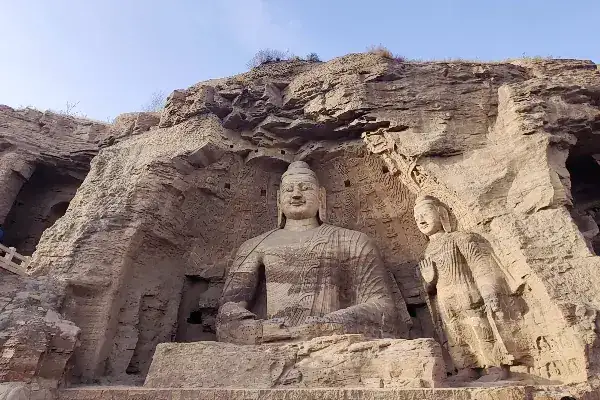
The city has 160+ Stone Age cultural sites, 5,539 immovable cultural relics (69 national, 96 provincial, 20 municipal, 882 county-level), and 41,932 collection items. World Cultural Heritage sites: Pingyao Ancient City, Shuanglin Temple, and Zhenguo Temple. 2 national historical and cultural cities, 2 historical and cultural towns, 17 historical and cultural villages, and 90 national traditional villages. 300+ revolutionary sites from the Jin-Cha-Ji base area.
Folk Customs and Intangible Heritage
Jinzhong is a hub of folk culture: the Cold Food Festival originated in Jiexiu, the Cowherd and Weaver Girl legend in Heshun, and the God of Longevity legend in Shouyang. Local folk arts include Zuoquan Little Flower Opera, Qi-Tai Yangge (folk dance), and Yushe Overlord Whip.
The city has 21 national, 128 provincial, and 995 municipal intangible cultural heritage items, with 19 national, 176 provincial, 476 municipal, and 1,942 county-level inheritors. 2 national and 2 provincial production protection demonstration bases have been established.
Scenic Spots
Overview
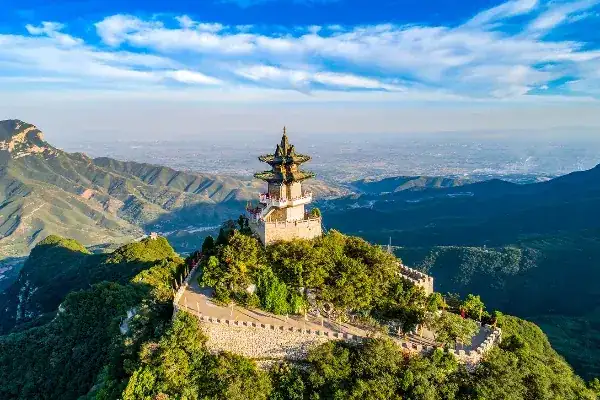
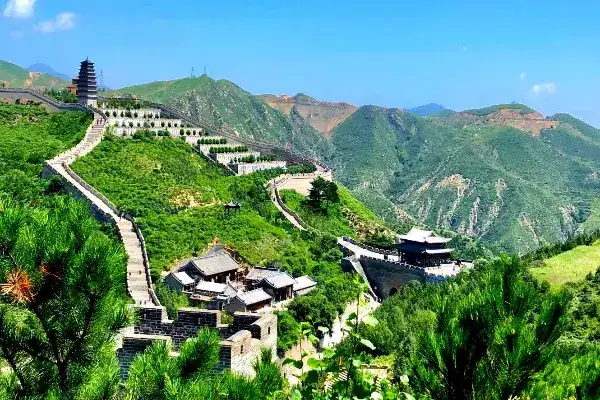
The city has 43 A-level tourist attractions, including 2 national 5A scenic areas: Pingyao Ancient City and Jiexiu Mian Mountain. Key tourism resources include "Two Cities" (Pingyao Ancient City, Yuci Old City), "Two Temples" (Shuanglin, Zishou), "Four Mountains" (Jiexiu Mian, Yuci Wujin, Lingshi Shigao, Shouyang Fang), and "Five Compounds" (Cao, Qiao, Qu, Wang, Chang family mansions)—a major tourism route in Shanxi.
Attractions
Major attractions include the Qiao Family Compound, Wang Family Compound, Pingyao Ancient City, Chang Family Compound, Mian Mountain, Zhangbi Ancient Castle, and many other historical sites and natural scenic areas.
Others
Industrial tourism sites include Qi County Red Sea Glass Cultural Art Park, Jiexiu Hongshan Ceramics, Taigu Xinbingji, Old West Vinegar Museum, and Yiyuan Winery.
Famous Specialties
Local specialties include Jiexiu stuffed candy, buckwheat cold noodles, and Taigu cake.
Famous Figures
Honorary Titles
Travel information can change. Check current opening hours, reservations and entry requirements before you travel.

Traveller discussion
Start the conversation with a helpful tip or a question.