
Shuozhou City
Shuozhou CityShuozhou, also known as Shuo or Mayi, is a prefecture-level city in Shanxi Province, located in the northern part of the province, in the upper reaches of the Sanggan River. It borders Inner Mongolia to the northwest and contro
Shuozhou City
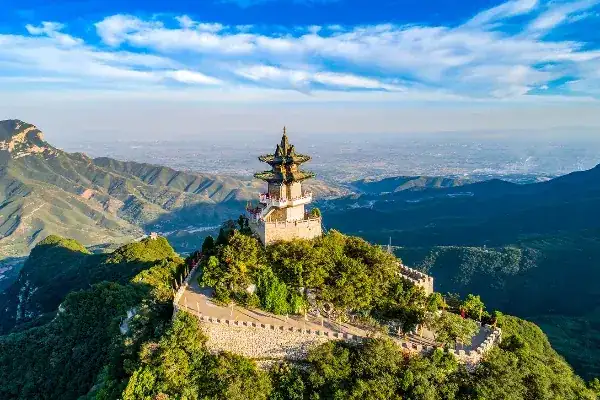
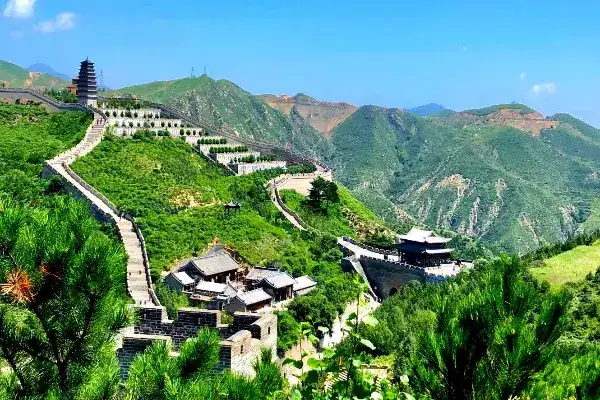
Shuozhou, also known as Shuo or Mayi, is a prefecture-level city in Shanxi Province, located in the northern part of the province, in the upper reaches of the Sanggan River. It borders Inner Mongolia to the northwest and controls the Yanmen Pass to the south. The terrain is surrounded by mountains on three sides (north, west, and south) with the Sanggan River alluvial plain in the middle. It has a temperate continental monsoon climate, with a total area of 10,600 square kilometers. As of March 2024, the city administers 2 municipal districts, 3 counties, and 1 county-level city. As of the end of 2024, the permanent resident population was 1,567,800. Shuozhou has a long history where Central Plains agricultural civilization and grassland nomadic civilization clashed and blended. The city is home to the Yingxian Wooden Pagoda, one of the world's three great pagodas, and over 300 kilometers of relatively well-preserved Great Wall. The Great Wall and the Tea-Horse Road intersect at Shahu Pass in Youyu. Notable historical figures include the Three Kingdoms general Zhang Liao, Tang Dynasty general Yuchi Gong, Later Tang founding emperor Li Cunxu, and Ming Dynasty prime minister Wang Jiaping. In 2024, the GDP was 132.85 billion yuan, down 0.5%.
History
Evidence from ancient sites at Shiyu, Bianyao, and Emaokou proves human habitation since the late Paleolithic period. Before the Spring and Autumn period (pre-770 BCE), the area was inhabited by the northern Di minority. During the Warring States period (475–221 BCE), it became part of the State of Zhao. During the Qin Dynasty (221–206 BCE), Yanmen Commandery was established with its seat at Shanwu (present-day Youyu County).
During the Western Han Dynasty (206 BCE–9 CE), Mayi, Zhongling, Juyang, Yinguan, Wangtao, Lie, Loufan, and Shanwu counties were established under Yanmen Commandery. During the Eastern Han Dynasty, the commandery seat moved to Yinguan. At the end of the Eastern Han, chaos and population flight led to the abolition of most counties.
During the Western Jin Dynasty (265–316), populations north of the Yanmen Pass were moved south, and the area came under the rule of Tuoba Yilu, Prince of Dai. During the Northern Wei Dynasty (386–534), the area was part of the imperial domain, with Sanggan, Fanzhi, and Mayi commanderies established. In 555, the Northern Qi (550–577) moved the Shuozhou seat to southwest Mayi. In 557, Mayi County was renamed Zhaoyuan. The Northern Zhou (557–581) elevated Shuozhou to a General Administration.
During the Sui Dynasty (581–618), the area became Mayi Commandery. During the Tang Dynasty (618–907), it was renamed Shuozhou in 621, then Mayi Commandery in 742. In 843, it was placed under the Datong Military Commissioner. During the Five Dynasties (907–960), Yingzhou was established at Jincheng. In 936, Shuozhou, Huanzhou, and Yingzhou were ceded to the Khitan.
During the Liao Dynasty (907–1125), Shuozhou and Yingzhou belonged to the Western Capital Circuit. During the Yuan Dynasty (1271–1368), it was under the Datong Circuit of the Shanxi Route. During the Ming Dynasty (1368–1644), Shuozhou was subordinate to Datong Prefecture, administering Mayi County. In 1725, the Qing Dynasty established Shuoping Prefecture. During the Republic of China, the area was under Yanmen Circuit and later directly under Shanxi Province. During the War of Resistance, it was divided between the Jin-Sui and Jin-Cha-Ji border regions.
After the PRC was founded, it belonged to Chahar Province. In 1952, it was transferred to Shanxi Province under the Yanbei Special District. In January 1989, the State Council approved the establishment of Shuozhou City from parts of the former Yanbei Prefecture. In July 1993, Yingxian, Youyu, and Huairen counties were added.
Administrative Divisions
In July 2018, Huairen County was converted to the county-level Huairen City. As of March 2024, Shuozhou administers 2 districts (Shuocheng and Pinglu), 3 counties (Shanyin, Yingxian, Youyu), and 1 county-level city (Huairen), with 62 townships/towns and 8 sub-districts. The Municipal Government is at No. 3 Xifu West Street, Shuocheng District.
Geographical Environment
Location and Boundaries
Shuozhou is in northern Shanxi Province, between 111°53′–113°34′E and 39°5′–40°17′N, at the southwestern end of the Datong Basin. It borders Xinzhou to the south, Datong to the north, and Inner Mongolia to the northwest. The east-west width is about 145 kilometers, north-south length about 133 kilometers, with a total area of 10,600 square kilometers. It is on the Loess Plateau, between the inner and outer Great Walls, at the junction of Shanxi, Shaanxi, and Inner Mongolia. It is 200 kilometers south to Taiyuan, 129 kilometers north to Datong, 230 kilometers to Hohhot, and 502 kilometers east to Beijing.
Landforms
The overall terrain is a loess-covered mountain plateau, surrounded by mountains on three sides with the Sanggan River alluvial plain in the center, forming an inverted V-shape. Mountainous areas cover 2,816 square kilometers (26.5%), hilly areas 3,648 square kilometers (34.3%), and plains 4,163 square kilometers (39.2%). The northwest features the Hongtao Mountains (main peak Dabeishan at 1,947m), the southwest the Guancen Mountains (main peak Heituoshan at 2,147m), and the southeast the Heng Mountains (main peak Mantoushan at 2,426m, the city's highest peak). The Shuozhou Basin is part of the Datong Basin, a semi-enclosed basin 48.5 kilometers at its widest, with elevations generally above 1,000 meters.
Climate
Shuozhou has a temperate continental monsoon climate, classified as the northern Shanxi temperate-cold semi-arid zone. Spring has little rain, strong winds, and high evaporation; summer has concentrated rainfall with occasional heavy rain, hail, and thunderstorms; autumn has little rain with cool mornings and hot middays; winter has strong winds, little snow, and cold temperatures. Average annual temperature is 3.6°C–7.3°C. January is the coldest month, averaging -14.9°C to -9.4°C. Annual sunshine: 2,600–3,100 hours (63–65% sunshine rate).
Hydrology
Shuozhou's rivers belong to the Hai River and Yellow River basins. The Yellow River system covers the northern and northwestern areas, mainly the Cangtou River and its tributaries (6 rivers), covering 2,953 square kilometers (27.7%). The Hai River system's Yongding River tributaries cover the eastern and southern plains, mainly the Sanggan River and its 20 tributaries, covering 7,690 square kilometers (72.3%).
Natural Resources
Water Resources
The multi-year average total water resources are 790 million cubic meters, including 468 million cubic meters of river runoff and 703 million cubic meters of groundwater (382 million overlap). Per capita water resources: 627 cubic meters (24.1% of the national average but above the provincial average of 490). Per mu water resources: only 127 cubic meters.
Plant Resources
The city has 96 families, 408 genera, and 900 species of seed plants, including 131 cultivated crop varieties. Wild plants include 107 medicinal species, 18 starch/sugar species, 17 oil-bearing species, 22 fiber species, and 14 ornamental species. Nine species are under national protection, including ginkgo (Class II) and Siberian ginseng, wild soybean, yellow horn, Scots pine, and desert poplar (Class III).
Animal Resources
The city has 19 wild mammal species, 62 bird species, and 225 insect species. National Class I protected animals include the tiger (mammal), black stork, and great bustard (birds). Class II protected animals include the leopard, swan, golden eagle, grey crane, sparrowhawk, and various falcons.
Mineral Resources
Over 30 mineral types have been proven, primarily coal (49.4 billion tonnes, one-sixth of Shanxi's reserves, high-quality thermal coal), kaolinite, limestone, bauxite, refractory clay, mica, graphite, quartz, feldspar, iron ore, plus gold, copper, rare earths, and zirconium. Coal mining is a pillar industry, with Shuocheng, Pinglu, Shanyin, Huairen, and Youyu all being national key coal-producing counties/districts.
Population
As of the end of 2023, the permanent resident population was 1,578,963, a decrease of 11,692 (0.74%). Birth rate: 5.75‰; death rate: 7.67‰; natural growth rate: -1.92‰. Urban population: 1,014,702 (64.26%); rural: 564,261 (35.74%). Males: 817,950 (51.80%); females: 761,013 (48.20%); sex ratio: 107.48.
Politics
Current Leadership
Sister Cities
Economy
Overview
In 2024, GDP was 132.85 billion yuan, down 0.5%. Primary industry: 9.60 billion yuan (up 3.0%, 7.23%); secondary: 54.66 billion yuan (down 2.6%, 41.14%); tertiary: 68.59 billion yuan (up 0.3%, 51.63%). Per capita GDP: 84,439 yuan (about $11,857 USD).
Fixed asset investment: 38.98 billion yuan (up 3.2%). General public budget revenue: 13.136 billion yuan (down 12.61%). General public budget expenditure: 26.146 billion yuan (down 10.6%).
Primary Industry
Crop planting area: 5.106 million mu, including 4.149 million mu of grain (up 9,000 mu). Grain output: 1.296 million tonnes (up 0.5%). Meat output: 83,000 tonnes (up 9.7%), including pork 34,000, mutton 32,000, and beef 11,000 tonnes. Milk: 629,000 tonnes (up 0.1%); eggs: 37,000 tonnes (up 1.2%).
Secondary Industry
Industrial enterprises above designated size declined 5.1%, with coal down 4.0% and non-coal down 12.1%. By ownership, state-owned enterprises grew 62.0%, joint-stock enterprises declined 5.8%. Revenue: 153.19 billion yuan (down 14.6%), with coal at 106.32 billion (down 15.2%) and utilities at 26.20 billion (down 6.4%). Construction enterprises (169 qualified) achieved output of 8.06 billion yuan (down 9.1%).
Tertiary Industry
In 2024, service industry value added was 68.59 billion yuan (up 0.3%). Wholesale and retail: 10.45 billion (down 3.1%); transportation/warehousing/postal: 6.93 billion (down 5.3%); accommodation/catering: 1.19 billion (up 2.5%); financial: 6.31 billion (up 9.8%); real estate: 7.25 billion (up 1.8%). Service enterprises above designated size saw revenue decline 5.2%.
Retail sales of consumer goods: 36.93 billion yuan (up 2.8%). Financial institution deposits: 290.197 billion yuan (up 12.176 billion); loans: 157.893 billion (up 11.282 billion). Securities trading: 59.449 billion yuan (up 40.34%). Insurance premium income: 3.578 billion yuan (up 14.95%).
Social Undertakings
Science and Technology
In 2024, 588 patents were authorized (95 invention, 430 utility model, 63 design). The city has 6 national basic weather stations, 11 national weather observation stations, 128 regional automatic weather stations, and various specialized observation stations.
Education
In 2024, general undergraduate enrollment was 2,524 (11,553 total enrollment); vocational college enrollment 6,519 (20,442 total); secondary vocational 4,907 (16,034 total); general high school 17,174 (49,331 total); junior high 20,890 (66,467 total); primary 16,120 (113,103 total).
Culture
As of the end of 2024, the city has 6 state-owned performing troupes, 7 cultural centers, 4 radio stations, 5 TV stations, 7 public libraries (1.4237 million books), with 100% broadcast and TV population coverage.
Healthcare
As of the end of 2024, the city has 1,911 medical institutions (including 6 maternal/child health centers), 10,439 authorized beds (10,001 actual), and 10,421 health technical personnel.
Sports
The city has 798 fitness guidance centers/sites and 6,326 sports instructors. 85 sports events were held in 2024. Sports lottery sales: 145 million yuan.
Social Security
As of the end of 2024, urban employee pension insurance covered 386,900 (up 6,900); urban-rural resident pension 835,800 (down 54,300); unemployment insurance 254,300 (up 7,500); work injury insurance 220,200 (up 9,100); resident medical insurance 1,093,100 (down 36,900); employee medical insurance 243,000 (up 11,900). 9,000 urban and 65,600 rural residents received minimum living allowance. 7,734 rural residents received special hardship support.
Transportation
The Erguang Expressway, Hubu Expressway, National Highway 208, Pingwan Road, and Shuowei Road pass through the city. The Rongwu Expressway and National Highway 336 run north-south and east-west respectively. As of the end of 2024, total highway mileage was 10,288.8 kilometers, including 467.4 km of expressways, 815.1 km of trunk roads, and 9,006.3 km of rural roads. Highway passenger volume: 2.8904 million; freight volume: 9.9627 million tonnes.
Railways include the Beitongpu electrified double-track, Shenshuo, Shuohuang, Jidayuan high-speed, and Daxi high-speed railways.
Shuozhou Zirun Airport officially opened on December 18, 2023, with flights to Shanghai, Tianjin, Changsha, Guangzhou, Harbin, Guiyang, and Shenyang. In 2024, the airport served 110,500 passengers on 2 routes to 3 cities.
Historical Culture
Folk Customs
"Lao Gan" is a traditional firework display in Shuocheng District, performed during the Lantern Festival for at least a century. The "Jia" (armor) and "Feng" (abundance) shaped wooden frames hold fireworks symbolizing twelve months of good wishes and a bountiful harvest.
Dry Boat Running is a folk performance tracing back over 2,000 years to the memory of the poet Qu Yuan, where performers simulate boat-rowing on land.
Ti Gu La Hua is a dance with drumming and flower-waving, featuring male "drum kickers" and female "flower pullers," with Liangshan characters as the main face-paint theme.
Local Spirit
Youyu County, located at a natural wind gap of the Mu Us Desert, suffered from severe sandstorms and barren land. Since the 1950s, successive leadership teams led the people in persistent tree-planting, transforming 1,969 square kilometers of barren desert into a "green oasis beyond the Great Wall." Forest coverage increased from less than 0.3% at the founding of the PRC to 57%, creating the internationally acclaimed ecological miracle known as the "Youyu Spirit." General Secretary Xi Jinping has praised and called for the promotion of the Youyu Spirit, which embodies "serving the people wholeheartedly, rising to challenges, working hard, and persevering for long-term benefits."
Intangible Cultural Heritage
As of February 2025, the city has 6 national, 30 provincial, and 267 municipal intangible cultural heritage items. National-level items include: Shuozhou Yangge Opera (folk dance) (combining martial arts, dance, and opera, listed 2006), Jinbei Daoqing Opera (northern Chinese Daoist musical theater, listed 2006), Sai Opera (ancient masked performance possibly related to Nuo rituals), Lihua Spring Baijiu (Chinese liquor) brewing technique (traditional distillation, listed 2008), Huairen Wanghuo custom (large coal-tower bonfires for Spring Festival, listed 2011), and Shuozhou traditional gold-gilding technique (metal decoration dating back to the Warring States period, listed 2021).
Cultural Heritage Protection
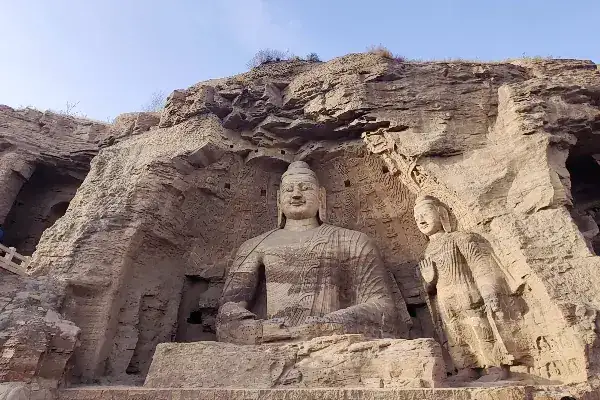
As of February 2025, the city has 2,487 cultural heritage protection units of all levels, including 8 national, 24 provincial, 58 municipal, and 396 county-level. These cover ancient sites, buildings, and tombs.
Scenic Spots
Overview
As of January 2025, the city has 4 national AAAA-level and 4 national AAA-level tourist attractions.
Major Attractions
Famous Specialties
Six products have been converted from agricultural geographical indications to geographical indication products: Youyu mutton, Youyu oat rice, Youwei potato, Yingxian carrot, Yingxian green pepper, and Hongshan buckwheat. As of August 2025, the city has 7 geographical indication trademarks, 8 geographical indication products, and 107 authorized user enterprises.
Famous Figures
Honorary Titles
Travel information can change. Check current opening hours, reservations and entry requirements before you travel.

Traveller discussion
Start the conversation with a helpful tip or a question.