
Changzhi City
Changzhi CityChangzhi, historically known as Shangdang, Luzhou, and Lu'an Prefecture, is a prefecture-level city in Shanxi Province and a provincial sub-center city. Located in southeastern Shanxi at the junction of Shanxi, Hebei, and Henan
Changzhi City
Changzhi, historically known as Shangdang, Luzhou, and Lu'an Prefecture, is a prefecture-level city in Shanxi Province and a provincial sub-center city. Located in southeastern Shanxi at the junction of Shanxi, Hebei, and Henan provinces, it sits in the Shangdang Basin. As of May 2026, the city administers 4 districts and 8 counties, covering 13,955 square kilometers. As of the end of 2024, the permanent resident population was 3,097,600. The city is on the southeastern edge of the Loess Plateau with complex, mountainous terrain in a basin formation, and has a warm temperate semi-humid continental monsoon climate. The name "Changzhi" (Lasting Governance) dates from 1529, meaning "lasting peace and stability." In 348 BCE, the State of Han established Shangdang Commandery here. The city has over 3,500 ancient buildings and is known as the "Museum of Ancient Chinese Architectural Art." It is a center city of southeastern Shanxi and one of the birthplaces of the Chinese nation. Su Shi praised it as "Shangdang has always been the ridge of the world." In 2025, GDP was 255.83 billion yuan, up 4.3%.
Name Evolution
Changzhi was anciently called Shangdang, named because "it sits at the summit of the Taihang Mountains, with the highest terrain, allied with heaven." In the Ming Dynasty's Jiajing reign (1522–1566), a local clerk named Chen Qing fled into the Qingyang Mountains and launched a rebellion. In 1529, after suppressing the uprising, the Ming court elevated Luzhou to a prefecture and established a county, naming the prefecture "Lu'an" and the county "Changzhi" (Lasting Governance), hoping for lasting peace. The name has been used since.
History
Changzhi was historically the territory of "Shangdang" and "Luzhou." During the Shang Dynasty (c. 1600–1046 BCE), it was the State of Li, belonging to Jizhou. During the Spring and Autumn period (770–476 BCE), it was the State of Luzi Ying'er, later absorbed by the Jin State. During the Warring States period (475–221 BCE), it belonged to the State of Han, which established Shangdang Commandery in 348 BCE. After Qin Shi Huang unified China in 221 BCE, Shangdang became one of the 36 commanderies nationwide.
During the Eastern Han Dynasty (25–220 CE), Shangdang belonged to Bingzhou. During the Three Kingdoms, it returned to Bingzhou under the Wei State. During the Western Jin (265–316), it changed hands among Former Zhao, Later Zhao, and Western Yan. In 578, the Northern Zhou (557–581) established Luzhou. During the Sui Dynasty (581–618), it was changed to Shangdang Commandery. During the Tang Dynasty (618–907), it became Luzhou with a Governor-General's office. In the Five Dynasties period (907–960), it was successively under Later Tang, Later Liang, Later Jin, Later Han, and Later Zhou. During the Song Dynasty (960–1279), it was Longde Prefecture. During the Jin Dynasty (1115–1234), Luzhou belonged to the Henan South Circuit. During the Yuan Dynasty (1271–1368), it belonged to Jinning Circuit. In 1529, the Ming Dynasty elevated Luzhou to Lu'an Prefecture. The Qing Dynasty (1644–1912) maintained this system. In 1945, Changzhi was liberated and established as a city.
Administrative Divisions
Divisional History
In 1983, Changzhi had 2 districts and 2 counties. In 1994, Lucheng County became Lucheng City. In June 2018, the State Council approved merging the Cheng and Jiao districts into Luzhou District, changing Changzhi County to Shangdang District, Tunliu County to Tunliu District, and Lucheng City to Lucheng District.
Division Details
As of October 2022, Changzhi administers 4 districts (Luzhou, Shangdang, Tunliu, and Lucheng) and 8 counties (Xiangyuan, Pingshun, Licheng, Huguan, Zhangzi, Wuxiang, Qinxian, and Qinyuan). The municipal government is in Luzhou District.
Geographical Environment
Location and Boundaries
Changzhi is in southeastern Shanxi, between 111°58′03″–112°44′04″E and 35°49′–37°08′N. The maximum east-west extent is about 150 km, north-south about 140 km. It borders Hebei and Henan to the east across the Taihang Mountains, Linfen to the west across the Taiyue Mountains, Jincheng to the south, and Jinzhong to the north. Total area: 13,955 square kilometers (8.90% of the province). The city is 229 km by road from Taiyuan and 623 km from Beijing.
Geology
The area has complex geology on the southeastern edge of the Loess Plateau. The Taihang range features Lower Paleozoic carbonate rocks; the Taiyue range has Triassic, Carboniferous, and Permian clastic rocks; hilly and basin areas have Quaternary and Tertiary loose sediments including red clay and loess.
Landforms
The terrain is mountainous and complex, generally basin-shaped. The highest point is the main peak of Taiyue Mountain in northwestern Qinyuan County at 2,541 meters; the lowest is at 380 meters where the Zhuozhang River exits Pingshun County, with a maximum relief of 2,161 meters. Plains cover 15.9%, hills 33.4%, and mountains 50.7%. Five landform types include: mid-mountain areas (~4,800 km², ~1,400m), low-mountain areas (~6,000 km², ~1,200m), transition zones (900–1,200m), basin plains (~3,000 km², 900–1,000m, the most important agricultural area), and river floodplains and terraces.
Climate
Changzhi has a warm temperate continental monsoon climate, mild and dry with four distinct seasons. The average annual temperature is 10.3°C. Annual precipitation ranges from 511.2 to 795.9 mm. Annual sunshine averages 2,185.1 hours. Frost-free period averages 220 days. Main meteorological hazards include hail, frost, drought, and floods.
Hydrology
The city straddles the Hai River and Yellow River basins. The Hai River basin covers 11,103 km² (79.9%) and the Yellow River basin 2,793 km² (20.1%). The Zhuozhang River (the "mother river of Shangdang") is 364.2 km long within the city, with a basin of 10,035 km² (72.2% of total). The Qin River is 98 km long with a basin of 2,283 km² (16.4%). There are 97 rivers with drainage areas exceeding 50 km². The Xin'an Spring is Shanxi's second-largest karst spring, with excellent water quality and abundant flow.
Soil
Changzhi has 2 soil types, 7 subtypes, 16 genera, and 34 species. Cinnamon soil dominates (423,000 mu, 82%), widely distributed at 820–1,300m elevation. Meadow soil covers 46,000 mu (9%), in 3 subtypes.
Natural Resources
Biological Resources
The city has 243 wild animal species, including 45 mammals (2 national Class I: leopard and musk deer; 4 Class II), 177 birds (4 national Class I: black stork, golden eagle, great bustard, brown eared pheasant; 22 Class II), 15 reptiles, and 6 amphibians. Vegetation is mainly coniferous-broadleaf mixed forest. The Lingkong Mountain in Qinyuan preserves natural forest communities 200–300 years old. Over 20 nationally/provincially protected plant species include southern yew, Manchurian walnut, purple linden, Siberian ginseng, and Manchurian ash.
Water Resources
Multi-year average total water resources: 1.90673 billion cubic meters/year (1.49860 billion local + 408.13 million inflow). River runoff: 1.19197 billion cubic meters; groundwater: 925.11 million (after deducting 618.48 million overlap, net: 937.08 million). The Xin'an Spring covers an area of 10,950 km² across 11 counties plus Yushe County in Jinzhong.
Mineral Resources
All 12 counties except Qinxian have mineral resources. 40 mineral types include coal, iron, limestone, mineral water, dolomite, silica, gypsum, bauxite, pyrite, refractory clay, and others. The most significant are coal, iron, and limestone. In 2019, raw coal output was 130 million tonnes. Proven coalbed methane reserves exceed 57 billion cubic meters.
Politics
Population
Population Numbers
In 2024, births: 24,500 (7.87‰); deaths: 30,000 (9.63‰); natural growth rate: -1.76‰. Sex ratio: 103.57. Permanent resident population: 3,097,600.
Ethnic Composition
As of September 2009, there are 34 ethnic minorities totaling about 30,000 (1% of total, 25% of the province's minority population), with Hui accounting for 95% of the minority population, mostly in urban districts.
Language
Changzhi dialect belongs to the Jin Chinese, Shangdang sub-group, preserving the entering tone with 6 single-character tones.
Religion
The city has 5 major religions: Buddhism, Daoism, Islam, Catholicism, and Protestantism, with 4 municipal-level patriotic religious organizations.
Economy
Overview
In 2024, GDP was 259.34 billion yuan (up 2.6%). Primary: 9.95 billion (up 4.7%, 3.9%); secondary: 147.90 billion (up 2.0%, 57.0%); tertiary: 101.49 billion (up 2.9%, 39.1%). Per capita GDP: 83,333 yuan ($11,701). In 2025, GDP was 255.83 billion yuan (up 4.3%).
Fixed asset investment in 2025: 102.71 billion yuan (up 0.5%). General public budget revenue: 21.57 billion (down 24.2%). General public budget expenditure: 49.40 billion (down 10.4%). Urban per capita disposable income: 46,369 yuan (up 3.6%); rural: 23,617 yuan (up 5.4%). CPI: +0.4%.
Primary Industry
In 2024, meat output was 102,000 tonnes (up 10.0%), including pork 90,000, beef 6,000, and mutton 6,000 tonnes. Egg output: 143,000 tonnes; milk: 16,000 tonnes. In 2025, grain output reached a record 2.53 billion jin (126,500 tonnes). Specialty agriculture includes Qinzhou yellow millet and Lu dangshen (Codonopsis), with planting areas increased by 34,000 and 25,000 mu respectively.
Secondary Industry
Changzhi is a national pilot city for industrial transformation, with traditional pillars (modern coal chemical, energy) and emerging industries (carbon-based new materials, high-end equipment manufacturing, optoelectronic LED, modern pharmaceuticals). In 2025, industrial enterprises above designated size grew by 6.2%, with a sales-to-output ratio of 97.1%. 2,531 projects were implemented with total investment of 102.7 billion yuan. 176 transformation projects were completed, including lithium iron manganese phosphate cathode materials. High-tech manufacturing grew 12.2%, with carbon-based new materials revenue up 97.8% and high-end equipment up 13%. Construction output: 32.75 billion yuan (down 3.8%).
Tertiary Industry
In 2025, retail sales of consumer goods reached 67.21 billion yuan (up 4.2%). The city implemented Wuyue Plaza and Tongluowan cultural-commercial projects, creating 15 distinctive commercial districts with over 100 first-store openings. Import/export totaled 1.61 billion yuan (up 3.5%). 1,012 investment projects were signed totaling 220.7 billion yuan, with 80.5% commencement rate. Beijing-Changzhi cooperation implemented 37 projects, with education cooperation experience nationally promoted.
15 key scenic areas saw visitor numbers grow 24.3% and revenue grow 30.3%. Financial institution deposits reached 513.30 billion yuan (up 6.5%), with 32.5 billion in new loans.
Social Undertakings
Education
In 2025, 6 inclusive kindergartens, 8 township boarding schools, and 8 county-level standardized high schools were built. As of the end of 2024: 6 higher education institutions, 32 secondary vocational schools, 52 general high schools, 113 junior high schools, 360 primary schools, and 726 kindergartens.
Science and Technology
In 2025, science and technology fiscal investment grew 20%, driving total R&D investment to 3.55 billion yuan. Technology contract transactions: 1.06 billion yuan. 334 high-tech enterprises and 104 provincial-level and above innovation platforms. 10 provincial science and technology awards were received.
Culture
In 2025, 7 new public cultural spaces were built, with 2,575 free performances in rural areas. As of the end of 2024: 147 performing troupes, 13 cultural centers, 27 museums, 13 public libraries (2.89 million books), 11 radio stations, 14 TV stations, with 100% population coverage.
Healthcare
In 2025, Changzhi was approved for the national public hospital reform demonstration project, securing 500 million yuan in central funding. Free medical insurance for infants 0–3 and reduced prenatal checkup fees were implemented. As of the end of 2024: 3,887 medical institutions, 252 hospitals/health centers, 20,117 beds, 27,276 health technical personnel.
Sports
In 2024, athletes won 1 world championship and 2 national championships. The city hosted the 2024 China Team International Football Invitational.
Social Security
In 2025, vocational training for 28,000 and 48,000 new urban jobs. In 2024, 72 community elderly care facilities were built. Pension insurance: 2.423 million; medical insurance: 2.967 million; unemployment insurance: 539,000; work injury insurance: 626,000; maternity insurance: 440,000.
Safety Production
On May 22, 2026, a gas explosion occurred at the Liushenyu Coal Mine in Qinyuan County, killing 82 people with 2 missing—a major mining accident.
Environmental Protection
In 2025, 479 scattered and polluting enterprises were rectified. All 6 air quality indicators met standards for the first time. 244,000 mu of afforestation and 450,000 mu of soil erosion control were completed. Green loan balance: 29.74 billion yuan (up 12.5%).
Transportation
As of the end of 2024, the city has 1,648 urban transit vehicles (868 buses, 4,933 taxis including 1,984 ride-hailing vehicles). 4 expressways, 4 national highways (207, 208, 309, 341), 13 provincial highways, and 71 county roads serve the city. Total highway mileage: 12,890.7 km, including 471.4 km of expressways.
Railways: Taijiao, Hangchang, Jin-Yu-Lu (Wari), and Zheng-Tai High-Speed railways, with stations at Changzhi, Changzhi North, Changzhi East, Changzhi South, and Lucheng.
Aviation
Changzhi Wangcun Airport serves the city.
Historical Culture
Historical Sites
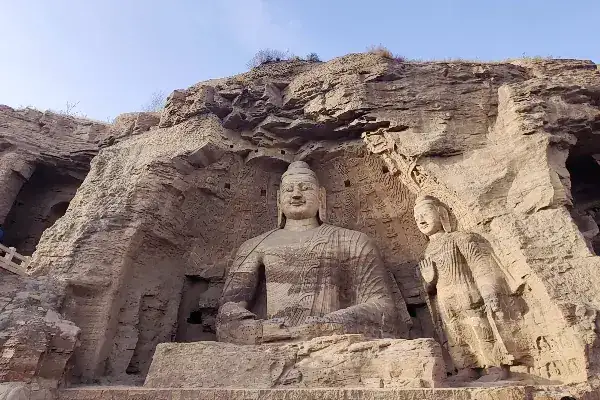
The city has over 3,500 ancient buildings spanning Tang to Qing dynasties, known as the "Museum of Ancient Chinese Architectural Art." 73 national key cultural heritage sites and 189 pre-Yuan Dynasty wooden structures—the most of any prefecture-level city nationwide.
Intangible Cultural Heritage
As of May 2023, 19 national, 129 provincial, and 408 municipal intangible cultural heritage items have been listed. Shangdang Bangzi (clapper opera), one of Shanxi's four major Bangzi opera genres, was formed in the late Ming/early Qing and designated as national intangible cultural heritage in 2008. Shangdang Luozi, formed in the Daoguang era of the Qing Dynasty, was also listed nationally in 2008.
Traditional Customs
"Sending the Fifth Watch" (Song Wugeng), also called "Sending Away Poverty," is observed on the 5th day of the first lunar month, when accumulated ashes and garbage are divided into 5 piles and placed by the roadside with incense and firecrackers. Star Worship ceremonies are held three times (8th, 18th, and 28th of the first lunar month) for disaster prevention. The Fill-the-Granary Festival on the 25th features grain-flour "lamp" offerings and iron-flower fireworks.
Scenic Spots
Overview
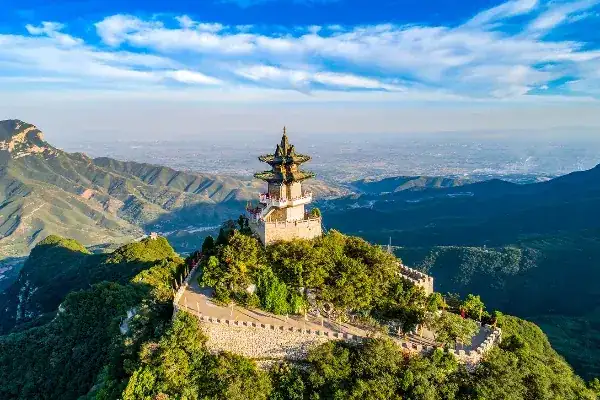
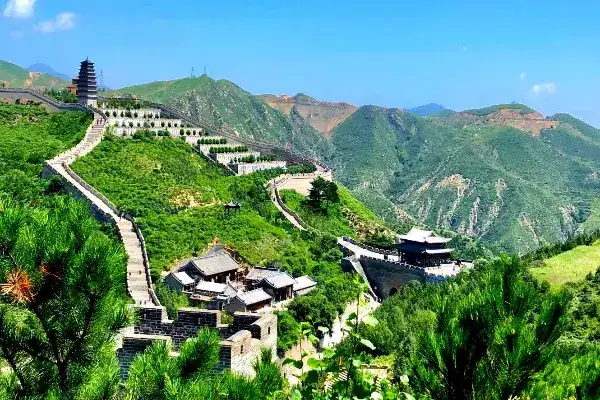
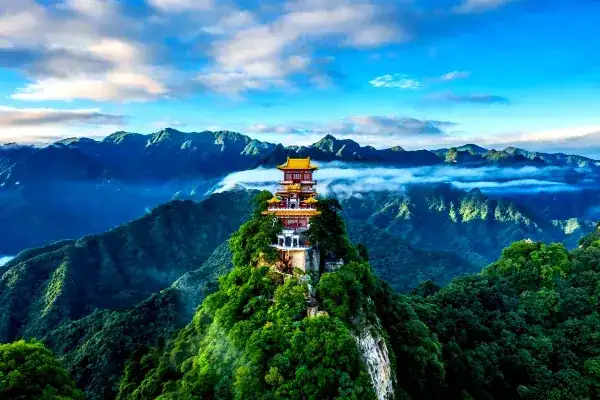
Changzhi has 73 national key cultural heritage sites and 189 pre-Yuan wooden structures, ranking first among prefecture-level cities. Major attractions include the Taihang Grand Canyon (Baquan Gorge is a national 5A scenic area), Taihang Canyon National Forest Park (5,848 hectares, 74.9% forest coverage, 300+ rare plant species and 130 protected animal species), the Petrified Wood Nature Reserve in Zhangzi County (90+ exposed specimens, largest diameter 1.24m), and Lingkong Mountain Nature Reserve in Qinyuan (91% forest coverage, 90,000+ cubic meters of standing timber).
Major Attractions
Local Specialties
Famous Figures
Notable historical figures include: Feng Fengshi (Han Dynasty general), Li Yexing (Northern Wei scholar), Yao Xiong (Northern Wei general), Miao Jingqing (Tang Dynasty Confucian scholar), and Li Jilong (Northern Song general, one of the 24 Meritorious Officials of Zhaoxun Pavilion).
Honorary Titles
Sister Cities
Travel information can change. Check current opening hours, reservations and entry requirements before you travel.
Traveller discussion
Start the conversation with a helpful tip or a question.