
Datong City
Datong CityDatong, historically known as Yunzhong, Pingcheng, and Yunzhou, and nicknamed "China's Coal Capital," is a prefecture-level city in Shanxi Province, a Type II large city, and one of the central cities at the junction of Shanxi, H
Datong City
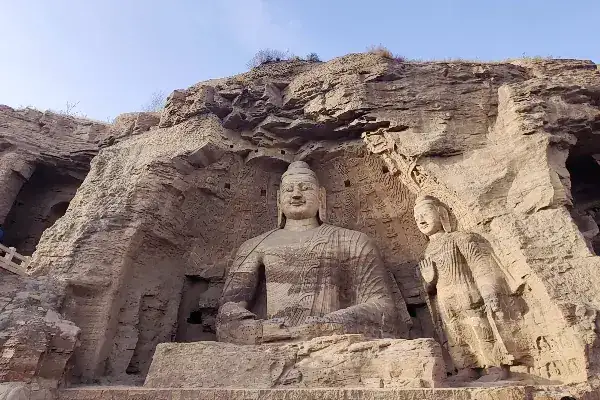
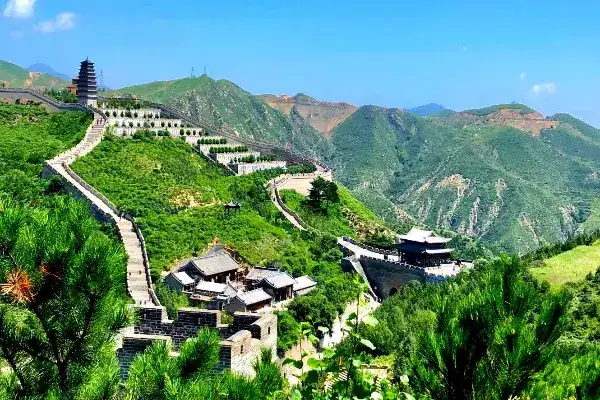
Datong, historically known as Yunzhong, Pingcheng, and Yunzhou, and nicknamed "China's Coal Capital," is a prefecture-level city in Shanxi Province, a Type II large city, and one of the central cities at the junction of Shanxi, Hebei, and Inner Mongolia as designated by the State Council, as well as an important comprehensive energy base. The total area is 14,176 square kilometers. As of the end of 2025, the permanent resident population was 3,044,000. As of 2026, the city administers 4 municipal districts and 6 counties. Datong is located in the North China region, at the center of the northern Shanxi Datong Basin, at the junction of Shanxi, Hebei, and Inner Mongolia, on the northeastern Loess Plateau. It is the barrier of all Jin and the gateway to the north, controlling the strategic passage between Shanxi, Hebei, and Inner Mongolia. Known as the "Northern Lock and Key," it has been contested by military forces throughout history. Datong is one of the first National Famous Historical and Cultural Cities, with over 2,000 years of urban history and one of China's nine great ancient capitals. It was the southern capital of the Dai State, the capital of the Northern Wei Dynasty (386–534), and the secondary capital of the Liao, Jin, and early Yuan dynasties. The city has over 3,000 immovable cultural relics, including the Yungang Grottoes, Datong Ancient City, Northern Mount Heng, Datong Great Wall, Huayan Temple, Shanhua Temple, the Hanging Temple, and the Nine-Dragon Wall. Datong is the "City of Museums" supported by the National Cultural Heritage Administration, the "Capital of Chinese Sculpture," and the "Hometown of Chinese Knife-Cut Noodles." In 2025, GDP was 181.50 billion yuan, up 3.2%.
History
Stone Age sites are found throughout the Datong area. The Xujiayao Man (c. 100,000 years ago), a descendant of Peking Man, was discovered at Xujiayao Village in Yanggao County. Multiple Paleolithic sites (Qingciyao, Xiaozhan, Jiajiayao, Ximazhuang) yielded thousands of stone tools. Neolithic sites at Wuzhouchuan, Yuhe River, and Sanggan River banks yielded fine stone tools and pottery (gray, red, and painted wares).
During the Xia Dynasty, the area was called Xunyu; during the Shang, Guifang; during the Western Zhou, Beirong. During the Spring and Autumn period (770–476 BCE), the area was inhabited by northern Di nomads (Linhu and Loufan tribes). During the Warring States period (475–221 BCE), it was initially the State of Dai, later incorporated into the State of Zhao.
In 221 BCE, after Qin Shi Huang unified China, the area belonged to Yanmen and Dai commanderies. Qin general Meng Tian led 300,000 troops against the Xiongnu and built the Great Wall. During the Western Han Dynasty (206 BCE–9 CE), 14 counties under Yanmen and 18 under Dai were established, including Pingcheng. During the Eastern Han, counties were reduced and populations relocated due to frontier instability.
The Northern Wei Dynasty (386–534) established its capital at Pingcheng (present-day Datong) in 398 CE under Emperor Daowu (Tuoba Gui), who moved from Shengle. He conducted large-scale capital construction, establishing palaces, ancestral temples, and shrines, and relocating 3,000 families. The capital area was defined as a thousand-li square. During the Northern Qi (550–577) and Northern Zhou (557–581), Great Wall construction continued with over 1,000 km of walls built.
During the Sui Dynasty (581–618), the area belonged to Mayi and Yanmen commanderies. Emperor Yang built the Great Wall and was besieged by the Turks at Yanmen in 615 CE. During the Tang Dynasty (618–907), the area was organized as Yunzhou, Weizhou, and Shuozhou under the Hedong Circuit. The Datong Military was established in 869 CE. The area became a contested zone between the Shatuo and Tuyuhun peoples, and was the base of Li Keyong and his son Li Cunxu (Later Tang founder).
In 936 CE, Shi Jingtang ceded the Sixteen Prefectures of Yan-Yun to the Khitan (Liao), beginning 433 years of non-Han rule over Datong. The Liao Dynasty (907–1125) made Datong the Western Capital (Xijing), establishing Xijing Circuit and Datong Prefecture. The Jin Dynasty (1115–1234) maintained the Western Capital after capturing it in 1122. The Yuan Dynasty (1271–1368) changed it to Datong Circuit.
During the Ming Dynasty (1368–1644), Datong was a key military garrison, with 26 guard units and up to 135,778 troops and 51,654 war horses—known as "Datong's soldiers and horses are the best under heaven." During the Qing Dynasty (1644–1912), after a brutal massacre by Dorgon's forces in 1649 (demolishing the city walls by 5 feet), the city was gradually rebuilt. During the War of Resistance, the area was divided between Japanese puppet, Nationalist, and Communist administrative systems.
On May 1, 1949, Datong was peacefully liberated. In 1954, it was designated as one of 8 key national industrial cities. In 1982, it was listed as one of the first 24 National Famous Historical and Cultural Cities. In 1984, it became one of the first 13 "larger cities."
Administrative Divisions
Divisional History
After liberation in 1949, Datong was under Chahar Province. In 1952, it was transferred to Shanxi. In 1993, the Yanbei Prefecture was abolished and merged with Datong City, adding 7 counties. In February 2018, the State Council approved converting the old urban districts into Pingcheng District and Yungang District, and converting Datong County into Yunzhou District.
Division Details
As of October 2025, Datong administers 4 districts (Pingcheng, Yungang, Xinrong, Yunzhou) and 6 counties (Tianzhen, Yanggao, Guangling, Lingqiu, Hunyuan, Zuoyun), with 37 towns, 50 townships, and 39 sub-districts. The Municipal Government is at No. 2799 Xingyun Street, Pingcheng District.
Geographical Environment
Location and Boundaries
Datong is at the northernmost tip of Shanxi, between 112°34′–114°33′E and 39°03′–40°44′N. It borders Inner Mongolia (Ulanqab) to the north across the outer Great Wall, Shuozhou and Xinzhou to the south and west, and Hebei Province (Zhangjiakou and Baoding) to the east. It is approximately 330 km from Beijing, 290 km from Taiyuan, and 300 km from Hohhot. Total area: 14,176 km², urban area: 2,080 km², built-up area: 149.68 km².
Landforms
Datong sits at the junction of the Shanxi platform and the Yinshan uplift. The area features the Datong Volcano Group (one of China's two major volcano groups, paired with Tengchong in Yunnan). Mountains cover 13.4%, hills 56.6%, and plains 30%. The terrain descends from northwest to southeast. The Datong Basin is a trough-shaped basin flanked by mountains. The highest point is Huangyangjian at 2,420m in Yanggao County; the lowest is at 558m in Lingqiu County. The Sanggan River flows southwest to northeast through the city.
Climate
Datong has a temperate continental monsoon climate. Spring: rapid warming, strong winds, little rain (56.1 mm, 14.6% of annual). Summer: mild, concentrated rain (246.9 mm, 64.3%). Autumn: gradual cooling (72.96 mm, 19%). Winter: long, cold, northwest winds, minimal precipitation (8.06 mm, 2.1%). Average annual temperature: 6.4°C (January -11.8°C, July 21.9°C). Extreme minimum: -29.2°C. Annual precipitation: 400–500 mm. Frost-free period: ~125 days. In 2025: precipitation 766.8 mm, average temperature 7.9°C, frost-free period 164 days.
Hydrology
Main rivers: Yuhe, Shilihe, Kouquanhe, and Yunihe. Larger reservoirs include Cetian, Zhaojiayao, and Shijiazhai (Wenying Lake). The Sanggan River is the main river, flowing through the city. Other rivers include Nanyanghe, Huliuhe, Tanghe (Hai River system) and Cangtouhe (Yellow River system). In 2025, reservoir storage was 160 million cubic meters.
Natural Resources
Water Resources
Total water resources: 142 million cubic meters. Per capita: only 111 cubic meters (9% of national average)—extremely water-scarce. Industrial and domestic use accounts for 80%, agricultural 20%. Annual water deficit: over 20 million cubic meters.
Mineral Resources
Coal-bearing area: 632 km², proven reserves: 37.6 billion tonnes. The Jurassic Datong Formation has 540 km² with 5.87 billion tonnes remaining; Carboniferous coal has 11.7 billion tonnes. Since 1949, Datong has contributed over 3 billion tonnes of premium thermal coal. In the 1980s, it was ranked alongside Germany's Ruhr and the Soviet Union's Donbas as one of the "World's Three Great Coal Capitals." Graphite (5.1623 million tonnes ore, 224,700 tonnes graphite), limestone for cement (215.176 million tonnes), flux limestone (70.192 million tonnes), flux dolomite (5.353 million tonnes), kaolinite, and basalt (174.2435 million m³) are also significant.
Plant Resources
The vegetation is dry grassland type with abundant gramineous and leguminous grasses for grazing. Wild medicinal plants include ephedra and licorice. Wild flowers include Dianthus, lily, larkspur, and wild chrysanthemum. Sea buckthorn is widely distributed. Forests are concentrated in the northeast Cailiang Mountains, Heng Mountains, Yungang National Forest Park, and southeastern Taihang margins—all planted forests.
Animal Resources
About 100+ terrestrial vertebrate species, including ~70 birds and ~24 mammals. Common species include Siberian weasel and hare; less common species include stone marten, wolf, fox, and badger.
Population
As of the end of 2025, the permanent resident population was 3,044,000, a decrease of 6,725. Urban population: 2,304,000 (75.7%, up 0.4 percentage points). Birth rate: 4.9‰; death rate: 8.8‰; natural growth rate: -3.9‰.
Politics
Economy
Overview
In 2025, GDP was 181.50 billion yuan (up 3.2%). Primary: 11.97 billion (up 3.7%, 6.6%); secondary: 56.99 billion (up 1.3%, 31.4%); tertiary: 112.54 billion (up 3.9%, 62.0%). Per capita GDP: 59,554 yuan ($8,338). General public budget revenue: 17.54 billion (down 6.8%). Fixed asset investment: 73.39 billion (up 3.3%). Per capita disposable income: 34,220 yuan (up 4.3%); urban: 44,454 yuan; rural: 17,291 yuan.
Primary Industry
Crop planting area: 339,000 hectares, including 282,600 hectares of grain. Grain output: 1.322 million tonnes (up 14,000). Afforestation: 24,000 hectares. Meat output: 182,000 tonnes (up 7.7%). Milk: 383,000 tonnes; eggs: 75,000 tonnes. Pig inventory: 822,000 head; slaughter: 1.478 million.
Secondary Industry
Total industrial value added: 53.36 billion yuan (up 3.2%). Industrial enterprises above designated size grew by 4.4%. Mining grew 7.8%, manufacturing 2.7%, utilities declined 5.1%. Coal industry grew 8.1%, non-coal declined 2.3%. Equipment manufacturing grew 22.5%, with new energy vehicles up 32.5%. Revenue: 151.10 billion (down 11.0%); profits: 19.93 billion (up 28.2%). Installed power capacity: 18.937 million kW (up 7.9%), including wind 4.692 million kW and solar 6.097 million kW. New energy capacity: 10.789 million kW (57% of total). The city operates 758,000 servers with annual electricity consumption exceeding 6 billion kWh, ranking third nationally in urban computing. Construction: output 21.45 billion yuan (down 2.1%).
Tertiary Industry
Service industry value added: 112.54 billion yuan (up 3.9%). Transportation/warehousing/postal: 14.95 billion (up 6.4%); accommodation/catering: 2.99 billion (up 6.0%); financial: 11.71 billion (up 1.0%); real estate: 10.15 billion (up 3.7%). Retail sales: 57.58 billion (up 3.4%). Import/export: 4.73 billion (up 5.0%). Cross-border e-commerce: 340 million yuan. Actual foreign investment: 56.75 million USD. Financial deposits: 524.86 billion (up 4.5%); loans: 318.72 billion (up 9.2%). Insurance premiums: 8.96 billion (up 7.3%). Express delivery: 140 million parcels (up 11.9%). Mobile phone users: 3.973 million, including 2.922 million 5G users.
Social Undertakings
Education
As of the end of 2025: 5 higher education institutions, 31 secondary vocational schools, 46 general high schools, 82 junior high schools, 212 primary schools, 8 special education schools, and 473 kindergartens.
Science and Technology
In 2025, 929 patents authorized (241 invention), 1,586 valid invention patents. 525 technology contracts valued at 74.163 million yuan. 8 provincial-level and above key laboratories, 158 high-tech enterprises, 82 inspection/testing institutions.
Culture
As of the end of 2025: 11 cultural arts centers, 9 performing troupes, 11 public libraries (1.628 million books), 29 museums, 11 TV stations, 13 microwave stations. Broadcast coverage: 99.2%; TV coverage: 99.6%.
Sports
Sports venue area: 9.715 million m²; 9,108 venues, 8 large stadiums. 157 fitness programs. Athletes won 1 gold, 2 silver, and 2 bronze at the 15th National Games.
Healthcare
As of the end of 2025: 3,304 medical institutions, 22,205 beds, including 115 hospitals, 126 health centers, 12 disease prevention centers. 29,542 health technical personnel (13,052 physicians, 13,163 nurses).
Social Security
New urban employment: 44,000; reemployment: 21,390. Basic pension: 2.00 million; basic medical insurance: 2.684 million; unemployment insurance: 572,000; work injury insurance: 395,000; maternity insurance: 851,000. 22,000 urban residents received minimum living allowance. 114 residential service institutions with 12,781 beds.
Environmental Protection
334 good air quality days (91.5%). Air quality index: 3.26. PM2.5: 23 μg/m³. All 8 national monitoring sections achieved Class I–III water quality (100%).
Urban Construction
Green coverage: 43.8%; green space rate: 40.4%; per capita parkland: 12.9 m². Central heating rate: 99.8%; gasification: 99.0%; sewage treatment: 100%; waste treatment: 100%; water supply coverage: 99.4%.
Transportation
Datong is the northern Shanxi gateway and a bridge connecting North and Northwest China. As of the end of 2025: total highway mileage 12,786 km (562 km expressways), density 90.7 km/100 km². 4 long-distance bus terminals. Civil aviation: 951,000 passengers (down 18.7%) on 23 routes to 27 cities. Civilian vehicles: 1.01 million (up 3.5%), including 58,000 new energy vehicles (up 66.5%).
Railways: Beijing-Baotou, Tongpu, Daqin, and Dazhun lines converge at Datong, plus Yungang and Kouquan branch lines. The Daxi and Dazhang passenger-dedicated lines opened on December 30, 2019.
Datong Yungang International Airport (IATA: DAT, ICAO: ZBDT) is a 4C-level international regional airport 15.5 km from the city center, with two terminals (T1: 6,328.2 m² international, T2: 10,854 m² domestic), 7 parking positions, and a 3,000m runway. The airport's international aviation port was approved by the State Council in 2019 and passed national inspection in June 2023.
Urban Transit
As of 2022: 1,246 buses on 69 routes totaling 1,132.5 km, with 220 million annual passengers. 4,625 taxis. A rapid bus transit Line 601 opened in 2011. In 2016, the city approved an urban rail transit plan with 3 lines (71 km) in the near term and 4 lines (116 km) in the long term. The rail project entered the 2023 provincial key projects list.
Historical Culture
Dialect
Datong dialect belongs to the Jin Chinese language, specifically the Datong-Baotou sub-group (also called the Yunzhong sub-group within Shanxi). It includes the urban districts, Tianzhen, Yanggao, Zuoyun, Youyu, Shanyin, and Huairen. Hunyuan and Lingqiu dialects belong to the Wutai sub-group, and Guangling dialect belongs to the Northern Mandarin group.
Folk Customs
"Lighting the Prosperity Fire" (Sheng Wanghuo): Due to abundant coal resources, during Spring Festival's Eve, every household builds a tower-shaped pile of large coal blocks. At midnight, the fire is lit, with flames shooting from countless holes, resembling a pagoda. People gather around to "catch the prosperous energy."
"Touring the Eight Immortals" (You Baxian): A Datong-specific folk activity dating to the Ming Dynasty, held on the 8th day of the first lunar month, when people visit temples to pray for health and peace—"tour the Eight Immortals, cure all illnesses."
Crafts
Datong copper ware has a long and distinguished history, with 25 series, 235 varieties, and 458 colors, including copper hotpots, wine vessels, and palace tableware. The saying goes: "Worship Buddha on Mount Wutai, buy copper in Datong." Guangling paper-cutting is one of China's three major paper-cutting schools, inscribed on the UNESCO Representative List of the Intangible Cultural Heritage of Humanity in 2009.
Intangible Heritage
As of 2023, Datong has 8 national, 50 provincial, and 135 municipal intangible cultural heritage items, with 6 national, 39 provincial, and 154 municipal inheritors.
Scenic Spots
Datong, designated as a National Famous Historical and Cultural City in 1982, is known as the "Capital of Three Dynasties, Garrison of Two Eras." Key cultural heritage includes: Northern Wei culture (Yungang Grottoes, Hanging Temple), Liao-Jin culture (Huayan Temple, Shanhua Temple, Guanyin Hall, Jueshan Pagoda, Yuanjue Pagoda), and Ming-Qing culture (frontier Great Wall, military forts, Nine-Dragon Wall, Ming Dynasty Datong Prefecture walls). As of 2024, the city has 3,000+ immovable cultural relics (30 national, 63 provincial) and 240,768 movable artifacts.
Local Specialties
Famous Figures
External Exchange
Honorary Titles
Travel information can change. Check current opening hours, reservations and entry requirements before you travel.


Traveller discussion
Start the conversation with a helpful tip or a question.