
Chengde City
Chengde CityChengde City, formerly known as "Rehe," is a prefecture-level city under Hebei Province. It is an important node in the Beijing-Tianjin-Hebei city cluster, a water conservation functional zone, national ecological civilization c
Chengde City
Chengde City, formerly known as "Rehe," is a prefecture-level city under Hebei Province. It is an important node in the Beijing-Tianjin-Hebei city cluster, a water conservation functional zone, national ecological civilization construction demonstration zone, national sustainable development agenda innovation demonstration zone, national historical and cultural city, and international ecological tourism city. As of 2024: 3 districts, 4 counties, 3 autonomous counties, 1 county-level city. Total area: 39,511.89 square kilometers. Population: 3,260,100. Located in northeastern Hebei, it connects Beijing-Tianjin-Hebei, Liaoning, and Inner Mongolia — "one city connects five provinces." National Class A open city, China's standard Mandarin pronunciation collection site, China's Photography Hometown, China's Paper-cutting Hometown. The Chengde Mountain Resort and surrounding temples are China's top 10 scenic spots and a UNESCO World Cultural Heritage site (1994). In 1703, Emperor Kangxi built the Mountain Resort as the Qing Dynasty's second political center. In 1733, Emperor Yongzheng named it "Chengde" ("inheriting ancestral virtue"). In 1955, Rehe Province abolished, Chengde transferred to Hebei. In 2025, the gross regional product was 200.17 billion yuan, up 5.8%.
History
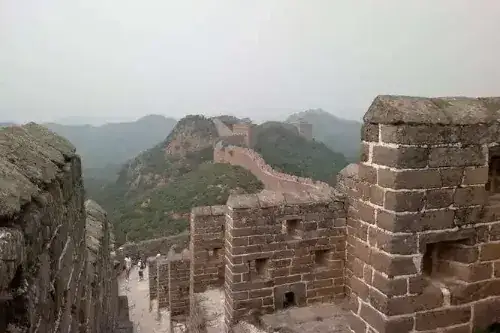
Anciently inhabited since Longshan Culture. Shang-Zhou: Shanrong and Donghu territory, Yan sphere of influence. Warring States: under Yan's Yuyang, Youbeiping, and Liaoxi commanderies. Great Wall ruins still visible. Qin-Han onwards: central governments established administrative agencies here. Various ethnic groups (Han, Xiongnu, Wuhuan, Xianbei, Khitan, Tujue, Mongol) developed economically and culturally. Yuan-Ming: under Beiping Prefecture (Beijing), grazing land for Mongol tribes. Early Qing: just a village. 1703: Emperor Kangxi built the imperial residence. 1708: Rehe Imperial Residence in use. 1711: population reached 10,000. 1723: Rehe Department established. 1733: Emperor Yongzheng established Chengde Directly Administered Department, origin of the name "Chengde." 1778: elevated to Chengde Prefecture, becoming the second most important political center after Beijing ("capital beyond the Great Wall"). 1914: Rehe Special District. 1928: Rehe Province, Chengde as capital. 1933: Japanese occupation. 1945: liberated. 1948: re-liberated, capital of Rehe Province. 1955: Rehe abolished, Chengde to Hebei. 1993: prefecture-city merger.
Administrative Divisions
Division Details
As of 2022: 3 districts (Shuangqiao, Shuangluan, Yingshouyingzi Mining), 4 counties (Chengde, Xinglong, Luanping, Longhua), 3 autonomous counties (Fengning Manchu, Kuancheng Manchu, Weichang Manchu-Mongol), 1 county-level city (Pingquan), plus Chengde High-tech Development Zone.
Geographical Environment
Location
Northeastern Hebei, between 40°12'-42°37' N and 115°54'-119°15' E. Transition zone between North and Northeast China. Near Beijing-Tianjin, backing Mongolia-Liaoning. 269 km north-south, 280 km east-west. Area: 39,511.89 km² (21.19% of Hebei). 435 km from Shijiazhuang, 225 km from Beijing.
Topography
Complex terrain: mountains, rivers. North: Inner Mongolia Plateau SE edge. Center: shallow mountains. South: Yanshan Mountains. Elevation: 200-1,200m (average 350m). Highest: Wuling Mountain 2,118m. Surrounding mountains show Danxia landform with unique peaks (Qingchuifeng, Luohanshan, Tianqiaoshan, Shuangtashan).
Climate
Temperate, semi-arid to semi-humid continental monsoon climate. Four distinct seasons, simultaneous rain and heat, large diurnal temperature range. Annual average: 9°C.
Hydrology
4 water systems: Luanhe, Chaohe, Liaohe, Dalinghe.
Natural Resources
Water Resources
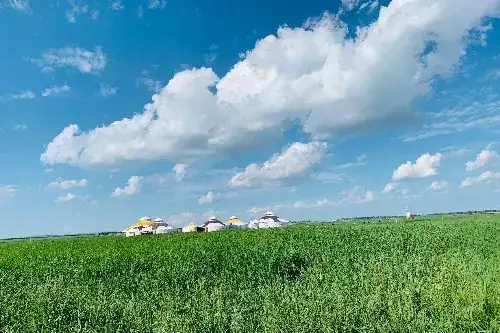
Annual water production: 3.76 billion m³. Key water source for Beijing-Tianjin-Tangshan (93.4% of Panjiakou Reservoir inflow, 56.7% of Miyun Reservoir inflow). Forest: 43.4% of provincial. Grassland: 40%. Forest coverage: 48%.
Mineral Resources
98 mineral types discovered, 50 developed. Major vanadium-titanium magnetite base (3.57 billion tons proven, 75.59 billion tons ultra-lean). Gold production: #1 in Hebei. Also: molybdenum, silver, copper, lead, zinc, granite, marble.
Plant Resources
Forest: 35.56 million mu (35.7% of provincial, 32% of Beijing-Tianjin-Hebei). Coverage: 60.03% (36pp above national, 25pp above provincial). Standing timber: 102 million m³ (59% of provincial). Grassland: 6.7 million mu (236,000 natural pasture, 78.8% protected). 71 nature reserves (23 national, 48 provincial). 315 families, 2,797 wild species (54 national I/II protected). 8.56 million mu of nut economic forest (chestnut, apricot, sea buckthorn, hawthorn). 54 state-owned forest farms (7.2 million mu, 80.85% coverage).
Population
As of end 2025: 3,260,100 (down 25,600). 60.91% urbanization (+1.14pp). Birth rate: 4.36 per mille; death rate: 9.05 per mille; natural growth: -4.69 per mille. 53 ethnic minorities (180,960, 53.95% — largest minority proportion in Hebei). 3 autonomous counties, 3 ethnic counties.
Politics
Economy
Overview
In 2025, GDP: 200.17 billion yuan (+5.8%). By industry: primary 46.39 billion (23.2%), secondary 62.54 billion (31.2%), tertiary 91.24 billion (45.6%). Private economy: 130.48 billion (65.2%). Fixed-asset investment -1.4% (infrastructure +3.3%, high-tech +21.9%). General public budget revenue: 14.48 billion (+3.0%). Expenditure: 51.43 billion (+4.8%). Per capita disposable: 32,457 yuan (+4.9%; urban 44,961; rural 19,449).
Primary Industry
Grain area: 4.289 million mu. Grain: 1.493 million tons (-1.7%). Vegetables: 5.431 million tons (+3.1%). Mushrooms: 1.118 million tons (+8.3%). Medicinal herbs: 265,000 tons (+5.0%). Fruit: 1.269 million tons (+3.8%). Meat: 429,000 tons (+5.1%). Milk: 114,000 tons (+4.2%).
Secondary Industry
Above-scale industrial added value +9.4% (mining -0.5%; manufacturing +19.8%; utilities +9.2%). High-tech +25.7% (21.0% share). Equipment manufacturing +62.4%. Wind power: 17.45 billion kWh (+18.1%). Solar: 6.9 billion kWh (+63.7%). Revenue: 180.46 billion (-0.3%). Profits: 9.75 billion (-21.8%). Steel: 11.932 million tons (+17.5%). Galvanized sheet: 1.548 million tons (+114.1%).
Tertiary Industry
Total retail sales: 57.44 billion (+4.7%). Foreign trade: 3.55 billion yuan (-3.0%; exports -12.5%, imports +186.7%). Total deposits: 484.73 billion (+7.4%). Total loans: 392.48 billion (+6.3%). Express: 63.922 million pieces (+28.5%). Telecom: 2.61 billion (-6.4%). 4.26 million mobile users. Insurance: 784 million (life) + 298 million (property). Tourist arrivals: 104.012 million (+11.5%). Tourism revenue: 130.89 billion (+11.6%).
Transportation
2025: highway passengers 5.902 million, freight 36.488 million tons. 6 expressways (759 km, #4 in province). National/provincial highways: 2,833 km (#1 in province, 86% Class II+). Rural roads: 20,450 km (#1 in province). All villages connected. Chengde Puning Airport (4C): 2,800m runway, 19 routes to 18 cities, 450,000 annual passenger capacity.
Social Affairs
Education
6 universities (75,000 students), 24 vocational (39,000), 134 secondary (212,000), 420 primary (225,000). Preschool enrollment: 100%. Compulsory education: 99.5%. High school: 95.4%.
Science and Technology
733 national technology-based SMEs. Technology contracts: 8.33 billion yuan. 5 new provincial R&D platforms.
Culture and Sports
9 broadcasting stations, 11 radio programs, 10 TV programs. Radio: 98.4%, TV: 99.5%. 12 cultural centers, 217 cultural stations, 140.2 million library volumes. 22 public sports venues. 24 new winter sports schools, 84,000 certified winter sports participants. 84 gold, 78 silver, 94 bronze at provincial+ level.
Healthcare
2,839 public health institutions: 36 hospitals. 10,137 physicians, 10,714 nurses. 23,000 beds (16,000 hospitals).
Social Security
Employee pension: 938,000. Urban-rural pension: 1,737,000. Employee medical: 556,000. Urban-rural medical: 2,630,000. Unemployment: 380,000. Work injury: 708,000. 45,000 new urban jobs. Urban minimum living: 12,000. Rural: 180,000. 129 elderly care institutions, 14,000 beds.
History and Culture
Dialect
Chengde dialect: mostly Beijing Mandarin (Huaicheng sub-group), close to standard Mandarin. Luanping County is China's standard Mandarin pronunciation collection site. Northeastern parts closer to Chifeng dialect. Southeastern parts show Tangshan dialect features.
Regional Culture
The Mountain Resort integrates Chinese garden art, ancient architecture, and Buddhist culture, blending Central Plains, Manchu-Mongol, and grassland cultures into the "Grand Mountain Resort Culture." "One resort, half of Qing Dynasty history."
Scenic Spots
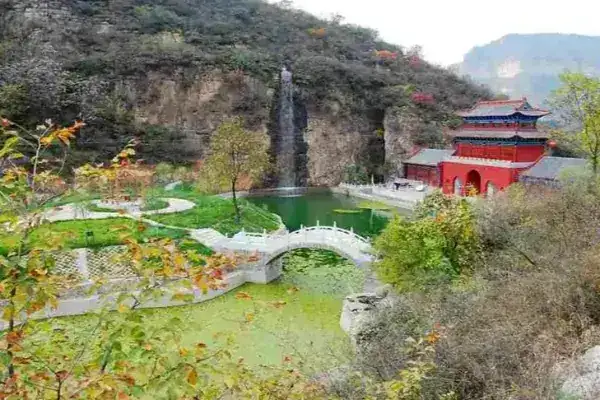
"Purple Frontier Pearl." Multiple "world's best": world's largest imperial garden (Mountain Resort), largest imperial temple complex (Outer Eight Temples), largest wooden Buddha (Thousand-Hand Avalokitesvara at Puning Temple), shortest river (Rehe), Great Wall essence (Jinshanling), unique stone pillar (Qingchuifeng), world's most peculiar pine (Nine-Dragon Pine).
Local Specialties
Crafts: Mountain Resort silk brocade, wood carving, fernbracken, paper-cutting, Teng's cloth paste painting, almond milk. Foods: Nansha cake, buckwheat noodles, Pingquan mutton soup, Pingquan sliced meat, tea candy, roll donkey, royal noodles, silver thread mixed noodles, rose cake, mushroom, bowl custard, mutton soup, lotus leaf chicken. Three categories: mountain dry fruits (almonds, chestnuts), Bashang mushrooms (Baimo, Koumo, Zhenmo, etc.), Qing Dynasty court products (fernbracken as tribute). 55 ethnic groups create diverse crafts: Teng's cloth painting, walnut crafts, Fengning paper-cutting (national heritage, "China Paper-cutting Hometown" 1992), root carving, porcelain carving. Chengde Qingyin Hui (national heritage 2010).
Famous People
Sister Cities
Honorary Titles
China Excellent Tourist City, National Forest City, National Ecological Civilization Demonstration Zone, National Historical and Cultural City, National Double Support Model City.
Travel information can change. Check current opening hours, reservations and entry requirements before you travel.
Traveller discussion
Start the conversation with a helpful tip or a question.