
Zhangjiakou City
Zhangjiakou CityZhangjiakou City is a prefecture-level city under Hebei Province, Type II large city, administering 6 districts and 10 counties. It is a central city in the Beijing-Hebei-Shanxi-Inner Mongolia junction area, national renewab
Zhangjiakou City
Zhangjiakou City is a prefecture-level city under Hebei Province, Type II large city, administering 6 districts and 10 counties. It is a central city in the Beijing-Hebei-Shanxi-Inner Mongolia junction area, national renewable energy demonstration zone, world winter sports leisure destination, and the capital's water conservation and ecological support zone. Located in northwestern Hebei, it borders Chengde (east), Beijing (southeast), Baoding (south), Shanxi (west/southwest), and Inner Mongolia (north/northwest). Terrain: NW high, SE low. Temperate continental monsoon climate. Total area: 36,357 square kilometers. As of end 2025: 4,011,200 permanent residents. In 1928, Chahar Province was established with Zhangjiakou as its capital. In 1952, transferred to Hebei. It is the origin of the "Zhang-Ku Trade Route," former Chahar provincial capital, member of the World Union of Olympic Cities, co-host of the 2022 Winter Olympics, hailed as the "Davos of the East." In 2025, the gross regional product was 197.07 billion yuan.
History
In ancient times, Yellow Emperor, Yan Emperor, and Chiyou "established cities at Zhuolu." Spring and Autumn/Warring States: North was Xiongnu and Donghu territory; south belonged to Yan and Dai states. Qin: south under Dai Commandery, north under Shanggu Commandery. Han: mostly Youzhou. Sui: east Zhuo Commandery, west Yanmen Commandery. Tang: north under Eastern Turkic and Sanggan Governor's Office, south mostly Hebei Circuit's Guizhou and Xinzhou. Five Dynasties: Liao's West Capital Circuit. Jin: West Capital Circuit. Yuan: Zhongshu Province. Ming: mostly capital district (Shuntian Prefecture), except Yu County under Shanxi's Datong Prefecture. Qing: north under Koubei Three Departments (Duolun, Dushikou, Zhangjiakou), south under Xuanhua Prefecture. In 1928, Chahar Province established with Zhangjiakou as capital. 1952: Chahar abolished, Zhangjiakou Special District under Hebei. 1983: Zhangjiakou became provincial-level city. 1993: Zhangjiakou Region and City merged. 2016: Xuanhua County/District merged into new Xuanhua District; Wanquan and Chongli counties became districts.
Administrative Divisions
Division Details
As of 2022: 6 districts (Qiaodong, Qiaoxi, Xuanhua, Xiahuayuan, Wanquan, Chongli) and 10 counties (Zhangbei, Kangbao, Guyuan, Shangyi, Yu, Yangyuan, Huai'an, Huailai, Zhuolu, Chicheng). City Government at No. 10 Changcheng West Avenue, Qiaodong District.
Geographical Environment
Location
Northwestern Hebei, between 113°50'-116°30' E and 39°30'-42°10' N. Spans 289.2 km north-south, 216.2 km east-west. Total area: 36,357 km².
Topography
NW high, SE low. Yinshan Mountains traverse the center, dividing the city into "Bashang" (upper plateau) and "Baxia" (lower region). Yang River and Sanggan River flow east-west into Guanting Reservoir. Geologically on the Inner Mongolia-Greater Khingan fold system and Sino-Korean paraplatform. 2 deep faults, 7 large faults. 9 magmatic cycles. Two distinct geomorphic units: Bashang Plateau (1/3 of area, ~1,400m elevation, Inner Mongolia Plateau southern edge) and Baxia Low-Middle Mountain Basins (1,000-2,000m, with Xiaowutai at 2,882m, Hebei's highest).
Climate
Temperate continental monsoon climate. Four distinct seasons: long cold winters, dry windy springs, brief hot summers with concentrated rain, clear autumns. Bashang: rich light resources, large diurnal temperature range, cool growing season. Baxia valley basins: large temperature differences, long frost-free period, sufficient heat.
Natural Resources
Water Resources
Semi-arid, severely water-scarce. 5 water systems: Daqinghe, Chaobaihe, Luanhe, Yongdinghe, and inland rivers. Annual average water resources: 1.799 billion m³ (surface 1.162 billion, groundwater 1.191 billion, overlap 553 million). 93 reservoirs (3 large, 8 medium, 82 small). 170 dams, 2,689 cisterns.
Land Resources
Total: 55,194,800 mu. Agricultural: 37,458,500 (67.87%; cultivated 13,993,900; forest 16,486,000; orchard 2,130,600; pasture 3,609,800). Construction: 2,496,200 (4.52%). Unused: 15,240,000 (27.61%).
Biological Resources
1,200+ wild plant species (120 families, 513 genera; 369 woody species in 62 families). 300+ wild vertebrate species in 50+ families (30+ mammals, 130+ birds, 15 reptiles, 6 amphibians). 27 nationally protected animal species. 68 natural enemy species of forest/fruit pests in 17 families.
Energy Resources
Coal (Yuzhou, Xuanxia, Zhangjiakou-north coalfields), wind power (20+ million kW potential, first national dual-million-kW wind power base), solar (2,756-3,062 annual sunshine hours, 1,500-1,700 kWh/m², Class II solar radiation zone).
Mineral Resources
46 minerals developed: 3 energy (coal, uranium, geothermal), 8 metallic (gold, silver, lead, zinc, iron, manganese, copper, molybdenum), 34 non-metallic (phosphorus, fluorite, graphite, zeolite, bentonite, pumice, limestone, etc.), 1 water-gas (mineral water). Coal: 36.65 billion tons (26 mining areas, 4 large/medium). Iron: 4.15 billion tons (65 areas, 3 medium). Gold: 67.04 tons, Silver: 2,246.82 tons (19 areas, 1 large/medium).
Population
As of end 2025: 4,011,200 (down 21,400). 69.87% urbanization. 26 ethnic minorities: Hui, Manchu, Mongolian (main groups).
Politics
Economy
Overview
In 2025, the gross regional product was 197.07 billion yuan, up 5.1%. By industry: primary 31.26 billion (15.9%), secondary 53.63 billion (27.2%), tertiary 112.18 billion (56.9%). Per capita: 49,000 yuan (+5.6%). Fixed-asset investment up 15.3% (private +49.3%, infrastructure +21.3%). General public budget revenue: 19.34 billion (+2.4%). General public budget expenditure: 71.15 billion (+6.9%). Urban disposable: 45,129 yuan (+3.9%). Rural: 21,163 yuan (+6.4%).
Primary Industry
Grain area: 7 million mu. Grain output: 1.956 million tons (-3.6%). Vegetables: 5.963 million tons (+2.2%). Fruit: 363,000 tons (+2.5%). Meat: 329,000 tons (+2.4%). Milk: 1.216 million tons (+3.9%). Eggs: 138,000 tons (-9.6%).
Secondary Industry
Industrial added value: 47.75 billion yuan, up 4.6%. Above-scale +5.9% (mining +7.7%; manufacturing +0.7%; electricity/heat/gas/water +11.4%). Key: non-ferrous mining +29.7%, tobacco +8.8%, pharmaceuticals +17.1%, food processing +15.5%, general equipment +46.7%. Profits: 14.04 billion (+65.7%). Construction added value: 6.11 billion (-1.9%).
Tertiary Industry
Wholesale/retail: 11.06 billion (+10.9%). Transportation: 13.21 billion (+3.7%). Finance: 16.7 billion (+8.5%). Real estate: 11.5 billion (+3.4%). Total retail sales: 70.17 billion (+5.0%). Foreign trade: 13.44 billion yuan (-43.7%). Total deposits: 647.98 billion (+11.7%). Total loans: 541.79 billion (+1.5%). Insurance premiums: 10.1 billion (+3.0%). Postal: 1.61 billion (+14.9%). Express: 107.924 million pieces (+25.6%). 5.203 million phone users (4.993 million mobile, 1.912 million broadband).
Social Affairs
Science and Technology
1,843 patent authorizations (-30.6%). 2,083 valid invention patents (+9.8%). 152 testing institutions. 15 metrology institutions. 27 local standards revised.
Education
3 municipal universities (40,000 students), vocational (32,000), high school (91,000), junior high (130,000), primary (220,000), kindergarten (69,000).
Healthcare
6,517 health institutions: 163 hospitals, 209 township health centers, 73 community centers, 3,700 village clinics, 2,308 clinics, 17 maternal/child centers, 20 CDCs, 2 first aid centers, 2 blood supply institutions. 40,821 health workers (17,592 physicians, 18,140 nurses). 32,362 beds (25,882 hospitals, 5,020 township). Grade IIIA hospitals: Zhangjiakou First Hospital, Hebei North University First Affiliated Hospital, PLA Army 81st Group Army Hospital.
Culture and Sports
20 museums, 17 public libraries, 17 cultural centers. Radio/TV coverage: 99.93%/99.91%. 2022 Winter Olympics: Zhangjiakou zone hosted all snow events except bobsled/skeleton/luge/alpine skiing/big air. 51 Olympic golds + 46 Paralympic golds (46.8% and 59.0% of total). China won 3 golds + 3 silvers (Olympic) and 14 golds + 11 silvers + 15 bronzes (Paralympic) in Zhangjiakou. 9,860 sports venues (15.7 million m², 3.9 m² per capita). 17,902 social sports instructors (4+ per 1,000). 9,599 winter sports instructors. 630 winter sports "Three-In" events, 138,000 participants.
Social Security
Employee pension: 1,259,000 (down 15,000). Enterprise: 1,024,000. Unemployment: 372,000 (down 62,000). Work injury: 444,000 (down 10,000; migrant 183,000). 176 social service institutions, 18,000 beds. 26 special hardship institutions. 52,510 new urban jobs. 12,327 reemployed.
Transportation
Expressways: Beijing-Xinjiang, Beijing-Tibet, Capital Ring, Zhangshi, Jingda, Zhangcheng, ring road. Railways: Beijing-Baotou Railway (Zhangjiakou Station, Zhangjiakou South Station). Zhangjiakou Airport: domestic flights. 2025: highway freight 15 million tons (+0.7%), highway passengers 3.683 million (+8.2%), airport passengers 195,000 (-41.5%).
History and Culture
Name origin: Two mountains (East and West Taiping) form a pass; a Zhang family lived there during Ming border garrison, hence "Zhangjiakou." Intangible cultural heritage: Kangbao "Errentai" and Yu County paper-cutting (first batch national heritage), Yu County Nuanquan ancient residential architecture, Zhuolu Three Ancestors culture (10 provincial items).
Scenic Spots
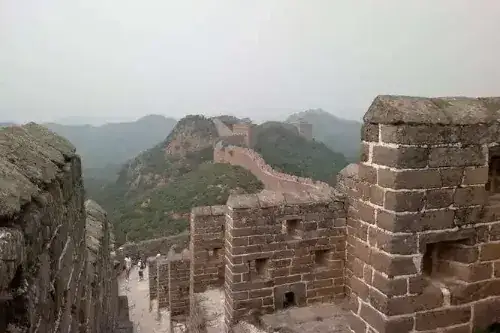
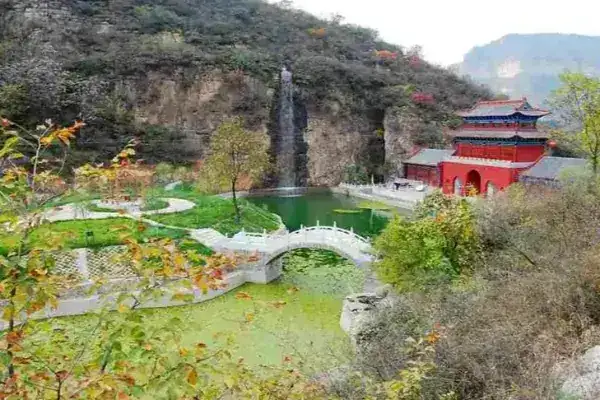
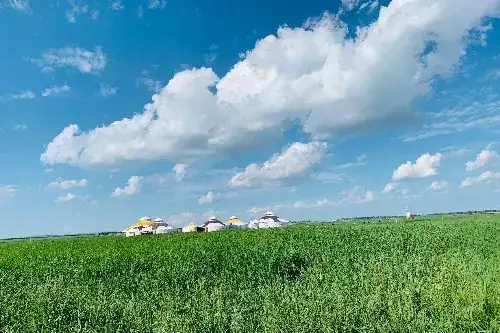
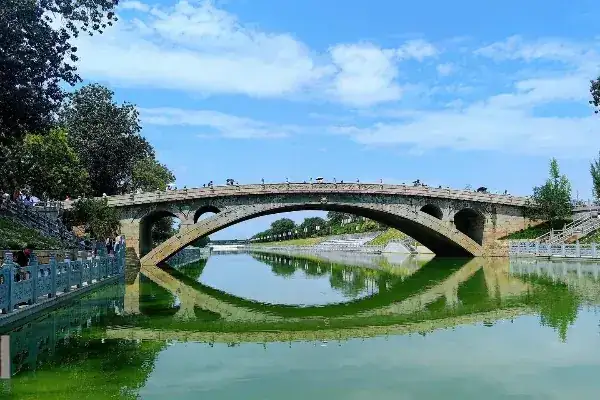
60 A-level scenic areas: 11 4A, 30 3A, 19 2A. 74 star hotels (22 four-star+), 98 travel agencies. 4 nature reserves, 1 national forest park, 16 provincial forest parks, 1 provincial scenic area. 2024: 94.018 million domestic tourists (+5.6%), tourism revenue 110.37 billion yuan (+5.2%).
Local Specialties
Famous People
Honorary Titles
National Civilized City, National Food Safety Demonstration City, National Tourism Demonstration City, China Top 10 Winter Sports Cities (2017, 2022, 2023), National Double Support Model City (2025), Carbon Peak Pilot City (2023), "Davos of the East."
Travel information can change. Check current opening hours, reservations and entry requirements before you travel.
Traveller discussion
Start the conversation with a helpful tip or a question.