
Baoding City
Baoding CityBaoding is a prefecture-level city under Hebei Province, located in the central-western part of Hebei Province, at the eastern foot of the Taihang Mountains and the western part of the central Hebei Plain, with geographic coordi
Baoding City
Baoding is a prefecture-level city under Hebei Province, located in the central-western part of Hebei Province, at the eastern foot of the Taihang Mountains and the western part of the central Hebei Plain, with geographic coordinates between 38°14′29″–39°57′3″N and 113°45′32″–116°19′41″E. The city borders the Xiongan New Area to the east, Cangzhou to the southeast, Hengshui to the south, Shijiazhuang to the southwest, Shanxi to the west, Zhangjiakou to the northwest, Beijing to the north, and Langfang to the northeast. The terrain slopes from northwest to southeast, with mountainous and plain landforms, covering a total area of 22,000 square kilometers (19,300 square kilometers excluding the Xiongan New Area and Dingzhou). As of June 2026, Baoding administers 5 districts and 15 counties (3 of which are managed by the Xiongan New Area), and 4 county-level cities, with a permanent resident population of 9,000,700 as of the end of 2025. Baoding is a regional center city of the Beijing-Tianjin-Hebei city cluster, a national base for new energy and advanced manufacturing, a national famous historical and cultural city, and a capital-area tourism and leisure city. Located at the Beijing-Tianjin-Shijiazhuang golden triangle, it has been a strategic gateway since ancient times, the south gate of the capital, and a thoroughfare connecting north and south. Baoding has over a thousand years of urban history. In 1275, the name Baoding was established, meaning "to permanently safeguard stability." In 1368, the Ming Dynasty established Baoding Prefecture. The city also served as the seat of the Zhili Governor-General during the Qing Dynasty (1644–1912). Baoding has 1 World Cultural Heritage site (the Western Qing Tombs), 69 national key cultural heritage protection units, and 3 national 5A-level scenic areas (Yesanpo, Baishi Mountain, and the Western Qing Tombs). In 2025, Baoding achieved a GDP of 454.03 billion yuan.
History
At the end of primitive society, during the Tang-Yu era, present-day Baoding belonged to Jizhou and Youzhou.
During the Shang Dynasty (c. 1600–1046 BCE), the Baoding area was part of the Northern Yan territory.
During the Western Zhou Dynasty (1046–771 BCE), the Yan state was conquered. From the Western Zhou to the Warring States period, the area belonged to the states of Yan and Zhao. During the Spring and Autumn period, the states of Yan and Zhongshan established capitals within present-day Baoding. In the Spring and Autumn period (770–476 BCE), Beiping City was built, marking the beginning of Baoding's urban history. The Xianyu State was established in the southwestern part. During the Warring States period (475–221 BCE), King Zhao of Yan built Guangyang City east of the ancient city for raising war horses. In 380 BCE, the State of Qi attacked Yan and occupied Sangqiu (about 10 kilometers north of present-day Baoding). In 314 BCE, internal strife in the Yan State led to a joint Qi-Zhongshan invasion, with the northern part occupied by Qi and the southern part by Zhongshan.
During the Qin Dynasty (221–206 BCE), the southern part of present-day Baoding belonged to Hengshan Commandery and the northern part to Guangyang Commandery.
During the Western Han Dynasty (206 BCE–9 CE), the area belonged to Zhuo Commandery and the Zhongshan Kingdom. During the Eastern Han Dynasty (25–220 CE), it was divided among Zhuo Commandery, Zhongshan Kingdom, and Hejian Kingdom.
During the Eastern Jin and Sixteen Kingdoms period (317–439), the area successively belonged to Youzhou and Jizhou.
During the Southern and Northern Dynasties (420–589), it was part of the Northern Wei (386–534), Northern Qi (550–577), and Northern Zhou (557–581) territories. In the first year of the Taihe reign of the Northern Wei (477), Qingyuan County was established, named after the Qingyuan River, marking the beginning of Baoding's county-level administration.
During the Sui Dynasty (581–618), the area belonged to Zhuo Commandery, Shanggu Commandery, and Gaoyang Commandery. During the Tang Dynasty (618–907), it belonged to Zhuozhou, Yizhou, and Dingzhou of the Hebei Circuit.
During the Five Dynasties and Ten Kingdoms period (907–960), the area's counties mostly belonged to the Later Liang and Later Jin. In 923, the Fenghua Army was established (in present-day Qingyuan District); in 928, it was elevated to Taizhou, marking Baoding's first prefecture-level establishment.
During the Song and Liao dynasties, the northern part belonged to the Liao Western Capital Circuit, and the southern part to the Northern Song's Hebei West and East Circuits. In 960, since Qingyuan was the ancestral home of Zhao Kuangyin (Emperor Taizu of Song, r. 960–976) and a military stronghold, the Baosai Army was established there. In 979, Emperor Taizong of Song led a northern campaign and stationed at Baosai for over half a month. In 981, the Baosai Army was elevated to Baozhou, meaning "to permanently safeguard stability." In 992, the prefecture and county seats were relocated to the present-day Baoding urban area. In 1127, Jin forces captured Baozhou, retaining the Song-era name Baozhou, also known as Jintai Station.
During the Jin Dynasty (1115–1234), Baosai County was renamed Qingyuan County, and Mancheng County was re-established. In 1129, Baozhou became the seat of the Shuntian Army Commissioner. In 1213, Genghis Khan led the Mongol army southward, destroying Baozhou City and leaving it in ruins.
In 1227, Baozhou City was rebuilt. In 1239, the Shuntian Army was changed to Shuntian Circuit, with Baozhou as the circuit seat. In 1275, the name was changed to Baoding Circuit, marking the origin of the name "Baoding," meaning "to permanently safeguard stability."
In 1368, Zhu Yuanzhang (Emperor Hongwu of the Ming Dynasty) abolished Baoding Circuit and established Baoding Prefecture. In 1403, Zhu Di (Emperor Yongle) changed Beiping Prefecture to Shuntian Prefecture and built Beijing City. In 1515, the Ming court established the Baoding Grand Coordinator's office. In 1638, a Baoding Governor-General was appointed.
During the Qing Dynasty, the old system was maintained with Baoding Prefecture. In 1669, the Zhili Governor moved from Zhengding to Baoding, making Baoding the capital of Zhili Province. In 1724, the Zhili Governor was elevated to Zhili Governor-General.
In 1912, the Republic of China retained the Zhili provincial system, keeping Baoding Prefecture. In 1913, the Zhili capital moved to Tianjin, Baoding Prefecture was abolished, and Qingyuan County was restored. In 1928, Zhili Province was renamed Hebei Province. In 1935, the Hebei provincial government moved from Tianjin to Baoding. In September 1937, Japanese forces occupied Baoding. On November 22, 1948, Baoding was liberated and Baoding City was established. On August 1, 1949, the Hebei Provincial People's Government was established with Baoding as the provincial capital. In 1958, the provincial capital moved from Baoding to Tianjin. In 1966, it returned to Baoding. In 1968, the capital moved out of Baoding. On December 23, 1994, Baoding Prefecture and Baoding City merged into a province-administered city.
Administrative Divisions
Divisional History
On August 9, 1949, Baoding Special District administered 17 counties. In 1953, Baoding City Suburban District was established. In 1954, Dingxian Special District was abolished with 6 counties transferred to Baoding. In 1958, Baoding City was placed under Baoding Special District. In 1960, the special district system was abolished and Baoding Prefecture and City merged. In 1961, Baoding Special District was restored. In 1983, Mancheng County was transferred to Baoding City. In 1986, Qingyuan County was transferred to Baoding City. In 1994, Baoding City administered 3 districts, 18 counties, and 4 county-level cities. In 2015, Xinshi District was renamed Jingxiu District, Beishi and Nanshi districts merged into Lianchi District, and Mancheng, Qingyuan, and Xushui counties were converted to districts. In April 2017, the Central Committee and State Council approved the establishment of Xiongan New Area, encompassing Baoding's Xionxian, Rongcheng, and Anxin counties.
Division Details
As of June 2026, Baoding administers 5 districts, 15 counties (3 managed by Xiongan New Area), and 4 county-level cities (1 as a provincial direct-administration pilot). It also has 1 national-level high-tech zone and 1 vice-departmental-level functional area (Baigou New City). The Municipal People's Government is located at No. 1 Dongfeng West Road, Jingxiu District.
Geographical Environment
Location and Boundaries
Baoding is located in the central-western part of Hebei Province, at the eastern foot of the Taihang Mountains and the western part of the central Hebei Plain, between 38°14′29″–39°57′3″N and 113°45′32″–116°19′41″E. The city center is 140 kilometers from Beijing, 145 kilometers from Tianjin, and 125 kilometers from Shijiazhuang, forming a tripod with Beijing and Tianjin. Total area is 22,000 square kilometers, with urban area of 2,531 square kilometers.
Landforms
Baoding is at the northern end of the eastern foot of the Taihang Mountains, with terrain sloping from northwest to southeast. Mountainous areas cover 10,988.1 square kilometers (49.7%), and plains (including lowlands) cover 11,124.9 square kilometers (50.3%). The highest peak is Waitou Mountain in Fuping County at 2,286 meters; the lowest point is the Baiyangdian Lake lowland area at 7 meters.
Climate
Baoding has a warm temperate continental monsoon climate with four distinct seasons. The multi-year average temperature is 13.4°C, with January averaging -4.3°C and July averaging 26.4°C. The average growing season is 280 days, with an average frost-free period of 211 days. Average annual sunshine is 2,511 hours. Average annual precipitation is 498.9 millimeters, concentrated in June–August. Average annual wind speed is 1.8 meters per second.
Hydrology
Baoding is in the middle and upper reaches of the Daqing River system of the Hai River basin, with a drainage area of 43,000 square kilometers. The system has a fan-shaped distribution. The Juma River is the largest river, flowing through Laiyuan, Yi County, Laishui, and Zhuozhou, approximately 200 kilometers long with a basin area of 4,810 square kilometers. The city has 72 rivers totaling 3,329.33 kilometers, 5 major flood channels totaling 202 kilometers, and 9 general flood channels totaling 236 kilometers. The Baiyangdian Lake dikes extend 153 kilometers. Three flood retention areas (Xiaoqinghe, Langouwa, and Baiyangdian) cover 1,366 square kilometers.
Natural Disasters
Major natural disasters in Baoding include droughts, floods, strong winds, hail, dry hot winds, low temperatures, frost, and prolonged overcast rain. Spring droughts are the most severe. Flash floods occurred in August 1963 and August 1996. Hail frequency decreases from mountains to hills to plains.
Natural Resources
Water Resources
Baoding's multi-year average surface water resources are 1.62 billion cubic meters, groundwater resources 2.223 billion cubic meters, total water resources 2.978 billion cubic meters, and inflow 632 million cubic meters.
Plant Resources
Mountain areas have deciduous forests including birch, poplar, larch, Chinese pine, arborvitae, and oak. Economic trees include jujube, persimmon, Sichuan pepper, apricot, walnut, and hawthorn. The Baiyangdian Lake area has aquatic marsh plants. In 2025, 239,000 mu of afforestation was completed. There are 4 provincial-level nature reserves.
Mineral Resources
As of 2015, Baoding has discovered 77 types of minerals, with 59 having proven reserves and 33 being developed. Main minerals include coal, iron, gold, copper, lead, zinc, molybdenum, granite, marble, limestone, and ceramic materials. Coal reserves: 156 million tonnes; iron: 225 million tonnes; copper: 869,400 tonnes (metal); lead: 115,800 tonnes (metal); zinc: 947,400 tonnes (metal); molybdenum: 361,400 tonnes (metal); silver: 996.11 tonnes (metal); and limestone for cement: 405 million tonnes.
Population
As of the end of 2025, Baoding (excluding Dingzhou) had a permanent resident population of 9,000,700, with 5,604,700 urban residents (urbanization rate 62.27%, up 1.17 percentage points). Births: 45,500; deaths: 80,800; natural growth rate: -3.92‰. The main ethnic group is Han, with 49 ethnic minorities including Hui, Manchu, Mongolian, Zhuang, and Tujia.
Politics
In May 2024, the National Data Bureau designated Baoding as one of the cities undertaking data annotation base construction tasks.
Economy
Overview
In 2025, Baoding's GDP was 454.03 billion yuan, up 6.0%. The primary industry value added was 48.62 billion yuan (up 3.7%); secondary industry 149.94 billion yuan (up 5.6%); tertiary industry 255.47 billion yuan (up 6.7%). The three-industry structure was 10.7:33.0:56.3. Per capita GDP was 50,317 yuan, up 6.5%. The private economy value added was 305.31 billion yuan (up 6.0%), accounting for 67.2% of GDP.
General public budget revenue was 32.71 billion yuan (up 1.8%), with tax revenue of 17.60 billion yuan (up 3.1%). General public budget expenditure was 99.58 billion yuan (down 16.6%).
Fixed asset investment (excluding rural households) declined 25.2%. High-tech industry investment saw R&D and design services grow 227.3%, e-commerce services 107.3%, and computer and office equipment manufacturing 39.0%.
Per capita disposable income was 35,137 yuan (up 4.9%); urban residents 44,900 yuan (up 4.1%); rural residents 24,283 yuan (up 5.5%). The urban-rural income ratio was 1.85.
Primary Industry
In 2025, grain sown area was 10.152 million mu (up 0.2%), with total output of 4.233 million tonnes (up 0.5%). Vegetable and edible mushroom sown area was 1.247 million mu (up 6.4%), with output of 4.880 million tonnes (up 3.1%). Garden fruit output was 1.606 million tonnes (up 3.9%). Meat output was 583,000 tonnes (up 6.1%), including pork 297,000 tonnes, beef 47,000 tonnes, mutton 85,000 tonnes, and poultry 153,000 tonnes. Egg output was 265,000 tonnes (down 10.3%); milk output 444,000 tonnes (up 0.8%). The city has 7 national-level and 123 provincial-level leading agricultural enterprises, 11,994 family farms, and 16,993 farmer cooperatives.
Secondary Industry
In 2025, total industrial value added was 119.29 billion yuan (up 6.8%). Industrial enterprises above designated size grew by 9.4%. By ownership, state-controlled enterprises grew 4.3%; joint-stock enterprises 9.6%; foreign/HK/Macao/Taiwan-invested 9.1%; private enterprises 9.2%. By sector, mining declined 1.0%; manufacturing grew 10.9%; electricity, heat, gas, and water supply grew 0.3%. Equipment manufacturing grew 13.6% (43.0% of total), and high-tech industry grew 13.2% (50.4% of total). New energy vehicle output was 170,000 units (up 13.0%); solar cell output 4.067 million kW (up 20.3%). Industrial enterprises above designated size achieved revenue of 407.31 billion yuan (down 3.5%) and profits of 20.43 billion yuan (up 48.6%).
In 2025, construction industry value added was 30.95 billion yuan (up 1.6%).
Tertiary Industry
In 2025, wholesale and retail value added was 41.02 billion yuan (up 12.1%); transportation, warehousing, and postal services 20.60 billion yuan (up 4.4%); accommodation and catering 6.24 billion yuan (up 2.4%); financial industry 31.30 billion yuan (up 8.1%); real estate 34.67 billion yuan (up 2.9%); information transmission, software, and IT services 11.42 billion yuan (up 11.1%); leasing and business services 13.12 billion yuan (up 10.7%); and scientific research and technical services 19.48 billion yuan (up 2.5%). Service enterprises above designated size achieved revenue of 67.53 billion yuan (up 3.4%).
In 2025, express delivery volume was 2.80 billion parcels (up 25.6%), with revenue of 14.41 billion yuan (up 10.8%). Mobile phone users reached 12.766 million, including 8.643 million 5G users. Fixed internet broadband subscribers reached 6.35 million.
In 2025, total retail sales of consumer goods were 185.12 billion yuan (up 4.7%). Total import and export was 84.81 billion yuan (up 6.8%), with exports of 80.70 billion yuan (up 7.1%) and imports of 4.12 billion yuan (up 0.9%). Actual foreign investment utilized was 97.91 million USD.
As of the end of 2025, financial institution deposit balances were 1,468.13 billion yuan (up 7.3%), with household deposits at 1,176.77 billion yuan (up 9.5%). Loan balances were 904.94 billion yuan (up 8.1%). There were 66 insurance companies with premium income of 32.02 billion yuan (up 6.0%).
In 2024, the city received 120 million tourist visits (up 4.0%), with tourism revenue of 132.26 billion yuan (up 3.7%). In 2025, tourist visits reached 130 million (up 7.0%), with revenue of 141.95 billion yuan (up 7.3%).
Social Undertakings
Education
As of the end of 2025, Baoding has 19 higher education institutions with 270,000 students (including 25,000 graduate students), 70 secondary vocational schools with 88,000 students, 97 general high schools with 255,000 students, 330 junior high schools with 414,000 students, 1,518 primary schools with 683,000 students, and 2,475 kindergartens with 190,000 children. Notable institutions include North China Electric Power University (Baoding) and Baoding University.
Science and Technology
In 2025, 1,877 technology contracts were registered with a transaction value of 43.21 billion yuan (up 5.7%). Patent authorizations were 10,978, including 2,524 invention patents. Valid invention patents totaled 12,000 (up 16.0%). The city has 481 technology innovation centers, 163 key laboratories, 115 maker spaces, 152 agricultural science and technology parks, 52 incubators, 95 industrial innovation alliances, and 33 international cooperation bases. There are 35 specialized and sophisticated "Little Giant" enterprises.
Culture
As of the end of 2025, Baoding has 22 public libraries, 102 museums, 68 national key cultural heritage protection units, 1 World Cultural Heritage site, and 23 national-level intangible cultural heritage items. There are 22 comprehensive archives, 86 operating cinemas with 200 million yuan in box office revenue. The broadcasting and TV population coverage rate is 99.3%.
Healthcare
As of the end of 2025, Baoding has 11,820 medical and health institutions, including 373 hospitals, 258 township health centers, 188 community health service centers (stations), and 6,460 village clinics. Medical institutions have 70,000 beds, including 57,000 in hospitals. Health technical personnel number 96,000, including 40,000 practicing physicians and 43,000 registered nurses. Annual hospital outpatient visits reached 26.48 million (up 6.1%).
Sports
On December 27, 2021, the Chinese Olympic Committee awarded Baoding the first-ever "Olympic Champion City" memorial trophy, recognizing its contribution to the Olympic movement. As of August 2021, Baoding has produced 24 world champions, 32 Asian champions, and over 150 national champions. In 2025, athletes won 980 medals at provincial-level and above competitions, including 333 gold, 300 silver, and 347 bronze. There are 7 national-level sports talent bases, with 64 sports venues and 112 sports fields. The per capita sports area is 2.8 square meters.
Social Security
In 2025, 9,000 urban residents and 173,000 rural residents received minimum living allowance. The city has 216 elderly care institutions with 31,000 beds. Basic pension insurance participants numbered 6.56 million (up 112,000); basic medical insurance 8.478 million (up 264,000); unemployment insurance 887,000; work injury insurance 1.062 million; and maternity insurance 1.179 million (up 76,000). New affordable rental housing: 5,770 units.
Environmental Protection
In 2025, non-fossil energy power generation by industrial enterprises above designated size was 3.73 billion kWh (up 2.0%), including wind power 440 million kWh (up 65.5%), solar power 2.52 billion kWh (down 2.3%), and waste incineration power 770 million kWh (down 5.0%).
Transportation
Highways
Major highway arteries through Baoding include the Beijing-Kunming Expressway, National Highway 107, Beijing-Hong Kong-Macao Expressway, Baojin Expressway, Binbao Expressway, Baocang Expressway, and Zhangshi Expressway. The Beijing-Hong Kong-Macao, Rongwu, Beijing-Kunming, Baocang, and Baofu expressways interconnect around Baoding, forming the Baoding Ring Expressway.
Railways
The Beijing-Guangzhou Railway and its passenger-dedicated line run north-south through Baoding, while the Tianjin-Baoding and Shen-Huang railways run east-west. The Xiongxian Railway (part of the Beijing-Kunming corridor), Beijing-Hong Kong/Taiwan high-speed railway, and several intercity railways are included in national and regional railway network plans.
Public Transit
As of December 2020, Baoding's public transit company operates 15 bus depots with 1,319 vehicles on 75 routes, 9 student-dedicated lines, and 7 custom routes, totaling 1,332.95 kilometers, with daily ridership of nearly 400,000.
Historical Culture
Name Origin
Baoding is located southwest of Beijing. During the Ming Dynasty's Hongzhi reign, the "Baoding Commandery Gazetteer" recorded that King Zhao of Yan built Guangyang City five li east of present-day Baoding for raising war horses, hence Baoding's earliest town was established to defend the Yan State. Originally centered on Qingyuan, in 477 the Northern Wei established Qingyuan County. In 960, Zhao Kuangyin established the Baosai Army at the ruined Qingyuan city. In 981, it was elevated to Baozhou. In 1213, Mongol forces destroyed the city. In 1227, the city was rebuilt. In 1275, the name was changed to Baoding, meaning "to safeguard the capital (Beijing) and stabilize the realm." In 1368, the Ming Dynasty established Baoding Prefecture, and during the Qing Dynasty it served as the seat of the provincial, prefectural, and county governments.
Intangible Cultural Heritage
Baoding's folk arts include Old Tune (Laodiao) opera, Haha opera, yangge opera, lion dance, dragon dance, sheng-guan music, stilt walking, stone carving, clay sculpture, paper cutting, reed painting, and rope art. 17 items are on the national intangible cultural heritage list, including Jizhong sheng-guan music (Gailao Music Society, Ziwei Chu Song, Donghan Village ancient music), Xushui lion dance, Yi County character dragon lantern, Baoding Old Tune, Anguo Old Tune, Dingzhou yangge (folk dance) opera, eagle-claw fan quan, Quyang stone carving, Ding porcelain firing technique, Yishui inkstone making technique, Anguo medicine market, and Zhili official cuisine technique. 54 items are on the provincial-level list.
Baoding Old Tune (Laodiao) is a local opera genre from the Baoding area, also called "Old Tune Bangzi (clapper opera)," originating from folk songs around Baiyangdian. It took shape during the Daoguang and Xianfeng reigns of the Qing Dynasty. The folk saying goes: "Cooking cannot do without the stove, listening to opera cannot do without the Old Tune." In 2008, it was inscribed on the second batch of national intangible cultural heritage list.
Haha Opera, also called Liuzi Tune, is a local opera genre from Hebei Province, included in the first batch of national intangible cultural heritage in 2006.
Historical Sites
As of December 2019, Baoding has 1 World Cultural Heritage site (the Western Qing Tombs), 69 national key cultural heritage protection units, 74 provincial-level protection units, 468 municipal and county-level units, and 1,996 ungraded heritage sites. The urban center has the best-preserved Qing Dynasty government office in China—the Zhili Governor-General's Residence. The city has 21 registered museums.
Festivals and Exhibitions
The Shunping Peach Blossom Festival has been held since 2000, attracting over 3.3 million visitors. The Baoding International Diabolo (Yo-yo) Art Festival has been held since 2008. The China Manufacturing Power Forum, known as the "Davos of Manufacturing," has been held in Baoding three times since 2015. The Anguo International Medicinal Materials Festival continues the centuries-old tradition of the "Spring Five Autumn Seven" medicine temple fair. The Mancheng Red Leaves and Persimmon Festival has been held 18 times since 2002.
Red City
Baoding is the cradle of early Chinese revolutionaries—the birthplace of the Work-Study Movement in France. During the agrarian revolution period, Baoding created the earliest Red regime in northern China, the "Fuping Soviet." In January 1938, the first anti-Japanese base area in China—the Shanxi-Chahar-Hebei Anti-Japanese Base Area—was born in the western mountains of Baoding. Chairman Mao Zedong inscribed: "Model Anti-Japanese Base Area." Literary and film works such as "Tunnel Warfare," "Five Heroes of Langya Mountain," "Little Soldier Zhang Ga," and "Enemy Rear Armed Work Team" chronicled Baoding's glorious revolutionary history.
Scenic Spots
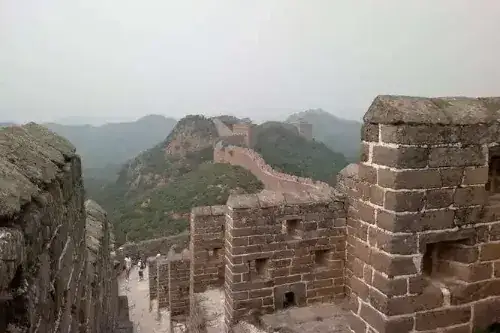
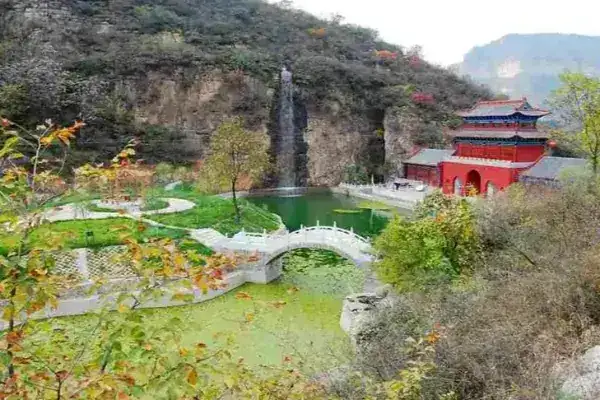
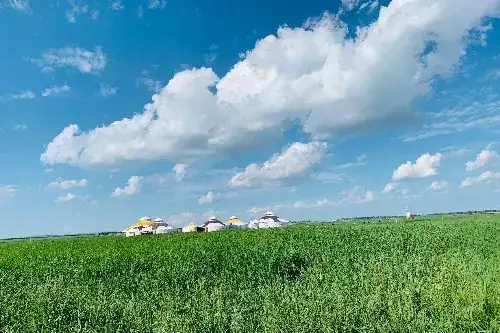
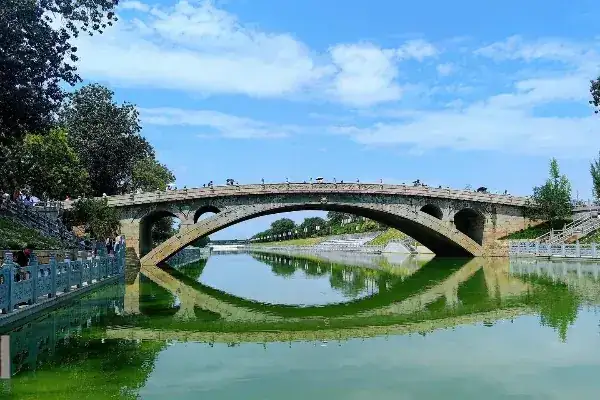
Baoding is an area combining plains, lakes, wetlands, hills, mountains, and subalpine meadows, recognized as a China Excellent Tourism City. As of December 2019, it has 3 national 5A-level scenic areas (Yesanpo, Baishi Mountain, and the Western Qing Tombs) and 12 national 4A-level scenic areas, including the Zhili Governor-General's Residence Museum, Langya Mountain in Yi County, Mancheng Han Tombs, Fuping Jin-Cha-Ji Border Region Revolutionary Memorial, Quyang North Yue Temple, Laishui Yugudong, and Yi County Yishui Lake.
In 2025, the city received 130 million tourist visits (up 7.0%) with tourism revenue of 141.95 billion yuan (up 7.3%). There are 21 4A-level and above scenic areas, 19 star-rated hotels, and 1 national and 4 provincial tourism and leisure districts.
The ancient "Eight Views of Shanggu" (Baoding Eight Views) include: Pavilion Soaring to the Sky, Bell Tower Echoing the Stars, Green Hills at Dawn, Lotus Ripples in Summer, Spring Rain at Donggao, Autumn Waves at Xicha, Clear Waters of Ji River, and Langya Mountain's Splendor.
The new eight views include Langya Mountain and Ancient Lotus Pond from the original eight, plus Yesanpo, Western Qing Tombs, Zhili Governor-General's Residence, Baishi Mountain, Baiyangdian Lake, and Ranzhuang Tunnel Warfare site.
Local Specialties
Specialty Foods
Baoding's specialty foods include donkey meat sandwich (lu rou huo shao), Baiyunzhang steamed buns, braised chicken, Gaoyang pork knuckle, beef pancake soup, Gaobeidian tofu strips, Baoding wheat paste (one of the "Three Treasures of Baoding"), Huaimao pickled vegetables, and spring greens (chun bu lao, another of the "Three Treasures").
Geographical Indications
Handicrafts
Baoding's specialty handicrafts include Baoding iron balls (one of the "Three Treasures of Baoding"), Quyang stone carving, Yishui inkstone, Baigou clay figurines, Ding porcelain, Dingxing enamel, Yi County twisted-fiber porcelain, and Gaoyang textiles.
Baoding iron balls, also known as fitness balls, are a traditional folk craft. Middle-aged and elderly people in Baoding enjoy playing with two iron balls in one hand for exercise and health. The "Three Treasures of Baoding Prefecture" are iron balls, wheat paste, and spring greens, with iron balls ranking first.
Cloisonne (enamel) dates back to the Ming Dynasty's Jingtai reign (1450–1456), with a 500-year history. Dingxing County's Xiaozhuzhuang Township had dozens of enamel factories. The production process involves over a dozen steps, all handcrafted, including copper plate cutting, wire bending, soldering, and five rounds of enamel application.
Quyang stone carving uses local white stone, with works ranging from Han Dynasty tomb figurines to Yuan, Ming, and Qing palace building materials to the contemporary People's Heroes Monument.
Ding porcelain, produced in Quyang, was fired beginning in the Tang Dynasty and flourished in the Northern Song, one of the five great kilns of the Song Dynasty alongside Ru, Jun, Guan, and Ge. The "Return to Seclusion" records: "Dingzhou's flower porcelain bowls, the whitest under heaven."
Baigou clay figurines originated in the Qing Dynasty, reaching peak prosperity during the Qianlong period, when every household along the Baigou River was skilled in clay modeling.
Yishui inkstone, from ancient Yizhou, is said to date back to the Warring States period, flourishing in the Tang and Song. It shares fame with Duan inkstone and She inkstone, considered the ancestor of Chinese inkstones, and was a palace tribute item throughout the dynasties.
Twisted-fiber porcelain, beginning in the Tang Dynasty, was interrupted after the Jingkang Incident of the Northern Song. Zhang Baojun of Yi County, after graduating from the Central Academy of Arts and Design in 1986, dedicated himself to restoring and innovating this technique.
Gaoyang textile industry began in the late Ming, flourished in the late Qing, and peaked in the early Republic. In the first half of the 20th century, its output accounted for one-third of North China's total.
Famous Figures
Honorary Titles
In December 2017, Baoding was named the first batch of Hebei Provincial Civilized City, selected as one of the 200 Charming Chinese Cities, and one of the top 50 Chinese cities with investment potential. In November 2019, it ranked 62nd among China's top 100 prefecture-level cities and was awarded the "National Forest City" title. In December 2020, it was rated a China Livable and Business-Friendly City and awarded the "Voluntary Blood Donation Advanced City" title. In December 2021, the Chinese Olympic Committee awarded Baoding the "Olympic Champion City" trophy, and it was named a Hebei Provincial Double Support Model City. In 2022, it was selected for the national innovative city building list, named a "Hebei Provincial Health City," ranked 97th on the "China's Top 100 Vigorous Cities" list, selected for the "Zero-Waste City" construction list, the national youth development-type city pilot, the climate investment and financing pilot, and the waste material recycling system key city list. In November 2023, the China Electronics Chamber of Commerce awarded Baoding the title of "Asian E-commerce Ecological Famous City." In April 2025, it was named a National Double Support Model City.
Sister Cities
Domestic
Baoding and its subordinate counties have established sister city relationships with multiple domestic cities and districts.
International
As of 2023, with the approval of the Chinese People's Association for Friendship with Foreign Countries, Baoding and its subordinate counties have established 10 sister city or friendship city relationships with 10 administrative regions in 8 countries worldwide.
Travel information can change. Check current opening hours, reservations and entry requirements before you travel.
Traveller discussion
Start the conversation with a helpful tip or a question.