
Tangshan City
Tangshan CityTangshan, abbreviated as "Tang," is a prefecture-level city in Hebei Province, located in the eastern part of Hebei and the northeastern part of the North China Plain, facing the Bohai Sea to the south and leaning against the Y
Tangshan City
Tangshan, abbreviated as "Tang," is a prefecture-level city in Hebei Province, located in the eastern part of Hebei and the northeastern part of the North China Plain, facing the Bohai Sea to the south and leaning against the Yan Mountains to the north, adjacent to Beijing and Tianjin, at the strategic passage between North China and Northeast China, with a total area of 13,472 square kilometers. As of July 2026, Tangshan administers 7 municipal districts, 4 counties, and 3 county-level cities, with 4 development zones. As of the end of 2025, the permanent resident population was 7,712,500, with an urbanization rate of 68.06%. Tangshan was named after Emperor Taizong of Tang (Li Shimin, r. 626–649) who camped here during his eastern campaign against Goguryeo. It is known as the "Northern Porcelain Capital," a window city for economic cooperation in Northeast Asia, a new industrialization base in the Circum-Bohai region, an important fulcrum of the Capital Economic Circle, a regional center city of the Beijing-Tianjin-Hebei city cluster, and a modernized coastal powerhouse. It is one of the provincial center cities designated by the State Council, a China Cross-Border E-Commerce Comprehensive Test Zone, and part of the China (Hebei) Pilot Free Trade Zone. Tangshan gave birth to China's first mechanized coal mine, first standard-gauge railway, first steam locomotive, and first batch of machine-made cement. It is the birthplace of Pingju opera, and shadow puppetry, Pingju opera, and Laoting drum—known as the "Three Flowers of Eastern Hebei"—are national intangible cultural heritage items. In 2025, Tangshan achieved a GDP of 1,045.02 billion yuan, up 6.2%.
History
Human habitation in the Tangshan area dates back to the Paleolithic period, with sites such as Zhua Village and Mengjiaquan. The area belonged to the Guzhu State and Shanrong State. It was under Pingzhou and Jizhou during the Han period, under the Nanjing Circuit, Zhongdu Circuit, and Beijing Circuit during the Liao and Jin dynasties, under the Zhongshu Province and Yongping Circuit during the Yuan Dynasty (1271–1368), and under Shuntian Prefecture, Yongping Prefecture, and Zunhua Subprefecture during the Ming and Qing dynasties.
In 1877, Qiaotun Town was established, later renamed Tangshan Town. In 1912, the Republic of China inherited the Qing administrative system. In 1929, Zhili Province was renamed Hebei Province. On January 28, 1939, the puppet East Hebei government established Tangshan as a city. In April 1946, the Hebei Provincial Committee of the CCP passed a resolution to establish Tangshan City, and on May 5, the Tangshan Municipal Government was established.
After the founding of the People's Republic of China, Tangshan remained a province-administered city. In 1955, the Municipal People's Government was renamed the Municipal People's Committee. In 1958, Tangshan was placed under Tangshan Special District. In 1960, the Tangshan Special District was abolished and its jurisdictions were merged into Tangshan City. In 1961, the Tangshan Special District was restored. In 1978, Tangshan was reinstated as a province-administered city. In 1983, the Tangshan Prefecture was abolished and merged with Tangshan City, implementing the city-administering-county system. On December 15, 1984, the State Council approved Tangshan as one of the 13 "larger cities" in China.
Administrative Divisions
Divisional History
Tangshan's administrative divisions underwent numerous changes from 1949 to 2019. Key milestones include: In 1955, districts were reorganized into Lubei, Lunan, BeiziYuan, Wali, Gangyao, and Dongkuang districts. In 1958, multiple counties were merged. In 1983, the Tangshan Prefecture was abolished and Funing, Changli, and Lulong counties were transferred to Qinhuangdao. In 1992, Zunhua County became Zunhua City. In 1994, Fengnan County became Fengnan City. In 1995, Dongkuang District was renamed Guye District. In 1996, Qian'an County became Qian'an City. In 2002, Fengnan City became Fengnan District and Fengrun County merged with the New District to form Fengrun District. In 2012, Tanghai County was abolished and Caofeidian District was established. In 2018, Luan County was abolished and Luanzhou City was established.
Division Status
As of July 2026, Tangshan administers 7 municipal districts, 4 counties, and 3 county-level cities, with 4 development zones. The city has 54 sub-districts, 158 towns, and 19 townships, with 756 community committees and 5,382 village committees. The Tangshan Municipal People's Government is located at No. 3 Xishan Road, Lubei District.
Geographical Environment
Location and Boundaries
Tangshan is located in the central zone of the Bohai Bay, in the eastern part of Hebei Province. It faces Qinhuangdao across the Luan River to the east, borders Tianjin to the west, faces the Bohai Sea to the south, and leans against the Yan Mountains and the Great Wall toward Chengde to the north. Between 117°31′–119°19′E and 38°55′–40°28′N, it extends about 130 kilometers east-west and 150 kilometers north-south, with a total area of 13,472 square kilometers. It is 125 kilometers east to Qinhuangdao, 40 kilometers south to the Bohai Sea, 108 kilometers southwest to Tianjin, 366 kilometers to the provincial capital Shijiazhuang, and 154 kilometers northwest to Beijing.
Geological Structure
Tangshan has extensive stratigraphic sequences. Archean and Proterozoic formations are mainly exposed in the northern mountainous areas; Cambrian and Ordovician systems are distributed on both limbs of the Kaiping Syncline; Carboniferous and Permian systems are mostly buried beneath the southern plains; small amounts of Jurassic strata are exposed near Lianhuayuan and Gantoushan in Qian'an; Tertiary system is found near Xinzhuan-Yinzhuang south of Qianxi County and deeply buried south of Xugezhuang in Fengnan District and Changning in Luannan County. Quaternary deposits are extensively developed, covering about three-fifths of the city's total area, forming a broad piedmont inclined plain.
The area sits at the junction of the eastern southern margin of the Yanshan Fold Belt of the Sino-Korean Paraplatform and the Huanghua Depression of the North China Depression Zone. The main structural framework was shaped by the Yanshan Movement, followed by strong tectonic differentiation during the Himalayan Movement, with the northern part continuing to rise and the southern part continuing to subside from the Late Tertiary onward.
Landforms
Tangshan's landforms are divided into two major regions: the Yanshan mountainous-hilly area and the Luan River plain. The terrain is higher in the north and lower in the south, sloping from west and northwest toward east and southeast until the coast. The northern and northeastern parts are mostly mountainous, with elevations of 300–600 meters; the central part is the Yanshan piedmont plain at elevations below 50 meters; the southern and western parts are coastal saline-alkali land and marshes at 15–10 meters or below. The highest peak in Tangshan is Bamian Peak at Qingshan Pass, 842 meters.
Tangshan's continental coastline totals 229.7 kilometers. There are over 100 islands of various sizes in the Luan River estuary and Caofeidian waters, with island coastlines totaling 125.7 kilometers, including Xiangyun Island, Yuetuo Island, Puti Island, and Tuodao Island.
Climate Characteristics
Tangshan has a warm temperate semi-humid continental monsoon climate. Spring is windy with little rain, high evaporation, and dry air; summer is hot and humid with concentrated rainfall, often accompanied by severe weather such as torrential rain, hail, thunderstorms, and strong winds; autumn has mostly clear weather with large temperature changes and rapid cooling; winter is cold and dry with little precipitation and prevailing west to northwest winds.
Natural Resources
Water Resources
Tangshan has 70 rivers. Surface water resources total 1.462 billion cubic meters, groundwater resources 1.435 billion cubic meters, with total water resources of 2.416 billion cubic meters after deducting overlap, averaging 329 cubic meters per capita.
Land Resources
As of the end of 2019, Tangshan's major land types include: 7.5028 million mu of arable land (1.0912 million mu paddy fields, 4.7749 million mu irrigated land, 1.6367 million mu dry land); 2.2861 million mu of orchard land; 2.4952 million mu of forest land; 819,800 mu of grassland; 664,000 mu of wetland (including 641,600 mu coastal mudflats); 4.7393 million mu of urban, village, and mining land; 686,300 mu of transportation land; and 1.8091 million mu of water and water conservancy land.
Marine Resources
Tangshan has a continental coastline of 229.7 kilometers, mudflat area of 1.25 million mu, 1,173 square kilometers of unused coastal land, and near-shore sea area of 3,492.5 square kilometers.
Plant Resources
Tangshan has 47 families, 67 genera, and 133 species of trees, plus 8 families, 12 genera, and 22 species of fruit trees. Wild medicinal plants belong to 123 families and 194 species.
Animal Resources
Historically, wild mammals in Tangshan included tigers, leopards, black bears, jackals, wolves, badgers, deer, river deer, roe deer, monkeys, apes, foxes, raccoon dogs, rabbits, otters, martens, Mongolian gazelles, wild boars, and various rodents. By the 1930s–1940s, tigers, leopards, black bears, deer, and monkeys had disappeared. Over 200 bird species have been recorded. Freshwater fish include 16 families and 46 species, with marine fauna also being diverse.
Mineral Resources
Tangshan has discovered and proven over 50 types of mineral resources. Iron ore reserves total 6.2 billion tonnes, making it one of China's three major iron ore concentration areas, second only to Anshan and exceeding Panzhihua. Gold deposits, mainly in Zunhua and Qianxi counties, have a long mining history—the Jinchangyu gold mine in Qianxi was one of China's three major gold producers by the late Qing Dynasty, with proven reserves of 78,543 kg. Manganese reserves total 213,700 tonnes. Other metal minerals include silver, copper, bauxite, molybdenum, tin, and mercury. Non-metallic minerals include limestone, dolomite, quartz sandstone, refractory clay, bauxite, oilstone, garnet, graphite, and more.
Coal mining has been conducted on a large scale for over 100 years, with reserves of 6.25 billion tonnes, making Tangshan an important coking coal production area. Five oil and gas fields have been discovered since exploration began in 1956, with a major oil field of 1 billion tonnes newly proven in 2007. Hydropower resources total 703,000 kW in theoretical capacity, primarily along the Luan River system (589,100 kW) and Ji Canal system (91,700 kW).
Population
As of the end of 2025, Tangshan's permanent resident population was 7,712,500, a decrease of 10,300 from the end of the previous year. The urban population was 5,248,800, an increase of 66,800. The urbanization rate was 68.06%, up 0.96 percentage points.
Politics
Economy
Overview
In 2025, Tangshan's GDP was 1,045.02 billion yuan, up 6.2%. The primary industry value added was 66.59 billion yuan (up 3.7%); secondary industry 512.94 billion yuan (up 7.1%); and tertiary industry 465.49 billion yuan (up 5.5%). The three-industry structure was 6.4:49.1:44.5. Per capita GDP was 135,406 yuan, up 6.2%.
Fixed asset investment (excluding rural households) grew by 7.2%. Industrial investment grew 19.9%, with industrial technology renovation investment up 9.5%. Private investment grew 6.9%, accounting for 56.1% of total investment. The city had 1,840 construction projects, including 848 projects with total investment over 100 million yuan.
Total fiscal revenue was 92.71 billion yuan (up 4.9%). General public budget revenue was 58.82 billion yuan (up 1.8%), with tax revenue of 30.43 billion yuan (up 4.0%). General public budget expenditure was 108.36 billion yuan (up 5.2%).
Per capita disposable income was 47,200 yuan (up 5.4%); urban residents 57,844 yuan (up 4.9%); rural residents 29,446 yuan (up 6.3%). The urban-rural income ratio was 1.96, narrowing by 0.03. Per capita consumption expenditure was 30,513 yuan (up 5.7%).
Primary Industry
In 2025, grain sown area was 490,000 hectares (down 0.2%), with total output of 3.019 million tonnes (up 0.4%). Grain yield per mu was 411.1 kg (up 0.6%). Cotton sown area was 7,000 hectares, with output of 8,000 tonnes. Oil crop sown area was 79,000 hectares, with output of 343,000 tonnes (up 3.3%). Vegetable sown area was 129,000 hectares, with output of 9.966 million tonnes (up 2.8%). Dried and fresh fruit (including melons) output was 1.539 million tonnes (up 2.1%), including chestnut output of 123,000 tonnes (up 5.5%). Afforestation area was 20,000 hectares. Pig slaughter was 5.27 million head (up 1.5%); cattle 513,000 (up 3.9%); sheep 1.142 million (down 3.9%); poultry 92.744 million (up 20.7%). Egg output was 269,000 tonnes (down 6.5%); milk output 1.22 million tonnes (down 0.2%).
Secondary Industry
In 2025, total industrial value added was 470.46 billion yuan (up 8.0%). Industrial enterprises above designated size grew by 10.3%, with 2,327 enterprises. By ownership: state-controlled enterprises grew 2.1%; joint-stock 9.2%; foreign/HK/Macao/Taiwan 35.4%; private 5.5%. By sector: mining grew 6.7%; manufacturing 13.3%; electricity, heat, gas, and water supply declined 5.3%. Industrial enterprises above designated size achieved revenue of 1,351.46 billion yuan (down 2.8%) and profits of 23.90 billion yuan (up 79.2%).
Construction industry value added was 45.60 billion yuan (down 0.8%). Construction enterprise housing construction area was 39.96 million square meters (down 7.2%), and completion area was 7.348 million square meters (down 5.5%).
Tertiary Industry
In 2025, wholesale and retail value added was 121.31 billion yuan (up 4.9%); transportation, warehousing, and postal services 94.11 billion yuan (up 5.8%); accommodation and catering 7.38 billion yuan (up 3.2%); financial industry 35.27 billion yuan (up 6.7%); and real estate 30.30 billion yuan (up 1.4%). Service enterprises above designated size (950 enterprises) achieved revenue of 101.38 billion yuan (up 0.3%).
Total retail sales of consumer goods were 242.09 billion yuan (up 5.3%). Urban retail sales were 194.75 billion yuan (up 5.4%); rural 47.34 billion yuan (up 5.2%). Total import and export was 136.96 billion yuan (down 7.7%), with exports of 40.94 billion yuan (down 14.1%) and imports of 96.02 billion yuan (down 4.7%). Actual foreign investment utilized was 384.01 million USD (up 32.7%).
Postal and telecom revenue was 10.03 billion yuan (up 1.5%). Express delivery volume was 310.865 million parcels (up 23.9%), with revenue of 3.14 billion yuan (up 12.3%). Mobile phone users reached 10.227 million, with 3.707 million broadband subscribers.
Tourist visits totaled 119.006 million (up 12.2%), with total tourism spending of 125.90 billion yuan (up 12.3%).
As of the end of 2025, financial institution RMB deposit balances were 1,701.75 billion yuan (up 124.73 billion), with household deposits at 1,209.22 billion yuan. Loan balances were 1,269.32 billion yuan (up 134.07 billion). The deposit-to-loan ratio was 74.6%. There were 128 listed companies. Insurance premium income was 29.30 billion yuan (up 4.9%).
Transportation
Tangshan's expressway network includes the Beijing-Shenyang, Tianjin-Tangshan, Tanggang, Tangcheng, and coastal expressways, interconnected with ring expressway and national highways. As of the end of 2025, total highway mileage reached 20,700 kilometers, including 884.8 kilometers of expressways and 18,200 kilometers of rural roads.
Four railway trunk lines—the Beijing-Harbin, Tongtuo, Beijing-Qinhuangdao, and Daqin railways—and multiple branch lines cross Tangshan. The Beijing-Tangshan intercity railway and Shuicao Railway are under accelerated construction. Tangshan Port is divided into Jingtang Port Area, Caofeidian Port Area, and Fengnan Port Area, with cargo throughput ranking 10th globally among ports. Caofeidian Comprehensive Bonded Zone, approved in July 2012, is Hebei's first comprehensive bonded zone. As of the end of 2025, Tangshan Port had 91 open berths, 62 inland ports, and 47 container shipping routes. Annual cargo throughput was 883.99 million tonnes, ranking second among global coastal ports.
Tangshan Sannvhe Airport, in Fengrun District, 20 kilometers from the city center, is a 4C-level civil airport with a 2,700-meter runway. It opened on July 13, 2010, as Hebei's fourth operational passenger airport. In 2025, passenger throughput was 653,000 (up 14.8%), with 12 routes to 12 cities.
The city operates 2,044 new energy buses on 156 routes, totaling 2,874.2 kilometers. 25 urban-rural bus routes were opened during the year.
Social Undertakings
Science and Technology
As of the end of 2025, Tangshan has 129 provincial-level and above science and technology research and development platforms, 1 national-level and 1 provincial-level high-tech industrial development zone, 3 national-level and 21 provincial-level technology business incubators, and 8 national-level and 20 provincial-level maker spaces. 8,057 patents were authorized during the year, with 10,436 valid invention patents (up 11.9%).
Education
As of the end of 2025, Tangshan has 13 general higher education institutions with 234,000 students (including 6,323 graduate students); 57,000 secondary vocational school students; 431,000 general secondary school students; 505,000 primary school students; and 138,000 kindergarten children. The nine-year compulsory education retention rate was 98.5%, and the gross enrollment rate for senior secondary education was 97.4%.
Culture
As of the end of 2025, Tangshan has 11 performing arts troupes, 15 cultural centers, 30 museums and memorial halls, and 15 public libraries. 2,747 public benefit performances were organized. The 13th Pingju Opera Festival was successfully held. The original shadow puppet play "Little Hero Yulai" was selected for the 2025 National Arts Fund.
Sports
As of the end of 2025, Tangshan has 18,703 sports venues, with per capita sports area of 2.71 square meters. Tangshan athletes won 7 national championships and 120 provincial-level championships. The city hosted the 2025 National Triathlon Championship Cup Series, China Handball Super League, and China U20 International Wrestling Championship.
Healthcare
As of the end of 2025, Tangshan has 9,645 medical and health institutions, including 285 hospitals (71 public, 214 private), 189 township health centers, 211 community health service centers, 5,528 village clinics, and 17 disease prevention and control centers. Medical institutions have 58,000 beds and 81,000 health technical personnel, including 33,000 practicing physicians and 38,000 registered nurses. Annual outpatient visits totaled 67.635 million.
Social Security
In 2025, new urban employment was 122,600, with 26,900 reemployed. Urban employee pension insurance covered 2.710 million people; urban-rural resident pension insurance 3.182 million; basic medical insurance 6.879 million; unemployment insurance 1.232 million; and work injury insurance 1.389 million. The city distributed 542.71 million yuan in minimum living allowances to 70,311 people. There are 342 elderly care institutions with 39,800 beds.
Safety Production
In 2025, Tangshan experienced 59 production safety accidents with 49 fatalities.
Historical Culture
Name Origin
Tangshan is named after Dacheng Mountain (originally called Tangshan) in the central part of the urban area.
Historical Sites
Tangshan has 1,321 immovable cultural heritage sites, including 1 World Cultural Heritage site and 95 municipal-level and above protected units.
Intangible Cultural Heritage
As of 2022, Tangshan had 232 municipal-level intangible cultural heritage items. Tangshan shadow puppetry was inscribed on the UNESCO Representative List of the Intangible Cultural Heritage of Humanity. 9 items including shadow puppetry, Pingju opera, Laoting drum, Yutian clay sculpture, and Tangshan flute were selected for the national list, and 43 items for the provincial list.
Local Specialties
Scenic Spots
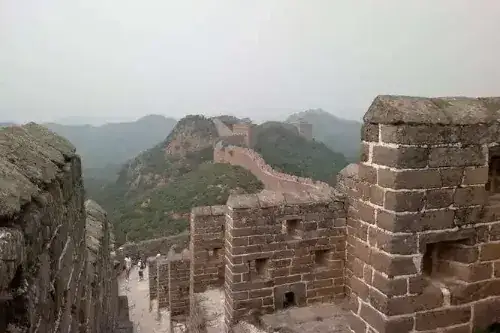
The northern mountainous area along the Great Wall preserves the essence of Ming Dynasty Great Wall, including the Qianxi underwater Great Wall, Qian'an marble Great Wall, Jiufeng Mountain dry-laid Great Wall, the Zuosan Kiln, Xifeng Pass, and Qingshan Pass. The Eastern Qing Tombs in Malanyu Town, Zunhua City, are a national key cultural heritage protection unit and World Cultural Heritage site.
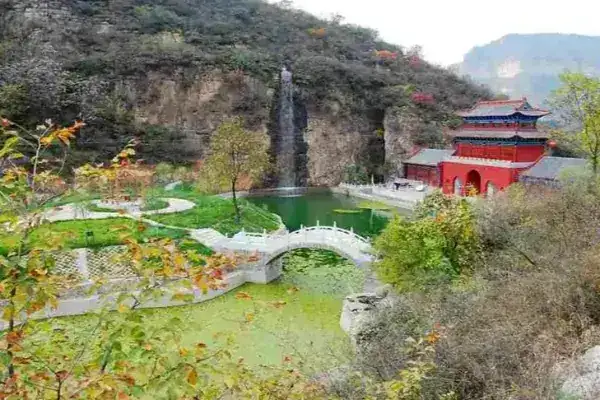
The central urban area features the Danan Lake National Ecological Park, built on coal mining subsidence land, with 1.38 million trees, 607 hectares of green area, over 40 species of aquatic plants across 20+ families, and 30+ species of animals and fish. The southern coastline features Qianshui Bay Beach, Yuetuo Island, and Tangshan Bay International Tourism Island. Other scenic areas include Jingzhong Mountain in Qianxi, Qingshan Pass, Luanzhou Ancient City, Qinglong Mountain in Luan County, Shankou Scenic Area in Qian'an, Caofeidian Wetland, and Tangren Street in Fengnan.
Famous Figures
Honorary Titles
In 1990, Tangshan's post-earthquake reconstruction won the UN Habitat Scroll of Honour Award. In 2004, it was awarded the National Garden City title. In 2004, its southern coal mining subsidence area ecological project won the Dubai International Award for Best Practices in Improving the Living Environment. It was also named a China Excellent Tourism City. In 2011, it was named a National Civilized City (later revoked in 2022). In 2019, it was awarded the title of "Northern Porcelain Capital" and "National Forest City." In 2020, it was named a National Agricultural Product Quality Safety City. In 2021, it was selected as a pilot city for national industry-education integration and for the first batch of city renewal pilots. In 2022, it was selected for the national comprehensive transportation hub city construction list and the "Zero-Waste City" construction list. In 2023, it was selected as one of the first carbon peak pilot cities. In 2025, it was reselected as a National Double Support Model City.
External Exchange
Travel information can change. Check current opening hours, reservations and entry requirements before you travel.
Traveller discussion
Start the conversation with a helpful tip or a question.