
Shijiazhuang City
Shijiazhuang CityShijiazhuang, abbreviated as "Shi," is a prefecture-level city under Hebei Province, the provincial capital, a Type I large city, and the core city of the Shijiazhuang metropolitan area. Located in the North China region, i
Shijiazhuang City
Shijiazhuang, abbreviated as "Shi," is a prefecture-level city under Hebei Province, the provincial capital, a Type I large city, and the core city of the Shijiazhuang metropolitan area. Located in the North China region, in the central-southern part of Hebei Province, it straddles the Taihang Mountains and the North China Plain, with a warm temperate continental monsoon climate, four distinct seasons, and long summers and winters. The total area is 15,848 square kilometers. As of September 2025, Shijiazhuang administers 8 municipal districts, 11 counties, and 3 county-level cities. As of the end of 2025, the permanent resident population was 11,246,900. Human activity in the area dates back to the Neolithic period. In 204 BCE, Hengshan Commandery was established. During the Song Dynasty, it belonged to Hebei West Circuit. During the Qing Dynasty (1644–1912), it was under Zhili Province. In 1925, the Republic of China established Shimen City. In 1947, Shimen was liberated and renamed Shijiazhuang. In 1968, the Hebei provincial capital moved to Shijiazhuang. In 1993, the Shijiazhuang Prefecture and Municipal Government merged. Shijiazhuang is designated by the State Council as an important center city of the Beijing-Tianjin-Hebei region, a national comprehensive transportation hub, a North China commerce and logistics base, and a North China advanced manufacturing base. Five leading industries include next-generation electronic information and biopharmaceuticals. In 2025, the GDP was 865.17 billion yuan, up 6.0%.
Name Evolution
The name Shijiazhuang originated from Shijiazhuang Village, first recorded on a Yuan Dynasty stone inscription dated the fourth year of the Dade reign (1300). The village name also appears in a 1534 restoration inscription at the Pilu Temple. The Qing Dynasty "Huolu County Gazetteer" (1878 edition) records: "Shijiazhuang, thirty-five li from the county seat, six streets, six temples, four wells."
The old name was Shimen (Stone Gate). In 1925, when Zhili Province was experimenting with the municipal self-governance system, Huolu County decided to merge Shijiazhuang, Xiumen, and Li villages to apply for city status. The name was created by taking the first character of "Shijiazhuang" and the last character of "Xiumen," forming "Shimen." In 1949, to break with the Japanese puppet government era when Shimen was formally established, and for administrative convenience, the city government requested renaming to "Shijiazhuang City," which was approved on October 6.
History
Pre-Qin Period
Human activity in the Shijiazhuang area dates back to the mid-to-late Neolithic period. The "Fuxi Platform" at Xinle's ancient site proves that Fuxi was active here over 6,000 years ago. According to the "Tribute of Yu," the area belonged to Jizhou during the Xia Dynasty. During the mid-Shang Dynasty (c. 14th century BCE), the area was a northern stronghold. During the Spring and Autumn period (770–476 BCE), the Xianyu State, Gu State, and Fei State were established here, all later conquered by the Jin State. During the Warring States period (475–221 BCE), the Xianyu people established the Zhongshan State. In 296 BCE, Zhongshan was conquered by the State of Zhao.
Qin-Han to Southern and Northern Dynasties
After Qin Shi Huang unified China, the area belonged to Julu Commandery. In 204 BCE, the Western Han Dynasty established Hengshan Commandery, named for its proximity to Mount Heng. After Emperor Wen (r. 180–157 BCE) ascended the throne, the name was changed to Changshan Commandery to avoid the emperor's name taboo. In 196 BCE, Liu Bang renamed Dongyuan County as Zhending County. In 113 BCE, Zhending Kingdom was established. During the Three Kingdoms period, the area belonged to the Wei State under Changshan, Anping, Zhao, Julu, and Zhongshan commanderies. In 398 CE, Emperor Daowu of the Northern Wei (386–534) relocated the Changshan Commandery seat to Anle Fort (present-day Zhengding), which became the central city of the region south of the Northern Yue and east of the Taihang Mountains.
Sui-Tang to Five Dynasties and Ten Kingdoms
During the Sui Dynasty (581–618), the area belonged to Hengshan Commandery, Zhao Commandery, Xindu Commandery, and Gaoyang Commandery. By the early Tang Dynasty (618–907), the commandery and county seats were moved north of the Hutuo River to present-day Zhengding. In 596, Luquan County was established. During the Five Dynasties period (907–960), the area belonged to the Chengde Military Commissioner's jurisdiction.
Song-Yuan Period
During the Song Dynasty (960–1279), the area belonged to Hebei West Circuit, with Zhending Prefecture as its capital. The Jin Dynasty (1115–1234) brought large numbers of Jurchen people to settle in Zhending. At its peak, Zhending Prefecture's nine counties had 137,137 households, making it the most densely populated and commercially developed city. During the Yuan Dynasty (1271–1368), the area was under the Zhongshu Province, with Zhending Circuit administering 1 prefecture, 2 departments, and 7 counties.
Ming-Qing Period
During the Ming Dynasty (1368–1644), Zhending Circuit was renamed Zhending Prefecture, administering 11 counties and 5 departments. In 1370, the Zhending Guard was established. Shijiazhuang Village appeared at this time as a military colony under the Zhending Guard. After Emperor Yongle (r. 1402–1424) moved the capital to Beijing, Zhending Prefecture became directly subordinate to the capital, serving as a major garrison town. In 1723, to avoid the name taboo of Emperor Yongzheng (Yinzhen), Zhending was renamed Zhengding. In 1902, the Beijing-Hankou Railway reached Shijiazhuang Village. In 1907, the Zhengtai Railway was completed, making Shijiazhuang the junction of two major railways and the most important material transit hub between Shanxi and Hebei.
Republic of China Period
In 1912, the Republic of China was established. In 1925, the provisional government ordered the establishment of "Shijiazhuang City," which was renamed "Shimen City" by combining characters from Shijiazhuang and Xiumen. In 1928, the Nanjing government abolished all municipal offices. In 1937, Japanese forces occupied Shimen. In 1939, the puppet government formally approved the establishment of Shimen City with 69 villages and 166,733 people. On November 12, 1947, Shimen was liberated, and on December 26, it was renamed Shijiazhuang City.
After the Founding of the PRC
In 1950, the Jingxing Mining District was established. In 1955-1956, districts were reorganized. In 1958, Shijiazhuang was downgraded from province-administered to prefecture-administered. In 1968, the Hebei provincial capital moved to Shijiazhuang. In 1978, Shijiazhuang was reinstated as a province-administered city. In 1993, the Shijiazhuang Prefecture and Municipal Government merged. In 2001, the Suburban District was abolished and Yuhua District was established. In 2014, Qiaodong District, Gaocheng City, Luquan City, and Luancheng County were abolished, and Gaocheng District, Luquan District, and Luancheng District were established.
Geographical Environment
Location and Boundaries
Shijiazhuang is located in the central-southern part of Hebei Province, at the junction of the Taihang Mountains and the North China Plain (37°27′–38°47′N, 113°30′–115°20′E). The terrain is higher in the west and lower in the east. It borders Hengshui to the east, Xingtai to the south, Shanxi Province to the west, and Baoding to the north. It is 273 kilometers from Beijing, 260 kilometers from Tianjin, and 155 kilometers from the Xiongan New Area. The central urban area covers 660 square kilometers.
Geology
Shijiazhuang sits on the transition zone between the Taihang Mountain uplift and the Hebei Plain depression, with the Taihang mountain front deep fault zone passing through. The area features Archean to Cenozoic stratigraphy. The main tectonic movements were differential block uplift and subsidence. Two major deep faults—the Zijinguan-Lingshan and Dingxing-Shijiazhuang—cross the area.
Landforms
The city straddles two major geomorphic units: the Taihang Mountains and the North China Plain. Landforms from west to east include mid-mountains, low mountains, hills, basins, and plains. The boundary between mountains and plains is at the 150-meter contour line, with mountains and plains each occupying roughly half (51:49). The highest point is Yuqinfen at 1,273 meters in southern Jingxing County. The lowest point is at 45 meters in southern Luancheng. Mountains cover about 50% of the total area, primarily in Jingxing, Pingshan, Zanhuang, Xingtang, Lingshou, Luquan, and Yuanshi. The plains include the Hutuo River alluvial fan.
Climate
Shijiazhuang has a warm temperate continental monsoon climate at the eastern edge of the Eurasian continent, with four distinct seasons. Spring lasts about 55 days, summer 105 days, autumn 60 days, and winter 145 days. The average annual temperature ranges from 11.8°C to 13.3°C, with the hottest month in July and the coldest in January. Average annual precipitation is 480–570 mm, concentrated in summer (63–70% from June to August). The prevailing winds are north in winter and southeast in summer.
Hydrology
The city's rivers belong to the Daqing River and Ziya River systems of the Hai River basin. Six major rivers include the Sha, Ci, Hutuo, Xiao, Huai, and Ji rivers. The Hutuo River, the largest flood channel, is 201 kilometers long within the city. The city has 239 reservoirs of all sizes, including 4 large reservoirs (Gangnan, Huangbizhuang, Hengshanling, Koutou) and 8 medium reservoirs, with total storage of 1.38729 billion cubic meters as of end-2022.
Soil
The city has 11 soil types across 19.97 million mu, with cinnamon soil and fluvo-aquic soil being the most widespread. Arable land includes 25,300 hectares of effectively irrigated area.
Natural Disasters
Shijiazhuang experiences multiple types of natural disasters with high frequency and intensity, including droughts, floods, hail, strong winds, dry hot winds, frost, and pest damage. From 1949 to 1990, the average annual affected agricultural area was 441,100 mu. Droughts are the most common, with a 33.6% frequency from 1470 to 1990. Floods are also frequent, with summer flood occurrence at about 20% and autumn floods at 15%. Notable flood years include 1954, 1956, 1963, and 1964.
Natural Resources
Water Resources
As of 2022, surface water resources total 1.18 billion cubic meters, groundwater 2.064 billion cubic meters, and total water resources 2.503 billion cubic meters. The 12 large and medium reservoirs store 1.529 billion cubic meters. Groundwater depth averaged 29.42 meters, recovering 1.53 meters from 2021.
Land Resources
As of early 2020, arable land totals 6.5583 million mu, including 5.5328 million mu of irrigated land. Orchard land is 1.4821 million mu, mainly in Zanhuang, Jinzhou, Zhao County, Xingtang, and Luquan. Wetlands cover 94,800 mu of inland mudflats.
Biological Resources
The city has 292 species of terrestrial wild vertebrates, with birds being the most numerous. Ten species are under national Class I protection, including the North China leopard, black stork, Baer's pochard, Chinese merganser, great bustard, Oriental white stork, golden eagle, white-tailed eagle, saker falcon, and yellow-breasted bunting. Wild higher plants include 159 families and 1,424 species, with 10 species under national Class II protection.
As of the end of 2023, afforestation covered 91,100 hectares, with a forest coverage rate of 42.6%. The city has 22 nature reserves, including 1 national-level (Tuoliang), 3 provincial-level, 3 national forest parks, and 18 provincial forest parks.
Mineral Resources
As of the end of 2021, 56 mineral types have been identified with 28 being developed. There are 110 mineral occurrences, including 12 energy, 35 metallic, and 63 non-metallic. Total proven reserves are 3.044 billion tonnes. Key minerals include iron, gold, silver, cement limestone, and crushed mica. Energy resources include coal (mainly in Yuanshi and Jingxing mining areas) and petroleum/natural gas (mainly in Jinzhou). Solar power installed capacity reached 3.4247 million kW.
Administrative Divisions
The Municipal People's Government is located at No. 216 Zhongshan East Road. As of September 2023, Shijiazhuang administers 8 districts, 11 counties, and 3 county-level cities.
Politics
Population
Population Numbers
As of the end of 2025, the permanent resident population was 11,246,900, an increase of 300. The urban population was 8,274,400, with an urbanization rate of 73.57%, up 0.91 percentage points.
Ethnic Composition
As of the end of 2020, the city has 54 ethnic groups. The Han population is 10,521,783 (98.88%), and minorities total 118,675 (1.12%), including Hui, Manchu, Mongolian, Tibetan, Miao, Yi, and Zhuang. Minorities are distributed across all 24 counties/districts, concentrated mainly in 4 districts and 5 counties. There are 3 Hui townships and 18 ethnic villages.
Economy
Overview
Shijiazhuang is one of China's major grain, oil, vegetable, fruit, meat, egg, and milk production areas, known as the "Northern Granary." Five leading industries: next-generation electronic information, biopharmaceuticals, equipment manufacturing, modern food, and modern commerce and logistics. Notable enterprises include Huabei Pharmaceutical, Shijiazhuang Pharmaceutical, Yiling, and Junlebao.
In 2025, GDP was 865.17 billion yuan, up 6.0%. Primary industry: 57.36 billion yuan (up 3.7%); secondary: 240.62 billion yuan (up 5.9%); tertiary: 567.19 billion yuan (up 6.3%). Structure: 6.6:27.8:65.6. Per capita GDP: 76,926 yuan (up 5.9%). Private economy value added: 512.09 billion yuan (up 6.1%), accounting for 59.2%.
General public budget revenue: 75.88 billion yuan (up 1.7%). Fixed asset investment grew 12.4%. Per capita disposable income: 42,085 yuan (up 5.6%); urban: 52,559 yuan; rural: 24,184 yuan.
Primary Industry
In 2025, grain sown area was 670,100 hectares (up 0.002%), with total output of 4.419 million tonnes (up 0.4%). Meat output was 550,000 tonnes (up 5.0%), including pork 325,000 tonnes, beef 85,000 tonnes, mutton 17,000 tonnes, and poultry 123,000 tonnes. Egg output: 714,000 tonnes (down 8.8%); milk: 939,000 tonnes (up 3.6%).
Secondary Industry
The city has designated next-generation electronic information, biopharmaceuticals, equipment manufacturing, and modern food as leading industries. The Luquan District electronic information industrial park hosts companies including Zhongci Electronics and Sensitech. In 2023, Luquan's electronic information revenue exceeded 85 billion yuan. The biopharmaceutical sector has 1,299 enterprises with 17 companies exceeding 1 billion yuan in revenue. In 2022, the biopharmaceutical industry achieved 80.2 billion yuan in revenue and 13.6 billion yuan in profit. The Luancheng District equipment manufacturing industry reached 8 billion yuan in 2023. The modern food industry achieved 68.17 billion yuan in revenue and 2.64 billion yuan in profit in 2022.
In 2025, industrial enterprises above designated size grew by 10.3%. By sector: mining grew 79.0%, manufacturing 11.2%, and utilities 2.1%. Key growth sectors: railway/ship/aerospace equipment manufacturing grew 145.7%, computer/communications/electronic equipment 33.4%, and chemical raw materials 19.3%. Profits reached 27.76 billion yuan. Construction industry total output: 215.19 billion yuan (up 4.1%).
Tertiary Industry
Modern logistics is a leading industry. Shijiazhuang International Land Port has 16 international routes reaching over 50 countries. As of August 2023, 40 logistics projects over 100 million yuan were under construction, with total investment of 30.3 billion yuan. The city has 2,802 logistics enterprises.
In 2025, total retail sales of consumer goods were 278.75 billion yuan (up 5.1%). Total import and export was 138.37 billion yuan (up 5.0%), with exports of 91.87 billion yuan (up 13.4%). Actual foreign investment: 173 million USD (up 64.4%). Financial institution deposit balances: 2,755.50 billion yuan (up 222.18 billion); loan balances: 2,114.54 billion yuan (up 151.39 billion). Express delivery volume: 2.80 billion parcels (up 24.5%), with revenue of 13.75 billion yuan (up 16.8%). Mobile phone users: 15.839 million, including 10.071 million 5G users.
Social Undertakings
Education
As of the end of 2025, Shijiazhuang has 50 higher education institutions with 752,900 students (including 33,000 graduate students), 429 general secondary schools with 718,000 students, 130 secondary vocational schools with 195,000 students, 1,368 primary schools with 844,000 students, and 1,797 kindergartens with 219,000 children. The nine-year compulsory education retention rate is 99.0%.
Notable institutions: Hebei Normal University (founded 1902, provincial key university, "Double First-Class" construction tier-1), and Hebei Medical University (founded 1894 by Li Hongzhang, China's first government-run Western medicine school).
Healthcare
As of the end of 2025, the city has 9,875 medical and health institutions, including 307 hospitals, 24 disease prevention centers, 202 township health centers, 237 community health centers, and 3,930 village clinics. Total beds: 77,122. Health technical personnel: 115,000, including 51,000 physicians and 50,000 nurses. Notable: Second Hospital of Hebei Medical University (Class III Grade A, founded 1918, 4,126 beds).
Science and Technology
In 2025, 15,539 patents were authorized, with 24,794 valid invention patents (23.25 per 10,000 people). Technology contracts: 2,652, valued at 34.19 billion yuan (up 43.8%). The city has 509 qualified inspection and testing institutions.
Culture
As of the end of 2025, the city has 18 performing arts troupes, 23 cultural centers, 16 museums, 24 public libraries, and 18 radio/TV stations, with 100% population coverage for both broadcasting and television. Notable: Hebei Museum (founded 1953, national first-class museum, 210,000 collections) and Hebei Provincial Library (founded 1909, 50,606 square meters).
Sports
From 2022 to 2024, the city built 817 ball sports venues. Per capita sports area reached 2.75 square meters. In 2025, the city hosted 1,551 events above municipal level with 4.6 million participants. Athletes won 706 gold, 570 silver, and 609 bronze medals in provincial and above competitions.
Environmental Protection
In 2025, the city had 260 good air quality days. Surface water quality compliance rate was 100%.
Social Security
As of the end of 2025, urban-rural pension insurance covered 3.773 million people; urban employee pension insurance 3.229 million; basic medical insurance 10.117 million; unemployment insurance 1.680 million; work injury insurance 2.021 million; and maternity insurance 1.959 million. New urban employment: 147,000; reemployment: 35,000.
Transportation
Shijiazhuang is known as the "thoroughfare between north and south, the throat of Yan and Jin," and is one of China's 42 transportation hub cities. Four expressways (Huangshi, Qingyin, Beijing-Hong Kong-Macao, and Jingkun) intersect here, along with 9 national highways. Three railway trunk lines (Beijing-Guangzhou, Shitai, and Shide) converge, forming a comprehensive rail network. Shijiazhuang Zhengding International Airport (4E level, opened 1995) exceeded 10 million passengers in 2018. In 2025, highway freight volume was 560 million tonnes (down 3.0%), and highway passenger volume was 15.79 million (down 3.1%). Civilian automobile ownership: 4.002 million (up 8.5%).
The city has 32 railway stations, including the special-grade Shijiazhuang Station. By 2022, total railway mileage reached 699 kilometers, with 270 kilometers of high-speed rail (up 33% from 2011), forming a "double-cross" railway network layout.
Public Transit
Shijiazhuang's subway system has been planned since 2001. As of April 2023, 78.2 kilometers of subway are in operation with 60 stations, having transported 6.48 billion cumulative passengers. The second-phase construction plan (58.85 km, including Lines 4, 5, 6, and Line 1 Phase III) was approved in August 2022. As of the end of 2025, the city operates 436 bus routes totaling 9,182.5 kilometers with 4,178 vehicles, serving 234 million passengers annually. The subway system operates 3 lines with 60 stations, having safely transported 10.35 billion cumulative passengers, with 189 million in 2025.
Humanities
Shijiazhuang features Xibaipo as a red landmark. National key cultural heritage sites include the Pilu Temple, Fuxi Platform, and Dongyuan Ancient City. National intangible cultural heritage items include Gengcun folk tales, Jingxing Lahuadance, and Shijiazhuang Sixian opera.
Cuisine
Staple foods include wheat and rice. The "Eight Big Bowls" of Zhengding, created by the Three Kingdoms general Zhao Zilong, includes four meat and four vegetarian dishes. The "Golden Mane Lion Fish" (Jinmao Shizi Yu), created by chef Yuan Qingfang in the early Republic era, was named one of Hebei's ten classic dishes in 2018. Shimen Beef Bread Soup, originating in 1927, has been popular for nearly a century.
Customs
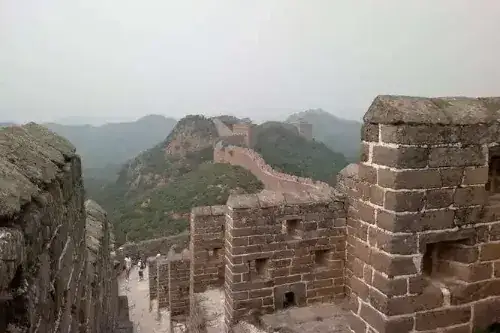
The "Fill the Granary Festival" (Tiancang Festival) on the 25th day of the first lunar month symbolizes abundant harvests. The "Dragon Head Raising Festival" on the 2nd day of the second lunar month marks the beginning of spring farming. The "Winter Clothing Festival" on the 1st day of the tenth lunar month derives from the legend of Meng Jiangnu bringing winter clothes to her husband at the Great Wall. Temple fairs have a long history, with about 1,000 traditional temple fair sites across the city.
Arts
Zanhuang Iron Dragon Lantern originated in the late Ming/early Qing, with two dragons each composed of 14 dragon balls performed by 28 people. Jinzhou Official Umbrella dance features male and female performers with umbrellas and fans. Shijiazhuang Sixian opera is an ancient Hebei genre with over 500 traditional plays. Nanyan Nuantan opera has over 200 surviving plays. Leleqiang opera is a folk art from Yuanshi County's Longzheng Village. Gengcun is known as "China's First Village of Folk Tales," recognized by the Ministry of Culture in 1995.
Historical Sites
As of 2020, Shijiazhuang has 40 national key cultural heritage protection units, 107 provincial units, and 213 county-level units. Notable sites include the Guanghui Temple Hua Pagoda (40.5m, Jin Dynasty, national key heritage unit since 1961) and the Kaiyuan Temple Bell Tower (Tang Dynasty architecture, 14m).
Intangible Cultural Heritage
As of June 2021, the city has 360 municipal-level and above intangible cultural heritage items, including 140 provincial and 12 national. Jingxing Lahuadance, originating in the Ming-Qing period, features distinctive movements like "twisting shoulders" and "flipping wrists." Taolinping Painted Face Fire Festival has over 600 years of history. Shenze Zhui Zi opera originated in the late 1930s.
Traditional Villages
As of May 2023, 60 villages in Shijiazhuang have been included in the Chinese Traditional Villages Directory, including 48 in Jingxing County, 7 in Pingshan, 2 in Luquan, 2 in Jingxing Mining District, and 1 in Zanhuang. Notable villages include Xiaolongwo (5.59 hectares, 114 well-preserved Ming-Qing courtyards, 2,000+ rooms), Zhangshiyan Village (settled by migrants from Shanxi during the Shunzhi reign), and Yujiacun (founded by descendants of the Ming Dynasty official Yu Qian, featuring stone architecture with 4,000+ stone houses).
Zhengding County was designated as a National Famous Historical and Cultural City in 1994, with 1,600+ years of history and the architectural complex of "Nine Towers, Four Pagodas, Eight Great Temples, and Twenty-Four Gold Medal Arches." Tianchang Town is a national historical and cultural town with Ming Dynasty stone city walls (2,000 meters), ancient kiln sites, and the ancient postal road.
Local Specialties
Zhao County Snow Pear ("Xiangya Pear"): large, thin-skinned, white-fleshed, sweet with a rock-sugar taste, cultivation history of 2,000+ years, annual exports of 4 million kg to Southeast Asia. Zanhuang Golden Thread Jujube: 62-70% sugar content, 300-600 mg vitamin C per 100g, 450,000 mu planting area, historical tribute jujube, national geographical indication protection since 2005. Yuanshi Pomegranate: large-grained, soft-seeded, sweet, with 8,000 mu planting area, the largest pomegranate base in North China.
Regional Symbols
The city tree is the Chinese Scholar Tree (Sophora japonica), with 133 century-old specimens, including 71 over 500 years old. The tree symbolizes resilience and perseverance. It is planted along 197 street sections with 51,000 trees. The city flower is the Chinese Rose (Rosa chinensis), known as the "Queen of Flowers," cultivated for over 2,000 years. The city has an 87,000-square-meter Rose Park and hosts the annual Rose Exhibition (16 editions since 2003).
Scenic Spots
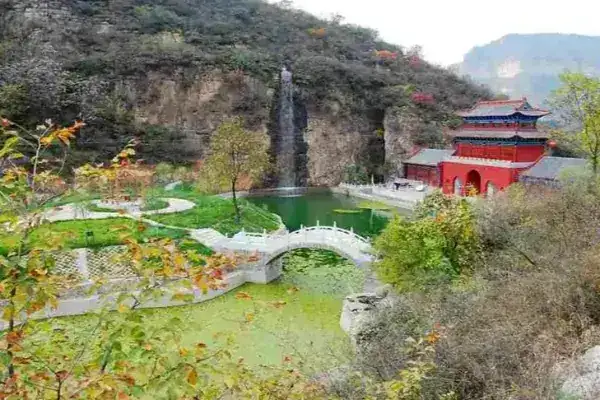
In 2023, Shijiazhuang received 127.565 million domestic tourists with tourism revenue of 150.89 billion yuan. The city has 1 national 5A, 24 national 4A, 7 national 3A, and 3 national 2A scenic areas. Top ten scenic areas include Xibaipo, Zhaozhou Bridge, Longxing Temple, Rongguo Mansion, and Zhangshiyan.
Xibaipo is a national 5A scenic area and national key cultural heritage site in northwestern Pingshan County. In 1947, Liu Shaoqi and Zhu De led the Central Working Committee here. In May 1948, it became the CCP Central Committee headquarters and the center of Chinese revolution leadership. The site covers 390,000 square meters.
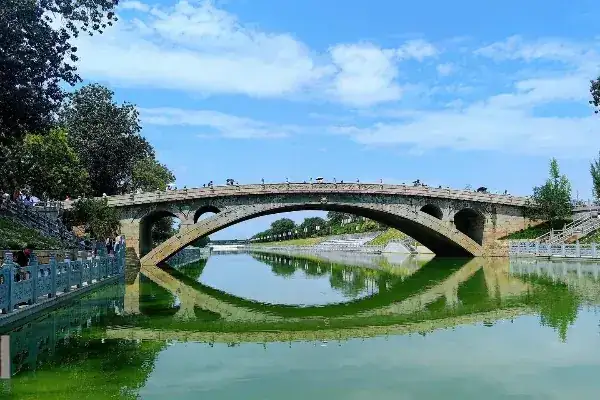
Zhaozhou Bridge (Anji Bridge), built during the Sui Dynasty (595-605 CE) by Li Chun, is the world's oldest surviving open-spandrel stone arch bridge at 64.4 meters long, a national key cultural heritage site since 1961.
Longxing Temple in Zhengding, built in 586 CE, covers 82,500 square meters with over ten halls. It was designated a national key heritage site in 1961 and a national 4A scenic area in 2001.
External Exchange
Famous Figures
Important Honors
Travel information can change. Check current opening hours, reservations and entry requirements before you travel.
Traveller discussion
Start the conversation with a helpful tip or a question.