
Yushu Prefecture
玉树州
Origin of the name: Yushu is a transliteration of the Tibetan word meaning "ruins." Legend has it that the area where Kenbuna Xin, the first chieftain of the Yushu people, established his tribe was the birthplace of Queen Zhumu of King Gesar, hence the name. Basic introduction to Yushu City: Yushu Tibetan Autonomous Prefecture (abbreviated as Yush…
Origin of place name:
Yushu is a transliteration of the Tibetan word meaning "ruins". Legend has it that the area where Kenbuna Shin, the first chieftain of the Yushu people, established his tribe was the birthplace of Queen Jumu, the wife of King Gesar, hence the name.
Basic introduction:
Yushu Tibetan Autonomous Prefecture (abbreviated as Wangshu Prefecture) is located in the southwest of Qinghai Province. It borders Haixi Mongolian and Tibetan Autonomous Prefecture to the north, Golog Tibetan Autonomous Prefecture to the east, Ganzi Tibetan Autonomous Prefecture of Sichuan Province to the southeast, Changdu Prefecture and Nagqu Prefecture of Tibet Autonomous Region to the south and southwest, and Bayingolin Mongol Autonomous Prefecture of Xinjiang Uygur Autonomous Region to the northwest.
Yushu Prefecture is a major livestock product production base in Qinghai Province. The prefecture has three major primeval forest areas: Jiangxi, Dongzhong, and Zhazha. The climate is characterized by only varying temperatures, with no distinct seasons. It also boasts unique plateau natural landscapes and ethnic customs.
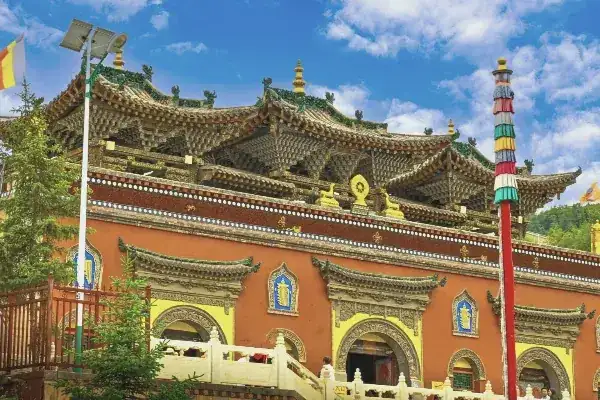
The Qingkang Highway passes through the area, which was once an important post station on the ancient Tang-Tibet Road. It boasts historical sites such as the Princess Wencheng Temple, Jiegu Temple, Zhujie Temple, Lingguo Temple, and the Mani Stone Wall. The Tibetan people have a deep love for singing and dancing, earning the area the title of "Land of Singing and Dancing."
View detailed information about Yushu Prefecture >>
Honors Ranking:
In January 2026, it ranked 338th in the overall ranking of overseas online influence of Chinese mainland cities in 2025.
In May 2025, the 2025 China City Charm Ranking was released, and Yushu Prefecture ranked 335th (a fifth-tier city).
In May 2024, the 2024 China City Commercial Attractiveness Ranking was released, with Yushu Prefecture ranking 329th.
In May 2023, the list of incentive recipients for the 2023 Qinghai Province Forest (Grassland) Chief System was announced, and Yushu Prefecture was among those listed.
In January 2024, it was named one of the eleventh batch of national demonstration zones for ethnic unity and progress by the State Ethnic Affairs Commission.
In April 2023, the 2023 China City Commercial Attractiveness Ranking was released, with Yushu Prefecture ranking 332nd.
In 2022, Yushu Prefecture's GDP totaled 7.227 billion yuan, ranking 7th among all cities and prefectures in Qinghai Province.
In November 2022, the Ministry of Ecology and Environment named Yushu Prefecture as the sixth batch of national ecological civilization construction demonstration zones.
In April 2022, Yushu Prefecture was included in the list of "waste-free cities" to be built during the "14th Five-Year Plan" period.
View more honors and rankings of Yushu Prefecture >>
Historical background:
Yushu was originally a land for yaks raised by the Western Qiang people; during the Wei, Jin and Northern and Southern Dynasties, it belonged to the Supi Kingdom.
During the Sui Dynasty, it was called "Women's Kingdom". Before and after the Sui Dynasty, it was under the jurisdiction of the two kingdoms of Supi and Duomi. During the Tang Dynasty, it was under the jurisdiction of Sunboru of Tubo. During the Song Dynasty, it was the territory of Nangqian, a small state under Lizhou. During the Yuan Dynasty, it was under the jurisdiction of the Tubo and other circuits Xuanwei Division.
During the Ming Dynasty, it belonged to the Duogansi Pacification Commissioner's Office; during the late Ming and early Qing Dynasties, the heads of various tribes in Yushu were granted the title of Taiji by the Qinghai Mongol Khoshut tribe; during the Qing Dynasty, it was directly governed by the Qinghai Affairs Minister and was the territory of Nangqian Thousand Households, under which were independent tribes such as Hundred Households.
In the early years of the Republic of China, he was under the jurisdiction of the Qinghai Provincial Commissioner, and later under the jurisdiction of the Mongolian and Tibetan Military Commissioner and the Ninghai Garrison Commander of Gansu Border Region.
Yushu Subprefecture was established in 1917, and Yushu County was established in 1929.
View detailed historical evolution of Yushu Prefecture >>
Travel information can change. Check current opening hours, reservations and entry requirements before you travel.

Traveller discussion
Start the conversation with a helpful tip or a question.