
Yingkou City
营口市
Origin of the place name: Yingkou was called Liaokou during the Three Kingdoms period, Limokou during the Jin Dynasty, Liangfangkou during the Ming Dynasty, and Meigouying during the Qing Dynasty. In 1866 (the fifth year of the Tongzhi reign of the Qing Dynasty), it was renamed Yingkou, a simplification of "Meigouying Port". In 1867, the "Yingkou …
Origin of place name:
Yingkou was called Liaokou during the Three Kingdoms period, Limokou during the Jin Dynasty, Liangfangkou during the Ming Dynasty, and Meigouying during the Qing Dynasty. In 1866 (the fifth year of the Tongzhi reign), it was renamed Yingkou, a simplification of "Meigouying Port." In 1867, the "Yingkou Coastal Defense Sub-Prefectural Office" was established, marking the first time the Qing government directly named a local government office after Yingkou. The *Draft History of the Qing Dynasty* records under the entry for Yingkou that in the early Qing Dynasty, Mongols set up tents and lived there. The *Veritable Records of the Kangxi Emperor* records that in the twenty-seventh year of the Kangxi reign, "the Barga Mongols outside Zhangjiakou were temporarily stationed in the Niuzhuang area for nomadic herding," and two years later they were settled in Xiong Yue and Fengtian. The *Chronicle of Events* in the *Yingkou City Gazetteer* records: "The Barga people used huts as dwellings, and the huts were connected, resembling military camps, hence the name 'Yingzi' (camp). Also, because the tidal ditch dried up at low tide and was submerged at high tide, it was called Meigouying (Submerged Camp)." In 1909, Yingkou Subprefecture was established. In 1913, Yingkou Subprefecture was changed to Yingkou County. In May 1938, Yingkou City was separated from it.
Basic introduction:
Yingkou City is a prefecture-level city in Liaoning Province. It borders Dalian City to the south, Dandong City to the east, Anshan City to the northeast, Panjin City across the Liao River to the northwest, and the Bohai Sea to the west. The eastern part is mountainous and hilly, while the western part is a plain, with a distinct east-to-west gradient. Located in the mid-latitudes and at the northwestern tip of the Liaodong Peninsula, it has a temperate continental monsoon climate. The four seasons are distinct and the climate is pleasant. Spring is mild with prevailing southwest winds and relatively little rain; summer is warm but not sweltering, with concentrated rainfall and prevailing southeast winds; autumn is cool with moderate rainfall; and winter is long with predominantly northeast winds.
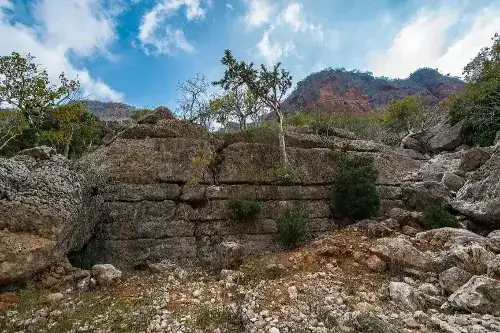
The area boasts beautiful mountains and rivers, a long history, and numerous historical sites. Two sites are listed as National Key Cultural Relics Protection Units, including the world-famous Jinniu Paoshan Site; nine are Provincial Key Cultural Relics Protection Units, including the Shipengshan Stone Shelter, Lengyan Temple, and the West Fort Site; and several are Municipal Key Cultural Relics Protection Units.
View detailed information about Yingkou City >>
Honors Ranking:
In January 2026, it ranked 289th in the overall ranking of overseas online influence of Chinese mainland cities in 2025.
In May 2025, the 2025 China City Charm Ranking was released, with Yingkou City ranking 200th (a fourth-tier city).
In April 2025, it was named a national model city (county) for supporting the military and giving preferential treatment to families of servicemen.
In March 2025, it was named the seventh National Civilized City.
In September 2024, Yingkou City was included in the fourth batch of pilot cities for convenient living circles within 15 minutes.
In May 2024, the 2024 China City Commercial Attractiveness Ranking was released, with Yingkou City ranking 172nd.
In March 2024, the third batch of national child-friendly cities was officially announced, and Yingkou City was selected.
In September 2023, Yingkou City was included in the list of cities for the construction of modern circulation strategic pivot cities (composite circulation pivot cities).
In May 2023, Yingkou City was included in the list of cities in Liaoning Province to build waste-free cities during the 14th Five-Year Plan period.
View more honors and rankings of Yingkou City >>
Historical background:
Yingkou has a long history.
As early as the Paleolithic Age, 260,000 years ago, the ancestors of Yingkou lived and thrived here.
More than 5,000 years ago, during the legendary reigns of Yao and Shun, Yingkou belonged to Qingzhou and Yingzhou.
During the Xia, Shang, and Zhou dynasties, the Yingkou area was successively under the jurisdiction of Qingzhou, Yingzhou, and Youzhou.
During the Warring States period, the State of Yan ruled what is now Liaoning Province, and Yingkou belonged to Liaodong Commandery.
After Qin unified China, it established a total of 36 commanderies, and the Yingkou area still belonged to Liaodong Commandery.
In the twelfth year of Emperor Gaozu of Han (195 BC), Pingguo County was established in Xiong Yue, south of present-day Yingkou; Anshi County was established in present-day Dashiqiao City; and Wen County was established in present-day Gaizhou City. These were the earliest county-level administrative divisions in the Yingkou area.
Eastern Han Dynasty
View detailed historical evolution of Yingkou City >>
Travel information can change. Check current opening hours, reservations and entry requirements before you travel.

Traveller discussion
Start the conversation with a helpful tip or a question.