
Yanqing District
延庆区
Origin of the place name: During the Yuan Dynasty, Emperor Renzong was born here, hence the name Longqing. In the early Ming Dynasty, it was renamed Longqing. In the first year of the Longqing reign of the Ming Dynasty, to avoid the reign title of Emperor Muzong, it was renamed "Yanqing". Basic introduction to the Badaling Great Wall: Yanqing is l…
Origin of place name:
Emperor Renzong of the Yuan Dynasty was born here, hence his name Longqing. In the early Ming Dynasty, it was renamed Longqing. In the first year of the Longqing reign of the Ming Dynasty, to avoid the taboo of Emperor Muzong's reign title, it was renamed "Yanqing".
Basic introduction:
Yanqing District is located in the northwest of Beijing, and is one of the city's suburbs. It borders Huairou District to the east, Changping District to the south, Huailai County of Hebei Province to the west, and Chicheng County of Hebei Province to the north. It is 74 kilometers from Deshengmen in Beijing. Yanqing covers a total area of 1995 square kilometers, with an average altitude of over 500 meters. Mountainous areas account for 72.8% of the area, with Haituo Mountain, the main peak of which reaches 2241 meters, being the second highest peak in Beijing. Plains account for 26.2% of the area, and water areas account for 1%. Located north of the Great Wall, Yanqing is characterized by its mountainous terrain, high altitude, strong solar radiation, large diurnal temperature range, and cool summers with an average annual temperature of 8℃, earning it the nickname "Summer Capital" of Beijing. The district has 18 rivers of Class IV or above, including 2 Class III rivers, with a total annual usable water resource volume of 190 million cubic meters. It possesses a 105-square-kilometer geothermal zone, rich in shallow geothermal resources. With over 2800 hours of sunshine annually, it is the area with the richest solar energy resources in Beijing.
View detailed information about Yanqing District >>
Honors Ranking:
In January 2026, it was recognized as a county (city, district) that achieved universal and inclusive preschool education in 2025.
In January 2026, it was recognized as one of the first batch of counties (cities, districts) for high-quality and balanced development of compulsory education in 2025.
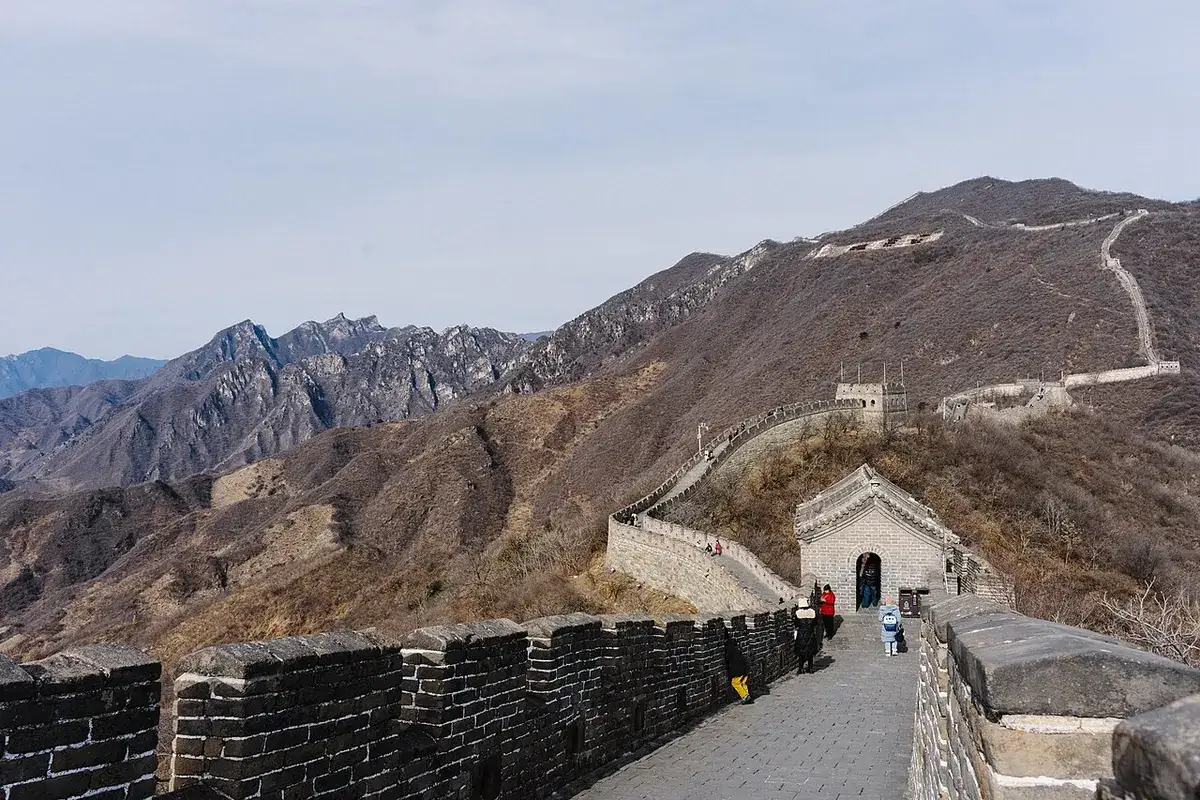
In May 2025, it was listed as the 83rd most beautiful small town in China. Its features include the Badaling Great Wall and Wild Duck Lake, a high-end aesthetic area in the suburbs of Beijing, where exquisite modern life and ecological harmony are found at the foot of the Great Wall.
In November 2025, it was named one of the first batch of national model cities (counties, districts) for law-abiding and law-popularizing.
In October 2025, Yanqing District was included in the first batch of high-quality outdoor sports destination construction areas, making it a year-round ice and snow outdoor sports destination.
In April 2025, it was designated as one of the second batch of pilot projects for cultural industry empowering rural revitalization.
In April 2025, it was named a national model city (county) for supporting the military and giving preferential treatment to families of servicemen.
In September 2024, the list of pilot areas for the fourth batch of convenient living circles in cities across the country was announced, and Yanqing District was included on the list.
In March 2024, the Ministry of Transport, the Ministry of Agriculture and Rural Affairs, and the State Post Bureau named Yanqing District as the fourth batch of national demonstration counties for "Four Good Rural Roads".
View more honors and rankings of Yanqing District >>
Historical background:
It was formerly known as Xiayangchuan, and also as Guichuan.
After Qin unified the country, it established Shanggu Commandery and set up Shanglan and Juyong Counties, which are now under the jurisdiction of Yanqing.
During the Western Han Dynasty, Shanggu Commandery governed 15 counties, including Yiyu and Juyong counties, which were located within its territory.
During the Eastern Han Dynasty, Yiyu was abolished and merged into Juyong County.
The Northern Qi dynasty abolished Juyong Pass and merged it into Huairong County.
In the early Tang Dynasty, Huai Rong belonged to Bei Yan Prefecture. In the eighth year of Zhenguan, Bei Yan Prefecture was renamed Gui Prefecture. During the Tianbao era, Gui Prefecture was changed to Gui Prefecture County. The area now under Yanqing was separated from Huai Rong County and set up Guichuan County (named after the Gui River). In the late Tang Dynasty and during the Liao and Jin Dynasties, it was changed to Jinshan County (named after Jinshan Mountain).
At the beginning of the Yuan Dynasty under Emperor Shizu, Jinshan County belonged to Fengsheng Prefecture of Dadu Circuit; after the fall of the Yuan and the establishment of the Ming, the prefecture was abolished and Longzhen Guard was established under Emperor Jianwen.
View detailed historical evolution of Yanqing District >>
Travel information can change. Check current opening hours, reservations and entry requirements before you travel.
Traveller discussion
Start the conversation with a helpful tip or a question.