
Taiyuan City
太原市
Origin of the name: It means "vast plain." During the Warring States period, Taiyuan was part of the Zhao state, with its capital at Jinyang. In the second year of King Zhuangxiang of Qin (248 BC), Qin general Meng Ao attacked Zhao and conquered Taiyuan. The following year, Taiyuan Prefecture was established. Its capital was Jinyang, marking the b…
Origin of place name:
The name Taiyuan means "vast plain." During the Warring States period, Taiyuan was part of the Zhao state, with its capital at Jinyang. In the second year of King Zhuangxiang of Qin (248 BC), Qin general Meng Ao attacked Zhao and conquered Taiyuan. The following year, Taiyuan Prefecture was established. Its capital was Jinyang, marking the beginning of Taiyuan as a prefecture.
Basic introduction:
Taiyuan is the capital of Shanxi Province and the province's political, economic, scientific, technological, cultural, educational, transportation, and information center. It is an ancient Chinese city with a history of 2,500 years, renowned throughout the world for its long history, splendid culture, and abundant resources.
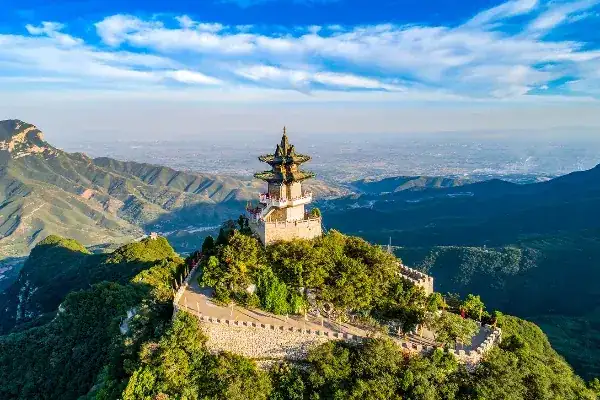
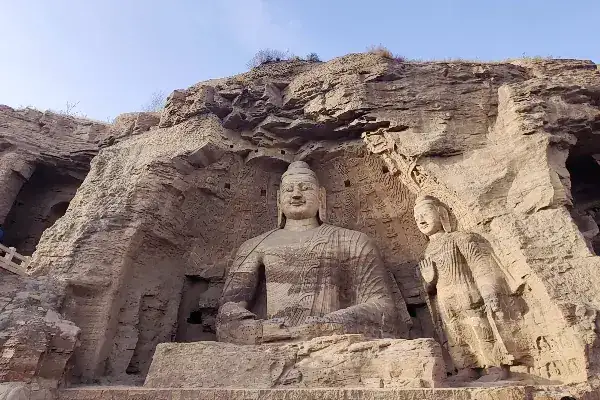
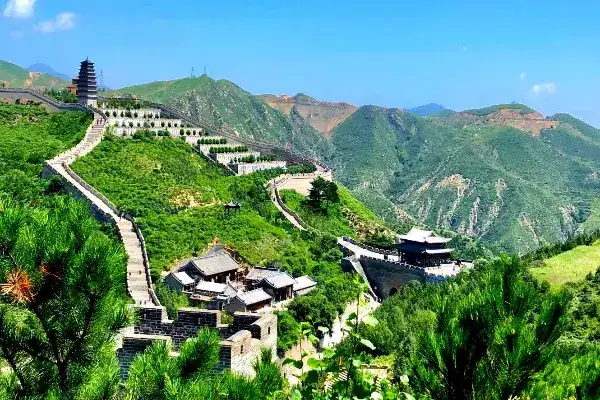
The highlights of this area include: Jinci Classical Garden, whose Song Dynasty architecture and sculptures are particularly precious; Tianlongshan Buddhist Grottoes, whose stone sculptures are rare masterpieces in the Central Plains; Longshan Taoist Grottoes, the only Yuan Dynasty Taoist grottoes in China; Shuangta Yongzuo Temple, whose twin pagodas soaring into the sky have become a symbol of Taiyuan; Jiaocheng Xuanzhong Temple, the ancestral temple of the Pure Land School of Buddhism; Pangquangou National Nature Reserve in northwest Jiaocheng, a well-preserved green treasure trove on the Loess Plateau; Beiwudang Mountain in Fangshan County, a national scenic spot combining majestic, precipitous, unique, and beautiful scenery; Yuci City God Temple, one of the oldest City God Temples in Shanxi Province; and Pingyao Ancient City, one of the only three remaining complete cities in China.
View detailed information about Taiyuan City >>
Honors Ranking:
In May 2025, it was awarded the title of "Demonstration City for the Construction of a Safe China (2021-2025)".
In July 2026, it was designated as a tourism hub city in the "15th Five-Year Plan for Building a Tourism Power".
In March 2026, it ranked 38th among China's top 100 cities.
In January 2026, it ranked 20th in the overall ranking of overseas online communication influence of Chinese mainland cities in 2025.
In May 2025, it was selected as one of the pilot cities for new forms, models and scenarios of consumption nationwide.
In November 2025, it was selected as a pilot city for the integrated development of human resources service industry and manufacturing industry.
In November 2025, it ranked 36th on the 2025 China Cities International Influence Ranking.
In October 2025, Taiyuan City's Huanxishan-Fenhe River "Cycling+" outdoor sports destination was included in the first batch of high-quality outdoor sports destination construction areas.
In September 2025, it ranked 60th among the top 100 smart cities in China (SMILE Index).
View more honors and rankings of Taiyuan City >>
Historical background:
The Qin dynasty established Taiyuan Commandery, with its capital at Jinyang.
In the early Han Dynasty, it was successively known as the State of Han, the State of Dai, and the State of Taiyuan. Emperor Wu of Han restored it as the Taiyuan Commandery.
During the Eastern Han Dynasty, it was placed under the jurisdiction of Bingzhou.
During the Three Kingdoms period (Wei) and the Western Jin Dynasty, it was known as the State of Taiyuan, later changed to Taiyuan Commandery, and belonged to Bingzhou.
The Northern Wei Dynasty followed suit.
The Eastern Wei and Northern Qi dynasties used Jinyang as their secondary capital.
During the Sui Dynasty, it was called Bingzhou, and later changed to Taiyuan Commandery.
During the Tang Dynasty, it was Bingzhou, which belonged to Hedong Circuit.
In the first year of the Tian Shou era (690), Wu Zetian added the title of Jinyang to the name of the Northern Capital.
In the eleventh year of the Kaiyuan era (723), it was promoted to Taiyuan Prefecture, the northern capital.
In the first year of the Tianbao era (742), it was renamed Beijing Taiyuan Prefecture.
It was called Xijing in the early Later Tang Dynasty of the Five Dynasties period, and was later renamed Beijing.
Liu Chong of the Northern Han Dynasty declared himself emperor and made it the capital.
In the fourth year of the Taiping Xingguo era of the Song Dynasty (979), Taiyuan Prefecture was downgraded to Bingzhou.
View detailed historical evolution of Taiyuan City >>
Travel information can change. Check current opening hours, reservations and entry requirements before you travel.

Traveller discussion
Start the conversation with a helpful tip or a question.