
Shijiazhuang City, Hebei Province
河北省石家庄市
Origin of the name: Originally a small village with fewer than 200 inhabitants on the North China Plain, belonging to Huolu County, Zhengding Prefecture during the Qing Dynasty. In the early 20th century, the late Qing government built the Beijing-Hankou Railway (now the Beijing-Guangzhou Railway) and the Zhengtai Railway (now the Shijiazhuang-Tai…
Origin of place name:
Originally a small village with fewer than two hundred inhabitants on the Hebei Plain, Shijiazhuang belonged to Huolu County, Zhengding Prefecture during the Qing Dynasty. In the early 20th century, the late Qing government constructed the Beijing-Hankou Railway (now the Beijing-Guangzhou Railway) and the Zhengtai Railway (now the Shijiazhuang-Taiyuan Railway), which passed through the area, with the railway station located in Shijiazhuang Village. Thus, the regional center gradually shifted from the ancient city of Zhengding to Shijiazhuang Village. In 1925, the Beiyang government established the small town of Shimen City, taking its name from the first and last characters of Shijiazhuang Village and Xiumen Village. On December 26, 1947, the Communist Party of China officially established Shijiazhuang City.
Basic introduction:
Shijiazhuang is the capital of Hebei Province. Located in the heart of the North China Plain, it borders Beijing and Tianjin to the north, the Bohai Sea to the east, and the Taihang Mountains to the west. It serves as the southern gateway to the capital.
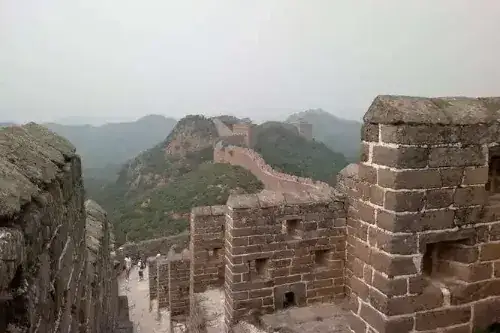
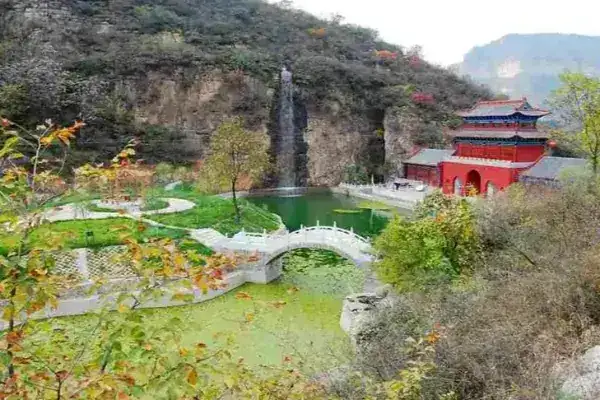
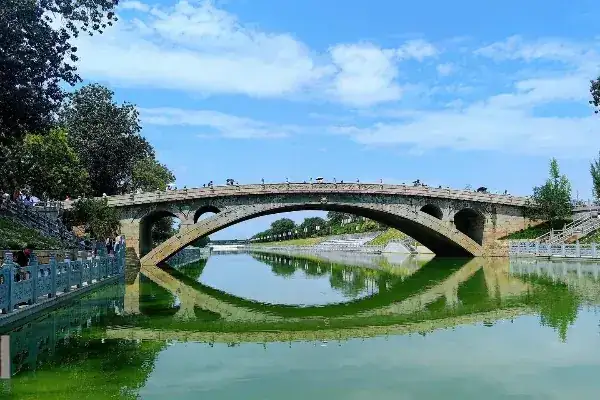
Shijiazhuang boasts abundant tourism resources. The city currently has 18 national-level key cultural relics protection units, 105 provincial-level key cultural relics protection units, and over 240 municipal and county-level key cultural relics protection units, along with more than 1,200 various cultural relics sites. It has two national-level scenic areas (Cangyan Mountain and Zhangshiyan), two provincial-level scenic areas (Fenglong Mountain and Tiangui Mountain), Zhengding (a national historical and cultural city), and Zhaoxian (a provincial historical and cultural county). It also has four provincial-level tourist resorts (Panlong Lake, Cangyan Mountain, Wentang, and Zhangshiyan), one national-level forest park (Wuyuezhai), seven provincial-level forest parks (Siantai Mountain, Tuoliang, Nansizhang, Chizhi, Longzhou Lake, Xibaipo, etc.), and six national and provincial patriotic education bases. Its unique status as the provincial capital and its thriving commerce further enhance its tourism appeal.
View detailed information about Shijiazhuang City >>
Honors Ranking:
In July 2026, it was designated as a tourism hub city in the "15th Five-Year Plan for Building a Tourism Power".
In March 2026, it ranked 37th among China's top 100 cities.
In January 2026, it ranked 43rd in the overall ranking of overseas online influence of Chinese mainland cities in 2025.
In November 2025, it ranked 37th on the 2025 list of Chinese cities with international influence.
In September 2025, it ranked 28th among the top 100 smart cities in China (SMILE Index).
In September 2025, it ranked 28th on the list of the top 100 cities in the digital economy in 2025.
In May 2025, it was designated as one of the first batch of pilot cities for innovation and upgrading of the national retail industry.
In May 2025, the 2025 China City Charm Ranking was released, with Shijiazhuang ranking 27th (a second-tier city).
In May 2025, the list of the top 100 cities with the greatest talent attraction in 2024 was released, with Shijiazhuang ranking 34th.
View more honors and rankings of Shijiazhuang City >>
Historical background:
In June 1925, Shijia City was established in the southeast of present-day Xinhua District. In August, Xiumen and Licun were merged into it. Taking the first and last characters of the names of Shijiazhuang Village and Xiumen Village, it was renamed Shimen City, which belonged to Zhili Province.
The city was abolished in 1928.
Shimen City was re-established in 1939.
It was renamed Shijiazhuang City in 1947 and belonged to the Jin-Cha-Ji Border Region.
It was changed to a city under the jurisdiction of Hebei Province in 1949.
In 1958, it was transferred to the jurisdiction of Shijiazhuang Special District.
In 1960, the prefecture and the city merged to form a provincial-level city.
In 1961, the special district and the city were separated, and it belonged to the special district. In 1967, the special district was changed to a region.
In 1978, Shijiazhuang was reinstated as a prefecture-level city.
In 1983, Jingxing and Huolu counties were incorporated.
1986
View detailed historical evolution of Shijiazhuang City >>
Travel information can change. Check current opening hours, reservations and entry requirements before you travel.

Traveller discussion
Start the conversation with a helpful tip or a question.