
Place names and administrative divisions of Gansu Province
甘肃省地名与行政区划
The name Gansu Province originates from the first characters of the ancient cities of Ganzhou (present-day Zhangye) and Suzhou (present-day Jiuquan), abbreviated as Gan. The Liupan Mountains within its borders are also called Longshan, hence the abbreviation Long. Gansu derives its name from the first characters of the ancient cities of Ganzhou (p…
The name Gansu Province originates from the first characters of the ancient names of Ganzhou (present-day Zhangye) and Suzhou (present-day Jiuquan), and is abbreviated as Gan. The Liupan Mountains within its borders are also called Longshan, hence the abbreviation Long.
Gansu derives its name from the first characters of the ancient cities of Ganzhou (present-day Zhangye) and Suzhou (present-day Jiuquan). Because the Western Xia dynasty established the Gansu Military Command, and the Yuan dynasty established Gansu Province, it was abbreviated as Gan. Furthermore, since most of the province lies west of the Longshan Mountains (Liupan Mountains), and the Tang dynasty established the Longyou Circuit there, it is also abbreviated as Long. Gansu is located in the northwestern inland region of my country, in the upper reaches of the Yellow River, with a total area of 425,800 square kilometers, ranking seventh in the country. It lies between 32°31′–42°57′ north latitude and 92°13′–108°46′ east longitude. It borders Shaanxi to the east, Sichuan to the south, Qinghai and Xinjiang to the west, Inner Mongolia and Ningxia to the north, and also borders Mongolia.
Gansu boasts a long history and splendid culture in the development of the Chinese nation. The Dadiwan Site proves that it is one of the birthplaces of the Chinese nation, and that Fuxi, the legendary ancestor of Chinese civilization, was born in the upper reaches of the Wei River. More than 3,000 years ago, the ancestors of the Zhou people originated in the Longdong area. Since the Han and Tang dynasties, Gansu has served as a vital link in the Silk Road, facilitating cultural exchange and trade between East and West, leaving behind a wealth of cultural relics and historical sites.
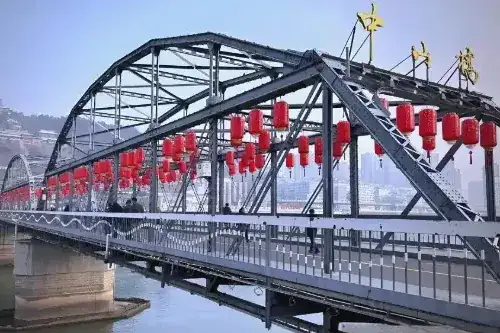
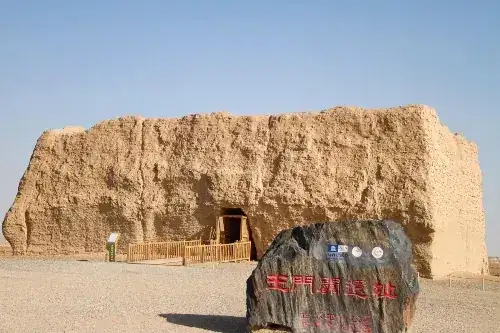
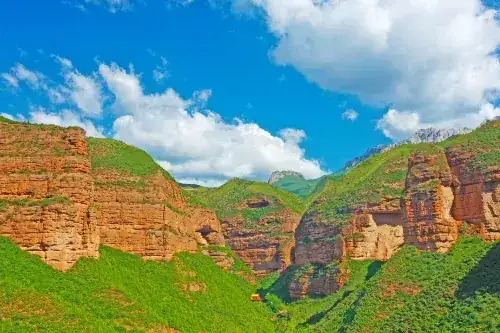
Gansu boasts a vast territory and beautiful natural scenery. The boundless Gobi Desert, the pristine Loess Plateau, the expansive grasslands, and the crystal-clear glaciers combine to create a magnificent and awe-inspiring landscape. The unique combination of the Singing Sand Dunes and Crescent Lake adds a touch of tranquility to the once-mysterious and solemn ancient Silk Road. The Loess Plateau of eastern Gansu and the Longnan Mountains rise and fall in southeastern Gansu. Beyond Lanzhou to the west lies the Hexi Corridor, stretching over 1,200 kilometers from northwest of Lanzhou to the Yumen Pass on the Shule River, bordering the Qilian Mountains of Qinghai. The Hexi Corridor is a long, narrow, flat plateau, with elevations ranging from 1,000 to 1,500 meters. Overlooking the corridor reveals continuous stretches of sand dunes, sandy slopes, and gently eroded land, interspersed with oases. The oasis's water source comes from rivers formed by the snowmelt of more than 3,300 glaciers in the Qilian Mountains, providing water to Lanzhou, Wuwei, Zhangye, Jiuquan, Jiayuguan, Dunhuang, and towns adjacent to the Qilian Valley. The Hexi Corridor is only about 40 kilometers wide at its narrowest point and only a few hundred kilometers wide at its widest.
Travel information can change. Check current opening hours, reservations and entry requirements before you travel.
Traveller discussion
Start the conversation with a helpful tip or a question.