
Place names and administrative divisions of Shanxi Province
山西省地名与行政区划
Origin of the name Shanxi Province: Located west of the Taihang Mountains. Shanxi Province was established during the Ming Dynasty. During the Spring and Autumn Period, it was part of the State of Jin, hence its abbreviation "Jin". Shanxi, named for its location west of the Taihang Mountains, is also known as "San Jin" (Three Jin), and was formerl…
Origin of the name Shanxi Province: It is located west of the Taihang Mountains. Shanxi Province was established during the Ming Dynasty. During the Spring and Autumn Period, it was the territory of the State of Jin, hence the abbreviation Jin.
Shanxi Province, named for its location west of the Taihang Mountains, is abbreviated as "Jin" and also known as "San Jin." Historically called Hedong, its capital is Taiyuan. Shanxi is bordered by the Taihang Mountains to the east, the Lüliang Mountains and the Yellow River to the west and south, and the Great Wall to the north, forming borders with Hebei, Henan, Shaanxi, and Inner Mongolia. Liu Zongyuan described it as "a land of mountains and rivers, both inside and out." Shanxi is one of the birthplaces of the Chinese nation, with a recorded history spanning three thousand years, earning it the reputation of "cradle of Chinese civilization" and the title of "museum of ancient Chinese culture." It covers a total area of 156,700 square kilometers, with the Taihang Mountains to the east and the Lüliang Mountains to the west, and mountainous areas accounting for over 80% of the province's total area. The administrative outline of Shanxi is roughly a parallelogram sloping from northeast to southwest, comprising 11 prefecture-level cities and 117 county-level administrative units (25 urban districts, 11 county-level cities, and 81 counties), with a total population of 37,183,400 as of the end of 2017. The geographical coordinates of the jurisdiction are 34°34′~40°44′ north latitude and 110°14′~114°33′ east longitude.
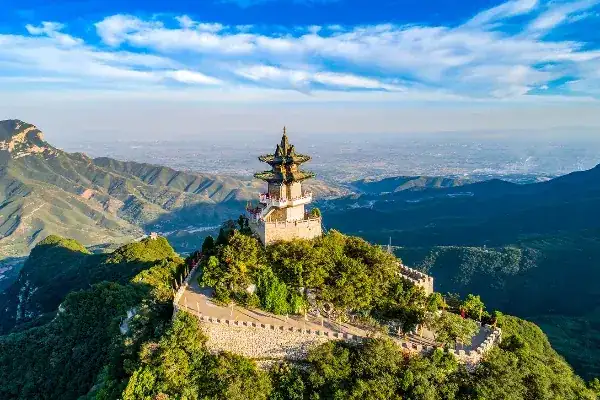
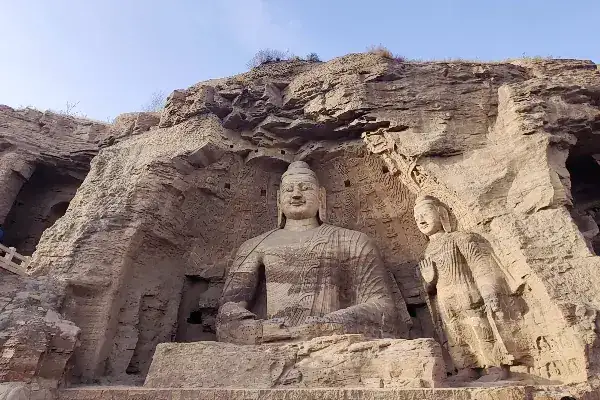
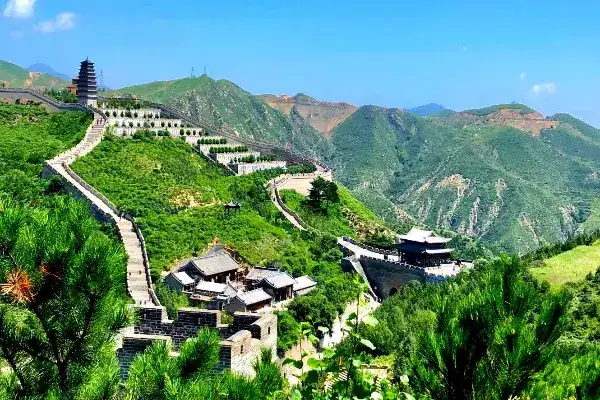
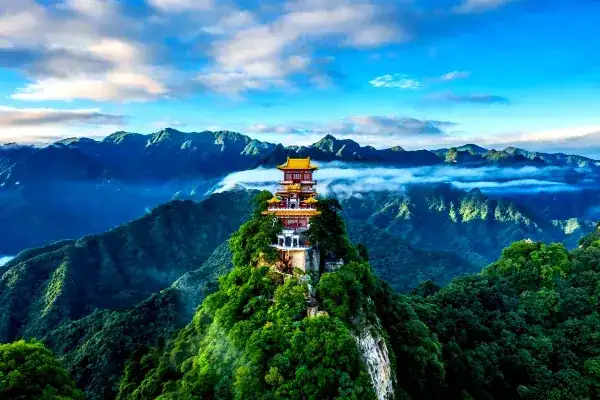
Shanxi is one of the cradles of Chinese civilization. During the Spring and Autumn Period, it was the State of Jin, hence its abbreviation Jin. Its long history has left behind numerous cultural heritages, and its complex topography and natural landscapes, formed by rivers and mountains, make it exceptionally rich in tourism resources. Shanxi boasts the largest number of ancient buildings in China, with 50 sites listed as national key protected sites and over 400 at the provincial level. Mount Wutai, one of the four major Buddhist holy sites, is home to a cluster of temples that have stood for millennia. Among them is Nanchansi Temple, the oldest existing wooden structure in my country. Foguang Temple and Xiantong Temple, integrating various architectural styles from the Northern Wei to the Qing Dynasty, are particularly famous, especially the Pagoda Relic Pagoda. The Hanging Temple of Hengshan, built during the Northern Wei Dynasty, is perched on a cliff, renowned for its breathtaking and unique architecture. Jinci Temple in Taiyuan is a scenic spot showcasing diverse ancient architecture. Pingyao Ancient City is one of the three remaining ancient cities in China and is listed as a World Heritage Site. Yongle Palace in Ruicheng is a typical Yuan Dynasty Taoist temple complex, with its murals being treasures of Chinese painting art. Puji Temple in Yongji is the setting for the play *The Romance of the Western Chamber*. The setting of the classic Chinese novel *The Story of Yingying*; the Jiexiu Guandi Temple, the largest martial arts temple in China; the Yungang Grottoes, one of the three major Buddhist grottoes in China, majestic and exquisitely carved; the Yingxian Wooden Pagoda, built during the Wen Dynasty, stands 67.31 meters tall, making it the tallest ancient wooden structure in my country; the Qiao Family Compound in Qixian, famous for being the filming location of *Raise the Red Lantern*, along with the Qu Family Compound in Qixian, the Wang Family Compound in Lingshi, and the Sanduotang in Taigu, together form the courtyard folk culture of Jinzhong, Shanxi. Shanxi boasts numerous famous mountains and rivers, with abundant and beautiful natural scenery. Mount Heng, one of the Five Sacred Mountains, is a national scenic area. Mount Mian, with its pleasant climate, has been a summer resort since ancient times; the famous Jin Dynasty minister, Jie Zitui, was burned to death on this mountain while carrying his mother. Mount Beiwudang, Mount Lingkong, and Mount Guancen each have their own unique characteristics. The Hukou Waterfall on the Yellow River is the second largest waterfall in China after Huangguoshu Waterfall, and is also a national scenic area. Shanxi also boasts nature reserves such as Pangquangou, Luyashan, Lishan, and Manghe, all with beautiful scenery. These diverse landscapes feature ancient trees, rare animals, and the brown-eared pheasant, a nationally protected species.
Travel information can change. Check current opening hours, reservations and entry requirements before you travel.
Traveller discussion
Start the conversation with a helpful tip or a question.