
Place names and administrative divisions of Shaanxi Province
陕西省地名与行政区划
The origin of the name Shaanxi Province: It refers to the area west of Shanmo, southwest of present-day Shanxian County, Henan Province. It is abbreviated as Shan. In ancient times, it was part of the Qin state, and was also abbreviated as Qin. Shaanxi Province, abbreviated as "Shaan" or "Qin," is located in the heart of inland China, between 105°…
The origin of the name Shaanxi Province: It refers to the area west of Shanmo, southwest of present-day Shanxian County, Henan Province. It is abbreviated as Shan. In ancient times, it was part of the Qin state and was also abbreviated as Qin.
Shaanxi Province, abbreviated as "Shaan" or "Qin," is located in the heart of inland China, between 105°29′ and 111°15′ east longitude and 31°42′ and 39°35′ north latitude. It borders Shanxi and Henan to the east, Ningxia and Gansu to the west, Sichuan, Chongqing, and Hubei to the south, and Inner Mongolia to the north, occupying a crucial position connecting eastern, central, northwestern, and southwestern China. The origin point of China's geodetic datum is located in Yongle Town, Jingyang County, Shaanxi Province. The province has a total area of 205,800 square kilometers.
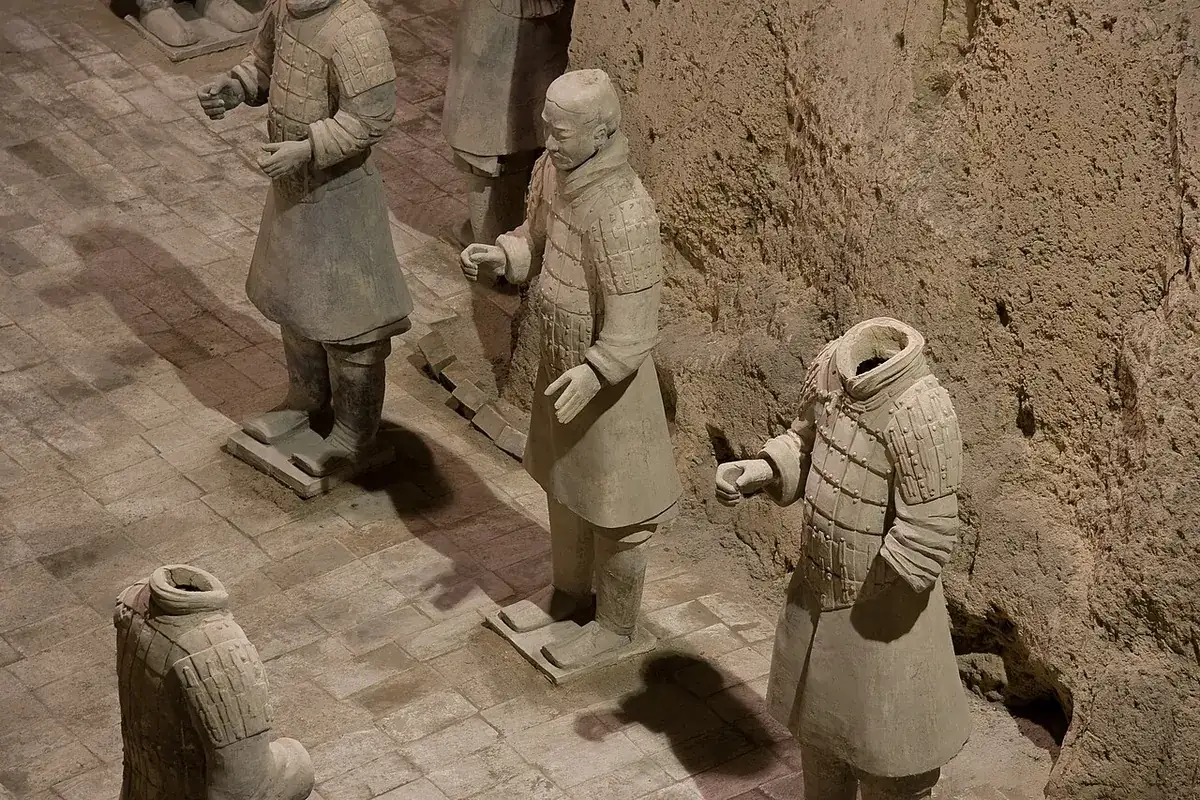
Shaanxi's long history has left behind an extremely rich collection of historical and revolutionary relics, both above and below ground—including the Mausoleum of the Yellow Emperor, the legendary ancestor of the Chinese nation; the Terracotta Army burial pits of Qin Shi Huang; the Zhaoling Mausoleum of Emperor Taizong of Tang; the Qianling Mausoleum of Emperor Gaozong of Tang; the Tomb of Sima Qian; the Tomb of Zhuge Liang in Mian County; the Xi'an City Wall from the Ming Dynasty; Xiangji Temple, the ancestral temple of the Pure Land School of Buddhism; Da Ci'en Temple; the Huajue Lane Mosque in Xi'an; Famen Temple; as well as unearthed artifacts; the Big Wild Goose Pagoda; the Small Wild Goose Pagoda; the Famen Temple Pagoda in Fufeng; the Sanyang Temple Pagoda in Gaoling; the Chongwen Temple Pagoda in Jingyang; the Dafosi Grottoes in Bin County; the Yaowangshan Cliff Carvings in Yao County; the Zhongshan Grottoes in Zichang County; the Shuilu Temple Sculptures in Lantian County; the Xi'an Stele Forest; the Yao County Stele Forest; the Lueyang Stele Forest; the Shimen Plank Road inscriptions, representing southern Shaanxi; the famous Six Steeds of Zhaoling; the stone carvings of Maoling Mausoleum in the Han Dynasty; the stone carvings of Qianling Mausoleum in the Tang Dynasty; and the stone carvings of Qiaoling Mausoleum in the Tang Dynasty. It also boasts the prosperous Silk Road.
There are also numerous museums, including the Shaanxi History Museum, the Qin Shihuang Terracotta Warriors and Horses Museum, the Xi'an Tang Dynasty Art Museum, the Xianyang Museum, the Hanzhong City Museum, the Beilin Museum, the Banpo Site Museum, the Qianling Museum, the Lintong Huaqing Palace, the Yaozhou Kiln Site Museum, the Sima Qian Memorial Hall, the Yan'an Revolutionary Memorial Hall, and the Xi'an Incident Memorial Hall.
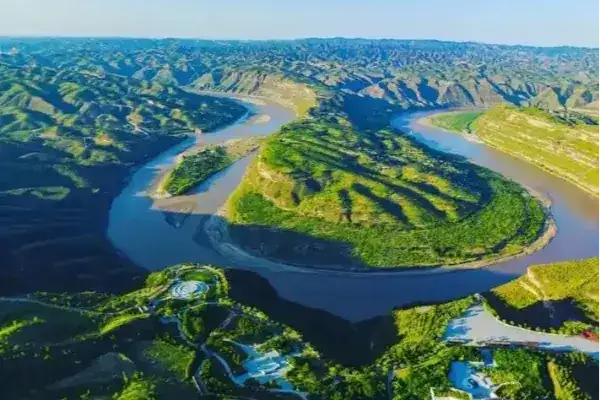
Its natural landscape is also extremely rich, ranging from the Qinling Mountains, which serve as the geographical dividing line between north and south my country, to the Loess Plateau and the Wei River Valley to the north; to the precipitous Mount Hua; the beautiful and tranquil Zhongnan Mountains; and the romantic Mount Li. All of this shrouds Shaanxi in a beautiful and mysterious veil.
Travel information can change. Check current opening hours, reservations and entry requirements before you travel.


Traveller discussion
Start the conversation with a helpful tip or a question.