
Ningxia
NingxiaCity OverviewThe Ningxia Hui Autonomous Region, abbreviated as “Ning,” is located in the inland northwest of China. It is one of the cradles of Chinese civilisation and the smallest of China’s five autonomous regions. Situated in the
Ningxia
City Overview
The Ningxia Hui Autonomous Region, abbreviated as “Ning,” is located in the inland northwest of China. It is one of the cradles of Chinese civilisation and the smallest of China’s five autonomous regions. Situated in the upper reaches of the Yellow River, it borders Shaanxi Province to the east, the Inner Mongolia Autonomous Region to the west and north, and Gansu Province to the south, with a total area of 66,400 square kilometres. Deep inland, Ningxia has a typical continental sub‑humid and semi‑arid climate, with four distinct seasons, scarce rain and snow, strong evaporation, and abundant sunshine. The region is characterised by “long cold winters, short hot summers, rapid springs, and early autumns.”
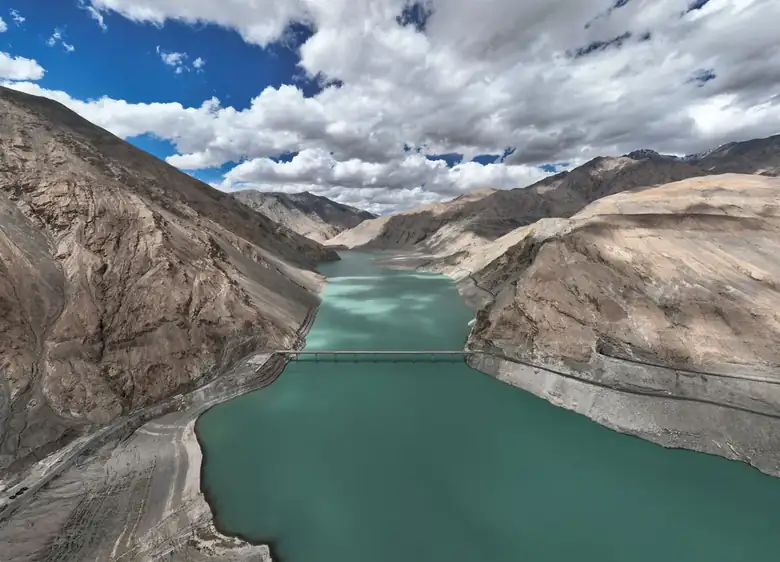
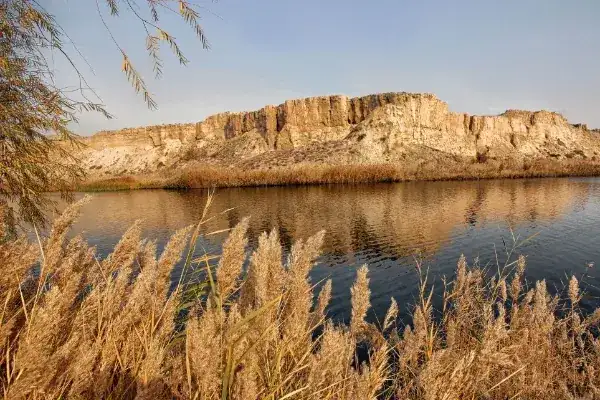
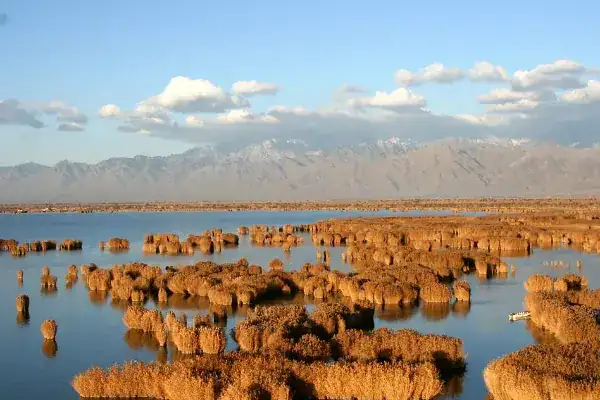
Ningxia’s terrain is elongated from north to south, about 456 kilometres long and up to 250 kilometres wide at its broadest point. The entire region lies above 1,000 metres in elevation, sloping downward from south to north in a stair‑step fashion. Its geographical pattern can be succinctly summarised as “two mountains and one river”: to the west stand the majestic Helan Mountains, a natural barrier that not only blocks the eastward advance of the Tengger Desert but also weakens the southward flow of cold air from the northwest—they are the “guardian spirit” of the Ningxia Plain. To the south lie the imposing Liupan Mountains, praised as “three thousand feet higher than Mount Hua, and twice as perilous as the Qin passes.” And winding through the entire region is the Yellow River, a golden lifeline flowing from southwest to northeast, creating the famous “Jiangnan beyond the Great Wall”—the Ningxia Plain—and giving rise to a fertile oasis of thousands of li of farmland.
According to the seventh national census, Ningxia has a permanent population of about 7.2 million. This land carries a rich history and a multi‑ethnic cultural fusion. The Hui population accounts for roughly one‑third of the region’s total, making it the largest Hui‑concentrated area in China, with a distinctive pattern of ethnic regional autonomy. The population is mainly distributed in the northern plain, especially in and around the capital Yinchuan, which concentrates nearly half of the region’s population.
The capital of Ningxia is Yinchuan, the political, economic, and cultural centre of the region. Owing to its unique geographic location and long history, Ningxia has many nicknames. The most widely known is “Jiangnan beyond the Great Wall” (Sai Shang Jiangnan). The Tang‑dynasty poet Wei Chan wrote, “Under the Helan Mountains, orchards thrive; north of the frontier, the Jiangnan fame has long lived,” making this epithet endure to this day—it vividly captures the extraordinary sight of a watery, fertile oasis nourished by the Yellow River amid the vast desert. In addition, Ningxia is also known as the “Homeland of the Western Xia,” for it was the core region of the formidable Western Xia dynasty that flourished from the 11th to the 13th centuries. The mysterious Western Xia script and its imperial tombs are unique historical imprints. In modern times, thanks to the unique terroir on the eastern slopes of the Helan Mountains, Ningxia’s wine industry has risen rapidly and gained world renown, earning it the title “Capital of Chinese Wine.”
Ningxia’s administrative status is that of a provincial‑level ethnic autonomous region, established on 25 October 1958. It administers five prefecture‑level cities: Yinchuan, Shizuishan, Wuzhong, Guyuan, and Zhongwei. Its establishment has profound significance for safeguarding the political rights of Hui compatriots, promoting regional economic and social development, and enhancing ethnic unity.
Historical Context
Ningxia’s history stretches back to the late Palaeolithic, some 30,000 years ago, when primitive humans inhabited the Shuidonggou area in Lingwu—one of the earliest excavated Palaeolithic sites in the Yellow River region of China. During the Spring and Autumn and Warring States periods, Ningxia was home to nomadic groups such as the Qiang and Rong. After the Qin unified China, to defend against the Xiongnu, the First Emperor sent General Meng Tian to build the Great Wall and construct the Qin Canal here, initiating the history of Yellow River irrigation in Ningxia. From then on, Ningxia was formally incorporated into the Central Plains empire, and the establishment of the Beidi Commandery marked the beginning of administrative organisation in the region.
The Han dynasty was a critical period for early development. During Emperor Wu’s reign, large‑scale military colonies were established and irrigation works were built; the famous Han Canal and Hanbo Canal still have surviving traces, laying the agricultural foundation of the Ningxia Plain. With the opening of the Silk Road, Ningxia, being strategically located, became an important corridor for East‑West trade and cultural exchange. During the Wei, Jin, and Northern and Southern dynasties, frequent regime changes made Ningxia a stage for the great integration of northern ethnic groups—Xiongnu, Xianbei, Jie, Di, Qiang, and others converged here, sowing the cultural genes for the later rise of the Western Xia.
The most glorious chapter in Ningxia’s history is the Western Xia period, from the late Tang to the Song dynasty. In 1038, the Tangut leader Li Yuanhao declared himself emperor and founded the “Great Xia” kingdom, with its capital at Xingqing Prefecture (present‑day Yinchuan)—known in history as the Western Xia. This regime, primarily Tangut but incorporating Han, Tibetan, Uyghur, and other peoples, reached its zenith with territory “bounded by the Yellow River in the east, the Yumen Pass in the west, Xiao Pass in the south, and the great desert in the north,” confronting the Song, Liao, and Jin dynasties. The Western Xia created its own brilliant civilisation—the Western Xia script, a script devised by borrowing Chinese character strokes, with over 6,000 characters of rigorous structure, still telling the story of this mysterious history today. The Western Xia dynasty lasted nearly 190 years and was finally destroyed by the Mongol cavalry in 1227, its culture and imperial tombs ravaged, shrouding its civilisation in mystery.
The Yuan, Ming, and Qing dynasties were a period of reintegration and development for Ningxia as a multi‑ethnic settlement. In the Yuan, the Ningxia Prefecture Route was established, meaning “peaceful Xia”—and the name “Ningxia” thus became fixed. During this period, following the Mongol westward expeditions, large numbers of Muslim soldiers and craftsmen from Central and West Asia were relocated to Ningxia for farming. They intermarried and merged with the local Han, Mongol, and other peoples, forming the main body of the Hui Hui community, and the Hui people took root and grew in Ningxia. In the Ming, Ningxia was designated a garrison town, one of the “Nine Frontier Towns” in the north, with supreme military importance. In the Qing, the “Pacification” policy brought relative social stability, and the economy and culture further recovered, gradually forming a population distribution of “seven Hui to three Han.”
Today, Ningxia’s historical sites bear witness to these turbulent times. Besides the world‑famous Western Xia imperial tombs, there is the Shuidonggou site, known as the “cradle of Chinese prehistoric archaeology,” and the “Great Wall Museum of China,” which preserves the beacon‑tower systems of the Qin, Han, and Ming dynasties. The Xumi Mountain Grottoes in Guyuan, first carved in the Northern Wei, contain 162 caves and over 1,000 statues; they are an important Buddhist art relic along the Silk Road, demonstrating the flourishing cultural exchange between China and the West.
Cultural Heritage
Ningxia’s culture is the product of interwoven nomadic and agrarian civilisations, blending Central Plains culture with frontier flavours, with Hui culture being the most distinctive feature. As the largest Hui‑concentrated region in China, Ningxia’s cultural foundation is deeply marked by Islamic influences, yet it is also seamlessly integrated with traditional Chinese culture, creating a unique and captivating “Hui hometown” atmosphere.
In terms of language, Ningxia’s dialects are complex and diverse. The majority population speaks the Northwestern sub‑dialect of Northern Mandarin, which can be further divided into the plain (Yinchuan plain) variety and the mountainous (Xihaigu) variety. The plain variety has a flat, gentle tone, while the mountainous variety preserves more archaic pronunciations and sounds harder. Due to the Hui people’s customs and traditions, their Chinese dialects incorporate a large number of Arabic and Persian loanwords, especially in religious life, dietary habits, and daily greetings—such as Salam (greeting) and Iblis (devil)—forming a unique “Hui speech” phenomenon.
In folk traditions, the Hui people strictly follow Islamic teachings, giving rise to distinctive festivals and rituals. The grandest festivals are Eid al‑Fitr and Eid al‑Adha. Eid al‑Fitr falls on the first day of Shawwal in the Islamic calendar, marking the end of Ramadan; Muslims bathe and dress in their finest, attend congregational prayers at the mosque, visit relatives and friends, and exchange traditional foods such as youxiang (fried dough cakes) and sazi (fried noodles). Eid al‑Adha, the “Feast of Sacrifice,” involves the slaughter of livestock; the meat is divided into three parts—one for the family, one for relatives and friends, and one for charity—embodying the spirit of solidarity and charity. Weddings and funerals also follow complete rituals, such as the Nikah (marriage contract recitation) at weddings, while funerals observe the principles of burial in the earth, prompt burial, and simplicity—solemn yet modest.
Ningxia’s art forms are rich and varied. The kouxian (jaw harp), a small plucked instrument beloved by Hui women and called lang, is made of bamboo or metal and played with the fingers; its plaintive, lingering tones often express inner feelings. Another unique folk art is the shanhua’er (mountain flower song), an important part of the UNESCO‑recognised “Hua’er” folk songs. Unlike the “Hezhou Hua’er” of Gansu and Qinghai, the Ningxia shanhua’er has a higher, more drawn‑out melody, commonly known as ganhua’er, and is improvised in the fields and mountains; the lyrics often express love and aspirations for life, with classic titles such as “Brother’s White Peony” and “Little Sister Plays the Jaw Harp.”
Intangible cultural heritage is the living transmission of Ningxia’s culture. To date, Ningxia has one UNESCO Intangible Cultural Heritage item (Hua’er) and 28 national‑level representative intangible cultural heritage items. Among the most representative are: the making and performance of traditional Hui musical instruments, such as the niwawu (clay ocarina); Hui traditional dress—men wear white or black brimless round caps, women wear headscarves; and the Yang family clay sculpture and Helan inkstone‑making techniques. The Hui heavy‑sword martial art, alongside the Hejia Gun (He family staff), is swift and combines offence with defence, reflecting the Hui people’s martial spirit. These intangible heritage items together paint a vivid picture of the region’s cultural landscape.
Architecture and Urban Landscape
Ningxia’s architecture and urban landscape are a symphony of multiculturalism written in brick and stone. With a foundation of bold frontier character, it incorporates mysterious Western Xia remnants, refined Islamic styles, and modern ecological concepts, creating unique scenery across the northwestern landscape.
Among traditional buildings, the most eye‑catching are the mosques found throughout cities and countryside. The architectural style of Ningxia’s mosques blends traditional Chinese timber and earth construction with strong Islamic cultural elements. Taking the Yinchuan Nanguan Grand Mosque as an example, its majestic dome, tall minarets, and intricate brick carvings form the most distinctive symbol on the city skyline. The prayer hall contains no idols; a niche in the centre of the west wall indicates the direction of Mecca, and the floor is covered with clean carpets, creating a solemn and serene atmosphere. Ordinary dwellings are mostly flat‑roofed houses of adobe or brick‑and‑wood construction, with square courtyards. Residents love to carve Arabic script or floral patterns on lintels and screen walls, reflecting the aesthetic tendencies of Islam.
Western Xia architecture is a unique historical legacy in Ningxia. Although no complete above‑ground wooden structures remain, the rammed‑earth tomb platforms and excavated glazed chiwen roof ornaments and animal‑faced eaves tiles give a glimpse of their former grandeur. The Western Xia imperial tomb platforms are octagonal or circular pagoda‑shaped, differing from the truncated‑pyramid mounds of the Tang and Song; they are known as the “Pyramids of the East.” This pagoda‑style tomb form incorporates Buddhist architectural features and represents an original Western Xia design, reflecting the dynasty’s unique culture and aesthetics.
In the modern era, Yinchuan’s urban construction has undergone profound transformation. After the establishment of the autonomous region in 1958, and especially since the new century, Yinchuan’s urban fabric has expanded eastward and westward, forming a “three vertical, three horizontal” lake‑city pattern. A number of strikingly modern cultural landmarks have risen—Ningxia Grand Theatre, Ningxia Museum, and Yinchuan Museum of Contemporary Art—whose architectural language often draws inspiration from local culture; for example, the flowing curved form of the Ningxia Grand Theatre evokes “petals of time” and “waves of the Yellow River.”
In terms of urban fabric, Ningxia’s cities exhibit an oasis‑type urbanisation characterised by “large concentration, small dispersion.” The capital Yinchuan is famous for its unique landscape of “city in the lake, lake in the city,” earning it the name “Lake City beyond the Great Wall.” Within and around the city are dozens of lakes and wetlands—Yuehai Lake, Baohu Lake, Mingcui Lake—which, through waterway connections, have revived the historical scene of “seventy‑two interconnected lakes.” The streets are broad and straight, with layered green belts, cleverly combining the beauty of a southern water town with the ruggedness of a northwestern city.
Among distinctive neighbourhoods, the “China‑Arab Axis” (now Unity Road) in Yinchuan best embodies the city’s open attitude. This 2.1‑kilometre‑long street features sculptures such as the Islamic‑style Chinese Ding and crescent moon, alongside Arabic‑style arches and the Crescent Moon Plaza, blending themes of cultural exchange between China and the Arab world. In contrast, the lively Huaiyuan Night Market and Jingde Street offer an earthy, bustling experience, filled with the aromas of grilled skewers and spicy paste—the best places to experience local life.
Culinary Culture
Ningxia’s culinary culture is a perfect union of northwestern boldness and Hui hometown flavours. Centred on beef and mutton and based on wheat‑flour foods, it emphasises the natural taste of ingredients and favours savoury, sour, and spicy flavours, while strictly adhering to halal dietary standards, forming a distinctive “Hui cuisine” system.
The foundation of Ningxia cuisine is ruggedness refined with care. Thanks to exceptional agricultural and pastoral conditions, the quality of its mutton is among the best in China. Yanchi Tan sheep, which graze on alkaline herbs such as liquorice and bitter beans and drink alkaline water, have tender, completely gameless meat that needs only boiling in water to become a delicacy. Hence the confident local saying: “Tan sheep needs only a pinch of salt at the table.” Ningxia cuisine not only excels in cooking lamb but also transforms flour into countless shapes—from minced‑meat noodles to rubbed noodles, and from fried sazi to youxiang—displaying the culinary wisdom of the wheat‑growing region.
Among classic dishes, hand‑grabbed mutton (shou zhua yangrou) is the undisputed top delicacy. It uses well‑marbled Tan sheep rib meat, cut into large pieces and simmered for a long time, then sliced and served with garlic‑vinegar sauce or seasoned salt. Each mouthful is tender and juicy yet holds its shape, and full of the original flavour of lamb. Another must‑try is stir‑fried young lamb, especially famous in Huangquqiao Town: young lamb is cut into small pieces and stir‑fried over high heat with vermicelli, dried chillies, and other ingredients, resulting in tender meat with a spicy, savoury kick.
In staples and snacks, minced‑mutton noodle soup is a home‑style dish found in every household. Diced mutton, potatoes, tofu, radish, and other ingredients are stir‑fried into a savoury sauce and poured over chewy noodles; the broth is sour and spicy, and the noodles are fragrant. Lamb offal soup is the most popular street snack: sheep head, trotters, heart, liver, stomach, and lungs are cleaned, cooked, and chopped, then covered with a boiling‑hot bone broth, garnished with coriander and chilli oil. A bowl warms the body and soul. Youxiang and sazi are essential festive and hospitality foods for Hui families: the former is a round fried dough cake, the latter a crisp, fried noodle product as fine as hair, coiled into a dragon shape—both crisp and delicious, carrying deep hometown sentiment.
Ningxia’s food customs are closely linked to its regional character. The Hui people are warm and hospitable; tea‑serving rituals are elaborate, with the most famous being Eight‑Treasure Covered‑Bowl Tea. The bowl contains eight ingredients—tea leaves, longan, red dates, goji berries, sesame seeds, raisins, walnut kernels, and rock sugar—brewed with boiling water. It is sweet and fragrant, cutting through grease and nourishing the body. At banquets, the order of dishes and seating arrangements follow certain rules, reflecting respect for the elderly and the virtuous. This ruggedness, generosity and hospitality are also evident in drinking culture: “eating large chunks of meat and drinking from large bowls” is the best footnote to Ningxia’s straightforward, welcoming hospitality.
Modern and Contemporary Development
Ningxia’s modern development history is a story of striving from a closed frontier to an open vanguard, and from a traditional farming‑pastoral economy to a diversified, modernised one. Its trajectory has been profoundly shaped by its geographic location, resource endowment, and the policies of ethnic regional autonomy.
From the late Qing to the Republic of China, Ningxia’s modernisation proceeded slowly, mainly relying on traditional agriculture and trade in raw products such as furs and liquorice. In 1929, Ningxia was formally established as a province. During this period, some modernisation took root, such as road construction and postal services, but it remained a backward border region dominated by agriculture and animal husbandry. Behind the saying “The Yellow River enriches Ningxia” lay a monolithic economy dependent on Yellow River irrigation, with virtually no industry.
After the founding of the People’s Republic of China, and especially with the establishment of the Ningxia Hui Autonomous Region in 1958, a new era began. The state mobilised cadres, intellectuals, and workers from across the country to support Ningxia’s development. During this period, coal mining became the engine of industrialisation. Shizuishan rose as a major coal and power centre in the northwest; the completion of the Baotou‑Lanzhou railway ended Ningxia’s history of being without rail and greatly improved transport links. Meanwhile, the Qingtongxia Hydro‑Junction Project replaced unregulated diversion from the Yellow River, expanding irrigation and providing vital electricity and flood control, laying a solid foundation for industrial and agricultural development.
Since reform and opening up, Ningxia has undergone profound transformation. The rural household responsibility system was first implemented in the countryside, unleashing agricultural productivity and making Ningxia a major national commodity grain base. Urban economic reforms followed, strengthening the functions of Yinchuan, Wuzhong, and other central cities. Entering the 21st century, Ningxia seized the historic opportunity of China’s Western Development strategy, leading to explosive growth in infrastructure: a dense expressway network and the continuous expansion of Yinchuan Hedong International Airport facilitated opening up.
Today, Ningxia’s development positioning is increasingly clear and confident. It is committed to building a pioneering zone for ecological protection and high‑quality development in the Yellow River basin, balancing ecological protection with economic growth. Economically, it has formed distinctive clusters in modern coal chemicals, new energy, new materials, wine, and goji berries. The eastern slopes of the Helan Mountains have become a world‑recognised high‑quality wine‑grape growing area, with wines winning numerous international awards; Ningxia is striving to become China’s “Bordeaux.” Meanwhile, as the permanent host of the China‑Arab States Expo, Ningxia leverages its unique ethnic culture and cultural strengths to actively integrate into the Belt and Road Initiative, becoming an important frontier and hub for China’s opening‑up and cooperation with Arab and Muslim countries.
Transportation and Travel
The strategic importance of Ningxia’s transport network far exceeds its economic size. Since ancient times, it has been a key passage on the Silk Road, and today it is a vital transport hub and strategic node connecting China’s interior with Central and West Asia under the Belt and Road Initiative. It is both a key section of the New Eurasian Land Bridge and one of the important “cross‑shaped” intersection areas in the national comprehensive three‑dimensional transport network.
For external transport, Ningxia has built a multi‑layered network centred on Yinchuan, reaching across China and connecting internationally. Yinchuan Hedong International Airport is the region’s largest civil aviation port, with routes to major domestic cities such as Beijing, Shanghai, Guangzhou, and Ürümqi, as well as chartered international and regional flights to Dubai, Bangkok, Singapore, and others—making it a regional aviation hub. In rail transport, the Baotou‑Lanzhou and Taiyuan‑Zhongwei‑Yinchuan railways form east‑west and north‑south trunk corridors. More importantly, with the successive opening of the Yinchuan‑Xi’an high‑speed railway and Yinchuan‑Lanzhou high‑speed railway, Ningxia has been formally integrated into the national high‑speed rail network; the journey from Yinchuan to Xi’an has been reduced from 14 hours to about 3 hours, greatly shrinking the time‑space distance to the central and eastern regions. In addition, Ningxia has a dense highway network, with national expressways such as Beijing‑Tibet, Qingdao‑Yinchuan, and Fuzhou‑Yinchuan converging here, forming a “three rings, four verticals, six horizontals” expressway network.
As an inland open‑economy pilot zone, Ningxia’s port facilities are a highlight of its transport system. Although landlocked and not bordering any coast, Ningxia has built inland “dry ports” that enable a customs clearance model of “declaration at the place of origin and inspection and release at the port of exit.” The Yinchuan International Public‑Rail Logistics Hub connects to western border ports such as Horgos and Alashankou, and via China‑Europe freight trains, Ningxia’s goji berries, wines, and chemical products can be transported directly to Central Asia and Europe.
Within the autonomous region, a “one‑hour intercity transport circle” centred on Yinchuan has basically taken shape. Intercity bus routes connect Yinchuan with neighbouring Shizuishan, Wuzhong, Ningdong Energy and Chemical Base, and other major urban clusters. Highways link Yinchuan to every city directly and conveniently.
In terms of urban transport and travel experience, Yinchuan has taken the lead in the green‑mobility revolution. The public transport system is dominated by electric buses and new‑energy taxis, using a unified card payment system. Bike‑sharing and e‑bike sharing are ubiquitous, solving the “last mile” problem. The Yinchuan Bus Rapid Transit (BRT) system, with dedicated lanes, ensures punctuality and speed, offering a good way to experience the city’s rhythm. For travellers, the most unique experience is driving on Ningxia’s roads. From the lush vine corridors at the foot of the Helan Mountains, to the grandeur of crossing the Yellow River Golden Bank, and into the endless desert highway of Zhongwei—within a few hours you can experience the geographic transition from oasis to desert. This “ecological corridor beyond the window” is a unique gift of travel in Ningxia.
Travel Tips
Ningxia, a land that magically combines desert solitude with the “Jiangnan beyond the Great Wall,” offers travellers an excellent destination to escape the crowds and explore history and nature. Unlike crowded, popular tourist cities, a journey here is often quieter, deeper, and more moving.
Best travel seasons
The best seasons to visit Ningxia are spring (April–May) and autumn (September–October), when temperatures are pleasant and the skies are clear. In April and May, the mountain flowers in Pengyang are in full bloom, with apricot and peach blossoms covering the terraced fields. In September and October, as the grapes ripen, the wineries at the foot of the Helan Mountains enter their busiest and most charming harvest season, allowing visitors to personally experience grape picking and taste new wines. If you have a particular longing for the desert, late summer and early autumn are also good times to venture into the sands; although the desert is hot during the day, the sunset and starry nights are utterly enchanting. Winter in Ningxia is cold; while you can enjoy snow views and winter sports, it is not the best choice for most outdoor sightseeing.
Must‑visit attractions and experiences
1. Explore the Western Xia Imperial Tombs: This is Ningxia’s most iconic historical site. Do not miss the Western Xia Museum, which systematically presents the history of the dynasty. At dusk, standing on this barren land beneath the Helan Mountains, watching the setting sun dye the huge rammed‑earth “pyramids” golden, the desolate and mysterious sense of history will instantly transport you back a thousand years.
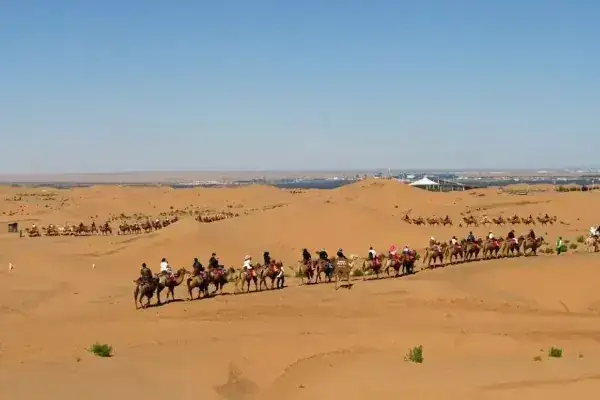
2. Wander through Shapotou: Located in Zhongwei, Shapotou is an excellent spot to appreciate the symbiotic spectacle of the Yellow River and desert. From the top of a sand dune, you can overlook the river making a unique “S”‑shaped bend. Activities are abundant: drifting on the Yellow River on a sheepskin raft—the most primitive watercraft—or riding a camel, slowly advancing through the sea of sand to the sound of bells. The landscape perfectly illustrates the poetic scene: “Lone smoke rises straight in the desert, over the long river the setting sun hangs round.”
3. Indulge in a winery tour on the eastern slopes of the Helan Mountains: This elegant experience will overturn any impression of the northwest as merely rugged. Over a hundred wineries of various styles are spread along the eastern slopes—such as the castle of Changyu Moser XV, or the Chinese garden style of Zhihui Yuanshi. Book a tasting session, listen to the winemaker’s story of the terroir in the underground cellar, and sample Cabernet Sauvignon or Marselan that rivals international châteaux—a delightful surprise on your Ningxia journey.
4. Experience Hui ethnic culture: Visit the Najiahu Grand Mosque in Wuzhong or Yinchuan, but be sure to respect religious customs, dress modestly, and visit outside prayer times. You can also enjoy an authentic Hui family banquet and learn a few simple greetings like Salam to feel the warmth of Hui hospitality.
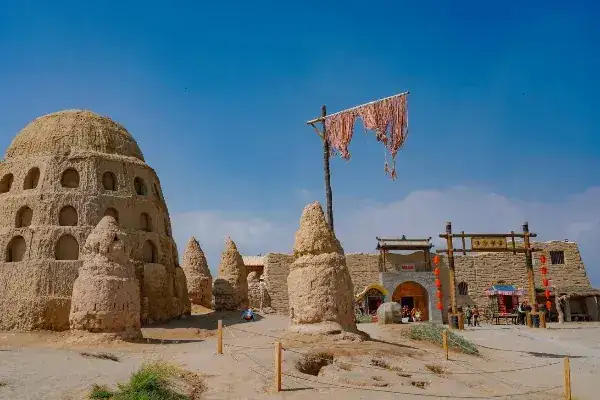
5. Play “actor” at Zhenbeibu Western Film Studio: This was once a border fortress from the Ming and Qing dynasties, later discovered and transformed into a film studio by writer Zhang Xianliang. Classic films such as Red Sorghum and A Chinese Odyssey were shot here. The studio preserves original northwest adobe buildings and movie sets; you can rent costumes and recreate famous scenes under the “Moon Gate” or at the “Spider Cave,” adding a fun, immersive touch.
Practical tips and precautions
- Climate and clothing: Ningxia has a large diurnal temperature range, strong ultraviolet radiation, and dry air. No matter the month, bring sunscreen, sunglasses, a sun hat, and lip balm. Even in summer, bring a light jacket or windbreaker for the cool evenings or sandstorms in desert areas.
- Dietary habits: Ningxia is a Hui‑concentrated area, so please respect local Muslim beliefs and dietary customs. In halal restaurants, avoid mentioning pork or other taboos, and do not bring non‑halal food. Hui hosts are hospitable; if urged to eat, you may freely enjoy the food to show respect.
- Health and safety: Most of Ningxia lies above 1,100 metres; altitude sickness is generally not severe, but avoid strenuous activity upon arrival. When playing in the desert, protect your camera equipment from fine sand and stay well hydrated.
- Transport suggestions: If you plan to visit multiple cities, the most flexible way is to rent a car in Yinchuan; roads are in good condition and traffic is light, allowing you to explore the scenery freely. Navigation apps make route planning easy.
- Language: Mandarin is universally spoken and communication is smooth. Learning one sentence—“As‑Salamu Alaykum” (Peace be upon you)—as an initial greeting will quickly bring you closer to local Hui people.
Travel information can change. Check current opening hours, reservations and entry requirements before you travel.
Traveller discussion
Start the conversation with a helpful tip or a question.