
Liuzhou, Guangxi
广西柳州市
Origin of the place name: In the eighth year of the Zhenguan era, Nankun Prefecture was renamed Liuzhou, named after the Liujiang River. How did the Liujiang River get its name? During the Han Dynasty, the Liujiang River was called Liushui. "Liu" means rapid water. Liushui was elegantly called Liushui, which is the reason for the name Liujiang. Li…
Origin of place name:
In the eighth year of the Zhenguan era, Nankun Prefecture was renamed Liuzhou, named after the Liujiang River. The Liujiang River got its name from the Han Dynasty, when it was called Liushui. "Liu" means rapid water. Liushui was elegantly called Liushui, which is how the Liujiang River got its name.
Basic introduction:
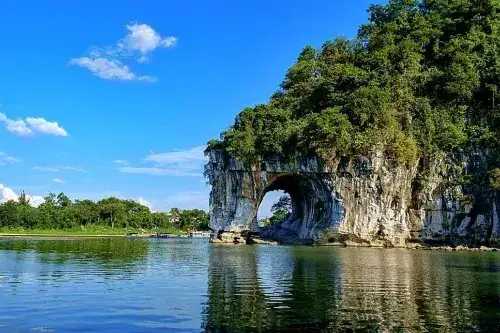
Liuzhou, also known as Dragon City, is located in the central part of Guangxi Zhuang Autonomous Region. It is an ancient city with a history of over two thousand years. Surrounded by green mountains and embraced by rivers, the city is known as "the world's largest natural bonsai garden." "The city is in the midst of mountains and water gardens, and mountains and water gardens are in the city"—this aptly describes Liuzhou's urban landscape.
The city administers six counties and four districts, covering a total area of 18,618 square kilometers, with an urban area of 658.31 square kilometers and a total population of 3.5 million. It is home to nearly 48 ethnic groups, including Han, Zhuang, Dong, Miao, Yao, and Mulam. With two thousand years of rich history and culture, and years of reform and opening up and economic development, Liuzhou has initially developed into a regional central city and transportation hub with industry as its mainstay and comprehensive development. It is a historical and cultural city with unique mountain and water landscapes.
Liuzhou is a renowned tourist city in China. Within a 250-kilometer radius of Liuzhou, 80% of Guangxi's [unclear - possibly referring to a specific region or area] is concentrated.
View detailed information about Liuzhou City >>
Honors Ranking:
In August 2026, it was designated as one of the second batch of pilot cities for innovation and upgrading of the national retail industry.
In May 2026, it was selected as one of the third batch of pilot cities for new technological transformation of manufacturing.
In March 2026, it ranked 91st among China's top 100 cities.
In January 2026, it ranked 91st in the overall ranking of overseas online influence of Chinese mainland cities in 2025.
In October 2025, Liuzhou's "Hundred-Mile Liujiang River" powerboat outdoor sports destination was included in the first batch of high-quality outdoor sports destination construction areas.
In September 2025, it ranked 66th among the top 100 smart cities in China (SMILE Index).
In May 2025, the 2025 China City Charm Ranking was released, with Liuzhou ranking 110th (a third-tier city).
In April 2025, it was named a national model city (county) for supporting the military and giving preferential treatment to families of servicemen.
In March 2025, it was named the seventh National Civilized City.
View more honors and rankings of Liuzhou City >>
Historical background:
It belonged to Guilin Commandery during the Qin Dynasty.
During the late Qin and early Han dynasties, it belonged to the Nanyue Kingdom.
Tanzhong County was established in 111 BC (the sixth year of the Yuanding era of the Western Han Dynasty). Its seat was located near Jiahe Mountain in the southeast of the present-day urban area. It belonged to Yulin Commandery and marked the beginning of Liuzhou's two-tiered administrative division.
In the first year of Tianfeng (14 years) of Wang Mang's Xin Dynasty, it was renamed Zhongtan County.
During the Eastern Han Dynasty, it was restored as Tanzhong County.
In the third year of the Fenghuang era of the Wu Kingdom during the Three Kingdoms period (274 AD), it was transferred to Guilin Commandery.
In the first year of the Tianjian era of the Southern Liang Dynasty (502 AD), Maping Prefecture was established, with its seat in Tanzhong County.
In the eleventh year of the Kaihuang era of the Sui Dynasty (591), Tanzhong County was renamed Guilin County and belonged to Xiangzhou; in the same year, Maping County was established by separating Guilin County.
In the first year of the Daye era of the Sui Dynasty (605 AD), Xiangzhou was abolished, and Maping County was placed under the jurisdiction of Guizhou; in the third year of the Daye era, Guizhou was renamed
View detailed historical evolution of Liuzhou City >>
Travel information can change. Check current opening hours, reservations and entry requirements before you travel.


Traveller discussion
Start the conversation with a helpful tip or a question.