
Liaoning
LiaoningCity OverviewLiaoning, abbreviated as “Liao,” takes its name from the Liao River basin, meaning “eternal peace.” It is the southernmost province in Northeast China and the only one in the region that is both coastal and bordered by
Liaoning
City Overview
Liaoning, abbreviated as “Liao,” takes its name from the Liao River basin, meaning “eternal peace.” It is the southernmost province in Northeast China and the only one in the region that is both coastal and bordered by a foreign country. Its name dates from 1929, when it was renamed from the Qing‑dynasty “Fengtian Province.” The geography of Liaoning is strategically striking: it backs onto the Changbai Mountains, bordering Jilin to the north; the Inner Mongolian grasslands and Hebei to the west; and the Yalu River forms its southeastern boundary with North Korea. The province’s topography can be summarised as “60% mountains, 10% water, and 30% farmland”—the east is covered by the forested hills of eastern Liaoning, part of the Changbai range; the west consists of the low hills of western Liaoning, including the Nuluerhu and Yiwulü mountains; and the centre is the vast Liao River Plain, formed by alluvium from the Liao and its tributaries, and an important part of the Northeast China Plain. To the south, the Liaodong Peninsula reaches like a giant arm into the Bohai and Yellow seas, creating a coastline of nearly 2,000 kilometres.
The province covers about 148,000 square kilometres, with a permanent population of approximately 41.82 million (end‑2023) and a GDP exceeding 3 trillion yuan. Liaoning’s administrative map consists of 14 prefecture‑level cities, forming a clear and orderly provincial urban structure. The provincial capital, Shenyang, is situated in the centre of the province and serves as the political, cultural, transport, and equipment‑manufacturing hub; it is also the only megacity in Northeast China approved by the State Council. The separately planned city of Dalian, at the southern tip of the Liaodong Peninsula, is the province’s and even the entire Northeast’s gateway to the outside world, an international shipping hub and financial centre, forming a strong “Shenyang‑Dalian dual core” with Shenyang. Anshan is built on steel and is the “Steel Capital of the Republic,” representing the industrial backbone of Liaoning; while Dandong, China’s largest border city, plays a unique geopolitical role deeply connected with the Korean Peninsula. Shenyang’s ancient capital aura, Dalian’s romantic seaside, Anshan’s steel will, and Dandong’s border charm together depict Liaoning as an important old industrial base, a forward frontier for opening to the north, and a multi‑faceted hub linking Northeast China by land and sea. This province is like a condensed canvas of modern Chinese history, carrying both the glory and weight of the “eldest son of the Republic,” while striving to write a new chapter of transformation in the tide of the new era.
Historical Context
The history of Liaoning is an epic of collision and fusion between Central Plains civilisation and frontier ethnic cultures. As early as 400,000–500,000 years ago, human activity was already present at the Jinniushan site in Yingkou. But its emergence as a regional civilisational centre began in the 3rd century BCE. During the Warring States period, the state of Yan established the Liaodong and Liaoxi commanderies here, marking the formal incorporation of the Liaoning region into the administrative system of the Central Plains dynasties. Over the following two millennia, Liaoning has played a crucial geopolitical role in the grand narrative of Chinese history. Its historical evolution can be broadly divided into four key phases.
Phase I: Commandery and Frontier City Foundations (Han to Yuan)
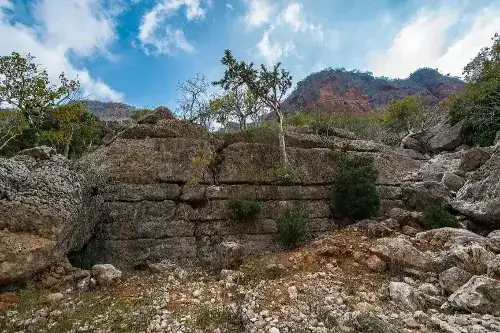
The Han dynasty inherited the Qin system and continued to strengthen the construction of the Liaodong and Liaoxi commanderies, bringing large numbers of Han migrants to cultivate the land and introduce advanced farming techniques. By the end of the Eastern Han, the Gongsun family established a semi‑independent regime in Liaodong, centred on Xiangping (present‑day Liaoyang), maintaining relative stability for half a century and making it a haven for Central Plains refugees fleeing the chaos. After that, Liaoning entered a period of change, with the Xianbei, Goguryeo, Khitan, and Jurchen peoples appearing in turn. The Goguryeo built mountain fortresses throughout eastern Liaoning, with the Mount Wunü Fortress as a witness to their early strength. In the Liao dynasty, this was the Khitan heartland, and the Eastern Capital of Liaoyang Prefecture flourished. The Jin dynasty continued this pattern, with Liaoyang remaining a major administrative centre. In the Yuan, the Liaoyang Branch Secretariat was established in Liaoning, governing the entire Northeast.
Phase II: Ming Frontier Defence and the Manchu Rise (1368–1644)
After the Ming dynasty was established, it built a large‑scale defence system—the Eastern Liaoning Frontier Wall—to defend against the remnants of the Mongol forces that had retreated to the northern deserts and the rising Jurchen tribes. Along this wall, eighteen key cities were established as military strongholds. Administratively, prefectures and counties were abolished and replaced entirely by guard posts, under the nominal jurisdiction of the Shandong Provincial Administration Commission, making Liaoning the foremost of the Ming empire’s nine frontier towns. The turning point came with the rise of the Jianzhou Jurchen. In 1583, Nurhaci rose in rebellion with thirteen suits of armour, and in 1616 he proclaimed himself khan at Hetu Ala (present‑day Xinbin, Fushun), establishing the Later Jin. In 1621, he captured Shenyang and Liaoyang, and in 1625 moved his capital to Shenyang, beginning the construction of the Shenyang Imperial Palace (Mukden Palace). This palace, one of only two surviving imperial palace complexes in China, along with the Yongling, Fuling, and Zhaoling tombs (the “Three Mausoleums Outside the Pass”), serves as a silent witness to the rise of the Qing and was among the first batch of national key cultural heritage sites.
Phase III: From Fengtian Mukden to Colonial Humiliation (1644–1945)
After the Qing entered the Pass in 1644, Mukden became a secondary capital, with a Mukden general in charge and a Fengtian prefectural magistrate for civil affairs. A strict closure policy was imposed to protect the “dragon vein.” However, in modern times, Liaoning became a focal point of great‑power rivalry. During the First Sino‑Japanese War of 1894–1895, much of Liaoning became a battlefield. Russia took the opportunity to lease Lüshun and Dalian, and in 1898 began construction of the branch line of the Chinese Eastern Railway. In 1904, the Russo‑Japanese War broke out fiercely on Liaoning’s soil; after the war, Japan inherited the special rights in the “Kwantung Leased Territory” (Lüshun‑Dalian area) and the South Manchuria Railway, establishing the Kwantung Army, which later became the headquarters for the full‑scale invasion of China. In 1931, the Japanese bombarded the Shenyang Northern Barracks, launching the Mukden Incident. Liaoning was the first to fall and, under the subsequent puppet state of Manchukuo, endured 14 years of profound suffering.
Phase IV: Birth and Transformation of the Eldest Son of the Republic (1949–present)
In November 1948, Liaoning was fully liberated; the victory of the Liaoshen Campaign brought the first ray of dawn for the founding of New China. With the industrial base left by the Japanese and puppet regime, a relatively intact railway network, and the geographical advantage of proximity to the Soviet Union, during the First Five‑Year Plan, 24 of the 156 key national projects were located in Liaoning—the highest proportion in the country. Shenyang No.1 Machine Tool Plant, Anshan Iron and Steel Company, Fushun West Open‑pit Mine—countless “firsts of the Republic” were born here. Liaoning made a foundational contribution to building an independent and complete industrial system for New China and earned the title “Eldest Son of the Republic.” After reform and opening up, the inertia of the planned economy put Liaoning through a difficult transition. In 2003, the state launched the strategy to “revitalise the old industrial base of Northeast China,” and Liaoning began exploring institutional and systemic innovation. In the new era, Liaoning has deeply integrated into the Belt and Road Initiative; platforms such as the Liaoning Pilot Free Trade Zone and the Shenyang‑Dalian National Independent Innovation Demonstration Zone have become new engines for reform. This old industrial base is on the road to comprehensive revitalisation, reshaping its historical glory.
Cultural Heritage
Liaoning’s cultural landscape is not monochrome but woven from the vibrant colours of multiple ethnicities and regions, displaying a strong character of integration and inclusiveness. The historical status of frontier strongholds and the large‑scale migrations in modern times have deeply interwoven the cultures of Shandong, Hebei, and other regions with local Manchu, Mongol, and other ethnic traditions, giving rise to the robust, simple, yet humorous and optimistic character of Northeast culture.
Dialects
Liaoning dialects are an important part of Northeastern Mandarin, with internal differences closely related to the origins of historical migration. They can be broadly divided into three groups: the central plain region centred on Shenyang and Anshan uses the Liaoning‑Shenyang subgroup, which is closest to standard Mandarin and is representative of Northeastern Mandarin; the Liaodong Peninsula cities of Dalian and Dandong, whose population is primarily made up of migrants from Shandong, speak the Deng‑Lian subgroup of Jiao‑Liao Mandarin, with a strong “seafood” accent very similar to the dialects of Yantai and Weihai in Shandong across the sea; and the western Liaoning corridor of Jinzhou and Huludao has a rising intonation, notably with a rising final particle at the end of questions. The common feature of all Liaoning dialects is vivid vocabulary, direct expression, and strong visual and humorous impact.
Folk Traditions
Liaoning’s folk life is alive with fiery vitality. In festivals, New Year’s Eve vigil and New Year’s Day greetings are similar to those of northern Han Chinese, but the Lantern Festival and the “Dragon Raises Its Head” on the second day of the second lunar month are particularly grand. Marriage and funeral customs still bear traces of ancient Manchu rites—for example, “stepping over the brazier” and “crossing the saddle” in weddings symbolise a prosperous and safe life. The most iconic regional feature is the Northeast Yangge dance. During festivals, drums and music resound throughout cities and countryside; the dance troupes perform with bold, exaggerated, and humorous movements. Haicheng Stilts are renowned for their height, risk, and “wave” style; the performers can execute difficult moves such as “crossing the arch” and “falling frog” while on stilts, and the art is inscribed on the national intangible cultural heritage list.
Artistic Traditions and Intangible Heritage
Liaoning’s folk arts are equally brilliant. Errenzhuan, represented by Zhao Benshan, originated in the fields and is a form of talking, imitating, teasing, and singing that is witty and robust. Known as “nine tunes, eighteen modes, and seventy‑two exclamations,” it is a unique spiritual product of Northeast people finding joy in hardship and dissolving life’s difficulties; its predecessors include Northeast Yangge and Hebei lotus‑fall. In arts and crafts, Xiuyan jade carving has a long history, with reserves and output among the highest in China; Fuxin agate carving is exquisite and diverse. Zhuanghe paper‑cutting and Xiuyan Manchu paper‑cutting use simple, rough lines to depict ancient themes such as shaman worship and fertility worship, serving as living codes for understanding the early spiritual world of the Manchu people. Liaoning has dozens of recognised national‑level intangible cultural heritage items, covering folk literature (such as the Eastern Mongolian folk tales of Kazuo), traditional music (such as Liaoning drum music), traditional dance (such as Fushun land yangge), and quyi (such as Northeast drum ballads), together forming a complete and rustic cultural ecosystem. The people of this land, speaking loudly, drinking heartily, and laughing at themselves, have digested long winters and hard times, condensing into a character of both “tiger” and “solidity” that takes heavy burdens lightly.
Architecture and Urban Landscape
Liaoning’s architectural landscape is a three‑dimensional history book written in stone and brick. From ancient royal grandeur, colonial exoticism, New China’s industrial ambitions, to modern metropolitan glamour, four temporal layers overlap within the same geographical space, creating an exceptionally rich urban fabric.
Traditional Architecture
Liaoning’s traditional architecture is notable for its bold, grand character, led by the Mukden Palace. Built from 1625, it was the imperial palace of the Qing dynasty before entering the Pass. Its layout has three sections: east, middle, and west. The combination of the East Dazheng Hall and the Ten Princes’ Pavilions is derived from the nomadic tent‑court system, showcasing the unique political form of joint office‑holding by the emperor and the Banner lords—a unique example in the history of Chinese palace architecture. In addition, Manchu quadrangles are found throughout cities and countryside; unlike Beijing quadrangles, they have larger courtyards, often with a screen wall behind the gate, and chimneys are not built on the roof but on the ground beside the house, known as “free-standing side chimneys,” which are highly recognisable. Buddhist architecture is represented by the White Pagoda of Guangyou Temple in Liaoyang and the Great Hero Hall of Fengguo Temple in Yixian; the latter houses the world’s largest and oldest group of painted clay Buddha statues and is a masterpiece of Liao‑dynasty wooden architecture.
Modern and Contemporary Architecture
If Shenyang is the stage of the early Qing, then Dalian is an “open‑air museum of modern architecture.” From 1898 to 1945, Russia and Japan successively occupied the Lüshun‑Dalian area and used it as a model to implement their latest urban planning concepts. The Russian plan built a radial urban skeleton centred on Zhongshan Square, surrounded by Renaissance, Gothic, and Baroque banks, hotels, and government buildings. After the Japanese occupation, they followed and expanded this plan, introducing many buildings in the popular “Japanese‑Western eclectic” style. In Shenyang, Changchun, and elsewhere, similar building complexes were left in the “South Manchuria Railway” attached areas, such as Shenyang Station and its surroundings. These buildings are both scars of colonialism and rare specimens for the study of modern urbanism and architecture.
Urban Fabric and Distinctive Neighbourhoods
Different cities show markedly different textures. Shenyang’s urban fabric is “collage‑like”: within the square city wall, the Shenyang Imperial Palace and surrounding alleys retain a pre‑industrial chessboard grid; outside, the South Manchuria Railway attached area has narrow streets and a Baroque radial network; while Tiexi District is a Soviet‑style industrial city of giant factories, railway spurs, and workers’ new villages organised by work units. Dalian, by contrast, has always expanded around the core concept of “plazas and radial roads,” making its urban lines more fluid and open. Distinctive areas are particularly legible: Shenyang’s Square City is the soul of the ancient capital, with the palace and Zhongjie Street intertwined, and tradition and modern commerce coexisting. Dalian’s East Harbour has been transformed from an old industrial dock into a new city gathering space for yachts, conferences, and seaside leisure. The Benxihu Industrial Heritage Group preserves the most complete early production system of modern China’s coal and iron industry—the huge, rusted blast furnaces and mine shafts record the glory and cost of this “coal and iron city.” Liaoning’s urban landscape is a vivid portrayal of the interplay, collision, and regeneration of “ancient, colonial, and industrial” forces; walking through it, one can almost feel the multiple historical forces that shaped modern China.
Culinary Culture
Liaoning cuisine, or Liao cuisine, though not one of the traditional eight great cuisines, has become a striking presence on the Chinese culinary map with its powerful fusion of Manchu, Shandong, Japanese, and Russian influences, and its robust style of clear savoury‑sweet flavours, tender and rich in savoury freshness textures, generous portions, and substantial value. Its soul lies in the bounty of mountains and sea and the marvellous cooking of diverse cultures.
General Characteristics and Influences
The base of Liao cuisine is Shandong cuisine. During the 19th and early 20th centuries, with the tide of Shandong people “breaking through the Pass” into the Northeast, the techniques of quick‑frying (bao), stir‑frying (chao), braising, and simmering, along with deep skill in making broth, gave Liao cuisine its emphasis on heat control and rich flavours. On this foundation, it incorporated the Manchu tradition of pork dishes and the “slaughtered‑pig” stew of white meat and blood sausage, and in coastal cities such as Dalian, introduced the Japanese philosophy of handling fresh seafood, as well as the robust flavours of Russian cuisine such as sour cream and Caucasian barbecue. This eventually formed two main schools: “official‑style and street‑style cuisine” centred on Shenyang, and “seafood cuisine” represented by Dalian.
Classic Dishes
If one speaks of representative Liao dishes, Guobaorou (sweet‑and‑sour crispy pork) is a flavour signature of the entire Northeast, although its precise birthplace is Harbin; the Liaoning version emphasises the sweet‑sour flavour, with a golden colour, crispy outside and tender inside, and a strong vinegar aroma. Pork Stewed with Vermicelli is a warm memory from ordinary lanes—pork belly stewed until meltingly tender, and broad vermicelli that is chewy and absorbs the essence of the broth. Stewed Chicken with Mushrooms must use wild hazel mushrooms from the eastern Liaoning mountains, slow‑simmered with free‑range chicken; the unique fragrance of the mushrooms intertwines with the rich chicken flavour. In seafood, Dalian abalone is unparalleled; it can be braised or served as sashimi. Braised Sea Cucumber with Scallions is one of the “eight treasures of ancient and modern times,” made with local sea cucumbers, flavoured with scallions, rich and thick in sauce, soft and gelatinous. In addition, the slaughtered‑pig feast is not just a dish but a ritual—white meat, blood sausage, and pickled cabbage are cooked together and dipped in garlic paste or chive flower sauce; it is the most festive flavour of the New Year. Quick‑Fried Pork Strips and Snowy Red Bean Paste are also enduring classics.
Eating Habits
Liaoning cuisine is characterised by heavy oil and salt, preferring salty, fragrant, sour, and sweet flavours. A meal commonly includes rice (Panjin rice is famous nationwide), noodles, and sorghum rice. The table is never without several items: sauce‑dipped vegetables—fresh lettuce, radishes, scallions, and cucumbers are washed and eaten raw with soybean paste, for a crisp, original taste; and pickled vegetables, with turnips, garlic eggplants, and soy‑pickled cucumbers being the most common, used to accompany porridge or as side dishes. With long, cold winters, pickling sauerkraut is a major household affair—hundreds of kilogrammes of cabbages are put into vats and naturally fermented, becoming the soul of the winter menu; it is essential in dumplings, stews, and hotpots. Its unique sour flavour is a winter memory etched into the bones of every Liaoning native.
Expression of Regional Character
Liaoning cuisine aptly reflects the character of its people—warm, direct, genuine, and lavish in hospitality. Portions are shockingly large, served on big plates and bowls, as if afraid guests might not have enough. The flavours do not pursue delicate layers but a bold, soul‑stirring richness. A meal leaves both host and guest satisfied and exuberant—a vivid portrayal of this land’s generous, unpretentious philosophy of hospitality.
Modern and Contemporary Development
Liaoning’s modern history is the roar of factories and the rise of cities. Its development trajectory is deeply embedded in China’s arduous transformation from an agricultural country to an industrial power. Its glory and burdens have both been thoroughly washed by the tides of globalisation and marketisation.
Opening of Ports and Transport Transformation
Liaoning’s modernisation began in the 1860s. In 1861, Yingkou (then called Meigouying) was forced to open as the Niuzhuang port, the first treaty port in Northeast China, sparking modern industries such as oil mills and flour mills. However, what truly changed Liaoning’s face was the railway—the Chinese Eastern Railway and its South Manchuria branch. This “T”‑shaped steel artery, built by Russia in the late 19th century and later controlled by Japan, not only made Dalian the leading trade port of the Northeast in place of Yingkou, but also, like a giant whip, carried soybeans, coal, and ore from along the line to overseas markets, while also bringing modern municipal facilities—electricity, water, gas—and the beginnings of industry to Liaoning in the form of “railway attached areas.”
Forging a New China Industrial Miracle
After the founding of New China in 1949, Liaoning, with its relatively intact industrial base, abundant coal and iron resources, and geopolitical security advantages, was designated the strategic core of national industrialisation. During the First Five‑Year Plan (1953–1957), Liaoning received the highest density of state investment in the country. Twenty‑four key Soviet‑assisted projects and the layout of over a thousand supporting enterprises systematically built a complete heavy‑chemical industrial system covering steel, machinery, chemicals, and energy. In Shenyang’s Tiexi District, chimneys stood thick and factories lined the streets, producing the first machine tool and the first large transformer of New China. Anshan Steel, with its glowing blast furnaces, was hailed as the “Steel Capital of the Republic,” and its output and technical standards were once a barometer of domestic industry. Fushun and Fuxin were underground “coal seas,” supplying the “grain” of industry to the whole country. Liaoning was truly the “equipment department of the Republic,” providing raw materials and equipment for the nation. By 1978, Liaoning’s urbanisation rate far exceeded the national average, fostering a huge industrial workforce and a unique “work‑unit” social structure.
Transition Pain and Revitalisation Exploration
Entering the 1990s, with the deepening of market‑economy reforms and the gradual depletion of resources, Liaoning’s systemic and structural problems erupted. Factory closures, layoffs, and “large collective enterprises” became heavy imprints of the era. Liaoning embarked on a painful and lengthy transition, carrying out unprecedented adjustments to ownership and industrial structure through measures such as “reducing staff and increasing efficiency” and “three‑year SOE turnaround.” The urban landscape also changed: in Tiexi, Shenyang, the “east relocation, west construction” programme saw hundreds of factories go bankrupt or relocate, with the remaining huge factory spaces converted into the Workers’ Village Living Museum, the China Industrial Museum, and the 1905 Cultural and Creative Park, transforming industrial memory into cultural capital. In 2003, the “Revitalisation of the Northeast” strategy was formally proposed, with Liaoning as the main battlefield, accelerating upgrading in advanced equipment manufacturing and petrochemicals, while Dalian’s software outsourcing and shipping‑centre construction emerged rapidly.
Current Strategic Positioning
Today, Liaoning’s development path is increasingly clear. It is striving to build a “Digital Liaoning and Smart Manufacturing Province,” actively developing high‑level open platforms such as the Shenyang‑Dalian National Independent Innovation Demonstration Zone and the Liaoning Pilot Free Trade Zone. Shenyang is advancing towards the goal of a national central city, while Dalian aims to become an international shipping centre, international logistics centre, and regional financial centre in Northeast Asia. In safeguarding the nation’s “five major security areas” (national defence, food, ecological, energy, and industrial security), Liaoning bears an irreplaceable strategic mission. Mega‑projects such as the BMW Brilliance Lydia Plant represent a new level of high‑end manufacturing and international cooperation for Liaoning. From “big, dark, thick, and crude” to “refined, new, and green,” Liaoning is trying to graft its century‑old industrial civilisation—its skilled workforce and technological heritage—onto open innovation. The road to revitalisation is bumpy, but the steps are solid.
Transportation and Travel
Liaoning has one of the most mature and dense integrated transport networks in China. This is both a concentrated expression of its century‑old industrial achievements and a vital artery sustaining its provincial economic linkages and national strategic status. The transport pattern has Shenyang as the central hub and Dalian as the main maritime gateway, advancing in four dimensions: sea, land, air, and rail.
Rail Network
Liaoning is one of the provinces with the highest railway density in China; conventional and high‑speed railways together weave a complex network connecting the whole province and the entire country. In high‑speed rail, the Harbin‑Dalian line runs north‑south and is the most important fast passenger corridor in the Northeast; Shenyang to Dalian takes less than two hours. The completion of the Beijing‑Shenyang and Kazuo‑Chifeng lines has fully integrated Liaoning into the national high‑speed network, with the fastest travel time from Shenyang to Beijing compressed to about two hours and forty minutes. Conventional rail, with the Shenyang‑Shanhaiguan, Shenyang‑Dalian, and Shenyang‑Dandong lines as the backbone, connects the major industrial and mining cities and ports. The Shenyang‑Dandong line is particularly scenic, winding through mountains and valleys; the section from Benxi to Fengcheng offers views of green hills, clear waters, and tunnels. Many industrial branch lines, once used for mining, have been converted into urban tourist lines for industrial tourism—a unique heritage of Liaoning’s railway culture.
Expressway Network and Roads
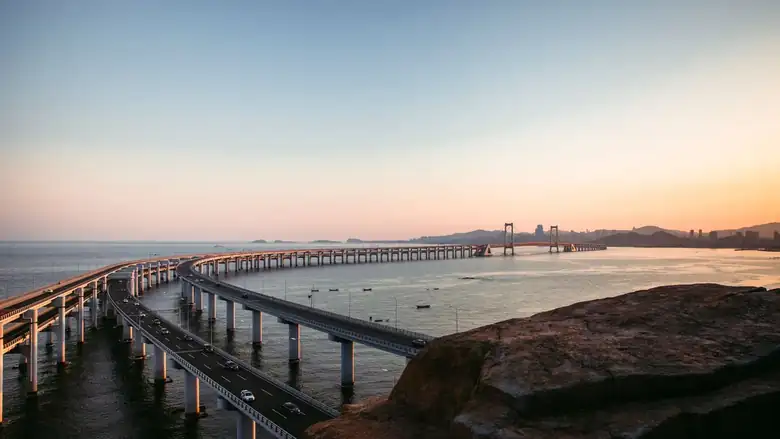
Liaoning was one of the first provinces to build expressways in China. The Shenyang‑Dalian Expressway, known as the “First Road of the China's First,” opened in 1990, connecting the five major industrial cities of Shenyang, Liaoyang, Anshan, Yingkou, and Dalian, forming the main backbone of Liaoning’s economy. Today, the provincial expressway network has a pattern of “one ring, five radial arteries, and multiple connecting lines,” achieving expressway coverage in every county, with total mileage continuing to grow. The Beijing‑Harbin National Expressway runs through the western Liaoning corridor, connecting North China; the Hegang‑Dalian Expressway links Jilin and Heilongjiang to Dalian Port. The developed road network supports the hinterland extension of Liaoning’s port cluster and makes self‑driving an excellent way to travel within the province. Driving along the Coastal Boulevard from Huludao through Panjin, Yingkou, and Dalian to Dandong allows you to fully experience the diverse landscapes of mountains, sea, and farmland, as well as the varied charms of fishing villages, international seaports, and border cities.
Airports and Ports
Liaoning is an important aviation hub in Northeast Asia. Shenyang Taoxian International Airport and Dalian Zhoushuizi International Airport (with the new Dalian Jinzhou Bay International Airport under construction, to become China’s first offshore airport) are the two gateway hubs, with route networks covering major domestic and international cities and frequent international flights to Japan, South Korea, the Russian Far East, and Mongolia. Regional airports in Dandong, Jinzhou, Anshan, and others effectively supplement the province’s aviation services. Ports are Liaoning’s core advantage. The Liaoning Port Group, formed by the deep integration of Dalian Port and Yingkou Port, is the largest port group in Northeast China. Dalian Port is a centre for oil products, containers, and passenger‑vehicle ferries; Yingkou Port is the nearest seaport to the Northeast hinterland, excelling in domestic container and bulk cargo. In addition, Dandong Port is the main port for trade with North Korea; Jinzhou Port handles goods from western Liaoning and eastern Inner Mongolia; Huludao Port (Suizhong port area) plays a special role in energy transport. The passenger‑vehicle ferry route from Yantai to Dalian is the busiest “golden waterway” linking Northeast and East China.
Travelling in Liaoning itself is an experience that crosses multiple cultures and historical time zones. In half an hour, you can step away from the ancient Mukden Palace, board a high‑speed train speeding across the Liaodong landscape, and within an hour find yourself amid the exotic atmosphere of Dalian’s Zhongshan Square. This unique rhythm of rapid switching among traditional industrial towns, modern cities, and blue sea and sky is the essential travel experience that Liaoning’s transport offers to visitors.
Travel Tips
To help make your journey to Liaoning fulfilling and profound, here is a thoughtful travel guide organised by season, core experiences, and practical tips.
Best Travel Seasons
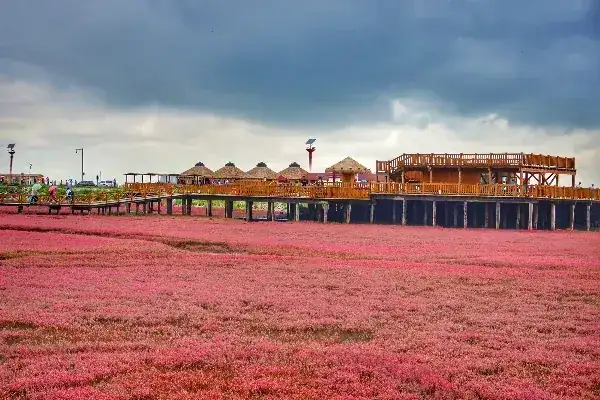
Liaoning has four highly distinct seasons, each with its own beauty, but autumn (September to October) is the universally recognised golden season. The weather is dry and crisp, with temperatures between 15°C and 25°C, very comfortable. The Panjin Red Beach reaches its best viewing period, where the red seepweed creates a carpet of scarlet, interwoven with golden rice fields and the blue Bohai Sea. The Benxi‑Huanren highway in the eastern Liaoning hills is covered with layered maple leaves, earning it the title “China’s Maple Leaf Avenue,” comparable to Canada’s renowned maple routes. Spring (late April to May) brings renewal; Dalian’s cherry blossoms and Lüshun’s Longwangtang Cherry Garden are the top cherry‑viewing destinations in Northeast China. Winter (December to February) is cold (average -5°C to -15°C) but offers authentic ice‑and‑snow fun, warm indoor living, and the richest folk customs around the Spring Festival. Summer (June to August) is cool and good for seaside holidays, but note that July–August may be rainy. Avoid the peak tourist periods of the Labour Day and National Day holidays.
Must‑Visit Attractions/Experiences (3–5)
1. A Historical Stroll through Shenyang’s Mukden Palace and Zhongjie Street: Spend a morning exploring the royal architecture of the Shenyang Imperial Palace—the East Road Ten Princes’ Pavilions and the Middle Road Chongzheng Hall—to understand the unique political structure of the early Qing. Afterward, have lunch on nearby Zhongjie Street, China’s first commercial pedestrian street, and try the hotpot skewers and ice cream at Zhongjie Ice Cream City. In the afternoon, walk to the Financial Museum (former Bank of Frontier) to appreciate Shenyang’s historical depth as a financial and commercial capital. This is a resonance of ancient and modern.
2. A Coastal Walk along Dalian’s Binhai Road and Nighttime Squares: Choose a morning or afternoon to walk along the Dalian Binhai Road boardwalk (recommended section: Fujiazhuang to Yanwoling). On one side is the vast blue sea, on the other are layered green hills—cliffs, islands, and beaches in full view. In the evening, arrive at Zhongshan Square to admire the century‑old European buildings illuminated at night, experiencing the city’s fashion and openness. This is another side of Liaoning—inclusive, romantic, and full of maritime spirit.
3. Red Beach Panjin’s Spectacular Sights: Visit Panjin in September or October. The boardwalks wind through the Red Beach; in the distance, the pumping units of the Liaohe Oilfield are at work—a dramatic fusion of industry and nature. The best viewing time is at low tide. Be sure to taste the locally grown crab‑field rice and the delicious Chinese mitten crabs (Panjin river crabs)—rice‑field crab farming is an excellent agro‑ecological model.
4. A Self‑Drive Gallery along the Benxi‑Huanren Highway: If you love road trips, drive east from Benxi along the Benxi‑Huanren Highway to Huanren before the National Day holiday. The scenic section is about 30 kilometres, known as the “Road of Chinese Maple Leaves.” The hills on both sides look like an overturned palette, glowing with gold, fiery red, and ochre in the sunlight. Along the way, explore valleys such as Laobiangou and Dashi Lake, where streams and fallen leaves dance together.
Practical Tips and Precautions
- Dialect and Communication: Mandarin is widely spoken in most parts of Liaoning, so communication is almost barrier‑free. Using a few Northeastern expressions such as “what are you looking at,” “chatting,” or “top‑notch” will quickly bring you closer to the warm and outgoing locals.
- Ordering Tips: Portions are huge—truly “Northeast size.” For two people, two dishes and a soup are more than enough; for three, three dishes are ample. Always ask the server about portion sizes and avoid wasting food.
- Payment Habits: Mobile payment (WeChat Pay, Alipay) covers most spending scenarios, but carrying a small amount of cash is useful, especially when visiting remote rural markets.
- Warm Clothing: If visiting in winter, be sure to bring the warmest gear: down jacket, windproof coat, snow boots, hat, gloves, and ear warmers. Indoor heating is very strong, usually over 20°C, so your inner layers should not be too thick, allowing you to take off heavy outerwear indoors.
- Historical Respect: When visiting historical sites such as the Lüshun Russo‑Japanese Prison Site or the Pingdingshan Massacre Site, maintain a solemn and respectful attitude. These places are not only historical memorials but also sites of national trauma and reflection. The same applies to the September 18 Historical Museum in Shenyang. Appreciating, rather than judging lightly, is the best way to understand this province that has endured so much.
Travel information can change. Check current opening hours, reservations and entry requirements before you travel.
Traveller discussion
Start the conversation with a helpful tip or a question.