
Jiangxi
JiangxiCity OverviewJiangxi, abbreviated as “Gan” (赣), is located in southeastern China on the southern bank of the middle and lower reaches of the Yangtze River. It is a land deeply shaped by lush landscapes, rivers, mountains, and memorie
Jiangxi
City Overview
Jiangxi, abbreviated as “Gan” (赣), is located in southeastern China on the southern bank of the middle and lower reaches of the Yangtze River. It is a land deeply shaped by lush landscapes, rivers, mountains, and memories of revolutionary history. Geographically, Jiangxi borders Zhejiang and Fujian to the east, Guangdong to the south, Hunan to the west, and Hubei and Anhui to the north. It lies at the shared hinterland of three of China’s most economically dynamic regions: the Yangtze River Delta, the Pearl River Delta, and the Western Taiwan Strait Economic Zone.
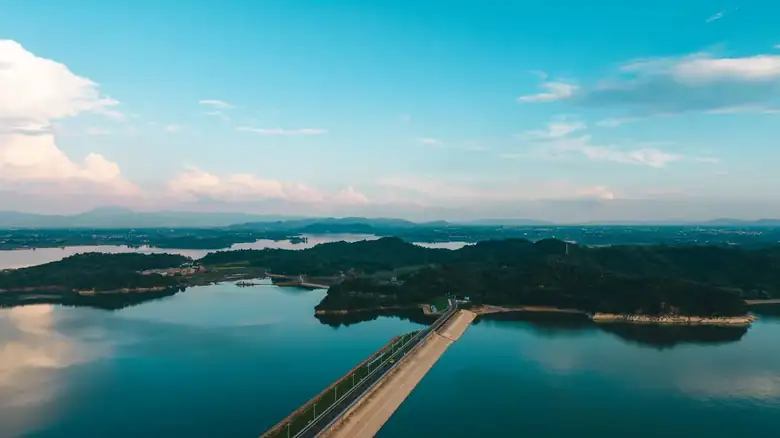
The province has a long and narrow north-south shape, with an overall terrain that is higher in the south and lower in the north. Mountains surround the east, west, and south, while the central region consists of rolling hills and basins. The north opens into the flat Poyang Lake Plain, forming a huge basin that faces north. This unique landscape makes Jiangxi resemble a giant winnowing basket, giving it a distinctive position on China’s geographical map.
The Gan River, the largest river in Jiangxi, runs from south to north across the entire province, flows into Poyang Lake, China’s largest freshwater lake, and eventually joins the Yangtze River. More than just a river, the Gan River is the mother river of Jiangxi and served as a vital ancient transportation route connecting the Central Plains with Lingnan (the region south of the Nanling Mountains).
Jiangxi covers an area of approximately 166,900 square kilometers and had a permanent resident population of around 45.15 million by the end of 2023. Administratively, it is one of China’s 23 provinces and governs 11 prefecture-level cities, including Nanchang, Jiujiang, Jingdezhen, and Ganzhou.
The provincial capital Nanchang is located along the lower reaches of the Gan River in the heart of the Poyang Lake Plain. As Jiangxi’s political, economic, and cultural center, it is known as the “Hero City.”
Jiujiang, located along the golden waterway of the Yangtze River, serves as Jiangxi’s northern gateway and its only river port city on the Yangtze, functioning as an important regional shipping hub.
Ganzhou, located in southern Jiangxi, is the province’s largest city by area and population and serves as a bridgehead connecting Jiangxi with the Guangdong-Hong Kong-Macao Greater Bay Area, carrying the responsibility of a provincial sub-center city.
Jingdezhen, famous for its thousand-year porcelain-making tradition, has become Jiangxi’s most internationally recognizable cultural symbol.
Although smaller in scale, cities such as Xinyu and Yingtan play important roles in industries including steel production and copper processing. This combination of geography and human history has shaped Jiangxi into distinct regional zones: the northern Jiangxi plains, central Jiangxi hills, and southern Jiangxi mountains, giving rise to its reputation as a land of literary excellence, moral tradition, and fertile abundance.
The name “Jiangxi” originated from the Tang Dynasty administrative division Jiangnan West Circuit (Jiangnan Xi Dao). The nickname “Gan” comes from the Gan River that flows through the province, while the ancient name “Yuzhang” can still be found today in many place names throughout Nanchang, echoing the province’s long historical legacy.
Historical Development
Human activity in Jiangxi can be traced back tens of thousands of years to the Paleolithic era. However, the province’s development as a clearly defined administrative region began during the Qin Dynasty. After Qin Shi Huang unified China, the Jiujiang Commandery was established in 221 BC, marking the formal incorporation of the Jiangxi region into the centralized imperial administrative system. At that time, the area remained on the frontier of Central Plains civilization, sparsely populated, humid, and often regarded by northern Chinese as a distant “southern frontier.”
The Han Dynasty marked the first major stage of Jiangxi’s development. In 202 BC, Emperor Gaozu of Han established Yuzhang Commandery, consisting of 18 counties with its administrative center in Nanchang. The establishment of Yuzhang Commandery marked the beginning of systematic development through the prefecture-county administrative system.
Over the following centuries, whenever warfare disrupted the Central Plains, large numbers of aristocratic families and ordinary people migrated southward. They brought advanced agricultural tools and technologies, cultivated land along the Gan River, and gradually expanded population and economic activity from the plains into the interior regions.
During the Three Kingdoms period, the Eastern Wu regime invested heavily in developing Jiangxi. Buddhism also entered the region during this era, and the founding of Donglin Temple on Mount Lu marked the beginning of Jiangxi’s long history as an important center of Buddhism in southern China.
During the Sui and Tang dynasties, the opening of the Grand Canal and the restoration of the Meiguan Ancient Trail transformed the Gan River–Dayu Mountain route into a major commercial corridor connecting northern and southern China. Jiangxi entered a period of prosperity that would last for more than a millennium.
In 675 AD, Wang Bo, one of the Four Great Poets of the Early Tang Dynasty, passed through Nanchang and composed the timeless masterpiece “Preface to the Pavilion of Prince Teng.” His famous phrase, “Treasures abound in the land, and outstanding people emerge from a place of spiritual beauty,” became one of the most vivid descriptions of Jiangxi’s cultural character.
During the Tang Dynasty, the Jiangnan West Circuit was established, giving rise to the provincial name “Jiangxi.” The Song Dynasty represented a golden age in Jiangxi’s history. Education flourished and talented figures emerged in large numbers. Statesmen and literary giants such as Ouyang Xiu, Wang Anshi, and Zeng Gong played influential roles in politics and literature. Meanwhile, Neo-Confucian philosophy developed rapidly in Jiangxi through the contributions of scholars such as Zhou Dunyi and Zhu Xi, profoundly influencing Chinese thought for later generations.
The late Yuan and early Ming dynasties marked a major turning point. Continuous warfare caused Jiangxi’s population to decline sharply and damaged its economy. This led to the historically significant migration movement known as “Jiangxi people filling Huguang”, during which large numbers of Jiangxi residents migrated to Hunan and Hubei, deeply reshaping population distribution throughout southern China.
At the same time, Jingdezhen rose during the Ming and Qing dynasties to become the world center of porcelain production. Its exquisite ceramics were exported globally through the Maritime Silk Road, spreading the reputation of Chinese porcelain and contributing to the international association between “China” and fine ceramics.
In modern history, Jiangxi once again stood at a critical historical crossroads. On August 1, 1927, the Nanchang Uprising fired the first shot of armed resistance against the Kuomintang government, making the city known as the birthplace of the People’s Liberation Army.
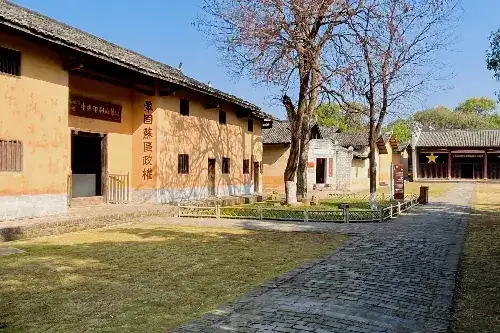
Later, forces led by Mao Zedong during the Autumn Harvest Uprising established China’s first rural revolutionary base in Jinggangshan, creating the strategy of “encircling cities from the countryside.” From 1931 to 1934, Ruijin witnessed the establishment of the Provisional Central Government of the Chinese Soviet Republic, earning Jiangxi the titles “Red Ancient Capital” and “Cradle of the Republic.”
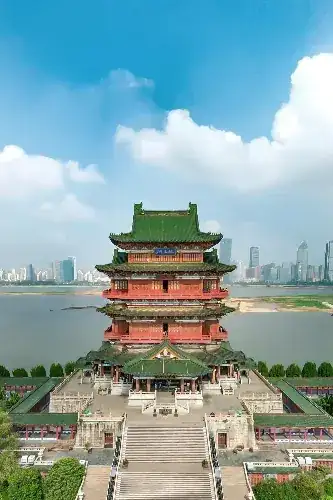
Today, landmarks such as Tengwang Pavilion, the Nanchang August 1st Uprising Memorial Museum, the Jinggangshan Revolutionary Sites, and the Ruijin Revolutionary Sites remain silent witnesses to this dramatic and transformative chapter of Chinese history.
Cultural Heritage
Jiangxi’s cultural landscape is clearly divided into three major regions: northern Jiangxi, central Jiangxi, and southern Jiangxi. The most direct representation of this division is its dialects. Apart from a few areas where Mandarin dialects and Hakka are spoken, the dominant language is Gan Chinese, commonly known as “Jiangxi dialect.” However, significant differences exist within Gan Chinese itself. The Gan dialects of the Poyang Lake Plain, the Fuzhou area, and the Ji’an area each have their own distinctive tonal characteristics, giving rise to the saying that “the pronunciation changes every ten li.” Southern Jiangxi is the heartland of the Hakka language. Since the Song dynasties, Hakka people migrated southward through generations and settled here. Due to the relatively isolated mountainous environment, they preserved many phonetic features of ancient Central Plains Chinese from the Tang and Song periods, earning Hakka the reputation of being a “living fossil” of ancient Chinese. The urban area of Jiujiang, benefiting from its location along the Yangtze River, uses Jianghuai Mandarin and has become a linguistic island.
Jiangxi’s folk traditions are deeply rooted in agricultural civilization, carrying strong elements of clan culture and religious beliefs. Nuo dance during the Spring Festival is one of the most distinctive features of Jiangxi’s folk culture. In places such as Nanfeng and Shangli, villagers wear ancient and fierce-looking masks and perform exaggerated dances to ward off evil spirits and bring good fortune. It is regarded as a “living fossil of ancient Chinese dance.” The belief in Wanshou Palace and Xu Zhenjun (Xu Xun) serves as a unique spiritual bond among the people of Jiangxi. According to legend, Xu Xun was a water-control hero of the Jin Dynasty who defeated a legendary flood dragon and eliminated disasters, and was revered by Jiangxi people as a guardian deity. Wanshou Palaces, found throughout China and even overseas, once served as guild halls and spiritual centers for the Jiangyou merchant community, giving rise to the unique “Wanshou Palace culture.” In marriage and funeral customs, many areas of Jiangxi still preserve ancient traditions such as bridal laments and elaborate funeral rituals. Among them, the Hakka custom of secondary burial reflects the ancient tradition of honoring ancestors and showing respect for the deceased.
In terms of artistic traditions, Jiangxi has made outstanding contributions. In opera, Yiyang Qiang, known as a “living fossil of Chinese opera,” is one of China’s four major vocal styles. Its passionate and powerful style had a profound influence on later forms such as Peking Opera and dozens of regional operas. Tea-picking opera, popular throughout Jiangxi, is a form of rural folk theater featuring singing and dancing, full of everyday charm and local character. In painting and calligraphy, Zhu Da, known as Bada Shanren, became a landmark figure in the history of Chinese freehand painting with his aloof and eccentric artistic style. Traditional crafts and fine arts are undoubtedly among Jiangxi’s greatest strengths. The handmade porcelain-making techniques of Jingdezhen include complex processes such as shaping, trimming, and painting. The blue-and-white porcelain, famille rose porcelain, linglong (rice-pattern) porcelain, and colored-glaze porcelain produced there embody thousands of years of craftsmanship and dedication. Paper-cutting, embroidery, and wood carving have also developed distinctive regional styles, such as Ruichang paper-cutting and Wuyuan’s “Three Carvings,” and continue to be passed down as living traditions among local communities. Jiangxi possesses numerous national-level intangible cultural heritages. In addition to Jingdezhen porcelain craftsmanship, Yiyang Qiang, and Nuo dance mentioned above, these include Qianshan Liansi paper-making techniques, Wuyuan She inkstone craftsmanship, and Wanzai summer cloth weaving techniques. Together, they represent the most resilient foundation of Jiangxi’s cultural spirit.
Architecture and Urban Landscapes
Jiangxi’s traditional architecture has been deeply influenced by its geographical environment and migration history, creating a diverse architectural landscape. The most representative styles are Gan-style architecture and Hakka fortified residences. Gan-style architecture shares a common origin with Hui-style architecture but developed its own unique characteristics. It is mainly distributed in northern and northeastern Jiangxi. Its core features include gray brick walls, black tiled roofs, towering horse-head walls, and deep courtyard layouts. The overall style is elegant and understated, yet magnificent without excessive ornamentation. The design of courtyards with skylights not only provides ventilation and natural lighting but also reflects the traditional concept of “all waters returning to the hall,” symbolizing the gathering of wealth and fortune. Ancient villages such as Liukeng in Fuzhou and the Anyi Ancient Village Group still preserve large, well-connected clusters of Ming and Qing dynasty Gan-style residences. Walking through them, visitors encounter deep alleyways and exquisite brick and stone carvings, creating the feeling that time has stood still. In southern Jiangxi, Hakka fortified residences are striking for their fortress-like grandeur. Representative examples include Guanxi Xinwei and Yanyi Wei in Longnan. These structures feature thick outer walls, watchtowers at the four corners, and integrated spaces for family life, ancestral worship, and defense. They embody the Hakka people’s wisdom of living together as clans and protecting themselves from external threats. Within each enclosure, facilities such as ancestral halls, residences, wells, and granaries are fully integrated, making a single fortified residence a self-sufficient miniature society.
Modern architecture in Jiangxi is closely connected with major historical events. The Zhongshan Road and Shengli Road areas in Nanchang preserve a number of Western-style buildings from the Republican era, including the Jiangxi Grand Hotel, which served as the former headquarters of the Nanchang Uprising. Its silver-gray cement exterior and interior decoration combining Chinese and Western styles bear witness to that turbulent historical period. In Guling Town on Mount Lushan, hundreds of villas built by Westerners remain preserved today. Their styles encompass more than ten countries, including Britain, the United States, Germany, and France. Known as the “World Architecture Museum,” these villas blend harmoniously with the natural scenery of Mount Lushan and record a chapter in the history of cultural exchange and collision between China and the West in modern times.
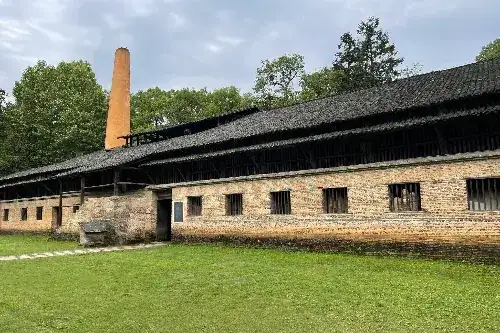
Jiangxi’s urban fabric displays a strong sense of historical layering. Taking Nanchang as an example, the street layout of the old city largely follows its Qing dynasty structure. Centered around Baihuazhou, the streets extend naturally like a web, with a human-friendly scale. In contrast, the Honggutan New District presents a completely different scene. Wide eight-lane roads, towering glass curtain-wall office buildings, and modern residential communities represent the city’s northward expansion over the past two decades and symbolize the ambition of central China’s rise. Among distinctive neighborhoods and cultural districts, Jingdezhen’s Taoxichuan Creative District stands out. Built upon the renovated structures of old factories such as the Universe Porcelain Factory, it combines red-brick workshops, sawtooth roofs, modern art installations, and ceramic studios in harmony. This transformation has injected new creative energy into the old industrial heritage, making it a cultural landmark where young people gather and take photos. In addition, Ganzhou’s old city area preserves the Song dynasty city walls, ancient pontoon bridges, and the underground drainage system known as “Fushougou,” which remains in use or is well preserved today. These features demonstrate the remarkable wisdom of an ancient city in protecting and continuing its traditional heritage.
Culinary Culture
Gan cuisine, also known as Jiangxi cuisine, is renowned in the landscape of Chinese gastronomy for its distinctive “salty, aromatic, savory, and spicy” flavor profile. Unlike the numbing spiciness of Sichuan cuisine or the fragrant spiciness of Hunan cuisine, Jiangxi’s chili flavor is more direct, mellow, and deeply savory. The formation of this flavor is closely tied to Jiangxi’s geographical environment. With its humid and hot climate, consuming spicy food is traditionally believed to help dispel dampness and stimulate the appetite. Jiangxi people commonly use fresh millet peppers and long peppers in cooking, while skillfully incorporating fermented black beans, soy sauce, and rice wine as seasonings. They emphasize preserving the original flavors of ingredients while achieving a deep integration with seasonings, creating a unique culinary style characterized by “authentic flavors, rich but not greasy textures, bold tastes, and a savory and spicy balance.”
A few classic Gan dishes are enough to portray the character of this land. At the top of the list is stir-fried Artemisia selengensis with cured pork. The main ingredient, Artemisia selengensis, is a type of aquatic plant unique to the shores of Poyang Lake, famous for its distinctive fragrance. When stir-fried together with farmhouse-smoked cured pork, the fat and savory aroma of the meat seep into the crisp and tender greens, creating a nostalgic hometown flavor deeply remembered by Jiangxi people living away from home. Another sophisticated dish is Three Cup Chicken. It is prepared by braising chicken pieces without adding water, using one cup each of rice wine, soy sauce, and lard. The result is tender meat with a rich aroma. Although this dish became widely popular in Taiwan, its origins are generally recognized as being rooted in Ningdu, Jiangxi. Steamed pork with rice flour is also an essential centerpiece of Jiangxi-style banquets. Particularly in Nanchang, freshly ground rice flour is used to coat marinated pork belly, which is then placed over taro or potatoes and steamed for a long time, resulting in tender meat and soft, glutinous rice flour that melts in the mouth. Among local snacks, Nanchang rice noodles and clay pot soup represent the soul of the city’s mornings. A bowl of smooth rice noodles mixed with chili, preserved radish, soy sauce, and sesame oil, accompanied by a bowl of meat patty soup or cuttlefish soup slowly simmered in a traditional clay pot, creates one of the simplest yet most satisfying meals for Nanchang residents. Jiujiang radish cakes, Shangrao chicken legs, and Gannan stuffed tofu are all excellent expressions of local customs and flavors.
Jiangxi’s dining traditions are equally distinctive. People here have an extraordinary passion for rice noodles, with breakfast often beginning with a bowl of noodles. Whether round varieties such as mixed rice noodles and boiled rice noodles, or flat varieties such as stir-fried rice noodles and soup rice noodles, there are countless preparation methods. At banquets, traditions such as “ten large bowls” or “four plates and eight bowls” emphasize a certain level of formality. Regardless of how the dishes evolve, a whole fish is always essential, symbolizing “surplus year after year.” Jiangxi people are often reserved and practical by nature, not always expressing emotions through words, but they pour their affection into every dish and every meal. Their hospitality at the dining table is subtle yet persistent: they repeatedly place food into your bowl with their chopsticks until it becomes piled high. This may be the warmest expression of hospitality from the Jiangxi region.
Modern and Contemporary Development
Jiangxi’s modern development trajectory has been deeply shaped by its inland geographical position. It has experienced a transformation from an inland hinterland province toward actively seeking openness and cooperation. In 1858, the signing of the Treaty of Tianjin forced Jiujiang to become a treaty port. This marked the humiliating beginning of Jiangxi’s modern opening to foreign trade. It also brought foreign concessions, customs offices, and overseas trading companies to the banks of the Yangtze River. Major commodities such as tea and porcelain were transported overseas by steamships, forcibly incorporating Jiangxi into the global trading system.
After the founding of the People’s Republic of China in 1949, Jiangxi was positioned as an agricultural province and a strategic rear area due to its location within the defensive depth of southeastern China. Limited industrial investment during this period was mainly concentrated in resource-based industries. The Pingxiang Iron and Steel industry, built upon Pingxiang coal mines; state-owned tungsten mines such as Xihuashan and Dajishan in southern Jiangxi; and the development of copper resources at Shanshan copper mine established Jiangxi’s role as a national base for raw materials and energy resources. The pattern of “Jiangxi supplying resources while coastal regions handled processing” became further entrenched during the early stages of reform and opening-up. While the Pearl River Delta and Yangtze River Delta regions rapidly rose through foreign investment and manufacturing, Jiangxi, constrained by inconvenient transportation and relatively conservative development concepts, once became a typical example of the “central region collapse,” creating the awkward phenomenon of an “economic circle surrounding Jiangxi.”
The true turning point began at the start of the 21st century. In 2001, Jiangxi proposed the strategy of “three bases and one backyard garden”: a base for undertaking industrial transfers from coastal regions, a base for supplying high-quality agricultural products, a labor export base, and a leisure destination for coastal residents. Through this strategy, Jiangxi actively integrated itself into the Yangtze River Delta, Pearl River Delta, and West Coast Economic Zone of the Taiwan Strait. The proposal and construction of the Changjiu Industrial Corridor marked the beginning of a path toward intensive industrial development centered around Nanchang and Jiujiang.
During the second decade of the new century, Jiangxi’s development strategy rose to a higher national level. The Poyang Lake Ecological Economic Zone was approved, emphasizing green development. The Gannan Soviet Area Revitalization Plan was approved with the goal of improving the living standards of more than 10 million people in southern Jiangxi. More importantly, Jiangxi’s current regional development framework has formed a clear strategy known as “one leading circle, two driving axes, and three coordinated zones.” The Greater Nanchang Metropolitan Area, centered on Nanchang, serves as the province’s core development engine. The Shanghai–Kunming and Beijing–Kowloon high-speed railway economic corridors form the cross-shaped main axes driving development. Meanwhile, the revitalization zone of former Central Soviet Areas, including Gannan and other areas, the open cooperation development zone of northeastern Jiangxi, and the transformation and upgrading development zone of western Jiangxi each focus on their own regional advantages.
Within the industrial division of labor among Jiangxi’s cities, Nanchang focuses on high-tech industries such as virtual reality, aviation manufacturing, and electronic information. Jiujiang develops petrochemicals and logistics. Ganzhou specializes in rare earth and tungsten new materials and furniture manufacturing. Jingdezhen continues to advance its ceramic and aviation industries. Shangrao develops photovoltaic and big data industry bases. The province’s 11 prefecture-level cities have gradually established industrial systems with clear divisions of labor and distinctive characteristics. Today, Jiangxi’s total economic output has exceeded 3 trillion yuan, and the province is rapidly moving from a once-marginalized region toward the forefront of China’s regional economic development.
Transportation and Getting Around
Jiangxi’s external transportation network has undergone a transformative development in recent years, evolving from a former transportation bottleneck into an important corridor connecting eastern, central, and western China. In terms of railways, the province has established a “large cross-shaped” high-speed rail hub centered on the provincial capital, Nanchang. The east–west Shanghai–Kunming High-Speed Railway runs across the province, connecting Shanghai and Kunming, allowing cities such as Shangrao, Yingtan, Nanchang, Xinyu, Yichun, and Pingxiang to quickly integrate into the Yangtze River Delta and Changsha–Zhuzhou–Xiangtan metropolitan regions. The north–south Beijing–Kowloon high-speed rail artery links Jiujiang, Nanchang, Ji’an, and Ganzhou, extending southward to Hong Kong and northward to Beijing, and serves as Jiangxi’s golden development axis. In addition, the completion and operation of railways such as the Nanchang–Jingdezhen–Huangshan High-Speed Railway and the Ganzhou–Shenzhen High-Speed Railway have further strengthened the network. The province has now basically achieved the ambitious goal of “every city connected by high-speed rail.” The expressway network is equally extensive. Under the planning framework of “four vertical routes, six horizontal routes, eight radial routes, and seventeen connecting routes,” all counties, cities, and districts within the province have been connected to the national expressway network. From Nanchang, travel time to most prefecture-level cities is within three hours.
In terms of aviation, Jiangxi has developed a “one main airport with multiple branch airports” air transportation network, centered on Nanchang Changbei International Airport and supported by regional airports such as Ganzhou Huangjin Airport, Ji’an Jinggangshan Airport, Jingdezhen Luojia Airport, and Shangrao Sanqingshan Airport. Changbei International Airport operates routes connecting major domestic cities and some international destinations, while regional airports greatly improve access to specific tourist destinations. For example, after arriving at Jinggangshan Airport, travelers can reach the revolutionary heritage sites within only half an hour by car. Water transportation is one of Jiangxi’s traditional advantages. Jiujiang Port, the province’s only first-class port open to foreign trade, is an important deep-water port in the middle reaches of the Yangtze River, where 10,000-ton vessels can dock year-round. The construction of high-grade waterways such as the Gan River and Xin River is also gradually restoring the ability of thousand-ton ships to travel from inland waterways to the sea.
Traveling within Jiangxi itself is a unique experience of space and time. One of the most captivating journeys is taking the Beijing–Kowloon or Shanghai–Kunming high-speed railway while watching the scenery transform along the way. From the layered mountains and lush navel orange orchards of southern Jiangxi, through the endless golden rice fields and rolling hills of central Jiangxi, to the misty wetlands of Poyang Lake in northern Jiangxi, the landscapes shift like scenes in a painting. This journey offers a direct understanding of why such a diverse cultural landscape developed in this region. Road trips also have their own charm, especially along rural roads in areas such as Wuyuan and Shangrao. White-walled villages with dark tiled roofs are scattered among green mountains and clear waters, and the scenery changes with every turn of the road, as if traveling through a classical Chinese landscape painting. Within Nanchang, Metro Lines 1 to 4 have formed the basic urban rail transportation network, connecting major railway stations, commercial districts, and tourist attractions, making travel highly convenient. However, to experience local life, visitors may also consider taking a non-air-conditioned bus through the old city area, listening to the straightforward and distinctive Gan dialect conversations around them and feeling the most authentic rhythm of the city.
Travel Recommendations
Jiangxi has four distinct seasons, and the best times to visit are generally spring and autumn. Spring (March to May) is the most beautiful season in Jiangxi. Especially from mid-March to mid-April, 100,000 mu of rapeseed flowers in Wuyuan bloom brilliantly across layers of terraced fields, forming a breathtaking spring landscape together with the white-walled, black-tiled Hui-style villages. However, this is also the peak tourist season, so advance planning is necessary. Autumn (September to November) brings clear skies and refreshing weather, making it the ideal season for climbing mountains and enjoying panoramic views. On Mount Lushan, plane trees and red maples turn golden and crimson; the strange peaks and rocks of Mount Sanqing appear especially magnificent under clear skies; and the Danxia landforms of Longhu Mountain display brilliant colors under the setting sun. Winter is colder, but after the first snowfall, Mount Lushan transforms into a crystal-like world with fewer visitors. If you visit Poyang Lake during this period, you can also observe hundreds of thousands of migratory birds, including white cranes and swans, making it a world-class birdwatching destination.
If summarizing the must-have experiences in Jiangxi, there are roughly five highlights. First, climb Mount Lushan and explore its cultural heritage. Lushan is not merely a scenic mountain; it is also a condensed record of modern Chinese history. Visitors can walk along the lakeside paths described by Bai Juyi near Huajing, reflect on the historical stories of Chiang Kai-shek and Soong Mei-ling in front of Meilu Villa, and experience the collision of Eastern and Western cultures among the international villa community of Guling Town. Second, immerse yourself in Jingdezhen and have a dialogue with clay. Whether or not you understand porcelain, it is worth spending a day visiting the China Ceramics Museum and the Imperial Kiln Ruins, then entering Taoxichuan’s creative market in the evening to personally experience pottery shaping or porcelain painting and feel the enduring creativity of a thousand-year-old kiln tradition. Third, cycle through Wuyuan and become part of a rural painting. Avoiding the busiest tourist spots, rent a bicycle and travel through ancient villages such as Jiangwan, Sixi, and Yancun. Watch locals washing clothes by streams and working in the fields, while rapeseed flowers, pear blossoms, and peach blossoms pass through your view one after another. This is one of the best ways to experience China’s most beautiful countryside. Fourth, travel to southern Jiangxi in search of Hakka fortified residences. Deep in Longnan County, stand in the courtyards of Guanxi Xinwei or Wushi Wei, look up at the sky, and experience the unity and resilience of Hakka ancestors who lived together as clans. There, enjoy authentic Hakka stuffed tofu and hammered fish dishes. Fifth, taste a traditional Gan-style breakfast amid the everyday atmosphere of Nanchang. Find a lively small restaurant in an old residential neighborhood, order a bowl of mixed rice noodles and a bowl of clay pot soup with meat patties cooked with longan, and begin an ordinary day in this heroic city through your taste buds.
Some practical tips can make your Jiangxi journey smoother. Jiangxi cuisine is generally spicy, so visitors who cannot tolerate spicy food should clearly request “no chili” when ordering. In some areas, even dishes described as “slightly spicy” may still feel extremely hot. Regarding transportation connections, although high-speed rail links major cities, some scenic areas (such as Wuyuan, Jinggangshan, and Yaoli) are relatively far from high-speed railway stations and public transportation services may be limited. The combination of “high-speed rail + rental car or private vehicle after arrival” is recommended for greater flexibility. Jiangxi’s dialect system is extremely complex, and communication with elderly residents in rural areas may sometimes be challenging. Learning simple gestures and maintaining patience can be very helpful. In addition, the mountainous areas of southern Jiangxi have highly changeable weather, so even during summer visits, it is advisable to bring a light jacket.
A few things to keep in mind: visitors during the Poyang Lake birdwatching season should protect wetland ecosystems and avoid wearing overly bright clothing that may disturb migratory birds. Tourist numbers in places such as Wuyuan can become extremely high during spring, so accommodation should be booked well in advance. Finally, Jiangxi is a revolutionary heritage region, and many red historical sites carry profound historical significance. Visitors should maintain respect and solemnity when visiting these locations. By traveling with an understanding of history and a sense of respect, you will gain not only the beauty of Jiangxi’s landscapes but also a rich spiritual experience beyond the scenery itself.
Travel information can change. Check current opening hours, reservations and entry requirements before you travel.
Traveller discussion
Start the conversation with a helpful tip or a question.