
Hunan
HunanCity OverviewHunan Province, abbreviated as “Xiang,” is located in central-southern China along the middle reaches of the Yangtze River. It derives its name from the fact that most of its territory lies south of Dongting Lake (“Hu” mea

Hunan
City Overview
Hunan Province, abbreviated as “Xiang,” is located in central-southern China along the middle reaches of the Yangtze River. It derives its name from the fact that most of its territory lies south of Dongting Lake (“Hu” meaning lake and “Nan” meaning south). This is a land meticulously carved by waterways and mountains, presenting the classic geographical pattern known as “seven parts mountains, one part water, and two parts farmland.”
Mountains surround Hunan to the east, south, and west, while the vast Dongting Lake Plain stretches across the north. The overall terrain is higher in the south and lower in the north, forming a horseshoe-shaped basin open toward the north. The four major rivers—the Xiang River, Zi River, Yuan River, and Li River—flow from south to north or west to east, eventually converging into Dongting Lake before joining the Yangtze River.
This intricate water system not only forms the geographical framework of Hunan but also gives the province its poetic nickname: “Three Xiangs and Four Rivers.” The province covers a total area of approximately 211,800 square kilometers and has a permanent population of around 66 million. As an important province in central China, Hunan consists administratively of 13 prefecture-level cities and one autonomous prefecture. Its capital city is Changsha, a city with a long and distinguished history.
The urban landscape of Hunan resembles a magnificent traditional Chinese landscape painting, with each city occupying its own distinctive role.
The provincial capital, Changsha, is unquestionably the political, economic, and cultural center of Hunan. Known both as an “entertainment capital” and a “city of construction machinery,” it has become a powerful engine driving the province’s development.
The provincial sub-center Yueyang guards the strategic junction where Dongting Lake meets the Yangtze River. It serves as Hunan’s gateway to river and maritime transportation, an important port city, and a major petrochemical base, with both cultural and economic significance.
Another sub-center, Hengyang, is an industrial powerhouse and transportation hub in southern Hunan. It plays an important role in receiving industrial transfers and holds significant strategic value.
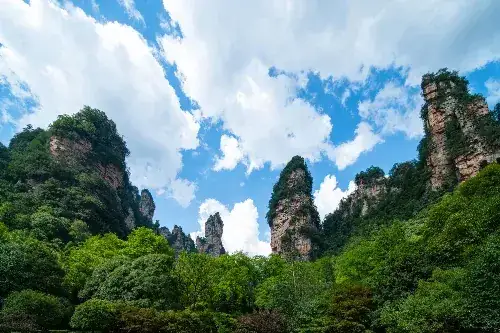
Located in the western part of the province, Zhangjiajie has become a world-famous tourism destination thanks to its unique quartz sandstone peak forest landscape, showcasing some of Hunan’s most spectacular natural scenery to visitors around the globe.
These cities serve different functions and collectively support Hunan’s economic landscape.
Historical Development
The history of Hunan is a story of transformation from a remote frontier region into a major center of Chinese civilization.
In ancient times, this area was home to southern tribal groups such as the San Miao and Bai Pu. During the Shang and Zhou dynasties, Hunan was regarded as part of the “Jing Man” territory. Although influenced by Central Plains civilization, it maintained a distinctive regional character.
The discovery of the Four-Ram Bronze Zun from Ningxiang, dating back to the Shang Dynasty, serves as a remarkable testament to the cultural fusion between northern and southern civilizations.
During the Spring and Autumn and Warring States periods, when China was divided among competing powers, most of present-day Hunan became part of the State of Chu and served as a stable rear base. Chu culture took root here, leaving a deep imprint through its romantic and imaginative artistic style.
In 278 BC, the poet Qu Yuan wandered along the Yuan and Xiang Rivers before eventually drowning himself in the Miluo River. His immortal works, including Li Sao and Nine Songs, injected Hunan’s cultural identity with a spirit of patriotism, concern for society, and relentless pursuit of truth. This legacy continues today through the annual celebration of the Dragon Boat Festival.
The Qin and Han dynasties marked a crucial turning point in Hunan’s history.
After Qin unified China, it established Changsha Commandery and Qianzhong Commandery, bringing Hunan systematically under centralized imperial administration. In the early Western Han Dynasty, Liu Bang granted Wu Rui the title of King of Changsha, establishing the Kingdom of Changsha.
The Mawangdui Han Tombs, excavated in the 1970s, were the family burial grounds of Li Cang, the Marquis of Dai and Chancellor of the Changsha Kingdom. The tombs yielded extraordinary cultural treasures, including the remarkably preserved body of Lady Xin Zhui, the famous plain gauze robe, and the T-shaped silk painting.
These discoveries provide a vivid reconstruction of the highly sophisticated and prosperous life of the Han Dynasty elite in Hunan, proving that the region was far from being merely a remote frontier in ancient times.
Afterward, Hunan entered a prolonged period of relative quiet. It was not until the Song and Yuan dynasties, when China’s economic center had fully shifted southward, that Hunan became a major agricultural region.
The saying “When Huguang has a good harvest, the whole empire is well-fed” reflected the region’s importance as a grain-producing center.
The establishment of Yuelu Academy and the famous “Joint Lectures of Zhu Xi and Zhang Shi” temporarily transformed Changsha into an important center of Neo-Confucian thought.
During the Ming and Qing dynasties, the large-scale migration movement known as “Jiangxi filling Huguang” fundamentally reshaped Hunan’s demographic structure. The bold, resilient, and enterprising spirit of these migrants became deeply embedded in the character of Hunan people.
By the modern era, this accumulated regional energy erupted dramatically. The rise of the Hunan Army, led by figures such as Zeng Guofan and Zuo Zongtang, not only helped rescue the Qing Dynasty from crisis but also established the famous saying:
“No army can be formed without Hunan.”
Through this process, Hunan moved from the margins of the empire into the center of Chinese history.
Cultural Heritage
The cultural landscape of Hunan, much like its dialects, is diverse yet distinctly defined. In a broad sense, Hunanese belongs to the Xiang branch of the Chinese language family and is commonly known as “Hunan dialect.” It can be further divided into New Xiang and Old Xiang. New Xiang, represented by the Changsha dialect, has been greatly influenced by Mandarin and serves as the mainstream dialect in urban areas. Old Xiang, centered around the dialects of Shuangfeng and Loudi, preserves more features of Classical Chinese, with complex tones and an archaic, difficult-to-understand character, earning it the nickname “the Hunan riddle.” In addition, Southwestern Mandarin is spoken in northern areas such as Yueyang, while Miao, Tujia, Dong, and other ethnic minority languages are distributed across western and eastern Hunan, together forming a vibrant linguistic museum.
In terms of folk traditions, the lives of Hunan people are filled with both ritual significance and everyday warmth. The Dragon Boat Festival is one of the most grandly celebrated occasions. Along the Miluo River, where Qu Yuan is believed to have drowned himself, dragon boat racing is not merely a sporting competition but also a ritual of remembrance that has continued for more than two thousand years. Its solemnity and intensity surpass those of many other regions. Marriage and funeral customs have been deeply influenced by Neo-Confucian traditions, featuring elaborate procedures. In some ancient villages, traditional practices such as bridal laments and night singing are still preserved today. In terms of beliefs, Hunan reflects a syncretism of Confucianism, Buddhism, and Taoism alongside various folk religions. Mount Heng in Nanyue is both a sacred site of the Tiantai school of Buddhism and one of Taoism’s famed “cave heavens and blessed lands,” with a level of religious devotion unmatched in southern China. Meanwhile, worship of local deities such as General Yang Si and the Meishan gods remains widespread in rural communities, reflecting Hunan people’s pragmatic and inclusive approach to religion.
Hunan has developed distinctive artistic traditions of its own. Among local opera forms, Xiang Opera and Huaguxi (Flower Drum Opera) are the most renowned. Xiang Opera combines high-pitched singing, Kunqu-style melodies, traditional low-register tunes, and arias into a unique theatrical form, characterized by its classical elegance. Huaguxi, on the other hand, originated from folk songs and dances, featuring lively melodies, witty language, and humorous performances. Its famous works, such as Liu Hai Chops Firewood and Beating the Copper Gong, are household names and carry the earthy charm of Hunan’s rural culture. In the field of craftsmanship, Xiang Embroidery, one of China’s four great embroidery traditions, is created by stitching silk threads onto silk fabrics. Known for its bold style and vivid colors, it is particularly celebrated for its lifelike depictions of lions and tigers using the distinctive “fluffy hair stitch” technique, regarded as a masterpiece of embroidery art. In addition, chrysanthemum stone carving from Liuyang and underglaze five-color porcelain from Liling are also treasures of Hunan’s traditional arts and crafts.
Hunan boasts an extraordinary collection of intangible cultural heritage. The grand songs of the Dong people, Miao drum dances, and Tujia hand-waving dances serve as grand narratives that express ethnic memory and collective emotion. The Jiulong Dance of Pingjiang, Changde silk-string music, Miao silver ornament forging techniques in western Hunan, and Tujia brocade weaving techniques are each a living cultural ecosystem in their own right. Together, they define Hunan’s profound cultural depth that extends far beyond its famous mountains and rivers.
Architecture and Urban Landscapes
Traditional architecture in Hunan is a direct response to its geographical environment, often described as “seven parts mountains and one part water,” and presents two distinctly different architectural patterns. In the mountainous regions of western Hunan, the most representative structures are the stilted houses of the Tujia and Miao peoples. These wooden buildings, half-suspended on hillsides or riverbanks, are supported by multiple pillars at the front while the rear sections rest against cliffs. Arranged in layers along the terrain, they not only channel the dragon's terrestrial energy but also protect residents from moisture and wild animals. In Fenghuang Ancient Town, the stilted houses lining both banks of the Tuo River create a winding skyline, representing the crystallization of wisdom from the human struggle with nature and the landscape.
By contrast, in the hills and plains of central and southern Hunan, large clan-based residential compounds known as traditional courtyard mansions are more common. Zhangguying Village is a prime example. Its architectural complex follows a “丰”-shaped layout, with interconnected courtyards and hundreds of courtyards. More than 2,000 members of the same clan lived together here, forming an inward-oriented architectural maze shaped by the traditional patriarchal system. With gray brick walls, black tiles, and towering horse-head walls, these buildings share historical connections with Huizhou architecture while displaying a stronger sense of restraint and solidity characteristic of Hunan culture.
Entering the modern era, Hunan’s architectural landscape has become a reflection of China’s social transformation. Changsha, as the provincial capital, was among the first cities to embrace Western architectural influences. The Xiangya Red Building, constructed in the early 20th century, represented one of China’s most advanced Western-style hospitals at the time and embodied an exploration of architectural integration between Chinese and Western traditions. Aiwan Pavilion on Yuelu Mountain, although originally built during the Qing Dynasty, gained new historical significance through repeated visits by Mao Zedong and other revolutionary youth, becoming a symbol of revolutionary spirit.
Contemporary urban landscapes have undergone dramatic transformation amid rapid economic development. The Meixi Lake International New City in Changsha features the Meixihu International Culture and Arts Centre, designed by Zaha Hadid. Like enormous white hibiscus flowers blooming beside the lake, its futuristic curves express the city’s new international aspirations. The “Three Museums and One Hall” complex (Museum, Library, Planning Exhibition Hall, and Concert Hall) stretches along the Liuyang River and Xiang River, with each structure possessing a distinctive form and serving as a new cultural gathering place for residents.
For the most vivid urban experience, Taiping Street in Changsha is a must-visit destination. This fishbone-shaped historic street preserves the appearance of the late Qing Dynasty and early Republican era, where landmarks such as Jia Yi’s Former Residence and Changhuai Well coexist with modern cultural creative shops and specialty cafés. In contrast, Jiefang West Road transforms after nightfall into one of China’s most energetic bar streets, with dazzling neon lights and bustling crowds. It reveals another side of Hunan people beyond their famous spirit of “enduring hardship, tolerating difficulties, and fighting tenaciously” — a side characterized by enjoyment and relaxation. Tradition and modernity, tranquility and excitement, coexist in tension-filled balance throughout Hunan’s urban landscapes.
Culinary Culture
Hunan cuisine, one of China’s eight major culinary traditions, has long transcended the boundaries of food and become a symbol of the Hunan people’s character. If one word were used to summarize the essence of Hunan cuisine, it would be “spicy.” However, the spiciness of Hunan cuisine is far from a simple burning sensation; rather, it is a richer and more layered form of aromatic spiciness. Its key ingredients are fresh red chilies, chopped chili peppers, and dried chilies. Through stir-frying in oil, they release a bold and intense fragrance, creating a flavor that is fresh, spicy, and lingering. Compared with Sichuan cuisine’s “mala” (numbing and spicy) profile, Hunan cuisine’s “xiangla” (fragrant spiciness) is more direct and pure, striking deep into the taste buds — much like the personality of Hunan people themselves: passionate, fiery, and straightforward.
Among its classic dishes, Steamed Fish Head with Chopped Chili Peppers is undoubtedly the signature representative. A large head of bighead carp is covered with layers of red and green chopped chilies and quickly steamed over high heat. The delicate freshness of the fish blends perfectly with the salty, fragrant, and spicy flavor of the chili topping. A bite of the tender fish delivers a refreshing combination of freshness, heat, and a delightfully smooth texture, making it a centerpiece dish at banquets. Another iconic dish full of everyday warmth is Stir-Fried Pork with Chili Peppers, a staple prepared in households across Hunan. Though seemingly simple, it requires great control of heat. Slices of pork belly are stir-fried until slightly crispy and fragrant, then cooked together with screw-shaped green peppers. The aroma of the meat and the fragrance of the peppers permeate each other, creating the taste of home that countless Hunan natives living away from their hometowns long for. As for the undisputed king of street snacks, it has to be Changsha Stinky Tofu. Its fascinating contrast of “smelling unpleasant but tasting delicious” attracts visitors from everywhere. The black tofu cubes are deep-fried until crispy on the outside and tender inside. After a small opening is made, they are filled with a special chili sauce, minced garlic, and cilantro. With one bite, the flavorful juices burst out, filling the mouth with layers of charred aroma, freshness, and spice — a true philosophy of street food.
Hunan’s dietary customs also bear strong regional characteristics. Due to the humid climate, chili peppers are believed to help dispel cold and dampness, making them an essential part of daily meals. Hunan people also have a deep tradition of preserving cured foods. During festivals and holidays, smoked fish and cured pork hang from the beams of many households. Slowly smoked over cold smoke, these delicacies carry the unique aromas of tea husks and pine branches. They represent not only the wisdom of food preservation but also a landscape shaped by time. At the dining table, Hunan people are known for their enthusiastic drinking culture. Unlike the heavy drinking traditions often associated with northern China, Hunan drinking customs emphasize reciprocal exchanges and the lively practice of “completing the rounds together.” This warmth, intensity, and directness in food culture perfectly reflect the regional character of Hunan — a vitality that never retreats in the face of passion and challenges.
Modern and Contemporary Development
The modern history of Hunan is a story of transformation — from an inland agricultural province striving to break through toward industrialization and modernization. During the Self-Strengthening Movement in the late 19th century, Hunan, despite its inland location, responded with remarkable sensitivity to national changes. Chen Baozhen implemented reforms in Changsha and established the Current Affairs School, while reformist figures such as Tan Sitong helped transform Hunan into one of the most dynamic provinces in China. However, the true beginning of Hunan’s industrial development emerged during the late Qing and early Republican periods, with the opening of the Canton–Hankou Railway and the development of modern mining industries, including the Xikuangshan antimony mine and the Shuikoushan lead-zinc mine.
After the founding of the People’s Republic of China, Hunan was positioned as a strategic rear area and a major base for grain and raw materials. During the planned economy era, a number of heavy industrial projects supported by the Soviet Union, including the Zhuzhou Cemented Carbide Plant and Southern Power Machinery Company, were established, laying the foundation for Hunan’s industrial system. Zhuzhou — originally a small town along the Xiang River — rapidly rose due to its railway hub status and industrial development, becoming known as a “city pulled forward by trains.” It became the birthplace of China’s first aircraft engine and first air-to-air missile. Yueyang leveraged its advantages in Yangtze River shipping to develop large-scale petrochemical industries, while Xiangtan became an important base for electrical machinery and steel production. An industrial framework centered around Changsha-Zhuzhou-Xiangtan (Chang-Zhu-Tan) gradually began to take shape.
Since the beginning of the reform and opening-up period, especially in the 21st century, Hunan has achieved remarkable development. The most internationally recognized achievement has been the rise of the “Hunan's construction machinery cluster.” In Changsha, three major companies — Sany Heavy Industry, Zoomlion, and Sunward Intelligent — emerged as global leaders, transforming the city into a world-class hub for construction machinery. Their products, including concrete machinery, cranes, and excavators, lead the global market in production and sales. During this period, the integration of the Changsha-Zhuzhou-Xiangtan urban cluster accelerated. The three cities, arranged in a “品”-shaped pattern, became closely connected and formed the core growth engine of the province. Their industrial specialization has become increasingly clear: Changsha focuses on high-end equipment manufacturing, electronic information, and cultural innovation industries; Zhuzhou strengthens its absolute advantages in rail transit equipment and aviation; while Xiangtan concentrates on intelligent equipment and automobile manufacturing.
Today, Hunan is advancing toward high-quality development under the strategic positioning of “One Belt and One Region” — serving as both a transition zone between China’s eastern coastal areas and central-western regions, and an intersection between the Yangtze River open economic belt and the coastal open economic belt. While continuing to strengthen advanced manufacturing, the province is also actively developing the digital economy and innovation-driven industries through platforms such as the Yuelu Mountain University Science and Technology City. From the “land of fish and rice,” to a “manufacturing powerhouse,” and now toward an “innovation hub,” every stage of Hunan’s development reflects its regional spirit of refusing to fall behind and daring to lead the way.
Transportation and Travel
Located at the crossroads connecting China’s eastern coastal regions with the central and western inland areas, Hunan has been a strategically important route for military campaigns and commercial travel since ancient times. Today, Hunan has developed a comprehensive, efficient, and province-wide transportation network centered around Changsha.
In terms of railways, the Beijing–Guangzhou High-Speed Railway and the Shanghai–Kunming High-Speed Railway, two of China’s national high-speed rail arteries, intersect at Changsha South Railway Station, forming a “golden cross.” This makes Changsha one of the largest high-speed rail hubs in central China. From Changsha, travelers can reach Wuhan and Guangzhou within approximately three hours, and access Shanghai, Kunming, and Beijing within about five hours. Meanwhile, conventional railway lines such as the Jiaozuo–Liuzhou Railway, Hunan–Guangxi Railway, and Chongqing–Huaihua Railway mainly serve freight transportation in central and western mountainous regions.
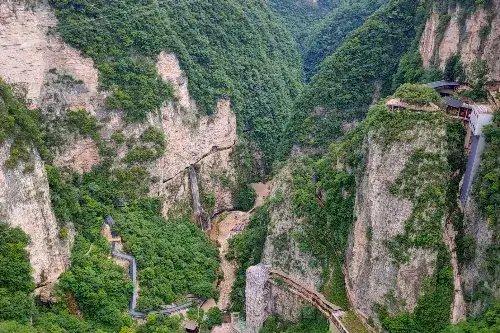
The development of the expressway network is equally impressive. The province has established a major highway framework known as the “Seven Vertical and Seven Horizontal” expressway network. The G4 Beijing–Hong Kong–Macau Expressway runs through Hunan from north to south and serves as a key connection among several national expressways. This convenient highway system has greatly shortened travel times between Changsha and major destinations such as Zhangjiajie, Fenghuang, and Hengyang. Notably, the completion of super projects such as the Aizhai Bridge in western Hunan is not only a milestone in transportation history but also a breathtaking scenic route in its own right.
In aviation, Hunan follows a “one major hub with multiple regional airports” structure. Changsha Huanghua International Airport serves as the province’s main aviation gateway and hub. With two terminals, T1 and T2, it operates international routes connecting major cities in East Asia, Southeast Asia, Europe, and other regions, making it one of the busiest airports in central China. In addition, Zhangjiajie Hehua Airport, as a key tourism-oriented regional airport, operates charter flights to countries such as South Korea and Thailand, providing an efficient gateway for international visitors entering western Hunan. Regional airports including Hengyang Nanyue Airport, Changde Taohuayuan Airport, and Huaihua Zhijiang Airport provide convenient air connections for different parts of the province.
Traveling through Hunan offers a unique experience of constantly changing landscapes. When taking a high-speed train westward from Changsha, the scenery outside the window quickly transforms from plains to hills, and eventually into magnificent mountains and deep valleys. The highways leading into the heart of western Hunan often pass through dramatic landscapes of towering bridges and long tunnels, creating a breathtaking journey. Within cities, Changsha is currently the only city in central China with more than five operational metro lines. Its subway network reaches key destinations including Changsha South Railway Station, Huanghua Airport, Yuelu Mountain, and Orange Isle, greatly improving urban mobility for travelers. From Changsha to Fenghuang, from modern cities to ancient border towns, Hunan’s three-dimensional transportation network opens a journey through nature and history with remarkable freedom.
Travel Recommendations
Hunan experiences four distinct seasons, each with its own charm, but spring and autumn are undoubtedly the best times to visit. Spring (March to May) brings blooming peach blossoms and rapeseed flowers across the landscape. The peach blossoms of Taohuayuan and the golden flower fields around Dongting Lake are particularly spectacular. With mild temperatures, this season is ideal for outdoor exploration and city walks in places such as Changsha and Yueyang.
Autumn (September to November) is the most colorful season in Hunan. The weather is cool and dry, while the red leaves of Mount Heng and the maple forests around Aiwan Pavilion on Yuelu Mountain create a paradise for photography enthusiasts. It is also the perfect time to enjoy the rich freshwater delicacies of Dongting Lake. Summers are hot and rainy, but they offer the best opportunity to experience the refreshing streams and rafting adventures of western Hunan’s mountains. Winters are cold and humid, yet when snow arrives, Fenghuang Ancient Town and Zhangjiajie transform into peaceful landscapes resembling traditional Chinese ink paintings.
When traveling in Hunan, several experiences are considered essential.
First, hike through Zhangjiajie National Forest Park and discover the world of “Avatar.” This is not simply a collection of mountains, but a maze-like landscape formed by more than 3,000 quartz sandstone pillars. When surrounded by mist and clouds, the floating mountains create a dreamlike scene — a geological wonder found nowhere else on Earth.
Second, release a river lantern along the Tuo River in Fenghuang Ancient Town. Although the town has faced criticism for commercialization, the atmosphere of the ancient border town described by writer Shen Congwen comes alive when you stroll along the river in the early morning, watch Miao women washing clothes by the water, hear the footsteps of elderly villagers carrying bamboo baskets, or release a lantern carrying your wishes into the river beneath the glow of thousands of lights at night.
Third, embark on a “wish journey” at Mount Heng in Nanyue. Whether you are passionate about hiking or interested in religious culture, the route to Zhurong Peak offers a perfect combination of natural beauty and cultural heritage. Ancient temples line the path, incense fills the air, and the mountain provides an ideal gateway into the spiritual world of Hunan’s people.
Fourth, experience the vibrant street-level city life of Changsha, which never sleeps. Visit traditional restaurants to taste Changsha specialties such as stinky tofu and sugar-oil rice cakes at Huogong Temple, enjoy a cup of Chayan Yuese tea, and then immerse yourself in the energetic atmosphere of young Changsha residents at the bars along Jiefang West Road.
Several practical tips can make your journey smoother. In terms of language, communication in Mandarin is generally effortless in major cities. However, when entering rural villages in western Hunan or speaking with elderly residents, dialect barriers may appear. A friendly smile is often the best universal language.
For food, visitors should clearly request “slightly spicy” when ordering dishes. It is often necessary to emphasize the request with stronger expressions such as “extra mild,” because what locals consider “no chili” may still be overwhelmingly spicy for visitors. Carrying digestive medicine such as Zheng Chang Wan is also a wise precaution.
Regarding transportation, do not rely too heavily on estimated travel times from map applications when traveling in mountainous areas. The winding roads of western Hunan can significantly extend driving times, so always allow extra time. Finally, respect the customs and traditions of ethnic minority communities. When entering Tujia and Miao villages, show respect toward cultural symbols such as the “grass markers” hung above doorways and follow local customs.
Bring your best appetite and an open heart for exploration. Hunan will reward you with a passionate, romantic, and unforgettable journey that stays with you for a lifetime.
Travel information can change. Check current opening hours, reservations and entry requirements before you travel.
Traveller discussion
Start the conversation with a helpful tip or a question.