
Huangshan City
黄山市
Origin of the place name: Huangshan was formerly known as Huizhou, Shezhou, and Xin'an. It is a prefecture-level city in Anhui Province, China, located in the southernmost part of Anhui Province and the upper reaches of the Xin'an River. Huangshan was originally named Yishan. In the sixth year of Tianbao (747) of the Tang Dynasty, Emperor Xuanzong…
Origin of place name:
Huangshan, formerly known as Huizhou, Shezhou, and Xin'an, is a prefecture-level city in Anhui Province, China, located in the southernmost part of Anhui Province and on the upper reaches of the Xin'an River. Huangshan was originally named Yishan. In 747, during the reign of Emperor Xuanzong of Tang, based on the legend of the Yellow Emperor (Huangdi) gathering herbs and refining elixirs here to attain enlightenment and ascend to heaven, the city was renamed Huangshan. In 1987, it was established as a prefecture-level city named after Huangshan within its territory.
Basic introduction:
Huangshan City is both ancient and young. In 221 BC, after Qin Shi Huang unified China, he established Yi and She counties, the earliest administrative divisions within the Huangshan area. During the Sui and Tang dynasties, Shezhou was established. In 1121 AD, Emperor Huizong of the Song dynasty renamed Shezhou to Huizhou, which administered six counties: Shexian, Xiuning, Yixian, Jixi, Qimen, and Wuyuan. In 1987, Huizhou Prefecture was abolished and Huangshan City was established as a prefecture-level city. It currently administers three districts (Tunxi District, Huangshan District, and Huizhou District) and four counties (Shexian, Xiuning, Yixian, and Qimen), covering a total area of 9,807 square kilometers, with a registered population of 1.474 million and a resident population of 1.323 million.
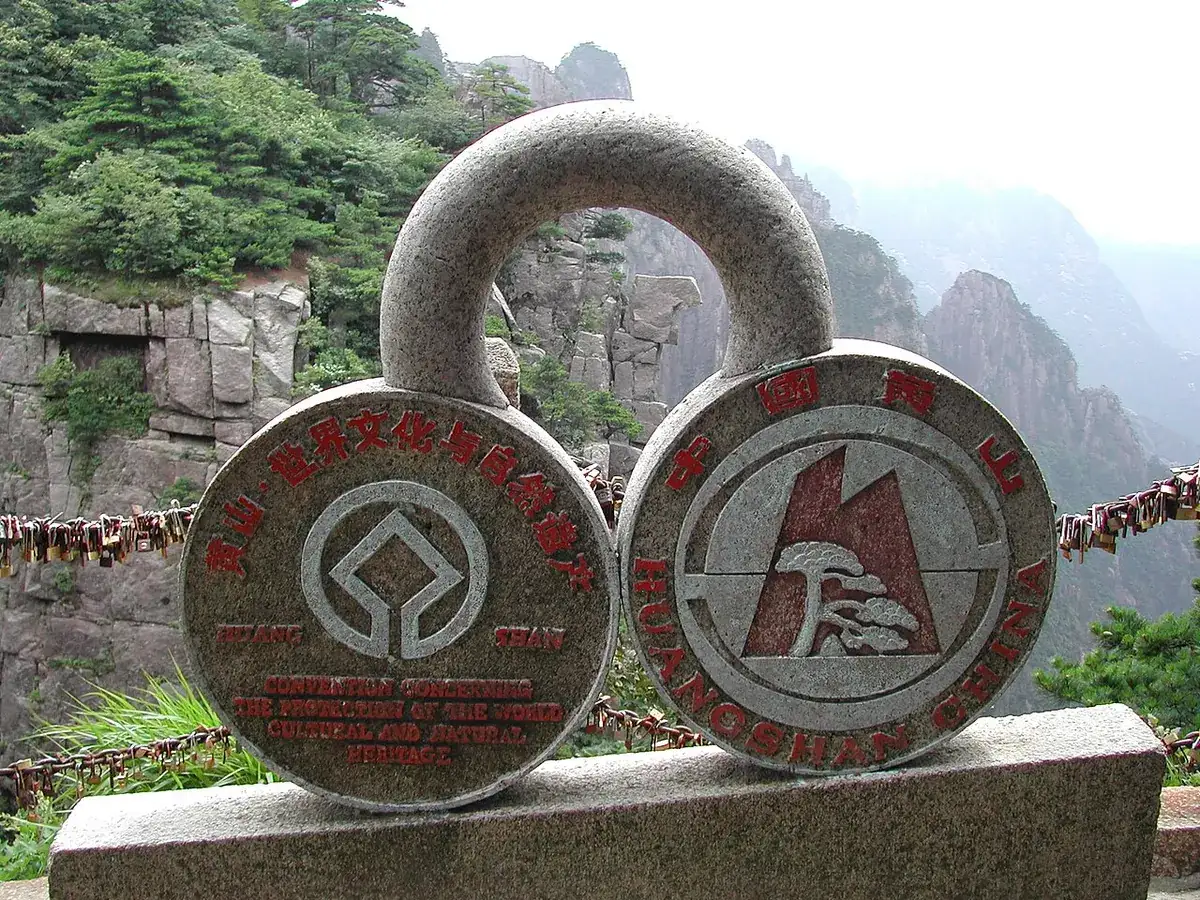
First, its mountains and rivers are beautiful. The area boasts stunning scenery, with 12 national-level key scenic spots, nature reserves, forest parks, and geological parks, and 56 scenic areas with 61 sites rated A or above, including 3 5A-level scenic areas (8 sites) and 22 4A-level scenic areas. As a representative of China's mountain scenery, Huangshan is world-renowned for its "five wonders": uniquely shaped pines, strangely shaped rocks, sea of clouds, hot springs, and winter snow.
View detailed information about Huangshan City >>
Honors Ranking:
In May 2025, it was awarded the title of "Demonstration City for the Construction of a Safe China (2021-2025)".
In July 2026, it was designated as a key tourism city in the "15th Five-Year Plan for Building a Tourism Power".
In January 2026, it ranked 66th in the overall ranking of overseas online influence of Chinese mainland cities in 2025.
In October 2025, Huangshan City was included in the first batch of high-quality outdoor sports destination construction areas for outdoor sports destinations around Huangshan Mountain.
In May 2025, the 2025 China City Charm Ranking was released, with Huangshan City ranking 168th (a fourth-tier city).
In April 2025, it was named a national model city (county) for supporting the military and giving preferential treatment to families of servicemen.
In September 2024, Huangshan City was included in the fourth batch of pilot cities for convenient living circles within 15 minutes.
In May 2024, the 2024 China City Commercial Attractiveness Ranking was released, with Huangshan City ranking 190th.
In March 2024, the second batch of model cities and counties for national fitness was announced, and Huangshan City was selected.
View more honors and rankings of Huangshan City >>
Historical background:
The origins of civilization in Huangshan City can be traced back more than 5,000 years ago.
Artifacts unearthed in Shexian County, Qimen County, and other places indicate that people lived in the area of present-day Huangshan City as early as the Paleolithic period.
In the Neolithic Age, our ancestors had already created primitive indigenous culture.
During the Spring and Autumn and Warring States periods, it first belonged to Wu, then to Yue after the fall of Wu, and finally to Chu after the fall of Yue, until Qin King Ying Zheng destroyed Chu in 223 BC.
However, these are merely territorial affiliations, not substantive jurisdiction.
At that time, it was still within the sphere of influence of the relatively independent ancient Yue indigenous people.
In 221 BC, the 26th year of Qin Shi Huang's reign, Qin unified China and implemented the prefecture-county system, which was then under the jurisdiction of Kuaiji Prefecture.
Qin Shi Huang Thirty-Seven
View detailed historical evolution of Huangshan City >>
Travel information can change. Check current opening hours, reservations and entry requirements before you travel.
Traveller discussion
Start the conversation with a helpful tip or a question.