
Hotpot Culture: How to Order and Eat Like a Local
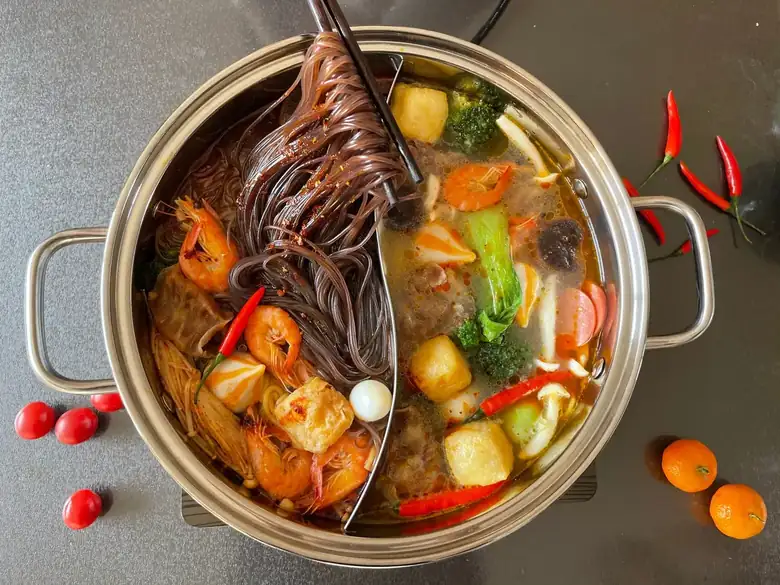
Quick Answer (30 seconds)Your hotpot starter kit: order a yuānyāng pot (yuān yāng guō — half spicy, half mild), then pick a couple of items each from meat, vegetables, mushrooms, and tofu. Dipping sauce — make it yourself at the sauce bar:
Quick Answer (30 seconds)
Your hotpot starter kit: order a yuānyāng pot (yuān yāng guō — half spicy, half mild), then pick a couple of items each from meat, vegetables, mushrooms, and tofu. Dipping sauce — make it yourself at the sauce bar: northern style is sesame paste (sesame paste + garlic + cilantro), Sichuan style is sesame oil garlic (sesame oil + garlic + oyster sauce). Cooking times matter: tripe 7 seconds, lamb rolls 30 seconds, shrimp paste floats when done. Haidilao has legendary service — free manicures, shoe shines, birthday songs, and if you go alone they'll put a plush toy across from you. Pay by scanning the QR code, ¥80-150 per person.
---
Full Guide
In China, hotpot isn't a meal — it's a social ritual. Friends gathering? Hotpot. Colleague dinner? Hotpot. Chinese New Year? Hotpot. Just broke up? Hotpot. I've been in China five years, eaten hotpot over a hundred times, and I still discover something new each time. Here's the complete guide from ordering to dipping to eating.
Broth: Yuānyāng Pot Is a Foreigner's Best Friend
- Yuānyāng pot (yuān yāng guō) — Half spicy broth, half mild, in a yin-yang split pot. A lifesaver for people who can't handle spice — the spicy side flavors the meat, the mild side cools you down and cooks the veggies.
- Red oil pot (hóng yóu guō) — All spicy, the standard for Sichuan and Chongqing locals. Outsiders proceed with caution — it will make you question your life choices.
- Clear broth/mushroom pot — Not spicy at all, with mushroom or bone broth flavor. For people who absolutely can't eat spice.
- Tomato pot — Tomato-based broth, sweet and sour, not spicy, everything tastes good in it. Great for spice-averse eaters.
- Strategy — 2-3 people: yuānyāng pot (one spicy, one mild). 4+ people: four-compartment pot (four different broths).
Ordering: Meat, Vegetables, Mushrooms, Tofu
Hotpot ordering is about balance — a little from each category:
- Meat — Fatty beef rolls (肥牛卷 - féi niú juǎn) and lamb rolls (羊肉卷 - yáng ròu juǎn) are must-orders. Thinly sliced, ready in seconds. Then there's tripe (毛肚 - máo dù, beef tripe), duck intestine (鸭肠 - yā cháng), and beef aorta (黄喉 - huáng hóu). Tripe and duck intestine are the soul of Sichuan hotpot — crispy and bouncy, though the appearance may require some mental preparation.
- Vegetables — Potato slices, lotus root slices, lettuce, baby cabbage, spinach. Cook vegetables in the mild broth — vegetables that soak up spicy broth will make you cry.
- Mushrooms — Enoki mushrooms (金针菇 - jīn zhēn gū, hotpot staple), shiitake, oyster mushrooms, king oyster mushrooms. Mushrooms need a bit more time to absorb the broth.
- Tofu products — Tofu skin (千张 - qiān zhāng), frozen tofu, dried bean curd sticks (腐竹 - fǔ zhú). They soak up the broth — delicious.
- Carbs — Wide glass noodles, hand-pulled noodles, instant noodles. Add last to soak up the broth essence.
- How much to order — 3-4 plates per person is enough, you can always add more. Hotpot restaurants usually let you return uncooked items (as long as they haven't been in the pot).
Dipping Sauce: North vs. South
Hotpot dipping sauce is an art, and north vs. south China is fiercely divided:
- Northern school (Beijing/Northeast) — Sesame paste dip: sesame paste base + garlic + cilantro + scallions + fermented bean curd + chive flower sauce. Thick and rich, perfect for meat.
- Southern school (Sichuan/Chongqing) — Sesame oil garlic dip: sesame oil + garlic + oyster sauce + cilantro + scallions. Light and oily, cools the spice.
- Chaoshan school (Guangdong) — Shacha sauce: shacha sauce + scallions + garlic, for beef hotpot.
- Beginner's universal recipe — Don't know how to mix? Look at the sauce bar — most hotpot places have recommended recipe cards. Or just go with: sesame oil + garlic + oyster sauce + cilantro. Can't go wrong.
Cooking Times: Don't Overcook
Hotpot isn't stewing — many ingredients only need seconds:
- Tripe (毛肚) — 7 seconds! Hold it with chopsticks in the boiling broth for 7-10 seconds, it curls up and it's ready. Overcooked tripe turns into rubber.
- Duck intestine (鸭肠) — About 10 seconds, until slightly curled.
- Lamb/beef rolls — About 30 seconds, done when the color changes. Thinly sliced meat cooks fast — don't overcook.
- Shrimp paste (虾滑) — Scoop into balls with a spoon, drop in, ready when it floats, about 3-5 minutes.
- Potato/lotus root slices — 3-5 minutes, until a chopstick pierces through.
- Enoki mushrooms/dried bean curd — About 3 minutes.
- Wide noodles/noodles — 5-8 minutes, until soft and translucent.
- General rule — Meat: look for color change. Vegetables: look for softening. If it floats, it's probably done. When in doubt, cook a bit longer — except for tripe and duck intestine, overcooking those just means slightly worse texture, not a disaster.
Haidilao: Service That Makes You Blush
Haidilao is China's "service ceiling" for hotpot:
- Free services — While waiting: free manicure, shoe shine, photo printing, snacks and fruit. Waiting an hour? You'll forget you're waiting because you're too busy being pampered.
- Birthday service — Tell them it's your birthday and they'll bring out an LED sign, sing happy birthday, and give you longevity noodles and a fruit plate. Delightfully embarrassing.
- Solo dining — Go alone to Haidilao and they'll place a large plush toy across from you "to keep you company." Thoughtful and slightly hilarious.
- Free refills — The sauce bar is unlimited, fruit, snacks, and sour plum drink are free.
- No service charge — No service fee! Prices are similar to regular hotpot, ¥100-150 per person.
Solo Hotpot Is Totally Fine
- Haidilao specifically serves solo diners (plush toy companion)
- Conveyor belt mini hotpot (one pot per person, bar seating): ¥40-80 per person, found in shopping malls everywhere
- Màocài (冒菜 - mào cài): A solo hotpot — pick your ingredients, the kitchen cooks and serves it to you, ¥25-40 per person
- Málàtàng (麻辣烫 - má là tàng): Similar to màocài, self-serve ingredients cooked for you, ¥20-35 per person
---
Troubleshooting
Problem 1: The Spicy Broth Is Too Much
What happens: You went full red oil pot and the first bite makes your lips numb and your eyes water.
Fix: Drink sour plum drink (酸梅汤) or milk — restaurants usually have them, more effective than water. Load up your dipping sauce with sesame oil and garlic — the sesame oil helps cool the spice. Rinse your food in the mild broth before eating to wash off the chili oil. Order a bowl of rice — a mouthful of rice helps absorb the heat. Next time, stick with yuānyāng pot.
Problem 2: Tripe Turned to Rubber
What happens: You dropped the tripe in and forgot about it. 5 minutes later, it's as chewy as a tire.
Fix: Tripe only needs 7-10 seconds — once overcooked, there's no fixing it, order a new plate. Next time, hold it with chopsticks the whole time, pull it out when it slightly curls. Duck intestine and beef aorta are the same — all fast-cook items, never leave them in the pot.
Problem 3: Bill Is Way Higher Than Expected
What happens: You thought ¥80 per person, but the bill shows ¥200 — broth fee + sauce fee + tea fee add up.
Fix: Hotpot hidden costs: broth fee (¥30-80, yuānyāng pot costs more than single broth), sauce bar fee (¥10-15/person), tea fee (¥2-5/person), tissue fee (¥1-2). Ask about broth prices before ordering, check the sauce bar pricing. Uncooked dishes can be returned if they haven't been in the pot — call the server to take them back. Check the itemized bill before paying, ask questions on the spot.
---
Last verified: August 2026 · Sources: Haidilao official mini-program, 大众点评 (Dàzhòng Diǎnpíng) hotpot categories, China Catering Industry Association hotpot industry report · Prices vary by city and brand.
Travel information can change. Check current opening hours, reservations and entry requirements before you travel.




Traveller discussion
Start the conversation with a helpful tip or a question.