
Guangdong
GuangdongCity OverviewGuangdong, abbreviated as “Yue” (粤), is located at the southernmost tip of mainland China. The Nanling Mountains form a natural barrier stretching across the north, while the vast blue waters of the South China Sea ext
Guangdong
City Overview
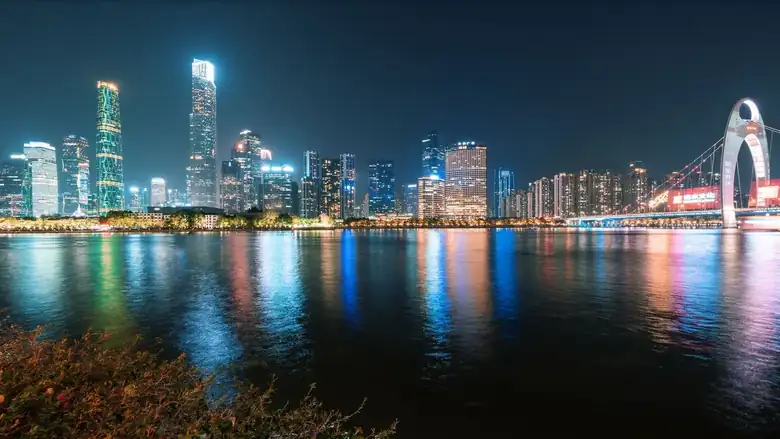
Guangdong, abbreviated as “Yue” (粤), is located at the southernmost tip of mainland China. The Nanling Mountains form a natural barrier stretching across the north, while the vast blue waters of the South China Sea extend along the south. The province covers a land area of approximately 179,800 square kilometers, with a long and winding coastline stretching over 4,100 kilometers, making it the province with the longest coastline in China. The Tropic of Cancer crosses the central part of the province, bringing abundant rainfall and warm, humid air associated with a subtropical monsoon climate. The Pearl River system flows from west to east, depositing fertile alluvial plains in the south and creating one of China’s most prosperous regions — the Pearl River Delta.
As of the end of 2022, Guangdong had a permanent resident population of approximately 127 million, making it China’s most populous province. Its population density is high, with the majority concentrated in the Pearl River Delta region. As a provincial-level administrative region, Guangdong is not only China’s largest economic powerhouse but also a frontier of reform and opening-up and a key hub in the global manufacturing landscape. Its administrative status determines its strategic role in China’s foreign openness, institutional innovation, and coordinated regional development.
The name “Yue” (粤), Guangdong’s official abbreviation, originates from the ancient term “Baiyue” (百越), referring to the ancient Yue ethnic groups. In classical Chinese, “Yue” (越) and “Yue” (粤) were interchangeable characters. More commonly, Guangdong is referred to as “Nanyue” (Southern Yue) or “Lingnan,” a name derived from the Five Ridges — Yuecheng Ridge, Dupang Ridge, Mengzhu Ridge, Qitian Ridge, and Dayu Ridge — that stretch across its northern boundary. Historically regarded by Central Plains civilizations as a remote and disease-ridden frontier, this land nonetheless developed a uniquely resilient regional culture due to its geographical isolation between mountains and sea.
When discussing Guangdong’s urban structure, one sentence captures its underlying character: Guangzhou is an ancient commercial capital, the gateway to southern China, and the province’s political and cultural center; Shenzhen, as a Special Economic Zone and a pilot demonstration area for socialism with Chinese characteristics, serves as the spearhead of technological innovation; Foshan and Dongguan form the twin stars of the “world factory,” providing a solid foundation for Pearl River Delta manufacturing; while Shantou in eastern Guangdong and Zhanjiang in western Guangdong serve as regional sub-centers, respectively driving the development of Chaoshan culture and the Leizhou Peninsula. Together with Hong Kong and Macao, these core cities constitute one of the largest urban clusters in human history — the Guangdong–Hong Kong–Macao Greater Bay Area.
Historical Development
The history of Guangdong is an epic journey from the “edge of Chinese civilization” to the “frontier of openness.”
1. Stone Age to Pre-Qin Period: The Cradle of Baiyue Civilization (approximately 130,000 years ago–214 BC)
As early as the Paleolithic Age, the “Maba Man” inhabited Guangdong. By the Neolithic Age, indigenous civilizations such as the Shixia culture had emerged across the region. During the pre-Qin period, this land was home to the Baiyue peoples, who excelled in fishing, hunting, and navigation. They developed alongside Central Plains civilizations and planted the early seeds of maritime culture through overseas exchanges.
2. Qin and Han Dynasties to Northern and Southern Dynasties: The Southern Frontier of the Empire (214 BC–581 AD)
In 214 BC, Emperor Qin Shi Huang sent troops to conquer Lingnan and established the three commanderies of Nanhai, Guilin, and Xiang. Most of present-day Guangdong belonged to Nanhai Commandery. This marked the first time Lingnan was incorporated into the administrative territory of a centralized Chinese dynasty. At the end of the Qin Dynasty, Zhao Tuo established the independent kingdom of “Nanyue,” with its capital at Panyu (present-day Guangzhou). The kingdom maintained nearly a century of peaceful development and promoted integration between the Han and Yue peoples. In 111 BC, Emperor Wu of Han conquered Nanyue, after which Panyu became one of the starting points of the Han Dynasty’s Maritime Silk Road, serving as a trading hub for ivory, rhinoceros horns, silk, and other goods.
3. Sui and Tang Dynasties to Song and Yuan Dynasties: The Peak of the Maritime Silk Road (581–1368)
During the Tang Dynasty, Prime Minister Zhang Jiuling oversaw the construction and improvement of the Dayu Ridge Meiguan Ancient Trail, greatly enhancing north–south transportation. Guangzhou became one of the world’s largest ports at the time. To manage the unprecedented prosperity of overseas trade, the Tang government established the Shibosi (Maritime Trade Office) in Guangzhou, the earliest official institution of its kind in Chinese history. By the Song and Yuan dynasties, the “Guangzhou Maritime Route” had fully developed, with merchant ships reaching as far as the Persian Gulf and East Africa. In 1279, the Battle of Yamen (Yashan) took place in Xinhui, Jiangmen, Guangdong, where the final fleet of the Southern Song Dynasty was destroyed, adding a tragic chapter to this historical period.
4. Ming and Qing Dynasties: The Golden Age of the Single-Port Trade System (1368–1840)
During the Ming Dynasty, Guangdong Province was formally established, and its regional structure largely took shape. In 1553, the Portuguese gained permission to reside in Macao, which gradually became an intermediary for cultural exchange between East and West. In 1757, during the 22nd year of the Qianlong reign of the Qing Dynasty, the Qing government closed all other ports and retained Guangzhou as the only official foreign trade port. For nearly a century, the Thirteen Factories of Guangzhou served as the empire’s sole legitimate gateway for international commerce. Global silver flowed into China, while Guangdong’s export products, including Guangcai porcelain, Canton embroidery, and export paintings, reached markets around the world. This highly centralized and exclusive trading system left Guangdong with a deep-rooted tradition of commercial contracts and business culture.
5. Modern and Contemporary Era: Revolutionary Birthplace and Pioneer of Reform and Opening-up (1840–Present)
The Opium War began in Guangdong, after which Hong Kong Island was ceded. Guangdong became the region of China most strongly affected by Western influence and one of the earliest places to “open its eyes to the world.” From Kang Youwei and Liang Qichao’s Reform Movement of 1898 to Sun Yat-sen’s leadership of the Xinhai Revolution, Guangdong consistently stood at the center of movements that transformed China’s destiny. In 1978, the call for reform and opening-up was once again sounded in Guangdong. Shenzhen, Zhuhai, and Shantou were established as the first Special Economic Zones, and the Pearl River Delta took the lead in undertaking global industrial transfers. Products and industries symbolized by “Guangdong grain, Pearl River water, Lingnan clothing, and Guangdong home appliances” quickly spread throughout China, opening one of the most remarkable chapters of China’s economic miracle.
Historical remains bearing witness to these transformations are scattered throughout the province. The Nanyue King Museum in Guangzhou houses precious artifacts such as the jade burial suit woven with silk threads. The Nanhai God Temple preserves a thousand-year-old tradition of maritime worship. The “Nanhai I” shipwreck museum in Yangjiang preserves a snapshot of Song Dynasty maritime trade. The Kaiping Diaolou and Villages stand as a historical monument to overseas Chinese perseverance and the fusion of Chinese and Western architectural styles.
Cultural Heritage
Guangdong is a cultural mosaic formed through the integration of three major regional cultures — Cantonese (Guangfu) culture, Hakka culture, and Chaoshan culture — along with various distinctive ethnic minority traditions. Its extraordinary diversity has created the remarkable vitality of Guangdong culture.
Dialects: The Three Major Dialect Groups
Cantonese, locally known as “Baak Waa” (白话), takes the Guangzhou Xiguan dialect as its standard pronunciation. It serves as the core linguistic carrier of Lingnan culture, preserving a complete system of Middle Chinese entering tones and complex vowel structures. Through the global influence of Hong Kong popular culture, Cantonese has also gained international recognition. Hakka, regarded as a “living fossil” of ancient Central Plains Chinese, spread throughout northeastern Guangdong, including Meizhou and Heyuan, as well as the mountainous areas of northern Guangdong along with the migration routes of the Hakka people. A spoken Hakka dialect itself tells half the story of their migration. Chaoshan dialect belongs to the Southern Min language family and is spoken along the coastal areas of eastern Guangdong. Its distinctive tones and elegant ancient vocabulary remain powerful symbols of Chaoshan people’s collective identity. In addition, northern Guangdong still preserves minority languages such as Yao and Zhuang.
Folk Traditions: Reverence for Heaven and Ancestors, Practicality and Respect for Rituals
Guangdong’s folk customs are vibrant and deeply rooted in daily life. During the Spring Festival, the “Flower Market Festival” attracts crowds of people, who purchase kumquat trees and peach blossoms as symbols of good fortune. In the Chaoshan region, the “Ying Laoye” (welcoming deities) processions are filled with strong religious devotion and community cohesion. The Hakka “Shang Deng” (lantern raising) ceremony lights lamps in ancestral halls to celebrate the birth of new male family members. The local belief system is complex yet practical. Temples dedicated to Mazu (Goddess of the Sea), Hongsheng, Dragon Mother, and Guanyin are found throughout urban and rural areas. People pray to Mazu before going out to sea, worship Beidi (the Water God) for flood control, and seek blessings from Dragon Mother for healing and medicine. This diverse folk belief system reflects Guangdong people’s flexibility and authenticity in responding to challenges posed by nature.
Artistic Traditions: A Complete Spectrum of Southern Elegance
Cantonese opera, also known as “Guangdong Grand Opera,” is performed in Cantonese and combines elements of Yiyang Qiang, Kunqu Opera, and local folk music. It has been recognized by UNESCO as an Intangible Cultural Heritage of Humanity. With graceful vocal styles and refined martial performances, it embodies both the elegance and everyday vitality of Guangfu culture. Guangdong music centers around the “Three-Piece Ensemble” (gaohu, yangqin, and qinqin). Its lively and bright melodies, such as High Steps and Banana Grove in the Rain, capture the charm of life in the Pearl River Delta’s water towns. The Lingnan School of Painting, founded by Gao Jianfu, Gao Qifeng, and Chen Shuren, advocated “combining Chinese and Western approaches while integrating ancient and modern traditions.” With its realistic and expressive style, it established a unique position in modern Chinese painting. Traditional crafts such as Chaozhou wood carving, Canton embroidery, Shiwan ceramic sculpture, and Duan inkstone craftsmanship push complexity and refinement to their limits. Every carving and engraving reflects Guangdong artisans’ confident expression of prosperity and their meticulous pursuit of beauty in daily life.
Intangible Cultural Heritage
Guangdong possesses an exceptionally rich collection of intangible cultural heritage. In addition to Cantonese opera, it includes Guangdong paper-cutting, Lufeng shadow puppetry, and Chaozhou iron-branch puppetry, among other examples recognized as national-level or UNESCO intangible cultural heritage. The craftsmanship of herbal tea preparation and traditional Chinese medicine culture, represented by brands such as Chen Li Ji, embody thousands of years of Lingnan wisdom in adapting to a humid and hot climate.
Architecture and Urban Landscapes
Guangdong’s architecture is a dialogue between China and the West written in bricks and tiles. It preserves local traditions of clan organization, ritual systems, and feng shui principles while boldly incorporating foreign technologies and aesthetics, creating a distinctive Lingnan architectural style.
Traditional Architecture: The Perfect Combination of Ritual and Climate
Lingnan traditional architecture demonstrates a deep understanding of how to coexist with a humid and hot climate. The most representative layout is the “three rooms and two corridors” structure: the central hall occupies the middle, two corridors connect the bedrooms, and a narrow courtyard is enclosed in the center. This design provides ventilation and natural lighting while also reflecting the traditional belief of “water from all directions returning to the hall,” symbolizing the gathering of wealth and fortune. Buildings commonly use gray bricks and stone foundations for moisture resistance. Ancestral halls serve as the center of villages and are often decorated with extraordinary luxury. Shiwan ceramic ridge decorations on roof ridges depict scenes from legends such as The Investiture of the Gods and Romance of the Three Kingdoms. Gray plaster reliefs, wood carvings, and stone carvings on walls vividly portray flowers, birds, and auspicious animals in exquisite detail.
The Chen Clan Ancestral Hall in Guangzhou represents the pinnacle of this tradition and is known as the “Pearl of Lingnan Architectural Art.” In the Chaoshan region, the “cuojiaotou” (five-element mountain-shaped gables) of traditional houses display various forms, with the five elements of metal, wood, water, fire, and earth carrying symbolic meanings. Village layouts such as “Descending Tiger” and “Hundred Phoenixes Facing the Sun” reveal a strong sense of order and symbolism. Hakka Weilong Houses and Tulou represent an entirely different architectural language. These enormous circular or semicircular residences are closed externally but open internally, with all rooms facing the central ancestral hall, embodying the ultimate expression of Hakka clan identity and defensive wisdom.
Modern Architecture: Arcade Streets and Watchtowers
After the opening of foreign trade ports in modern times, Guangdong’s architecture underwent revolutionary changes. Bamboo-tube houses and arcade buildings became dominant commercial-residential forms. Especially in Guangzhou, Shantou, and Jiangmen, continuous arcade streets created unified urban facades, with commercial corridors below providing shade from the sun and protection from rain. Roman columns, floral scroll patterns, and Baroque-style pediments were quietly incorporated into traditional Chinese spaces.
Meanwhile, in the Wuyi overseas Chinese homeland area (Jiangmen), a completely unique architectural form emerged: the diaolou (watchtower). Most Kaiping Diaolou were built in the early 20th century by overseas Chinese. They combined Western castles, ancient Roman colonnades, Byzantine domes, and Chinese architectural elements into a unique fusion. Each tower has its own character. Beyond serving defensive purposes against floods and bandits, they represented a Westernized declaration of wealth and social status. Standing alone among rice fields and ponds, they create an almost surreal rural landscape.
Urban Fabric and Distinctive Neighborhoods
Traditional cities, represented by Guangzhou, developed naturally around old waterways and commercial streets. Shenzhen, in contrast, was planned from a blank slate as a modernist city, with broad roads and skyscraper clusters forming its framework. However, this modernity is not entirely cold or impersonal. Beneath the skyscrapers of Guangzhou and Shenzhen, vibrant “urban villages” such as Guangzhou’s Shipai and Gangding continue to thrive. With extremely high population density and diverse businesses, they provide the cities with a rough yet highly efficient grassroots vitality.
Among distinctive neighborhoods, Shamian Island in Guangzhou serves as a complete showcase of European-style concession architecture. Foshan’s Lingnan Tiandi has transformed traditional Lingnan architectural clusters through urban renewal and commercial revitalization. The radial arcade streets of Shantou’s Little Park area form one of the largest surviving groups of arcade architecture in China.
Culinary Culture
(Culinary content is integrated within the Cultural Heritage section above.)
Modern Development
The modern development of Guangdong is a grand narrative of transformation from an imperial frontier trading port into a global manufacturing and innovation hub.
Opening of Ports and Foreign Exchanges
After the Opium War, Guangzhou, Shantou, Jiangmen, and other cities were successively opened as treaty ports. Guangdong was forced into the capitalist world system, but this also gave rise to some of China’s earliest modern national industries and comprador merchant groups. Guangdong merchants were among the earliest Chinese groups to venture overseas. The wave of migration known as “going south to Nanyang” created tens of millions of overseas Chinese of Guangdong origin throughout Southeast Asia and the Americas.
These overseas Chinese continuously supported their hometowns, investing in transportation infrastructure and establishing Western-style schools and hospitals, profoundly transforming Guangdong society. Famous examples include the Chaoshan Railway and Xinning Railway, among the earliest privately funded railways in China, both built with overseas Chinese investment.
Industrial Development and Urban Construction After 1949 (1949–1978)
After the founding of the People’s Republic of China, Guangdong’s location as a coastal defense frontline limited the placement of major national industrial projects. However, this also allowed the province to gradually build a foundation in light industry and local state-owned enterprises during a relatively closed period.
During this era, the China Import and Export Fair (Canton Fair) was established in Guangzhou in 1957, becoming China’s only window for international trade and external economic exchange for many years.
Transformation and Takeoff Since Reform and Opening-up (1978–2012)
In 1979, Deng Xiaoping “drew a circle on the southern coast of China,” and Shenzhen, Zhuhai, and Shantou became Special Economic Zones. Taking advantage of their proximity to Hong Kong and Macao as well as overseas Chinese capital, Guangdong pioneered the “front shop, back factory” model: Hong Kong handled orders and the Pearl River Delta handled manufacturing.
Beginning with the “three processing and one compensation trade models” — processing with supplied materials, processing with supplied samples, and assembling with supplied components — Guangdong gradually developed highly specialized world-class industrial clusters: Guangzhou became a commercial and trade center, Shenzhen focused on high technology, Foshan developed home appliances and ceramics, Dongguan specialized in electronics manufacturing, Zhongshan became known for lighting industries, and Jiangmen developed motorcycle manufacturing.
The Pearl River Delta urban cluster rapidly achieved industrialization and urbanization, with GDP increasing from RMB 18.5 billion in 1978 to more than RMB 5.7 trillion in 2012, creating China’s leading economic engine.
Current Urban Positioning and Development Direction
Today, Guangdong is striving to move toward the higher end of global industrial value chains. The development of the Guangdong–Hong Kong–Macao Greater Bay Area has become the province’s core strategic initiative in the new era, aiming to transform the “9+2” city cluster (the nine cities of Guangdong plus Hong Kong and Macao) into a world-class bay area comparable to New York Bay and San Francisco Bay.
Within the province, cities have developed clear divisions of labor:
Shenzhen is positioning itself as a global center for technological innovation, home to technology giants such as Huawei, Tencent, and DJI.
Guangzhou continues to strengthen its role as an international trade center and transportation hub while advancing next-generation information technology, artificial intelligence, and biotechnology industries.
Foshan and Dongguan have become major battlefields for advanced equipment manufacturing and intelligent manufacturing transformation, with numerous specialized and innovative enterprises emerging.
Zhuhai, Zhongshan, Huizhou, and other cities undertake key roles within industrial chains such as electronic information and new energy.
Through major infrastructure projects such as the Shenzhen–Zhongshan Link and the Guangzhou–Shenzhen–Hong Kong–Macao Technology Innovation Corridor, Guangdong is enabling the seamless movement of knowledge, capital, and talent within its metropolitan regions. The province aims to overcome bottlenecks in core technologies and transform itself from the “world factory” into a “global innovation laboratory.”
Transportation and Getting Around
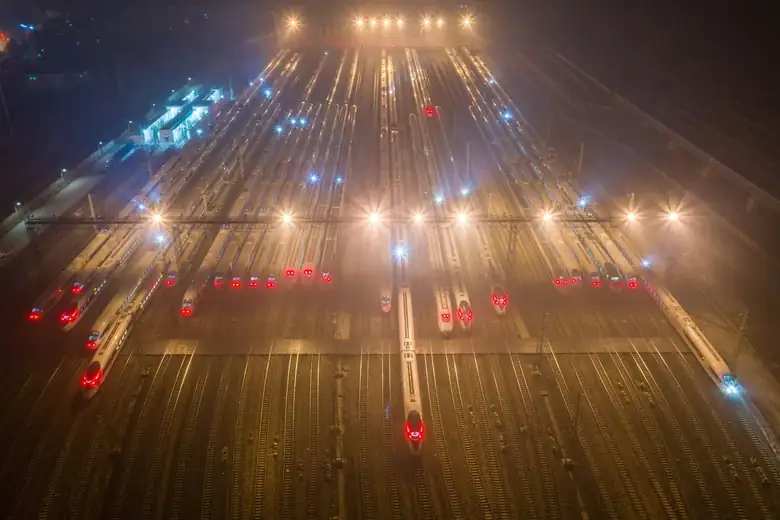
Guangdong has one of the densest and most comprehensive modern transportation networks in China. It serves not only as a logistics artery but also allows travelers to journey within a single day from skyscraper-filled modern cities to ancient villages listed as world cultural heritage sites.
External Transportation: A Comprehensive Multimodal Network
Air transportation is highly convenient. The province is home to two world-class international aviation hubs: Guangzhou Baiyun International Airport and Shenzhen Bao’an International Airport, with flight networks covering destinations worldwide. In addition, regional airports such as Zhuhai Jinwan Airport, Jieyang Chaoshan International Airport, and Zhanjiang Wuchuan Airport provide convenient air connections for eastern, western, and northern Guangdong, forming a dense aviation corridor linking the province with domestic and international destinations.
High-speed rail is the province’s key transportation advantage. Major routes including the Wuhan–Guangzhou High-Speed Railway, Guiyang–Guangzhou High-Speed Railway, Nanning–Guangzhou Railway, Xiamen–Shenzhen Railway, and Ganzhou–Shenzhen High-Speed Railway connect Guangdong closely with central China, southwest China, and the West Coast of the Taiwan Straits. Guangzhou South Railway Station is the largest high-speed rail hub in South China, ranking among the country’s busiest passenger transportation centers.
The expressway network has a total length exceeding 11,000 kilometers, ranking first nationwide for many consecutive years. National arterial expressways such as the Shenhai Expressway, Beijing–Hong Kong–Macau Expressway, and Guangkun Expressway intersect throughout the province, connecting all prefecture-level cities and making self-driving travel across Guangdong exceptionally convenient.
Urban Transportation: The Rise of an Integrated Metro City Cluster
The Pearl River Delta is developing one of the world’s largest urban metro networks. Guangzhou Metro and Shenzhen Metro each exceed 500 kilometers in operating mileage, forming dense urban rail networks.
More importantly, intercity rail transit is gradually blurring city boundaries. The Guangfo Metro Line was China’s first cross-city metro line, making Guangzhou and Foshan function like a “twin city” in everyday life. Intercity routes such as the Guangzhou–Shenzhen Intercity Railway and Guangzhou–Qingyuan Intercity Railway, together with extensions under construction such as Guangzhou Metro Line 18 toward Zhongshan and Zhuhai, are weaving the Pearl River Delta into a one-hour commuting circle.
Unique Travel Experiences
Taking high-speed rail through the heart of the Pearl River Delta offers a rare urban experience: traditional waterways and rural landscapes rapidly alternate with factories and skyscrapers outside the window, creating one of the world’s most continuous metropolitan landscapes.
In northern Guangdong, road trips take travelers through winding mountain roads, where the scenery suddenly transforms into Hakka fortified houses and Yao ethnic terraced fields. Maritime transportation adds another dimension to the journey. Travelers can board high-speed ferries from ports in Zhuhai or Shenzhen and reach Hong Kong within about an hour, turning the transition between sea and city into a memorable coastal experience.
Travel Recommendations
Planning an in-depth journey through Guangdong requires sensitivity to flavors, history, and modern urban life. The richness of this land ensures that travelers with completely different interests can all find experiences that resonate with them.
Best Travel Seasons
Guangdong has long summers and short winters. The most suitable travel season is autumn (October to December), when the weather is clear, dry, and comfortable. Guangzhou, Chaoshan, and other regions also host numerous festivals during this period, offering excellent cultural experiences.
Spring (March to April) is warm and humid, making it ideal for flower viewing, though travelers should be aware of the extremely damp “returning moisture” weather phenomenon known locally as huinantian.
Summer (May to September) is hot and affected by typhoons and heavy rainfall, but it is also the best season to experience the vibrant Lingnan waterways, lush ancient gardens, and abundant seasonal fruits such as lychees, longans, and mangoes.
Winter (January to February) is much warmer than northern China, making Guangdong a popular winter escape destination. Although the weather can feel damp and chilly, this season is perfect for enjoying hot springs in Conghua and Qingyuan, as well as experiencing Chaoshan deity procession festivals.
Five Essential Experiences
1. From Kaiping to Chikan: Exploring Diaolou and Overseas Chinese Villages
Spend a full day driving or cycling through Kaiping’s countryside and explore the hundreds of distinctive diaolou (watchtowers) in villages such as Zili Village and Majianglong. Each tower represents a “gold mountain dream” brought back home by overseas Chinese who sought success abroad. Stay overnight in Chikan Ancient Town, watch the sunset beneath arcade buildings, and enjoy traditional clay-pot rice cooked over wood fire.
2. Experience Traditional Morning Tea in Guangzhou
Choose a historic restaurant such as Guangzhou Restaurant or Panxi Restaurant. In the lively atmosphere of morning tea carts moving through the dining hall, savor crystal-clear shrimp dumplings, generously filled steamed pork dumplings, and garlic-flavored spare ribs, accompanied by a pot of chrysanthemum Pu’er tea. This is far more than a meal — it is an immersion into Guangdong’s relaxed philosophy of life.
3. A Sensory Journey Through Ancient Chaozhou City
Wander along Paifang Street in search of authentic beef offal rice noodles, then turn into narrow alleys to discover traditional handmade teapot workshops. Be sure to stand by the Han River to witness the famous “bridge opening and closing” spectacle of Guangji Bridge. After night falls, watch a Chaozhou iron-branch puppet performance, where “lights rise and theater begins.”
4. A Futuristic Exploration of Shenzhen
In this city of the future, visit the Huaqiangbei Museum to learn about the dramatic rise of “China’s No. 1 Electronics Street.” Then head to OCT Creative Culture Park or the Sea World Culture and Arts Center to experience Shenzhen’s rhythm as a design capital. For those curious about innovation, a technology tour of the Baguang International Biological Valley offers a unique glimpse into the city’s scientific ambitions.
5. Chasing Waves and Wind at Nan’ao Island or Hailing Island
A Guangdong journey can perfectly conclude beside the blue sea. In eastern Guangdong, visit Nan’ao Island, drive across the Nan’ao Bridge, follow the coastline, and enjoy the freshest seafood porridge on floating fishing platforms. Alternatively, travel to Hailing Island in western Guangdong to watch sunrise over Dajiao Bay and explore the Maritime Silk Road Museum, where the ancient “Nanhai I” shipwreck remains preserved in eternal silence.
Practical Tips and Notes
Regarding language, Mandarin is widely understood in the Pearl River Delta and major tourist cities. However, when encountering elderly residents in rural Chaoshan or Meizhou, greeting them with a simple phrase such as “食饱未” (“Have you eaten?” in Chaoshan dialect) or “恁好” (“Hello” in Hakka) can often bring the warmest smiles.
For climate, always carry an umbrella. Guangdong can experience sudden “passing showers,” and an umbrella also provides protection from strong sunlight. Cash is now rarely needed, as electronic payments such as WeChat Pay and Alipay are deeply integrated into everyday situations, from market shopping to roadside snack stalls. Carrying some small cash is still useful for occasional purchases at traditional shops or old villages.
Guangdong generally has a safe travel environment, but visitors should still take care of personal belongings at railway stations and crowded tourist areas during peak seasons. Respect local religious traditions. When visiting ancestral halls or temples, or photographing deity processions, remain quiet and avoid blocking ceremonies, entrances, or processions.
Finally, arrive with enough appetite. Every city in Guangdong has its own unique culinary universe, and within the small space of a dining table lies one of the deepest expressions of local culture.
Photo gallery
Travel information can change. Check current opening hours, reservations and entry requirements before you travel.
Traveller discussion
Start the conversation with a helpful tip or a question.