
Ganzhou City
赣州市
Origin of the place name: There are several theories about the origin of the name Ganzhou. The most popular theory is that it is the confluence of the Zhang River and the Gong River, with "Zhang" plus "Gong" forming "Gan". Another theory is that the "Gan Giant" mentioned in the "Classic of Mountains and Seas - Classic of the Seas Within" has a hum…
Origin of place name:
There are several theories about the origin of the name Ganzhou. The most popular theory is that it is the place where the Zhang River and the Gong River converge, and "Zhang" plus "Gong" equals "Gan". Another theory is that the "Gan Giant" mentioned in the "Classic of Mountains and Seas - Classic of the Seas Within" has a human face, exceptionally long arms, and a black body with thick hair, hence the name Gan.
Basic introduction:
Located in southern Jiangxi Province, on the upper reaches of the Gan River, it borders Sanming and Longyan in Fujian Province to the east, Meizhou, Shaoguan, and Huiyang in Guangdong Province to the south, Chenzhou in Hunan Province to the west, and Ji'an and Fuzhou in the north. It administers two cities, fifteen counties, and one district (Nankang City, Ruijin City, Ganxian County, Xinfeng County, Dayu County, Shangyou County, Chongyi County, Anyuan County, Longnan County, Dingnan County, Quannan County, Xingguo County, Ningdu County, Yudu County, Huichang County, Xunwu County, Shicheng County, and Zhanggong District).
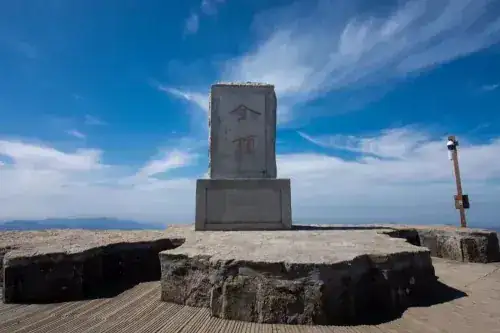
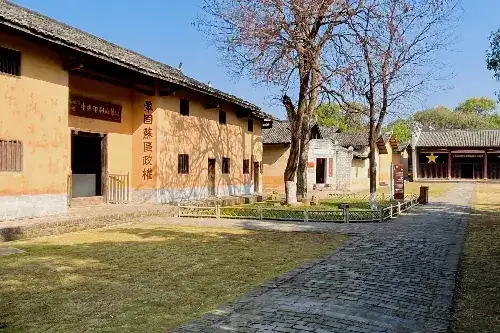
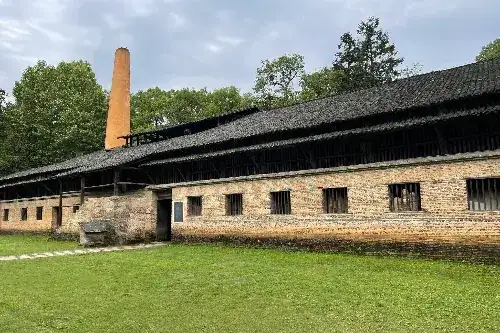
The magnificent Danxia landforms and karst landscapes of Ganzhou have created a breathtaking and enchanting natural scenery. The Cuiwei Peak, Yushiyan Rock, Meiling Mountain, Luotianyan Rock, Hanxianyan Rock, Niedu Cave, Doushui Lake, Yangling Nature Reserve (a natural park), Wudang Mountain, Jiulian Mountain Nature Reserve, and the Sanbaishan Mountains (the source of the Dongjiang River) all vie for attention, creating a truly awe-inspiring landscape. Ganzhou is a national historical and cultural city, boasting well-preserved Song Dynasty city walls, a magnificent Confucian temple, the art treasure trove of Tongtianyan Rock, the Qili Ancient Kiln Site, and the world-renowned Bajingtai and Yugutai Terraces, immersing visitors in a truly immersive experience.
View detailed information about Ganzhou City >>
Honors Ranking:
In May 2025, it was awarded the title of "Demonstration City for the Construction of a Safe China (2021-2025)".
In July 2026, it was designated as a key tourism city in the "15th Five-Year Plan for Building a Tourism Power".
In May 2026, it was selected as one of the third batch of pilot cities for new technological transformation of manufacturing.
In March 2026, it ranked 67th among China's top 100 cities.
In January 2026, it ranked 92nd in the overall ranking of overseas online communication influence of Chinese mainland cities in 2025.
In November 2025, it was selected as a pilot city for the integrated development of human resources service industry and manufacturing industry.
In October 2025, the Huanshangbao Terraced Fields Outdoor Sports Destination in Ganzhou City was included in the first batch of high-quality outdoor sports destination construction areas.
In September 2025, it ranked 71st among the top 100 smart cities in China (SMILE Index).
In September 2025, it ranked 57th on the list of the top 100 cities in the digital economy in 2025.
View more honors and rankings of Ganzhou City >>
Historical background:
During the Spring and Autumn and Warring States periods, it was successively under the jurisdiction of Baiyue, Yue, and Chu.
It belonged to Jiujiang Commandery during the Qin Dynasty.
During the Han Dynasty, it belonged to Yuzhang Commandery and Luling Commandery.
In the fifth year of the Jiahe era of the Wu Kingdom during the Three Kingdoms period (236), the Southern Commandery was established by separating Luling Commandery, and its system and jurisdiction were initially determined.
The Jin dynasty established Nankang Commandery.
In the first year of Yongchu (420) of the Southern Song Dynasty, Nankang Prefecture was renamed Nankang State. In the first year of Yongming (483) of the Southern Qi Dynasty, it was restored to Nankang Prefecture.
In the ninth year of the Kaihuang era of the Sui Dynasty (589), it was renamed Qianzhou. In the first year of the Daye era of the Sui Dynasty (605), Qianzhou was renamed Nankang Prefecture.
The Tang Dynasty established Qianzhou.
During the Five Dynasties period, it belonged to the Baisheng Army under the Liang Dynasty, and was renamed the Zhaoxin Army under the Southern Tang Dynasty.
In the early Song Dynasty, it was renamed Qianzhou again; in the first year of Chunhua (990), Nankang, Dayu, and Shang were separated from Qianzhou.
View detailed historical evolution of Ganzhou City >>
Travel information can change. Check current opening hours, reservations and entry requirements before you travel.
Traveller discussion
Start the conversation with a helpful tip or a question.