
Fuxin City
阜新市
Origin of the place name: Fuxin County was established here in 1903 (the 29th year of the Guangxu Emperor's reign). There are two interpretations of its meaning. One is "mountains and hills renewing themselves daily." The other is "abundant resources and prosperous people." This likely refers to the area's rich resources and the people's increasin…
Origin of place name:
Fuxin County was established here in 1903 (the 29th year of the Guangxu Emperor's reign). There are two interpretations of its name. One is "mountains and hills renewing themselves daily," and the other is "abundant resources and prosperous people." This likely reflects the area's rich produce and the people's increasing prosperity year by year. Fuxin City was established in 1940.
Basic introduction:
Fuxin City is located in western Liaoning Province, bordering Inner Mongolia Autonomous Region to the north, Shenyang City to the east, and Chaoyang City and Jinzhou City to the southwest. It is an emerging industrial city, a livestock and oilseed base and a key grain-producing area in Liaoning Province, and also one of China's important energy bases, known as the "City of Coal and Electricity." Fuxin's climate belongs to the North Temperate Continental Monsoon Climate Zone, with four distinct seasons, simultaneous rainfall and heat, and abundant sunshine.
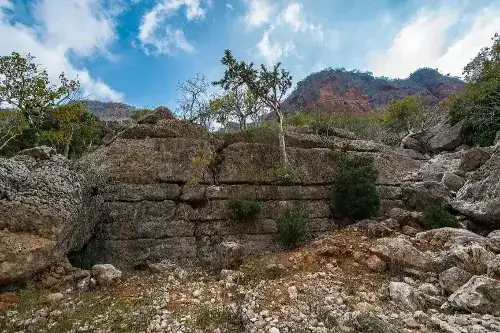
Fuxin is a city steeped in history. The discovery of the Zhaohai Paleolithic site and dragon-patterned pottery shards proves that as early as 8,000 years ago, human ancestors lived and thrived on this land. Fuxin is also the Eastern cultural center of the Gelug school of Tibetan Buddhism in China, and its temple culture and cliff carvings are considered treasures of Chinese Buddhist culture. Fuxin is located in the heart of Northeast Asia and the Bohai Rim region, bordering the Yellow Sea region.
View detailed information about Fuxin City >>
Honors Ranking:
In January 2026, it ranked 328th in the overall ranking of overseas online influence of Chinese mainland cities in 2025.
In May 2025, the 2025 China City Charm Ranking was released, with Fuxin City ranking 263rd (a fifth-tier city).
In April 2025, it was named a national model city (county) for supporting the military and giving preferential treatment to families of servicemen.
In May 2024, the 2024 China City Commercial Attractiveness Ranking was released, with Fuxin City ranking 264th.
In June 2023, six departments, including the National Health Commission, announced the list of pilot cities for integrated urban medical groups, and Fuxin City was among them.
In May 2023, Fuxin City was included in the list of cities in Liaoning Province to build waste-free cities during the 14th Five-Year Plan period.
In May 2023, Fuxin City was selected as one of the second batch of cities nationwide to be designated as National Child-Friendly Cities. Also in May 2023, 40 cities were selected for the second batch of National Child-Friendly Cities.
In April 2023, the 2023 China City Commercial Attractiveness Ranking was released, with Fuxin City ranking 252nd.
In 2022, Fuxin City's GDP totaled 57.77 billion yuan, ranking 14th among major cities in Liaoning Province.
View more honors and rankings of Fuxin City >>
Historical background:
Fuxin City has a long history. In a few dynasties, it was directly under the jurisdiction of the Central Plains dynasties, while in most dynasties it was under the jurisdiction of ethnic minority regimes and belonged to the border region.
During the Western Zhou and Eastern Zhou Spring and Autumn periods, the Shanrong and Donghu peoples were active in this area.
During the Eastern Zhou and Warring States periods, the Yan Great Wall traversed the territory. North of the Yan Great Wall still belonged to the Donghu, while the south was located between the Liaoxi and Liaodong commanderies of the Yan state.
In the second year of Qin Er Shi (208 BC), the Xiongnu defeated the Donghu, and present-day Fuxin City belonged to the left territory of the Xiongnu.
During the Western Han Dynasty, it belonged to the Inspectorate of the Han Dynasty, but was still the left territory of the Xiongnu.
In the fourth year of Emperor Wu of Han's Yuanshou reign (119 BC), after the Han Dynasty defeated the Xiongnu, the territory belonged to the Wuhuan.
During the Three Kingdoms period, the northern part of present-day Fuxin belonged to the Xian
View detailed historical evolution of Fuxin City >>
Travel information can change. Check current opening hours, reservations and entry requirements before you travel.

Traveller discussion
Start the conversation with a helpful tip or a question.