
Fujian
FujianCity OverviewFujian Province, abbreviated as “Min,” is located on the southeast coast of China, facing the Taiwan Strait and the island of Taiwan across the sea. Its topography is often described as “80% mountains, 10% water, and 10%
Fujian
City Overview
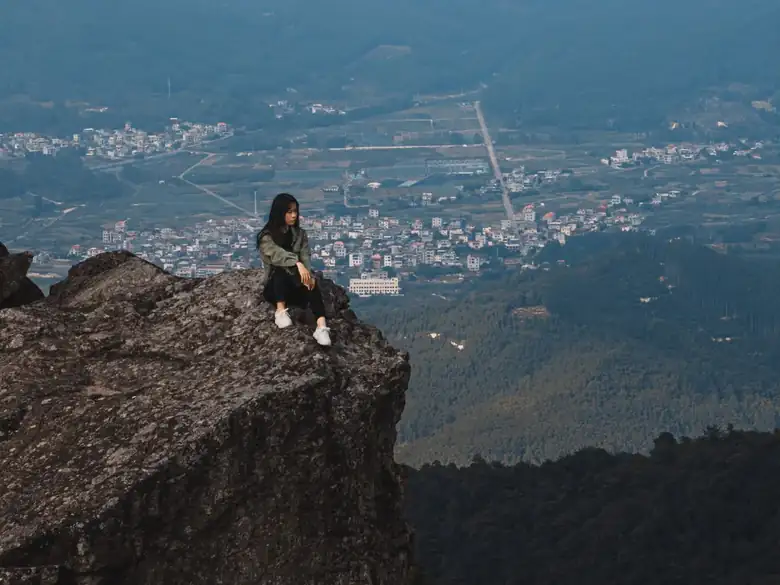
Fujian Province, abbreviated as “Min,” is located on the southeast coast of China, facing the Taiwan Strait and the island of Taiwan across the sea. Its topography is often described as “80% mountains, 10% water, and 10% farmland.” The Wuyi Mountains, along with the Jiufeng, Daiyun, and Bopingling ranges, run longitudinally across the province, forming a stepped terrain that is higher in the west and slopes eastward toward the sea. River systems such as the Min, Jiulong, and Jin cut through the mountains to create fertile valley basins, while the indented coastline produces numerous natural harbours and islands. This geographic configuration of mountains embracing the sea has profoundly shaped Fujian’s historical trajectory and cultural character—the mountains serve as barriers, preserving ancient cultural relics and distinct dialect systems; the sea serves as a passageway, fostering a pioneering maritime tradition and an open spirit.
The province has a land area of 124,000 square kilometres and a sea area of 136,000 square kilometres, with a permanent population of approximately 41.88 million. Administratively, Fujian is divided into nine prefecture‑level cities: Fuzhou, Xiamen, Quanzhou, Zhangzhou, Nanping, Sanming, Putian, Longyan, and Ningde. The capital, Fuzhou, sits at the mouth of the Min River and is the province’s political and cultural centre, where thousand‑year‑old banyan trees shade a refined urban atmosphere reminiscent of a Jiangnan-style metropolis. In southern Fujian, Xiamen emerged as a special economic zone after the reform and opening‑up, becoming Fujian’s international showcase with its garden‑city image and global port. Quanzhou, a world‑class port during the Song and Yuan dynasties, remains a powerhouse of private enterprise; its manufacturing clusters coexist with a deep cultural heritage, making it a unique city. In the north, Nanping, where the Wuyi Mountains are located, is a sanctuary of natural heritage and tea culture; in the west, the Hakka tulou (earthen buildings) in Longyan bear witness to another form of civilisation that lives in harmony with the mountains and sea. This mountain-sea divergence creates a multi‑faceted province: the coastal belt—centred on Fuzhou, Quanzhou, Xiamen, and Zhangzhou—forms the economic engine and cultural crossroads; the inland mountainous areas preserve older ecological systems and ethnic roots.
Historical Evolution
Human activity in Fujian can be traced back to the Paleolithic period. The discovery of the Wanshouyan site in Sanming pushed the history of human habitation in the province back to 180,000 years ago. In the historical era, however, this land long remained a peripheral region of Chinese dynasties. During the Warring States period, the Yue people migrated into Fujian and merged with the indigenous population to form the “Min‑Yue” ethnic group. The Qin dynasty established Minzhong Commandery, but the first substantive administrative organisation came in the Han dynasty. In 202 BCE, Emperor Gaozu of Han enfeoffed Wuzhu as King of Min‑Yue, with his capital at Yecheng (near today’s Yushan area in Fuzhou)—the first clearly dated regime in Fujian’s history. Yet the Min‑Yue kingdom was soon destroyed in Emperor Wu’s campaign to suppress vassal states, and its people were forcibly relocated to the Yangtze‑Huai region. Thereafter, Fujian sank into obscurity for centuries, becoming a mist‑shrouded land beyond the civilised sphere.
The true turning point came during the Wei‑Jin and Southern‑Northern Dynasties. In the wake of the Yongjia Rebellion in the Western Jin, aristocratic families from the Central Plains migrated southward; one branch followed the Min River into the Fuzhou plain. The saying “Eight clans entered Min during the garment‑and‑hat migration” refers to the eight great families—Lin, Chen, Huang, Zheng, and others—who brought advanced farming techniques and Confucian culture. They found the mountains rising like screens, as if “no road could be found beyond the mountains and rivers,” and finally settled in the lower Min River basin—this marked the early development of Fuzhou. In the Tang dynasty, General Chen Zheng and his son Chen Yuanguang led troops into Fujian to suppress tribal uprisings and petitioned to establish Zhangzhou Prefecture in the Zhang River basin, initiating large‑scale development of southern Fujian. In the late Tang and Five Dynasties period, Wang Shenzhi and his brothers brought settlers from Guang Prefecture and Shouzhou to establish the Min Kingdom, ensuring peace, promoting agriculture and sericulture, and giving Fujian over half a century of relative stability. Wang Shenzhi is still revered as the “Sacred King Who Opened Min.”
With accumulated immigration and development, the Song and Yuan dynasties marked Fujian’s golden age. During this period, Fujian leapt from the periphery of Chinese civilisation to the centre of global maritime trade. The port of Quanzhou had already rivalled Guangzhou by the mid‑Northern Song. In 1087, the imperial court established a maritime trade office (shibo si) in Quanzhou. The Southern Song, having retreated to the south and dependent on maritime revenue, made Quanzhou a hub connecting East Asia, Southeast Asia, the Indian Ocean, and even East Africa. Marco Polo praised Zaitun (the ancient name for Quanzhou) as one of the world’s greatest ports, where masts stood like forests, merchants gathered, and spices, gems, silk, and ceramics were distributed. This commercial prosperity fostered cultural diversity: Buddhism, Islam, Christianity, Hinduism, and Manichaeism coexisted within the same city. To this day, Quanzhou preserves historical sites such as the Qingjing Mosque and the Cao’an Manichaean temple ruins. In this period, Fujian was the heart of Asia’s maritime golden age.
Entering the Ming and Qing dynasties, the rules of the sea changed radically. The early Ming implemented strict maritime bans, forbidding even a single plank from going to sea. The once‑prosperous port of Quanzhou silted up and declined under the bans. Yet the impulse for the sea had already become ingrained in the Fujian people. Enormous survival pressure and trade demands pushed coastal residents onto the path of semi‑legal private commerce and armed maritime trade. In the 17th century, the harbour of Yuegang in Zhangzhou briefly became a centre for private maritime trade, later overshadowed by the vast maritime kingdom based in Xiamen under the Zheng family. Zheng Chenggong’s expedition to recover Taiwan was both a highlight and the swan song of Fujian’s maritime power. After the Qing unified Taiwan, although the maritime bans were briefly lifted, the centre of trade shifted to Guangzhou, and Fujian’s maritime glory gradually faded. After the Opium Wars in the mid‑19th century, Fuzhou and Xiamen were forced to open as treaty ports. Western consulates, churches, and trading houses appeared on Nantai Island and Gulangyu Island, and the sea redefined the land in a humiliating yet profound manner.
Cultural Heritage
The most immediate hallmark of Fujian’s cultural landscape is its highly complex dialect map. There is no unified “Fujian dialect,” nor can it be summarised by simple regional divisions. This land, cut off by mountains and layered with successive immigrations, has become the densest area of Chinese dialect diversity. The Min dialect is the main branch, but it subdivides into several mutually unintelligible systems: Eastern Min, spoken in Fuzhou and Ningde, with Fuzhou dialect as its representative, preserves many features of Old Chinese in its initial consonants; Southern Min, spoken in Xiamen, Quanzhou, Zhangzhou, and Taiwan, has an extremely complex literary‑colloquial reading system and is a living fossil of Tang‑Song phonology; Putian‑Xianyou dialect, spoken in Putian and Xianyou, appears as a transitional form between Eastern and Southern Min. Additionally, the Hakka dialect, spoken in western Fujian counties such as Changting and Shanghang, is the language of later southern immigrants and preserves a large amount of Central Plains ancient pronunciation from the Song‑Yuan period, forming a distinct cultural block from Min dialects. A Fuzhou native cannot understand a Quanzhou native, and a Hakka visitor to Putian feels as if in a foreign country. This “ten li, different sounds” pattern is a direct linguistic reflection of Fujian’s historical immigration layers and mountain isolation.
In the realm of belief, Fujian is described as one of the regions with the highest density of deities. Village and community life often revolves around a local tutelary deity, forming “ritual spheres” that run parallel to the administrative system. The most influential is undoubtedly the cult of Mazu. Lin Moniang on Meizhou Island was deified as the Sea Goddess, evolving from a local shamanic figure in the Song to the Heavenly Empress sanctioned by successive emperors, and spreading with Fujianese maritime and migration networks across the China Seas and globally. Mazu processions and circumambulations remain the grandest festivals in Fujian’s coastal communities, and her belief system has been inscribed on UNESCO’s Representative List of the Intangible Cultural Heritage of Humanity. In addition, the cult of Baosheng Dadi (Wu Tao) in southern Fujian, the cult of Lady Linshui (Chen Jinggu) in the Fuzhou area, and the cult of Dingguang Buddha in the Hakka regions each have large followings, forming cross‑regional pilgrimage networks.
Fujian’s traditional performing arts, nurtured in dialect environments and ritual spaces, have taken extraordinarily unique forms. Known as the “living fossil of ancient southern opera,” Puxian opera retains the performance conventions of early Chinese theatre through its distinctive puppet‑like gestures and remnants of Tang‑Song grand music. Liyuan opera, popular in Quanzhou, is renowned for its elegant “eighteen steps of stage movement,” and its classic plays like Chen San and Wuniang are household names in Southern Min‑speaking communities. Perhaps most breathtaking is Quanzhou string‑puppet theatre, with its exquisite marionette manipulation and unique “puppet tune” music—a treasure of intangible heritage. These art forms are not mere entertainment; they are closely integrated with temple fairs and life‑cycle rituals. Puppet theatre, for example, was once a ritual for communicating with spirits and exorcising evil, and it still holds an irreplaceable ritual status at deity birthdays and funerals. The mountain songs of the Hakka tulou in western Fujian, the Jin‑ge ballads of Zhangzhou, and the Nanyin music of Quanzhou together weave a multi‑voiced cultural tapestry.
Architecture and Urban Landscape
Fujian’s traditional architecture is a highly sophisticated response to natural geography and social ecology, with its most iconic creation being the Hakka tulou of western Fujian. These massive rammed‑earth structures, concentrated in Yongding (Longyan) and Nanjing (Zhangzhou), are circular or square in plan, with outer walls over 1.5 metres thick and no windows at ground level—like solid fortresses. A single tulou is a miniature walled city for an entire clan, containing wooden, ring‑shaped ancestral halls and residences for hundreds of people. Combining living quarters, defence, and ancestral worship in one form, they answered the dual needs of bandit threats in mountainous areas and clan‑based cohabitation. They are now a UNESCO World Heritage Site. Complementing them are the red‑brick traditional houses of the southern Fujian coast. In the plains of Quanzhou and Zhangzhou, traditional dwellings are built with red bricks for gables, with swallow‑tail ridges rising high in vivid, warm colours. This “palace‑style” form is linked to folk legends; the rigorous layout of official‑style mansions, organised around a central courtyard with main halls and side wings, reflects the profound understanding of family rites and spatial order among southern Fujian people.
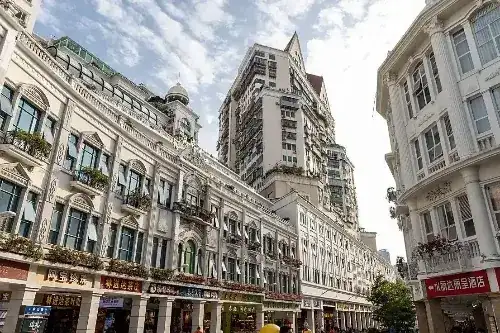
In modern times, maritime influences left their mark on Fujian’s urban landscape. The most extreme example of this Sino‑Western fusion is Gulangyu Island. This small island, separated from Xiamen by the Lujiang Channel, became an international settlement in 1902, with over a dozen countries establishing consulates there. Western missionaries, merchants, and returning overseas Chinese competed to build villas. Local Fujianese labourers and craftsmen combined Western columns, arches, and domes with local materials and techniques, incorporating Southeast Asian decorative styles brought back by overseas Chinese, ultimately creating a unique “Amoy‑style” architecture. Over a thousand historic buildings on the island form a “museum of world architecture.” In 2017, it was inscribed as a UNESCO World Heritage site under the title “Gulangyu: Historic International Settlement,” with its core value being the unique testimony to multicultural fusion. In Fuzhou’s Shangxiahang and Cangxia areas, another form of Sino‑Western hybrid remains—the chailancuo and row‑style wooden houses, recording the commercial and trade patterns of Fuzhou as a treaty port in modern times.
Modern urban development has posed continuous challenges to traditional fabric while also generating new landscapes. In Fuzhou’s downtown, three hills—Wushan, Yushan, and Pingshan—form the axis, with the White Pagoda and Black Pagoda facing each other, and ancient banyan trees dotting the lanes; the pattern of “three hills, two pagodas, and one river” is still preserved. Meanwhile, the modern skyscrapers of the North Bank of the Min River Central Business District have reshaped the city skyline. Quanzhou’s ancient city has the most intact fabric, with its grid‑like lanes centred on West Street and Kaiyuan Temple, remaining essentially unchanged for a millennium. Red‑brick houses, stone‑paved alleys, and ornamental water‑spouts on the sides create a persistent urban atmosphere. Xiamen has taken a more radical path: its modern urban area extends around Yundang Lake and the island‑ring road, cultivating a garden‑city aesthetic, yet its spirit remains inseparable from the historical memory of Gulangyu and Zhongshan Road. This landscape structure of tradition alongside modernity, and stark differences between inland mountains and coastal cities, is the dual outcome of Fujian’s natural and historical forces.
Culinary Culture
Fujian cuisine (Min cuisine) is one of China’s Eight Great Culinary Traditions. Its overall characteristics are a mastery of soups, an emphasis on heat control, and a pursuit of flavours that are fresh, mellow, aromatic, and not greasy. This style relies on the rich produce from the province’s mountains and seas: bamboo shoots, mushrooms, and muntjac from the hills; fish, shrimp, and clams from the coast; and rice, fruits, and vegetables from the plains, available all year round. The soul of a dish often lies not in strong seasoning but in a carefully prepared stock. Min chefs believe “no soup, no feast”; vegetarian stocks from dried mushrooms and scallops, and meat stocks from old hens, pork bones, and Jinhua ham form the foundation of dishes. Another technical hallmark is the extreme pursuit of precise knife work and heat control, especially in stir‑frying and steaming, where the natural flavour of ingredients is extracted and preserved to the fullest.
The crowning achievement of Fujian cuisine is first and foremost Buddha Jumps Over the Wall. This legendary dish, originating from the Juchunyuan restaurant in Fuzhou, combines dozens of precious ingredients—abalone, sea cucumber, shark fin, dried scallops, pigeon eggs, and mushrooms—in a single clay pot, seasoned with aged wine and bone broth, sealed and simmered slowly for hours. When opened, the aroma is so enticing that even a meditating monk is said to leap over the wall to taste it, hence the name. It represents the highest level of Fujian cuisine in terms of meticulous ingredients, complex preparation, and exquisite heat control. In the ordinary alleys, however, Fuzhou fish balls are the true soul of the streets. Made from minced eel, shark, or mackerel as the skin, wrapped around a pork filling, they bounce like ping‑pong balls when cooked, and with each bite the juice bursts out—a taste of nostalgia for Fuzhou locals. In the small inland city of Shaxian, its bianrou (wontons) and mixed noodles (banmian) pairing, with standardised and low‑cost operations, have spread across China, becoming one of the most successful mass‑market snack chains in contemporary China. Also, southern Fujian’s oyster omelette, made with fresh oysters and sweet potato starch, fried on a griddle until crispy outside and tender inside, served with sweet chilli sauce, is a concentrated taste of coastal life and produce.
Eating habits and patterns also reveal regional character. Fujian people have a tradition of “morning tea,” but unlike Guangdong, the “tea table” in southern Fujian is more like a street social ritual—a pot of Tieguanyin or Wuyi rock tea, accompanied by a few pastries and suanrongzhi (garlic-flavoured twisted dough sticks), can while away a morning. Tea houses scattered across towns and cities form the network of public life. At regular meals, coastal residents are inseparable from seafood, insisting on “fresh” to the extreme, especially favouring steaming and blanching to preserve the natural taste. Inland Hakka cuisine presents a different picture: due to mountain labour needs, dishes are oilier, saltier, and fattier to replenish energy. Classics like meicai kourou (steamed pork with preserved mustard greens), salt‑baked chicken, and stuffed tofu reflect food preservation wisdom and the pragmatic character of a migratory people. Within one province, mountain and sea flavours are distinct yet borrow from each other; culinary character mirrors regional spirit.
Modern Development
Fujian’s modernisation was framed by two wars. The Treaty of Nanjing in 1842 opened Fuzhou and Xiamen as treaty ports. Fuzhou’s Nantai Island became a tea‑trading centre; Wuyi black tea was shipped down the Min River to Mawei and then to Europe, creating a brief boom of “Fujian tea supplying half the world.” In 1866, Zuo Zongtang established the Fuzhou Shipyard at Mawei, which became the cradle of China’s modern navy and its first modern shipyard. Only a decade later, in 1884, the Sino‑French Fuzhou Naval Battle erupted in these waters, and the Fujian Fleet was almost entirely annihilated—a painful symbol of the failure of the Self‑Strengthening Movement. At the same time, Gulangyu in Xiamen, under the influence of missionaries and overseas Chinese capital, developed modern education, healthcare, newspapers, and municipal administration, becoming one of the first fronts of China’s exposure to modern civilisation, though deeply entangled with a semi‑colonial political order.
In the thirty years after 1949, Fujian’s fate was completely reversed by Cold War geopolitics. Being on the “front line” facing Taiwan, the province was designated as a national defence outpost, and almost no major national industrial projects were located there. The Yingtan‑Xiamen railway, built as a strategic line through the Wuyi Mountains, was the only significant infrastructure of that period. The economy remained at the level of agriculture and limited light industry, and the commercial functions of Xiamen port stagnated. This situation only broke after reform and opening‑up. In 1979, the central government granted Fujian special policies and flexible measures in foreign economic activities; in 1980, the Xiamen Special Economic Zone was established, one of the first four in the country. Initially, large amounts of investment from Hong Kong, Macao, Taiwan, and overseas Chinese flowed into the coastal areas, and light industry and export processing grew rapidly in Jinjiang, Shishi, Mawei (Fuzhou), etc. The famous “Jinjiang model” was characterised by rural industrialisation and vigorous growth of township enterprises, alongside the “Sunan model.”
Contemporary Fujian’s development has formed a distinct pattern dominated by coastal city clusters with internal division of labour. The southern Min delta—Quanzhou, Xiamen, and Zhangzhou—constitutes the province’s economic engine. Quanzhou, with its extremely active private economy, has huge industrial clusters in textiles, footwear, petrochemicals, building materials, and home furnishings, nurturing brands such as Anta, Heng’an, and JOMOO. Xiamen, as a separate planning city and SEZ, focuses on high‑end services such as shipping logistics, financial services, IT, and tourism and conventions, making it a regional headquarters economy hub. Fuzhou, extending to Putian and Ningde along the Min River estuary, has witnessed the rapid rise of heavy and chemical industries, electronics, and new‑energy vehicles—Ningde CATL is a world‑class enterprise born in this region. Inland cities—Nanping, Sanming, and Longyan—adopt a green‑oriented path, undertaking some industrial relocation from the coast, while specialising in forest‑product processing, specialised vehicle manufacturing, rare earths and non‑ferrous metals, and health tourism. Regional coordination strategies are trying to push coastal manufacturing inland, forming a mountain‑sea cooperative industrial chain.
Transportation and Travel
Fujian’s transport infrastructure is essentially a sustained struggle against the topography of “80% mountains, 10% water, and 10% farmland.” For centuries, the Wuyi Mountains and the interior’s high ranges blocked access to the outside world; from ancient times it was said that “the road to Fujian is harder than the road to Shu.” It was not until the Yingtan‑Xiamen railway opened in the 1950s that this pattern changed. The true transport revolution came during the high‑speed rail construction of the 21st century. The Hefei‑Fuzhou high‑speed railway connected Fuzhou and Nanping to the national network, creating a fast corridor between the west side of the Taiwan Strait and North and East China. The coastal Wenzhou‑Fuzhou, Fuzhou‑Xiamen, and Xiamen‑Shenzhen railways form a busy passenger trunk line, linking the coastal city cluster of Ningde, Fuzhou, Putian, Quanzhou, Xiamen, and Zhangzhou; the Fuzhou‑Xiamen trip now takes just about an hour. Currently, the new dedicated Fuzhou‑Xiamen high‑speed railway operates at 350 km/h, further compressing commute times within the metropolitan area. On the expressway front, the “three vertical, eight horizontal” network has connected all county seats, making even the remotest Wuyi mountain areas and western Fujian tulou easily accessible.
The province’s internal transport pattern shows a distinct centripetal fan shape, with the core hub being the capital Fuzhou. Fuzhou Changle International Airport is a major regional trunk airport, with many domestic and international routes, linked to the city centre by metro and airport express. Xiamen Gaoqi International Airport is equally important, and the new Xiang’an International Airport will further strengthen its aviation hub status. The two hubs are connected by high‑capacity railways and highways. Quanzhou Jinjiang International Airport focuses on domestic trunk routes and Southeast Asian services. Additionally, Wuyishan, Sanming Shaxian, and other places have regional airports serving tourism and local travel. In water transport, Xiamen Cruise Home Port offers a unique arrival experience: sailing slowly into Xiamen Bay on an international cruise ship provides a superb perspective of Fujian as a maritime province.
Travel within Fujian is a continuous experience of passing through mountains, sea, and cities. On the Hefei‑Fuzhou high‑speed railway, the windows frame continuous green mountains and canyons in northern Fujian, a scenic journey from Wuyi all the way to Fuzhou. Driving along the Shenyang‑Haikou expressway follows the coastline, with mountains on one side and the sea on the other, crossing countless sea bridges, giving an intuitive sense of Fujian’s mountain‑sea geography. In Xiamen, ferrying between the island and Gulangyu offers views of Xiamen’s skyline from the sea, itself part of the city’s sightseeing. In the western mountains exploring the tulou, the winding roads between valleys and tunnels will deepen your understanding of why ancestors chose to settle here as clans in these places. From high‑speed railways to mountain roads, Fujian’s transport networks each depict different dimensions of this land.
Travel Tips
The best travel seasons in Fujian are spring and autumn. From March to May, the weather is mild, coastal humidity is moderate, and the tea gardens in the interior enter their harvest season. From September to November, skies are clear and typhoons have largely passed, making it ideal for exploring tulou, ancient towns, and city streets. Summer (June to August) is hot and humid, with frequent typhoons that can disrupt coastal and mountain itineraries, but it is also peak season for experiencing island charm and escaping to the Wuyi Mountains. Winter is relatively chilly and damp, with possible freezing in the northern mountains, but tourist numbers are low, offering a quieter experience. If you come specifically for the tulou, winter brings a strong festive atmosphere in Hakka villages, with preserved meats, rice cakes, and family gatherings that are highly evocative.
Here are three classic routes, each with a distinct focus. The first is the Southern Min Cultural Corridor: start in Xiamen, take the ferry to Gulangyu and spend half a day or a full day strolling through the lanes of the historic international settlement; then cross via the Haicang Bridge or by road to Quanzhou, explore Kaiyuan Temple and Qingjing Temple along Tumen Street and West Street, and in the evening watch the sunset at the mouth of the Jin River. This route allows you to experience the collision of Chinese and Western cultures and the maritime character of southern Min. The second is Tulou and Hakka Secrets: travel west from Xiamen to Shuyang Town in Nanjing County, Fujian, or south from Longyan to Yongding, and choose one or two tulou clusters (such as Tianluokeng or Chengqi Lou) to stay overnight. The next morning, watch these massive rammed‑earth buildings awaken from the mist—with roosters crowing, dogs barking, and cooking smoke rising. The point is not to see the buildings but to understand a way of life based on clan cohabitation. The third is Twin World Heritage – Landscape and Tea Culture: head to Wuyi Mountain, where a bamboo raft ride on the Nine‑Bend Stream is the core experience. Then hike to Tianyou Peak for panoramic views, and in the afternoon visit the rock‑tea producing areas, walk in the “Three Creeks and Two Ravines,” and stop at a tea factory to taste authentic Dahongpao—blending the natural and tea‑cultural heritage into one experience.
Practical tips should not be overlooked. Mandarin is spoken throughout Fujian, but in remote villages and markets, the sounds of Min or Hakka dialects can make you feel as if you’ve entered a different country—a smile and gestures work fine. In food, northern Fujian leans spicy, southern Fujian tends toward sweet and fresh; seafood, satay sauce, and red lees are flavour keywords. When visiting tulou or ancient villages, wear easily removable shoes, as many traditional buildings require removing footwear before entering. Mobile coverage is comprehensive, and WeChat Pay and Alipay are widely used in urban areas. If you want to watch puppet theatre or Nanyin, check performance schedules on the official WeChat accounts of Quanzhou theatres in advance; they often stage only two or three shows a week. The most crucial tip: slow down. The essence of Fujian is not ticking off sights, but sitting idly under a banyan tree at a tea stall, listening to elders tell stories in the courtyard of a red‑brick house, or watching fishing boats return at dawn in a fishing port. This is not a place for check‑ins; it is a province to live in and feel.
Travel information can change. Check current opening hours, reservations and entry requirements before you travel.
Traveller discussion
Start the conversation with a helpful tip or a question.