
The Forbidden City
HomeChina GuideBeijing The Forbidden City With a long history of over 600 years, the Forbidden City (故宫 Gugong in Chinese) was the home of Chinese last 24 emperors during the Ming and Qing dynasties. It is internationally recognized as the
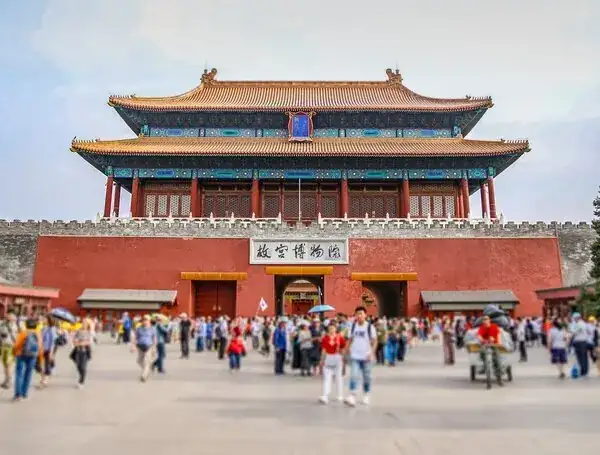
The Forbidden City
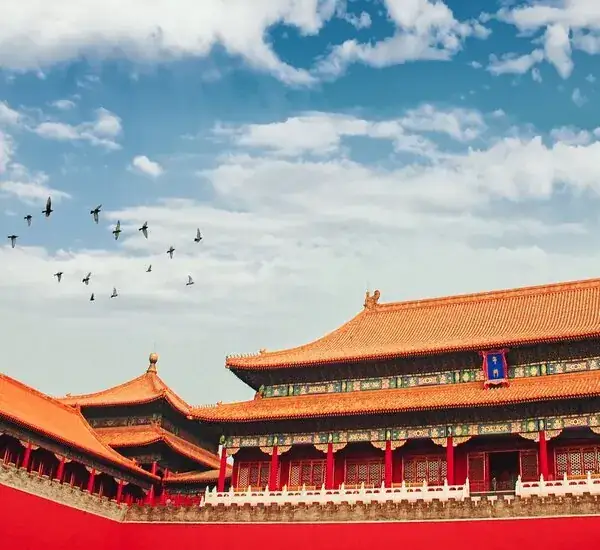
With a long history of over 600 years, the Forbidden City (故宫 Gugong in Chinese) was the home of Chinese last 24 emperors during the Ming and Qing dynasties. It is internationally recognized as the top one of the top five ancient palatial complexes in the world.
The other four are the Palace of Versailles in France, Buckingham Palace in the UK, the White House in the US, and the Kremlin in Russia. The Forbidden City represents some of the greatest technical and artistic achievements in China.
It was listed by UNESCO as a “World Cultural Heritage” in 1987. With its treasures and secrets, it has for centuries attracted an endless stream of admirers.
- History: over 600 years
- Recommended visiting time: one day
- Suitable for: everyone
- Features: symmetry in architecture, the essence of classical Chinese architecture, and numerous imperial treasures
A Place Forbidden to Common People
Over the centuries, the Forbidden City has been home to 24 emperors and their households.
Citizens were not allowed to enter the palace without permission, hence the name “Forbidden City”. Residents of the palace also could not simply leave at will. After arrival, many of the emperors’ wives and servants never again stepped outside the palace grounds.
The Chinese name of the palace is full of mystery. Zijin Cheng (紫禁城), literally means "Purple Forbidden City", though the "purple" [zi] here does not really refer to the color (all things imperial are more commonly associated with the color yellow) but to the name for the North Star, Polaris.
This "pole star" is the brightest star in the constellation of Ursa Minor ("the Lesser Bear") and is the abode of the Celestial Emperor in Chinese Astro-mythology.
History of the Forbidden Palace
It took 14 years (from 1406 to 1420) to build the Forbidden City. In the history of more than 600 years since its construction, this complex has experienced several ups and downs, including but not limited to the three great fires and reconstructions in the Ming dynasty, the destruction of war in the late Qing dynasty, the protection of cultural relics in the Republic of China, and the development of modern museums… more about history
The Layout of the Forbidden City
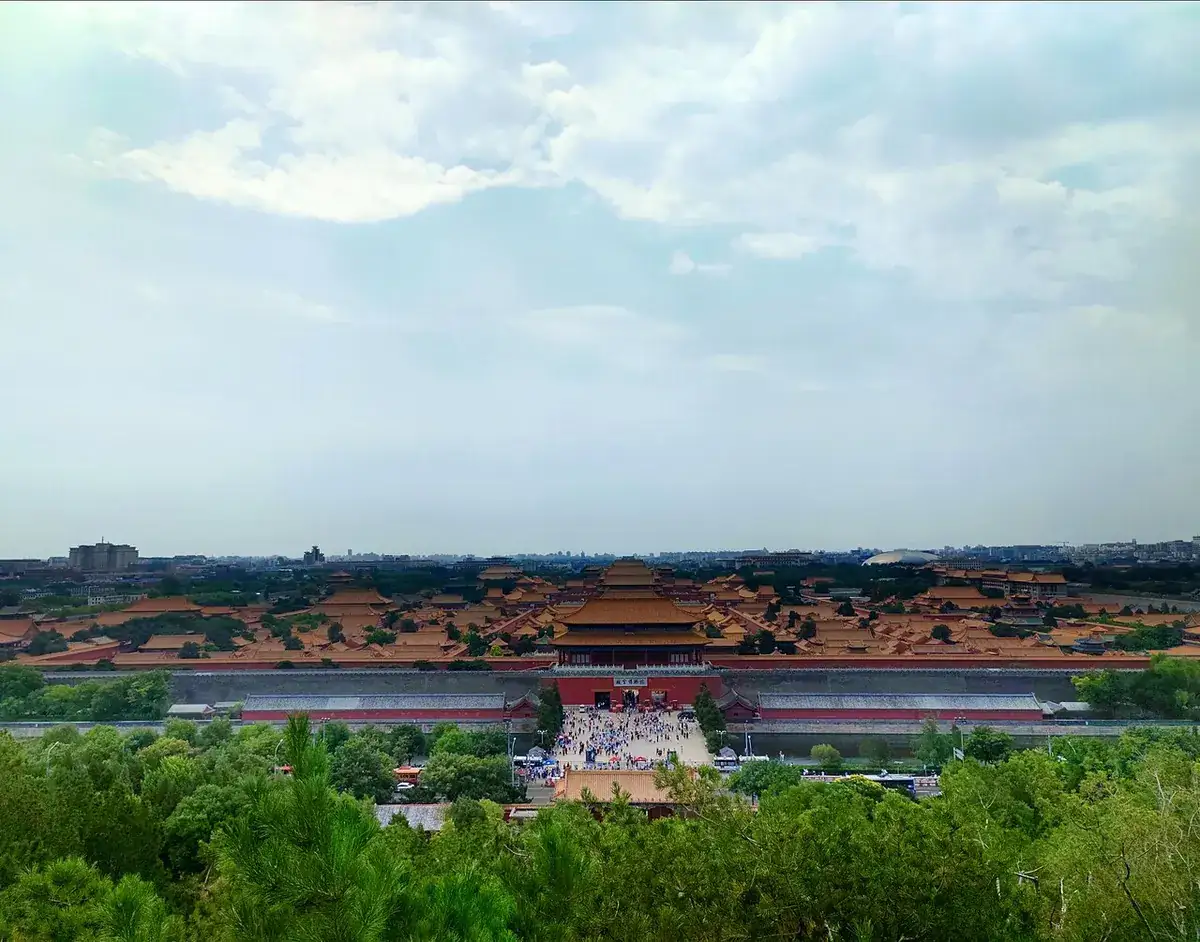
The Forbidden City is approximately 960 meters long from north to south, and 750 meters wide from east to west, and has an area of over 720,000 ㎡ (about 180 acres), with more than 8,000 rooms.
It is surrounded by a 10-meter-high, 3,400-meter-long city wall and a 52-meter-wide moat outside the wall, forming a strongly fortified rectangular castle.
With a gate at each side – east, west, south, and north – the city consists of two parts: the Outer Court (the southern section) and the Inner Palace (the northern section).
Outer Court
The Outer Court (外朝, 前朝) is the place where the emperor handled political affairs. It includes three main halls: Tai He Dian (the “Hall of Supreme Harmony”), Zhong He Dian (the “Hall of Middle Harmony”), and Bao He Dian (the “Hall of Preserving Harmony”).
These three halls, at the front or entrance of the palace complex, served as venues for official ceremonies, each ceremony to be observed in the hall most befitting its significance.
- The Hall of Supreme Harmony was the tallest and most splendid, appropriate when emperors were ascending the throne, and for weddings, etc.
- The Hall of Middle Harmony was where the emperor took a rest and received pilgrims, before attending grand ceremonies.
- The Hall of Preserving Harmony was where the emperor gave feasts and where the highest imperial examinations were convened.
Lesser auxiliary halls were situated adjacent to each of these three main halls.
Inner Palace
The architecture in the Outer Court symbolizes the supremacy of the emperor, while most of the buildings in the Inner Palace (内廷, 后宫) retain instead the flavor of the emperor’s family life.
Behind the outer court, the Inner Palace centers on three main structures: the Qian Qing Gong (or “Palace of Heavenly Purity”), Jiao Tai Dian (or “Palace of Union and Peace”), and Kun Ning Gong (or “Palace of Earthly Tranquility”).
In addition, the Inner Palace comprises numerous “everyday buildings” where the emperor conducted his daily business affairs and where the emperor and his large, extended family lived more or less in private, except for the presence of servants.
These include the 6 east-wing palaces and the 6 west-wing palaces, which – apart from rooms that were reserved for work – included rooms that served as living quarters for the imperial family: the emperor, empresses, and concubines.
Read Highlights of the Forbidden City to know the essence of classical Chinese architecture.
Quick Forbidden City Travel Tips
1. Ticket Price: (extra fees to the Hall of Clocks and the Treasure Gallery are CNY 10 each)
- High season (April 1 to October 31): CNY 60
- Low season (November 1 to March 31): CNY 40
2. Opening hours:
- High season: 8:30-17:00, ticketing stops at 16:00
- Low season: 8:30-16:30, ticketing stops at 15:30
3. Transportation:
- A. Tiananmen East Station: Bus nos. 1, 2, 52, 59, 82, 99, 120, Tourist Line 1, or Tourist Line 2
- B. Tiananmen West Station: Bus nos. 1, 5, 52, 99, Tourist Line 1, or Tourist Line 2
- C. Subway Line 1: get off at Tiananmen East Station (Exit A) or Tiananmen West Station (Exit B)
Please note:
- Entry is allowed only through the Meridian Gate (Wu men), while the exit is allowed only through the Gate of Divine Prowess (Shenwu men) behind the Imperial Garden, or the Gate of Eastern Brilliance (Donghua men).
- To visit the Forbidden City, please register on the Beijing Health Kit and get a Beijing Health Code in advance.
- To visit the Forbidden City, please offer a negative PCR test result within 72 hours.
Popular Forbidden City Trips
Want to find out more about the history of China? Go to Beijing. Want to know more about Beijing? Don’t miss the Forbidden City!
Join our popular tours to discover the deep secrets of the emperors.
- Half-Day Trip to the Forbidden City & Treasure Museum (Bus Tour)
- 1-Day Trip to the Forbidden City, Temple of Heaven (Private Tour)
- 4-Day Beijing Classic Tour (Private Tour)
More Articles about The Forbidden City
- History of the Forbidden City
- Highlights of the Forbidden City
- How to Visit the Forbidden City
- The architecture of the Forbidden City
- Top Movies about the Forbidden City
- How the Forbidden City was Restored and Renovated
- Top Souvenirs to Buy in the Forbidden City
Travel information can change. Check current opening hours, reservations and entry requirements before you travel.
Traveller discussion
Start the conversation with a helpful tip or a question.