
[Suzhou Self-Guided Tour] A comprehensive Suzhou travel itinerary guide, including transportation, accommodation, attractions, and food.
Twenty years ago, I took a business trip to Suzhou. Although I only stayed for less than 24 hours, I had a wonderful impression of the city. I thought to myself then and there that I must revisit Suzhou someday. But time flies so fast; twenty years have passed in the blink of an eye. If I don't go now, I'll probably be too old! I've prepared a tra…
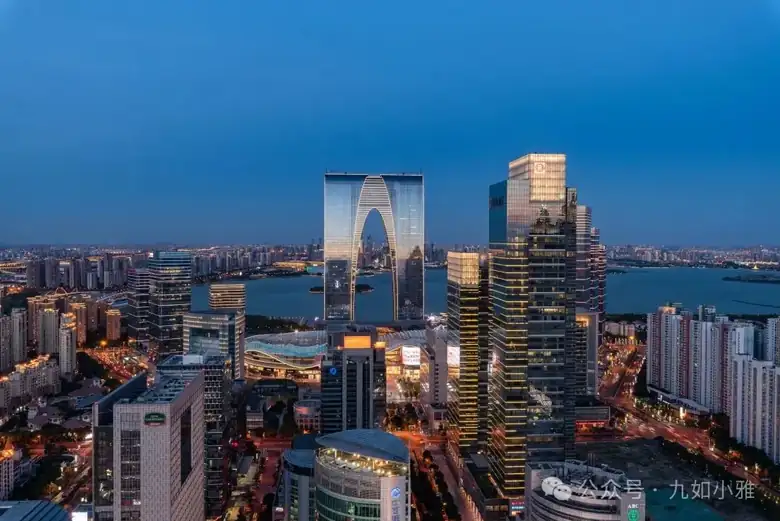
Twenty years ago, I took the opportunity of a business trip to Suzhou. Although I only stayed for less than 24 hours, I had a very good impression of Suzhou.
I thought to myself then that I must visit Suzhou again if I have the chance.
Unexpectedly, time flies by so fast that 20 years have passed in the blink of an eye.
If I don't go now, I'll probably be too old!
I've put together a travel guide, packed my bags, and am ready to take my mother on a second trip to Suzhou.
First Impression of Suzhou
Half poetry, half life
This city, named by National Geographic as a "must-visit in your lifetime," is a real-life ink painting woven together with its small bridges, flowing water, white walls, and black tiles.
What impressed me most about Suzhou was the locals' attention to detail in their daily lives.
During a night stroll through the Master of the Nets Garden, I heard a Suzhou storytelling teacher say something that I still remember vividly: "Suzhou people are particular about making the most of every little thing in life."
When I first heard this sentence, I didn't understand its meaning. Until recently, while doing research, I suddenly remembered this sentence from years ago, and then I gained a deeper understanding of it—it turns out that refinement and composure have long been engraved in the DNA of this city.
Suzhou Transportation Guide
How do I get to this ancient city in Jiangnan?
Transportation from Hong Kong and Taiwan to Suzhou
Hong Kong to Suzhou
1. High-speed rail
Route: Hong Kong West Kowloon Station → Suzhou South Station.
Train number: G100, departs from Hong Kong West Kowloon Station at 11:37 daily and arrives at Suzhou South Station at 19:14, with a total journey time of approximately 7 hours and 37 minutes.
Ticket prices: Second class seat approximately 910 yuan, first class seat approximately 1453 yuan, business class seat approximately 2995 yuan (discounted price).
Customs clearance: Hong Kong West Kowloon Station adopts the "co-location arrangement" for customs and immigration clearance. Passengers complete Hong Kong departure and mainland entry procedures on level B3 before boarding the train.
✅️High-speed rail ticket booking: Trip
2. Airplane
Route: Hong Kong International Airport → Wuxi Shuofang International Airport.
Flights: There are multiple direct or connecting flights daily, with a flight time of approximately 2 hours.
Ticket price: Economy class ticket prices fluctuate depending on the season and booking time, generally ranging from 800 to 1500 yuan.
Connections: The airport offers connections to downtown Suzhou via subway, bus, and taxi.
✅️Flight booking: Trip
Taiwan to Suzhou
1. Airplane
Route: Taipei Taoyuan International Airport/Kaohsiung International Airport → Wuxi Shuofang International Airport.
Flights: There are multiple direct or connecting flights daily, with a flight time of approximately 2-3 hours.
Ticket price: Economy class tickets are generally between 1,000 and 2,000 yuan, depending on the route and booking time.
Customs clearance: You need to hold a valid Mainland Travel Permit for Taiwan Residents (Taiwan Compatriot Certificate) and endorsement. You will need to complete the relevant procedures at the airport upon entry.
✅️Flight booking: Trip
Arrival in Suzhou from mainland China
airplane:We recommend flying to Shanghai Hongqiao or Wuxi Shuofang Airport, and then taking the high-speed rail to Suzhou Station (Shanghai Hongqiao → Suzhou takes about 30 minutes, Wuxi Shuofang → Suzhou takes about 20 minutes).
High-speed rail:Suzhou Station and Suzhou North Station are major transportation hubs, making it very convenient to travel from surrounding cities such as Nanjing and Hangzhou.
✅️Klook Pre-book Train Tickets: [China Railway] High-Speed Rail Tickets from Shanghai to Beijing/Suzhou/Nanjing/Hangzhou
City transportation
Public transport/Taxi:The bus fare is 2 yuan, and the taxi starting price is 13 yuan. The scenic spots are relatively close to each other (e.g., it takes 10 minutes to walk from Pingjiang Road to Suzhou Museum).
Suzhou Accommodation Recommendations
A Jiangnan Dream of Sleeping by the Water
I recommend staying near Pingjiang Road, where you can see small bridges and flowing water just by opening your window, and it's a 5-minute walk to the Humble Administrator's Garden.
Moreover, some guesthouses offer free Hanfu (traditional Han clothing) experiences, allowing you to instantly travel back to ancient times.
Suzhou Accommodation Tips:
While guesthouses in Suzhou's old houses and traditional dwellings offer unique features, their comfort level is slightly lower than that of hotels. Wooden structures typically have poor sound insulation and are often two-story buildings. The first floor has a high ceiling, resulting in slow cooling in summer and ineffective heating in winter, and may also be damp during the rainy season. The second floor is in slightly better condition, but is also relatively more expensive.
Additionally, tourists with specific travel plans are advised to book hotels in advance. Guesthouses around scenic areas are in high demand and short supply, making on-site bookings often unsuccessful.
Must-see attractions in Suzhou
Escape the crowds and discover the true Jiangnan region.
Humble Administrator's Garden
Humble Administrator's Garden:As the premier of China's four most famous gardens, it's recommended to enter at 7:30 AM when the garden opens to enjoy the morning mist at the Lotus Breeze Pavilion and avoid the tour groups that arrive after 10:00 AM. Renting an audio guide for 20 yuan is also suggested to hear the stories behind the architecture.
✅️Ticket booking: Trip
Further Reading: [A Day Trip to the Humble Administrator's Garden in Suzhou] Ticket Reservations, Introduction, and Travel Guide All Organized!
Lion Grove Garden
Lion Grove Garden:It is a model of Yuan Dynasty gardens, with undulating rockery peaks and nine routes and 21 cave entrances. Remember to bring your mobile phone when exploring the rockery, or you may get lost! The light and shadow between 2:00 PM and 4:00 PM is the best time for taking photos.
✅️Ticket booking:Trip
Further Reading: [Lion Grove Garden] A dazzling pearl of classical gardens, a cultural journey not to be missed!
Yipu
Art Garden:Yipu Garden is perhaps the most literati-style garden in Suzhou, nestled in the depths of old streets and alleys, and a representative work of Ming-style small gardens. Every owner here was a scholar. The garden is not large, but its charm lies in its exquisite detail; the elements of Jiangnan gardens are condensed here—refined, unique, and with winding paths leading to secluded spots!
✅️Ticket booking:Trip
Pingjiang Road
Pingjiang Road:Pingjiang Road is a historic street in Suzhou, and the best-preserved area of the ancient city, a true microcosm of the old city. Comparing it with the Southern Song Dynasty's "Pingjiang Map" and the late Ming Dynasty's "General Map of Waterways within Suzhou Prefecture," Pingjiang Road has largely maintained the urban layout from the Tang and Song Dynasties and continues to thrive today.
Shantang Street
Shantang Street:Shantang Street, a famous historical and cultural street in China, was once one of the most developed commercial and cultural districts in China during the Ming and Qing dynasties, and is known as "a microcosm of old Suzhou and a window into Wu culture". After 7:30 pm, all the lanterns are lit. Take a night cruise on an antique-style painted boat and watch the lights on both banks reflected in the river. It feels like you have traveled back to the Ming and Qing dynasties.
Suzhou Intangible Cultural Heritage Museum
Suzhou Intangible Cultural Heritage Museum:Here, you can experience Suzhou embroidery and kesi (silk tapestry) making for free, but you need to make a reservation one day in advance.
Zhuozheng Wenya
Zhuozheng asked the elegant:Strolling through the garden at night is like stepping back into the Ming Dynasty. You can listen to the guqin, enjoy tea and snacks, and finally release river lanterns by the lotus pond to make a wish, instantly creating a sense of ritual.
Hanshan Temple
Hanshan Temple, located in the western suburbs of Suzhou, has a history of over 1,400 years. It is famous throughout the world because of the line "Outside Gusu city, Hanshan Temple stands; at midnight, the bell tolls to the traveler's boat" from the famous poem "A Night Mooring by Maple Bridge" by the Tang Dynasty poet Zhang Ji. Hanshan Temple is a renowned place for prayer, with a constant stream of believers coming to the temple every day to ring the bell, burn incense, and pray for peace.
Hanshan Temple mainly consists of the Mahavira Hall, Bell Tower, Stele Corridor, and Sutra Repository. Inside the Mahavira Hall, a tall Sumeru pedestal is carved from white marble, upon which sits a golden statue of Shakyamuni Buddha. On either side of the pedestal against the walls are eighteen gilded iron Arhat statues cast during the Chenghua period of the Ming Dynasty, moved here from the Buddhist holy site of Wutai Mountain. In the Stele Corridor, fragments of inscriptions by Wen Zhengming and Tang Yin, two of the "Four Great Talents of Jiangnan," can be seen, along with poems by famous figures such as Yue Fei and Kang Youwei. The poem "A Night Mooring at Maple Bridge" written by Yu Yue, a renowned scholar of the late Qing Dynasty, is a classic example of Hanshan Temple's architectural heritage.
The bell tower within the temple is the origin of the "midnight bell tolls," and its loud, melodious sound is a symbol of Hanshan Temple. Every year on December 31st, Hanshan Temple holds a New Year's Eve bell-ringing ceremony, striking the bell 108 times, symbolizing the dissipation of troubles in the coming year. Although the bell today is no longer the one in the Tang Dynasty poem, but rather an ancient relic from the late Qing Dynasty, it is still a rare giant bell that requires three people to encircle it.
Further Reading: [Hanshan Temple] Suzhou Hanshan Temple Travel Guide!
Zhouzhuang
Zhouzhuang is a world-renowned water town in Jiangnan, crisscrossed by waterways. Ancient buildings from the Ming and Qing dynasties are built along the rivers. The twin bridges depicted by painter Chen Yifei capture the gentle charm of a traditional water town. The South Lake to the south of the town is expansive and beautiful. At night, when Zhouzhuang is lit up, it takes on a different kind of charm.
Zhouzhuang's architecture is primarily Jiangnan-style residential, with nearly a hundred ancient courtyard houses, mostly dating from the Ming and Qing dynasties. Surrounded by water on all sides, the town's development is rooted in its rivers, with various waterways forming a "well" shape embedded within the town, creating Zhouzhuang's unique layout of streets built along the waterways and markets along the streets. Across Zhouzhuang's waterways, 14 ancient stone bridges built during the Yuan, Ming, and Qing dynasties are well-preserved. These ancient bridges, waterways, and houses truly embody the quintessential "small bridges, flowing water, and traditional houses" idiom.
There are many ancient residential buildings and historical sites here, the most famous being Zhang Hall, Shen Hall, and the mysterious underwater tomb of Shen Wansan, which is said to be a cenotaph for Shen Wansan. Shen Hall was built by Shen Wansan's descendants and is one of the best-preserved Qing Dynasty residences in Zhouzhuang. Its exquisite structure allows visitors to see the life of a wealthy man from Jiangnan and even touch the legendary "treasure basin." Zhang Hall, originally named Yishun Hall, was built even earlier in the Ming Dynasty. It was transferred to the Zhang family in the Qing Dynasty and named Zhang Hall. It is a typical official residence of the Ming Dynasty.
Zhouzhuang Ancient Town is not large, only about one to two kilometers in length and width, and you can explore the entire town on foot. However, taking a boat ride on the waterways is highly recommended. The boats in the ancient town are wooden boats covered with blue-printed cloth, which can carry six people at a time. The aunties rowing the boats often sing Kunqu opera tunes, which adds to the charm of the water town.
Further Reading: [Zhouzhuang Ancient Town] One of the Six Famous Ancient Towns in Jiangnan: A Complete Travel Guide to Zhouzhuang Ancient Town
Tiger Hill
Although Tiger Hill is just a small hill, it boasts natural landscapes such as cliffs and ravines, and numerous cultural attractions have been created through construction over the centuries. The buildings and plants within the park complement each other, exhibiting the exquisite style of a Jiangnan garden. Here you can learn about stories from the Spring and Autumn Period and see the landmark, the leaning Yunyan Temple Pagoda.
The entire Tiger Hill scenic area is roughly square in shape, not very large, measuring approximately 500 meters on each side and only about 30 meters high. It can be explored on foot. The scenic area is mainly divided into three parts: Thousand Mountains, Thousand Man Stone, and the summit. Each part offers many scenic and cultural attractions worth seeing. Besides the Yunyan Temple Pagoda, the Sword Pool and Thousand Man Stone are also worth noting.
Tiger Hill is also an important gathering place for Suzhou people. Based on the history of "Three Markets and Three Festivals", the scenic area has innovatively launched a spring art flower fair (from the end of March to May), which showcases the charming beauty of a large number of precious flowers such as peonies, tulips, Belgian azaleas, and lilies, and has a high artistic taste. Complementing the flower fair is the autumn temple fair (September and October) with rich folk customs, which recreates the grand scene of the Shantang fair and shows folk art programs that blend the north and south, which are deeply loved by tourists.
Further Reading: [Tiger Hill] How to visit Tiger Hill in Suzhou? This comprehensive guide is all you need.
Suzhou Museum
Suzhou Museum comprises two parts: the new building, which opened in 2006, and the old building, the former residence of the Prince Zhong of the Taiping Heavenly Kingdom. The entire museum resembles a small garden. In the new building, visitors can see artifacts such as pottery, jade, and calligraphy and paintings from ancient times to the modern era; in the Prince Zhong's residence, visitors can also see the beautiful and elegant "Suzhou-style painted decorations".
The main gate of the new museum serves as the entrance, while the main gate of the Prince Zhong's Mansion is the exit. Once inside, take a moment to appreciate the architecture of the new museum. Designed by the renowned architect I.M. Pei, it features a traditional Suzhou garden style, with varying heights and a striking contrast between the dark gray roof and white walls, creating a fresh and elegant atmosphere. The pyramid-shaped glass skylights on the roof flood the museum with natural light, a feature visible through the main gate, skylight corridors, lobbies, and various exhibition halls. The museum also includes courtyards, ponds, and stone bridges, blending tradition and modernity. Strolling through the courtyard of the new museum, surrounded by blue skies, white walls, green bamboo, and clear water, is incredibly pleasant. Walking on the stone bridges, you can also see unique paintings made of sand and gravel against the white walls – perfect for taking photos.
The museum features four permanent exhibitions showcasing Suzhou's unique characteristics: Treasures of Wu, National Treasures of Wu Pagodas, Elegance of Wu, and Calligraphy and Painting of Wu School. It houses many artifacts discovered at Tiger Hill Pagoda and Ruiguang Pagoda. Among them, two must-see treasures are displayed in the "National Treasures of Wu Pagodas" exhibition: one is the "Yue Kiln Secret Color Porcelain Lotus Bowl," composed of a bowl and a saucer, featuring elegant large-petaled lotus reliefs that are crystal clear and lustrous; the other is the "Pearl Relic Pagoda," a dazzling container for relics strung together with pearls and other seven precious stones.
In addition, the museum also features folk customs exhibitions, allowing visitors to learn about the customs and traditions of the Suzhou area; it also frequently hosts temporary special exhibitions, such as the "Ming and Qing Dynasty Calligraphy and Painting Exhibition." At the Prince Zhong's Mansion, visitors can tour ancient buildings from the Taiping Heavenly Kingdom era and experience the atmosphere of that time. The courtyard also boasts many flowers, trees, and shrubs, making it a delightful place to visit.
Tongli Ancient Town
Tongli Ancient Town, a water town in Jiangnan, is located in Wujiang, Suzhou. Surrounded by lakes, a network of rivers divides the town into seven islands. Almost every house in the ancient town is situated by the water, with many narrow alleys and old buildings from the Ming and Qing dynasties. On weekdays, it is not crowded with tourists, giving it a quiet and peaceful atmosphere. At night, the lights along the eaves illuminate the town, creating a beautiful scene.
The entrance to Tongli Ancient Town is located on the south side of the scenic area. Upon entering, you'll see the picturesque scenery of small bridges and flowing water throughout the town. Three uniquely shaped and historically significant bridges stand in the heart of the town. There are exquisite gardens, former residences of famous figures, and distinctive exhibition halls, all of which can be explored on foot within the ancient town. Luoxingzhou is a small island in the lake on the east side of the ancient town, where you can burn incense and pray. It requires a 20-minute walk from the ancient town to the pier to take a boat.
When visiting Tongli, you absolutely must try the local snacks. Just inside the main gate, on either side of the Ming-Qing Street and Zhuhang Street, you'll find yourself surrounded by countless food stalls. Tongli's various pastries are quite distinctive; "Wad-bottom Crisp," "Water Chestnut Cake," and "Maiyatie" are all very famous, while the Jiangnan-style Osmanthus Rice Balls and "Zhuangyuan Trotters" are sure to tantalize your taste buds. You can stroll along these two streets, visiting each stall and enjoying the delicious treats.
Besides snacks, there are also many artsy and trendy spots in the scenic area, mostly concentrated on the south side of the ancient town. Nanyuan Teahouse is a prime example. Sitting on the second floor, enjoying a cup of tea while watching occasional Pingtan (a type of storytelling and ballad singing) performances is a truly pleasant experience and shouldn't be missed.
Luzhi Ancient Town
Located 25 kilometers southeast of Suzhou city, Luzhi Ancient Town is less crowded than other popular water towns, making it a perfect weekend getaway. Visitors can stroll across several of the "Bridge Capital's" three-step-two-bridges (double bridges), admire the white-walled and black-tiled buildings along the river, and search for the setting of the story "Three or Five More Bushels of Grain" from the middle school Chinese textbook.
The ancient town of Luzhi was originally named Fuli because of the "Fuli Pond" in the west of the town. Later, it was renamed "Luzhi" because of the straight canal in the east of the town that leads to six places and the shape of the water flow resembles the Chinese character "甪". The ancient town is the same age as the ancient city of Suzhou, with a history of more than 2,500 years, which is much older than Zhouzhuang and Tongli ancient towns, which are also in Suzhou.
If you want to buy a combined ticket for the smaller attractions, you can enter through the main gate of Luzhi Ancient Town on Xiaoshi Road; the ticket office is there. If you don't need a ticket, you can enter the ancient town from either road. Because the ancient town is small, there is only one main street—Nanshi Shangtang Street and Nanshi Xiatang Street. No matter where you enter, you will have to walk to the main street running north-south. The main attractions are located on both sides of the main street.
To the west of the northern section of the main street is the Xiao Residence, built during the Guangxu period of the Qing Dynasty; to the east is a memorial hall with Qing Dynasty architectural style. To the west of the middle section of the main street is Baosheng Temple, and to the south of the temple is the Sunken Mansion, a Qing Dynasty mansion that is already quite large even though only a portion of it is open to the public. To the east of the middle section of the main street is the newly built Jiangnan Cultural Garden, which houses the Luzhi Historical Relics Museum, which displays artifacts unearthed from the Chenghu Site, attesting to Luzhi's long history. The Luzhi Water Town Women's Clothing Museum displays unique Luzhi women's clothing, such as headscarves and clothes made of blue-printed fabric.
Further Reading: [Luzhi Ancient Town] This little-known ancient town in Suzhou, with a history of 2,500 years, hides the most vibrant water town life!
Shajiabang Scenic Area
Shajiabang Scenic Area is located more than 10 kilometers south of Changshu City, on the north side of Yangcheng Lake. It is famous for the Peking Opera model play "Shajiabang," and the TV series of the same name was also filmed here. Visitors can see scenes from the play within the scenic area and take a boat trip deep into the reed marshes to enjoy the beautiful wetland scenery. In summer, the lotus flowers bloom in the scenic area, offering opportunities for lotus viewing.
The main gate of Shajiabang is in the southwest corner. After passing through the memorial square with statues of Sister Aqing and Guo Jianguang, the instructor of the New Fourth Army, you will first visit the Shajiabang Revolutionary History Memorial Hall. The memorial hall is located on the periphery of the main scenic area. Learning about Shajiabang's anti-Japanese history here will give you a deeper understanding of the revolutionary careers of Sister Aqing and Guo Jianguang when you visit the main scenic area. Walking east past the Tiankaibojing Archway, you will enter the main scenic area of Shajiabang, where you will find the typical Jiangnan water town village, Hongshi Folk Culture Village. In the village's many museums, such as the root carving museum and the wedding customs museum, you can learn about local folk customs. Walking north through the Yinhu Corridor, you will reach the boat dock. You can take a covered boat to the reed maze or a boat to the Hengjing Old Street Film and Television Base. The reed maze is located on the south side of Hongshi Folk Culture Village and consists of a water maze and a land maze. The water maze is accessed by boat, while the land maze is accessed by walking on a boardwalk laid on the water.
A boat tour of the reed maze is highly recommended, as it's the highlight of the scenic area. The reeds here are taller than a person, resembling a verdant canopy on the water in spring and summer; in autumn and winter, the reeds turn yellow, their fluffy flowers swaying in the breeze, creating a desolate scene. It was in these reed marshes that Sister Aqing and the local people hid wounded New Fourth Army soldiers to heal and fight off the Japanese army. Sailing through the narrow waterways, a gentle breeze rustles the reeds, and you can see many egrets. Listening to the boatman sing a song in the soft Wu dialect truly evokes the feeling of "Jiangnan" (the region south of the Yangtze River). After the boat tour, it returns to the original boarding dock and heads northeast to the Hengjing Old Street Film and Television Base. This is a restored version of the ancient town of Shajiabang, used for filming the TV series "Shajiabang," complete with wineries, dye houses, bamboo ware shops, embroidery workshops, blacksmith shops, and weaving workshops.
Tianpingshan
Tianping Mountain is located 15 kilometers west of Suzhou city. It is the burial site of Fan Zhongyan's ancestors, and the cultural attractions related to the Fan family are mainly concentrated at the foot of the mountain. Tianping Mountain is 201 meters above sea level. Although it is not high, it is a bit steep and quite an exhilarating climb. Every year from October to December, during the Red Maple Festival, the colorful autumn scenery attracts countless photographers.
At the foot of Tianping Mountain are several ponds, resembling a large park, with pedal boats and rowboats for children, and families can picnic on stone benches or the lawn. Passing the "First to Worry, Then to Enjoy" archway at the foot of the mountain, you'll find buildings such as the Fan Wenzheng Ancestral Hall and the Fan Zhongyan Memorial Hall, which introduce the life and works of Fan Zhongyan from the Northern Song Dynasty. It's only a few minutes' walk from the scenic area gate to here, and after visiting the exhibits, you can hike up the mountain along the adjacent path.
Ascending to Yunquan Hermitage, a spring called Baiyun Spring is channeled through bamboo tubes into a basin beneath the hermitage's stone wall. Further up is a narrow passage, barely wide enough for one person to pass. Tianping Mountain is rich in uniquely shaped rocks, forming various peculiar structures such as the "One Line Sky" and "Flying Stone." Don't worry, these rocks are far from being suitable for outdoor hiking; the difficulty is moderate, allowing visitors to experience the joy of climbing. Anyone who isn't elderly with mobility issues or particularly weak can easily reach the summit. A leisurely climb takes about an hour.
From the Wanghu Terrace at the summit, you can overlook the city of Suzhou and see Tianyun Temple not far away. The temple was originally built in the 1980s by locals to commemorate Ye Tianshi, a famous physician from Jiangnan during the Qing Dynasty. It has been renovated and is not worth a special trip; a view from the summit is sufficient. You can then take another set of steps down the mountain. Some people do the opposite, taking the steps up and the rocky path down, but this is too dangerous and not recommended. Although there are many forks in the path on Tianping Mountain, you will eventually return to the foot of the mountain, which resembles a large park, before exiting the scenic area.
Descending to the foot of the mountain, you can visit Tianping Villa, built by Fan Yunlin, the 17th generation descendant of Fan Zhongyan during the Ming Dynasty. It includes areas such as Zhoubo Nunnery, Laiyan Pavilion, Fan Canyi Ancestral Hall, Gaoyi Garden, and Baiyun Ancient Temple. Several antique-style buildings, along with the small Fan family temple, Baiyun Ancient Temple, create a tranquil environment. Walking east along the yellow wall of Baiyun Ancient Temple, you'll see a stone archway inscribed with "Tombstone of the First Ancestor of the Fan Family to Migrate to Wu, Tang Dynasty Pillar of State, Lord of Lishui." Entering through this archway, you'll find a passageway with stone sheep, tigers, and horses, and the tomb of Fan Sui, Fan Zhongyan's great-grandfather.
If you want to see red maple leaves, the maple trees are mostly at the foot of the mountain; there aren't many on the mountain itself. The maple trees truly turn vibrant red in mid-to-late November. The two rows of maple trees at the entrance of the scenic area turn red earlier, but they don't represent the essence of Tianping Mountain's maple trees. The ancient maple forest near the "First Worry, Then Enjoy" archway contains ancient maple trees transplanted from Fujian by Fan Yunlin, some over 400 years old, with towering branches and leaves that are incredibly beautiful when they turn red. During the Red Maple Festival, you can also see acrobatic performances at the foot of the mountain. In addition, every year from April to June, Tianping Mountain hosts a Cartoon Festival, where cartoon models are set up at the foot of the mountain, allowing you to take photos with people dressed in cartoon costumes and watch acrobatic performances.
Further Reading: [Tianping Mountain] Let's go to Tianping Mountain in Suzhou and see an autumn fairytale!
Suzhou Food Map
Local culinary secrets
Breakfast essentials: Pan-fried buns + noodle soup
Dumb Man's Pan-Fried Dumplings: The king of queues, but the moment you bite into the crispy outer layer and the delicious soup bursts in your mouth, you'll feel it's all worth it. Recommended to pair with chicken and duck blood soup.
Tongdexing: A representative of Suzhou-style soup noodles. Fengzhen braised pork noodles are made with braised pork steamed with rice wine, which melts in your mouth. The soup is so delicious that you can drink every last drop.
Must-try for main meals: The sweet and savory secrets of Suzhou cuisine
Songhelou: A century-old brand, their squirrel-shaped mandarin fish is made to order, freshly killed, crispy on the outside and tender on the inside, with a perfect sweet and sour taste. Crab roe tofu is also a signature dish, with rich crab roe and smooth, tender tofu.
Rongyanglou: The old-fashioned flavors of Suzhou, the crispy-on-the-outside and soft-on-the-inside fried dumplings filled with fresh meat, paired with a bowl of crepe soup dumplings, instantly make you understand the Suzhou people's obsession with carbohydrates.
Dessert Easter Egg: Sweetness Hidden in the Alley
Shuangta Market - Auntie's Dessert Shop: The taro paste for the taro mochi balls is freshly steamed, paired with soft and chewy mochi and osmanthus honey. One bite and you'll feel an overwhelming sense of happiness.
Zhu Xinnian Dim Sum Shop: Fresh Meat Dumplings will change your mind. The savory broth mixed with the soft and chewy glutinous rice skin, paired with a bowl of wontons, makes this breakfast unforgettable.
Suzhou self-guided tour itinerary planning
Suzhou 4-day 3-night in-depth self-guided tour
🔹 Day 1: First Encounter with Suzhou
Arrive at Suzhou Railway Station, check in → Suzhou Museum → Humble Administrator's Garden → Stroll through the Cat City on Pingjiang Road → Night cruise on the ancient canal
🔹 Day 2: Gardens and Street Life
Lion Grove Garden (less crowded in the early morning, better for photos) → Suzhou Folk Museum → Couple's Garden → Suzhou Embroidery Hands-on Experience on Pingjiang Road → Night View of Shantang Street
🔹 Day 3: Strolling through the ancient city
Cycling along the city moat (rent electric bikes) → Panmen Scenic Area → Changmen North Wharf (photo opportunities) → Yipu Garden (a less-known garden) → Jinji Lake Musical Fountain
🔹 Day 4: Surrounding Ancient Towns
Charter a car to Zhouzhuang (about 1 hour drive, cost around 200 yuan), return to Suzhou in the evening, and visit Tuisi Garden in Tongli along the way.
Best time to visit Suzhou
March to May: Wisteria in the Humble Administrator's Garden and cherry blossoms along Pingjiang Road are in full bloom, with temperatures ranging from 15 to 20 degrees Celsius, making it a perfect time for flower viewing and spring outings.
September to November: Red maple leaves at Tianping Mountain and chrysanthemums at Liuyuan Garden; clear autumn skies and fewer tourists.
December-January: Off-season with fewer crowds, and a higher chance of seeing snow at Master of the Nets Garden (subject to snowfall), suitable for visitors who prefer a quiet environment.
⚠️ Avoid the rainy season in June and July (humid and rainy) and the high temperatures in August (often exceeding 35℃).
Recommended attractions around Suzhou
Yuantouzhu in Wuxi:The high-speed rail takes only 15 minutes, and a day trip is possible during the cherry blossom season in March. When the cherry blossoms are in full bloom, it's like a fairyland.
A Comprehensive Guide to Avoiding Tourist Pitfalls in Suzhou
Timing is key
Timing is absolutely crucial. Avoid holidays if possible, and get up early if you can. I've tried countless times, and the experience of visiting the same attraction at 8 am and 2 pm is like two completely different worlds.
Ticket purchase strategy
Ticket prices are generally quite high, but if you plan to visit several gardens, it's recommended to buy a combined ticket. Combined tickets for Suzhou gardens are relatively cheaper, saving you some money.
Transportation advice
In terms of transportation, the various attractions within Suzhou city are quite close to each other, and the subway and buses are very convenient. However, if you want to visit the surrounding ancient towns, it's best to drive, as public transportation is infrequent and the travel time can be difficult to control.
Accommodation selection suggestions
I recommend choosing accommodation in the city center, as it will be convenient to visit various attractions. Avoid Guanqian Street or Pingjiang Road, as they are too noisy at night and will disturb your rest.
Food Experience Guide
The Suzhou cuisine was indeed very refined, but the taste was a bit sweet, which might not be to everyone's liking from the north. These days, very few of the "Three Whites of Taihu Lake" are wild; most are farmed, so don't have too high expectations.
Although Biluochun tea is famous, to be honest, I thought it was just so-so. Maybe I'm just a layman and don't know the nuances, but I wasn't won over. The Suzhou-style pastries, however, were quite good; I might bring some back with me.
Shopping Reminder
When it comes to shopping, Suzhou doesn't have many local specialties. Traditional handicrafts like silk and embroidery are mostly machine-made now, and handmade ones are quite expensive.
Suzhou certainly has its unique charm; its 2,500-year history is no joke. However, don't have too high expectations, especially for those so-called must-see places recommended by online influencers.
Having traveled to so many places over the years, I've come to realize more and more that the most important thing about travel isn't how beautiful the sights are, but rather the mindset with which you experience them. If you go with a thirst for knowledge and curiosity, even a simple little garden can reveal many interesting details.
If it's just about taking photos to post on social media, then anywhere is the same. But if you really want to understand the culture of Jiangnan and appreciate the exquisite beauty of traditional gardens, Suzhou is definitely a great place.
Finally, let me reiterate: when visiting Suzhou, be sure to avoid holidays, get up early, and do your research. If you do these three things, your Suzhou trip will be significantly enhanced.
Suzhou Attractions Distance Guide
In Suzhou, you will learn the wisdom of "taking it slow".
Listening to birdsong in the garden in the early morning, watching fallen leaves in the teahouse in the afternoon, and counting stars by the river at night—these seemingly time-wasting little things have become a balm for the soul.
If you want to escape reality for a while, why not spend a few days in Suzhou and let the city's gentleness melt away all your weariness?
Remember to plan your trip in advance and avoid the crowds to truly enjoy the poetic beauty of Jiangnan!
Travel information can change. Check current opening hours, reservations and entry requirements before you travel.


Traveller discussion
Start the conversation with a helpful tip or a question.