
Fengdu County
丰都县
Origin of the name: During the Sui Dynasty, the character "丰" (Feng) from Fengwen Dam and "都" (Du) from Pingdu Mountain were combined to form Fengdu County. Fengdu Ghost City: Originally called Fengdu, it was renamed Fengdu after liberation. Fengdu County is located on the southeastern edge of the Sichuan Basin, straddling both banks of the Yangtz…
Origin of place name:
During the Sui Dynasty, the character "丰" (Feng) from Fengwenba and the character "都" (Du) from Pingdushan were combined to form Fengdu County.
Basic introduction:
Fengdu was originally called Fengdu, and after liberation it was called Fengdu.
Fengdu County is located on the southeastern edge of the Sichuan Basin, straddling both banks of the Yangtze River. Situated in the upper reaches of the Yangtze, it is 172 kilometers upstream from Chongqing and 476 kilometers downstream from Yichang. The county covers an area of 2,910 square kilometers and has a total population of 740,000.
Fengdu is an ancient city nestled against the mountains and facing the water. During the Spring and Autumn Period, it was called "Bazi Biedu". In the second year of Yongyuan reign of Emperor He of the Eastern Han Dynasty, it was separated from Zhi County and established as an independent county, named "Fengdu County". It has a history of more than 1,900 years. Due to the construction of the Three Gorges Dam, the county seat was moved from Mingshan Town on the north bank of the Yangtze River to Sanhe Town on the south bank.
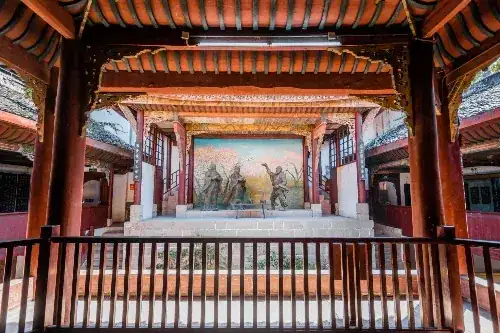
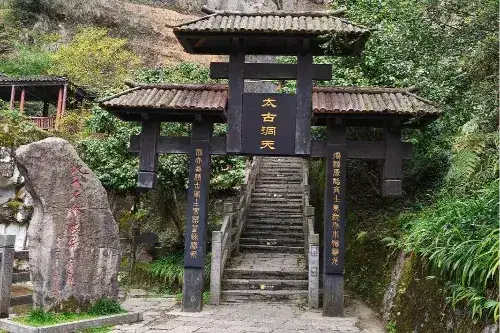
Fengdu, a renowned cultural city since ancient times, is one of China's most distinctive and famous historical and cultural towns, famous both domestically and internationally for its rich ghost culture as the location of the underworld. Many ghost and deity legends circulate here, and numerous famous Chinese and foreign literary works, such as *Journey to the West*, *Strange Tales from a Chinese Studio*, *The Complete Story of Yue Fei*, and *The Legend of Zhong Kui*, all feature Fengdu as a "ghost city."
View detailed information about Fengdu County >>
Honors Ranking:
In January 2026, it was selected as one of the top 100 cultural counties in China in 2025.
In December 2025, it was listed on the 2025 list of China's Most Beautiful Counties.
In November 2025, it ranked 41st among the top 100 counties and cities in comprehensive competitiveness in western China.
In January 2025, it was selected as one of the top 100 cultural counties in China in 2024.
In December 2024, the list of the top 100 counties in western China by CCID Consulting was released, with Fengdu County ranking 42nd.
In November 2024, the list of the top 100 counties in the comprehensive index of high-quality development of geographical indication industry in China was released, with Fengdu County ranking 60th.
In November 2024, it was listed as a key county for leisure agriculture in China.
In September 2024, it was ranked 68th among the top 100 counties and cities in China's comprehensive tourism competitiveness ranking.
In June 2024, the list of the top 100 counties in China with the most comprehensive competitiveness in cultural and tourism integration was released, with Fengdu County ranking 74th.
View more honors and rankings of Fengdu County >>
Historical background:
During the Zhou Dynasty, it belonged to the State of Ba, and a separate capital called "Ba Zi Bie Du" was once established there.
During the Qin Dynasty, it belonged to Zhi County of Ba Commandery.
During the Western Han Dynasty, it belonged to Zhi County, Ba Commandery, Yizhou.
In the second year of Yongyuan reign of Emperor He of the Eastern Han Dynasty (90), Pingdu County was established by dividing the territory of Zhi County and was under the jurisdiction of Ba Commandery of Yizhou.
From the first year of Emperor Xian's reign (1666) to the fifth year of the Jian'an era (1668), it was under the jurisdiction of Yongning County, Yizhou.
In the seventeenth year of Yanxi (254) of the Shu Han dynasty during the Three Kingdoms period, Pingdu County was merged into Linjiang County and belonged to Ba Commandery of Yizhou.
During the Western Jin Dynasty, it belonged to Ba Commandery of Liangzhou.
During the Eastern Jin Dynasty, it belonged to Ba Commandery of Liangzhou.
In the early Southern Song Dynasty, it belonged to Ba County of Yizhou.
In the second year of the Yining era of the Sui Dynasty (618), Fengdu County was separated from Linjiang County and placed under the jurisdiction of Linzhou.
In the eighth year of the Zhenguan era of the Tang Dynasty (631), Fengdu County was under the jurisdiction of Zhongzhou, Shannan Circuit.
During the reign of Emperor Zhenzong of the Northern Song Dynasty, Fengdu County belonged to Zhonglu of Kuizhou.
View detailed historical evolution of Fengdu County >>
Travel information can change. Check current opening hours, reservations and entry requirements before you travel.


Traveller discussion
Start the conversation with a helpful tip or a question.