
Mount Tai - Symbol of Ancient Chinese Civilization and Belief
Mount Tai, located in central Shandong Province, rises majestically from the central-southern Shandong Province. Its main peak, Jade Emperor Peak, reaches an elevation of 1,545 meters. Throughout Chinese history, Mount Tai has served as an
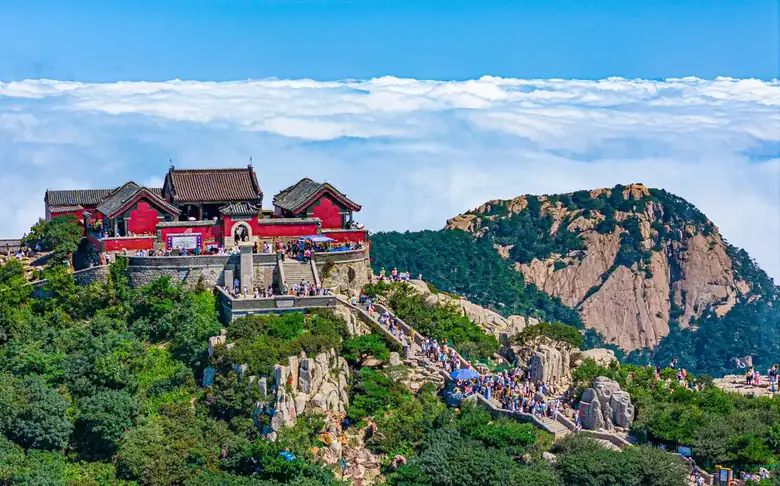
Mount Tai, located in central Shandong Province, rises majestically from the central-southern Shandong Province. Its main peak, Jade Emperor Peak, reaches an elevation of 1,545 meters. Throughout Chinese history, Mount Tai has served as an important site for imperial sacrifices, where emperors performed grand ceremonies to pray for peace and prosperity. The mountain is home to over 1,800 steles and inscriptions as well as 22 temples, seamlessly integrating human cultural achievements with the natural landscape.
Recommended Routes
The Easiest Route - Tianwai Village Route
This route offers the most convenient and time-saving way to reach the summit. Visitors may take a shuttle along the scenic road to Halfway Gate to Heaven, then transfer to the cableway to reach the peak.
Key sights along the route: Tianwai Village - Dragon Pool Reservoir - White Dragon Pool - Black Dragon Pool - Bamboo Temple - Huangxi River Reservoir - Fan Cliff - Aolai Peak - Halfway Gate to Heaven - Cableway - South Gate to Heaven - Azure Cloud Temple - Jade Emperor Peak
Tip: While this route is convenient, it bypasses many scenic spots. For a richer experience, visitors are recommended to take the traditional hiking trail from Halfway Gate to Heaven to the summit.
The Classic Route - Red Gate Hiking Trail
The Red Gate Hiking Trail is the most concentrated route showcasing Mount Tai’s natural beauty and cultural heritage. Stretching 9.5 kilometers with over 7,000 stone steps, the path includes virtually no flat sections. This trail was historically used by emperors for their sacred pilgrimages and is therefore also called the Imperial Road of Mount Tai. Along the way, hikers will encounter spectacular scenery and numerous historical sites.
Key sights along the route: (Dai Temple - Daizong Archway) - Red Gate Palace - Wanxian Tower (Mountain Entry & Ticket Check) - Doumu Palace - Jingshi Valley - Huitian Pavilion - Huima Range - Halfway Gate to Heaven - Kuaihuosanli - Yunbu Bridge - Wudafu Pine - The Eighteen Bends - South Gate to Heaven - Heaven Street - Azure Cloud Temple - Tang Moya Cliff - The Most Revered of the Five Holy Mountains - Jade Emperor Peak - Gongbei Stone
Tips:
1.Walking from Red Gate to the summit takes approximately 4-6 hours. Starting from Dai Temple adds 1-2 hours. Descending usually requires around 3 hours.
2.This route requires good physical fitness and stamina. Visitors who feel fatigued can hike to Halfway Gate to Heaven and then take the cableway to the summit.
Cultural Landscape Highlights
Dai Temple
The Dai temple houses a vast collection of ritual instruments, offerings, and craftworks used by emperors to worship the Mount Tai deity throughout history. It also displays artifacts from Mount Tai and relics from China’s revolutionary history.
Guan Di Temple
Located at the start of the mountain trail, the temple follows the natural slope of the mountain with a harmonious layout including a main gate, opera stage, worship hall, main hall, and side halls.
Confucius’ Ascension Site
Here, Confucius once said, “When you climb East Mountain (Yi Mountain), the State of Lu looks small; when you climb Mount Tai, the whole world looks small”. It remains a must-visit site for scholars and visitors.
South Gate to Heaven
Situated at the upper entrance of a cliff valley at an elevation of 1,460 meters, this location is noted for its dramatic and strategic terrain.
Natural Wonders
Sunrise over Mount Tai
The sunrise at Mount Tai is a defining feature, offering ever-changing, breathtaking scenes.
Sea of Clouds
From the summit, clouds spread across the sky like a giant floating jade plate, creating a mesmerizing spectacle.
Sunset Glow
At dusk, mountaintops are bathed in golden light, casting a radiant glow reminiscent of precious treasures.
Buddha Light of Mount Tai
Known as Buddha light of Mount Tai, this optical phenomenon is caused by light diffraction and derives its name from its resemblance to the halo surrounding a Buddha statue. It mostly occurs on Mount Tai between June and August, under partly cloudy and foggy conditions when the sun shines obliquely.
Ticket Information
Mount Tai Entrance Ticket
RMB 115 per person
Shuttle Bus
Tianwai Village to Halfway Gate to Heaven: RMB 40 (uphill) / RMB 40 (downhill)
Peach Blossom Valley to Peach Blossom Paradise: RMB 40 (uphill) / RMB 40 (downhill)
Featured Experiences
Mountain-Climbing Assist Robot
The mountain-climbing assist robot is very user-friendly. It can help users cut their climbing time by nearly half and reduce physical exertion by 30% to 50%. Several rental points are available within the scenic area, covering major sightseeing zones such as Hongmen and Zhongtianmen. The price is RMB 80 for three hours.
Featured Foods
Mount Tai Tofu Banquet
"There are three treasures of Mount Tai: cabbage, tofu, and water." Mount Tai tofu is as white as jade, tender yet firm, and remains smooth, without falling apart or becoming mushy, even after prolonged cooking. Together with Mount Tai huangya cabbage and Mount Tai spring water, it is known as one of the "Three Treasures of Mount Tai." Dishes made with tofu as the main ingredient, such as Mount Tai tofu balls, premium tofu, and hibiscus tofu, are popular everyday favorites. Processed tofu products such as fermented tofu, dried tofu, and five-spice tofu are also widely loved.
The Mount Tai Tofu Banquet dates back to the Han dynasty, flourished in the Song dynasty, and reached its peak during the Ming and Qing dynasties. During Fengshan sacrificial ceremonies, ancient emperors were required to "bathe, change clothes, eat vegetarian food, and purify the heart," making tofu an essential dish during the rituals.
Mount Tai Stir-Fried Chicken
The dish is made with premium local free-range chicken, paired with fresh vegetables and seasonings. During preparation, the chef must control the heat skillfully to ensure the chicken is crispy on the outside and tender on the inside.
Mount Tai San Soup
Mount Tai San Soup is one of Tai'an's famous traditional snacks. It is made by simmering beef bones, lamb bones, and old hens with various spices, then cooking the broth together with wheat kernels and shredded chicken. A breakfast bowl of san soup, paired with staples such as youtiao, pancakes, or egg pancakes, and served with braised beef, beef tripe, and other marinated meats, can awaken your energy for the day. For mountain climbers, it is an excellent source of fuel.
Travel information can change. Check current opening hours, reservations and entry requirements before you travel.


Traveller discussion
Start the conversation with a helpful tip or a question.