
List of UNESCO World Heritage Sites in China - 2026 Updates
You are here: Home » China Tours » China Heritage Tours » China World Heritage Sites List of UNESCO World Heritage Sites in China - 2026 Updates As of 2026, there are 61 sites of world heritage in China, including 42 cultural heritage sites
List of UNESCO World Heritage Sites in China - 2026 Updates
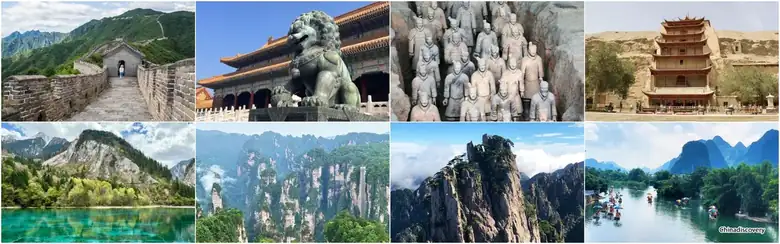
As of 2026, there are 61 sites of world heritage in China, including 42 cultural heritage sites, 15 natural sites, and 4 cultural & natural sites. They have not only "historical landmarks" like the Great Wall and the Forbidden City—imprinted with 5,000 years of civilization—but also "natural masterpieces" such as Zhangjiajie, Guilin and Jiuzhaigou Valley, which showcase Earth's ecological wonders. "Dual gems" like Mount Tai and Wuyi Mountain, where cultural depth and natural beauty blend harmoniously, are also included. These sites span most parts of China—covering cities and regions like Beijing, Xian, Gansu, Xinjiang, Sichuan, Yunnan, Guilin, Hunan, Guizhou, Tibet, Jiangxi, Hangzhou, Xiamen, Quanzhou, Luoyang, etc. To help you better plan your China heritage tour in 2026, below, we've rounded up all of China's World Heritage Sites and highlighted their key features.
Lates news about China Heritage Sites:
On July 25, 2026, the 48th session of the UNESCO World Heritage Committee, held in Korea, passed a resolution to inscribe the "Jingdezhen Handicraft Porcelain Industry Sites" on the World Heritage List. With this addition, the total number of World Heritage sites in China has reached 61. Jingdezhen, the world-famous Porcelain Capital in Jiangxi Province, is home to the world’s first UNESCO World Cultural Heritage themed on porcelain. Its 45 heritage sites portray the 10th–19th century handicraft porcelain development that had profound industrial, artistic and trading influences worldwide via the Silk Road, making Jingdezhen a landmark cultural link bridging China and the rest of the world.
Top World Heritage Sites of China to Visit in 2026
After an overview of China's UNESCO World Heritage Sites, some of them stand out as the deserved epitome of its finest. Encompassing three categories—natural, cultural, and dual gem heritage sites—these spots distinguish themselves through exceptional value. Their immense popularity, coupled with strong reputations, has solidified their status as top-tier, sought-after destinations.
-
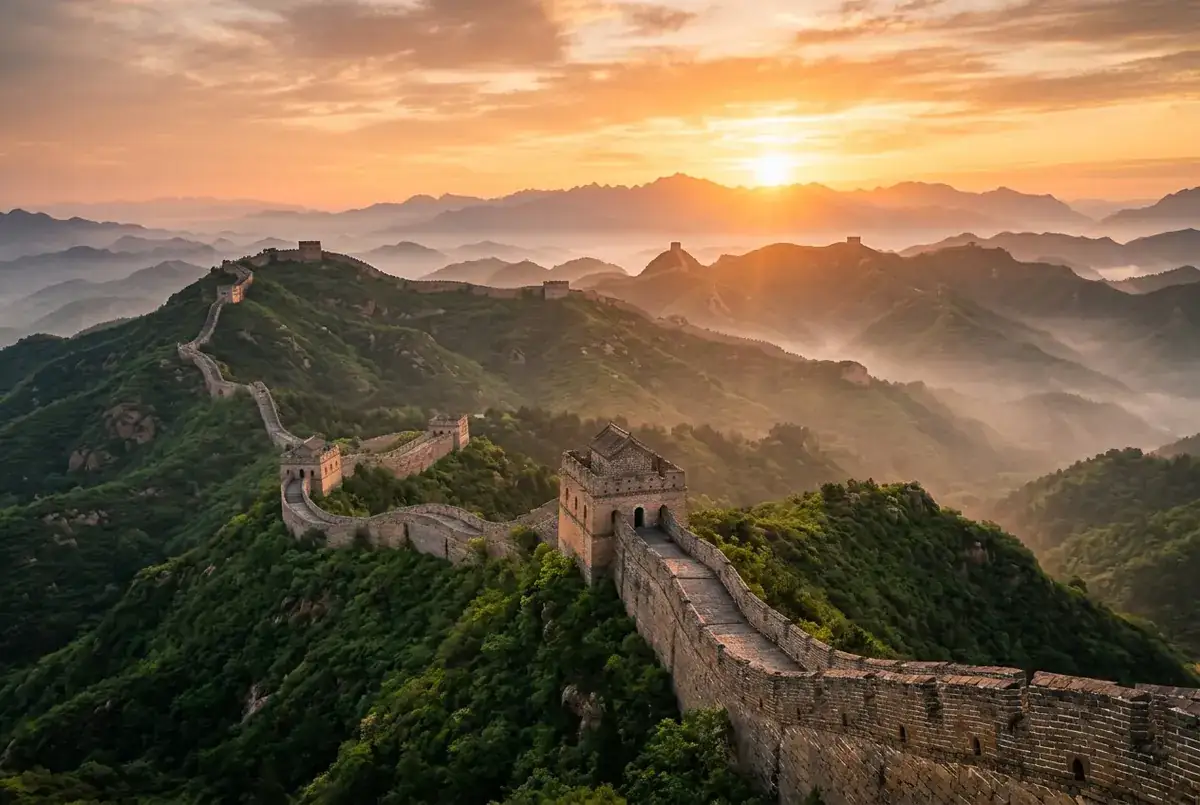
The Great Wall
An architectural marvel stretching over 21,000 kilometers, built from the Qin to the Ming dynasties (220 BC-1644 CE) as a military defense project. It's the globally well-known symbol of China.
Location: BeijingType: Cultural -
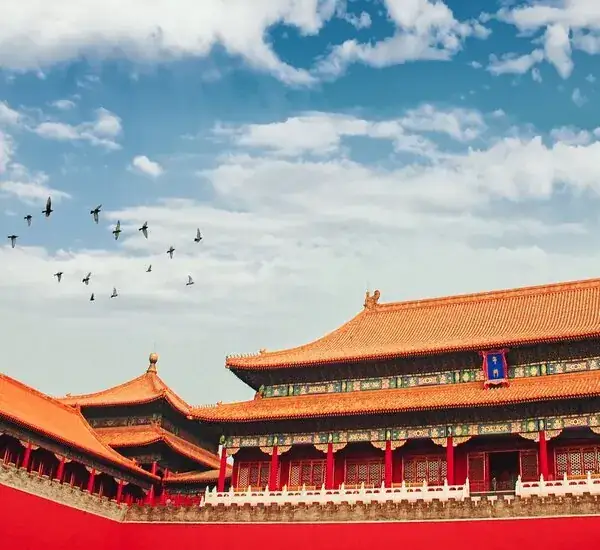
Forbidden City
The world's largest, best-preserved palace complex, serving as the residence and office of 24 emperors in Ming-Qing dynasties, and the most central and iconic landmark on the Beijing Central Axis.
Location: BeijingType: Cultural -
Terracotta Warriors and Horses
An archaeological marvel as part of the Mausoleum of the First Qin Emperor, comprising over 8,000 life-size terracotta soldiers and horses buried underground for over 2,200 years.
Location: XianType: Cultural -
Zhangjiajie Wulingyuan Scenic Area
An avatar fairyland spanning over 260 square kilometers with thousands of spectacular sandstone pillars and peaks across ravines, gorges, streams, waterfalls, calcite caves, and dense forests.
Location: Hunan provinceType: Natural -
Mogao Caves
A shining Buddhist grotto star on the Silk Road that features 735 caves and 2,415 colored sculptures blending various religions and cultures, constructed for more than 1,600 years since 366 CE.
Location: Gansu provinceType: Cultural -
Jiuzhaigou Valley
China's most beautiful waterscapes, featuring turquoise mineral lakes, multi-level waterfalls, vast primeval forests against snow-capped alpine peaks. Often visited with Huanglong National Park, “A Celestial Pool on Earth”.
Location: Sichuan provinceType: Natural -
South China Karst
A geological wonder of karst mountains, bridges, gorges, caves and sinkholes, embodying extraordinary aesthetic value, with prime examples in Guilin, Kunming, Libo, and Wulong.
Location: Southwest of ChinaType: Natural -
Silk Road
The ancient Chinese-Western trade and culture exchange corridor, featuring numerous splendid historical sites, like Gansu's Mogao Caves, Xian's Terracotta Army, Luoyang's Longmen Grottoes.
Location: Northwest of ChinaType: Cultural -
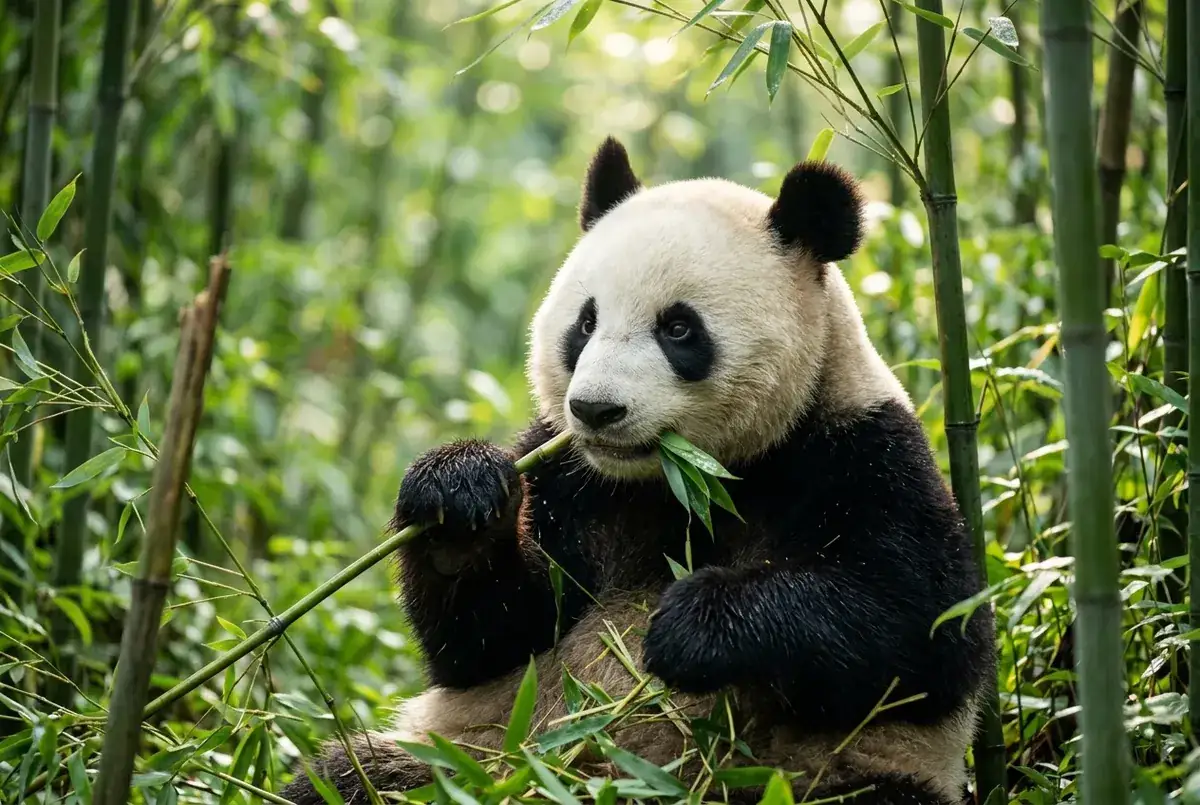
Sichuan Giant Panda Sanctuaries
The largest remaining contiguous habitat for giant pandas and the best place to see the lovely species. The Chengdu Panda Breeding and Research Center, Dujiangyan Panda Base, etc., are suggested to visit.
Location: Sichuan provinceType: Natural -
Mount Huangshan
“The Most Scenic Mountain in China” that boasts grotesque peaks, old-shaped pines, sea of clouds, hot springs, and pristine winter snow, playing a key role in Chinese landscape art and literature.
Location: Anhui provinceType: Cultural/Natural -
West Lake
A masterpiece of Chinese gardens, refining cultural landscapes into nature—dubbed "Paradise on Earth"—that has inspired countless poets, scholars and artists since the 9th century.
Location: HangzhouType: Cultural -
Lijiang Old Town
One of China's best-preserved ancient towns serving as the junction of the Southern Silk Road and Ancient Tea-Horse Road. It's rich in multi-ethnic culture, including the Naxi, Han, Bai, Yi, Tibetan groups.
Location: Yunnan provinceType: Cultural
Find the Full List of China World Heritage Sites 2026
For travelers visiting China, World Heritage Sites are must-see highlights—but choosing from such a vast array can feel overwhelming. To simplify this, we've categorized them based on their types as cultural, natural, or mixed (cultural & natural) heritages, and sorted them in a priority order according to their significance and popularity, offering information about their locations, year of recognition, and highlights. Thus, you can discover these distinctive attractions of different types in China effortlessly.
| No. | Heritage Sites (41) | Location | Year Listed | Highlights |
|---|---|---|---|---|
| 1. | The Great Wall | Beijing; Hebei; Gansu | 1987 | A series of fortifications in northern China stretching over 20,000 km, first built in the 3rd century BC. It represents centuries of Chinese engineering craftsmanship, the cultural spirit of resilience and unity, and military defense wisdom. |
| 2. | Mausoleum of the First Qin Emperor, including Terracotta Warriors and Horses | Shaanxi | 1987 | China's first grand, meticulously designed imperial mausoleum, housing the Terracotta Army – hailed as the "Eighth Wonder of the World", which is a group of 8,000 life-size terracotta warriors that has lain buried underground for over 2,200 years. |
| 3. | Imperial Palaces of the Ming and Qing Dynasties in Beijing and Shenyang (Forbidden City; Mukden Palace) | Beijing; Liaoning | 1987 | Forbidden City is the world's largest and best-preserved wooden structure palace complex, serving 24 emperors from 1416 to 1911. Mukden Palace is the former imperial palace of the Qing Dynasty before Beijing Forbidden City." |
| 4. | Mogao Caves | Gansu | 1987 | A group of Buddhist caves and carvings spanning from the 4th to 14th centuries, demonstrating the cultural exchanges between China, India, and Central Asia, as well as the art of various ethnic minorities of China along the Silk Road. |
| 5. | Historic Ensemble of the Potala Palace, Lhasa | Tibet | 1994 | The world's highest-altitude large-scale sacred palace complex, which was constructed in 631 CE, standing as a representation of Tibetan Buddhism and its central role in Tibet's traditional governance. |
| 6. | Silk Roads: the Routes Network of Chang'an-Tianshan Corridor | Henan, Shaanxi, Gansu, Xinjiang | 2014 | The oldest trade route with a great distance between East Asia and the Mediterranean that emerged over 2,000 years ago, leading to exchanges of culture, religions, art, and science between China and Western places. |
| 7. | Fujian Tulou | Fujian | 2008 | 14 clusters of 46 earthen dwellings, circular or with a square plan, and several stories high, constructed by the Hakka people for defensive purposes between the 13th and 20th centuries. |
| 8. | Temple of Heaven: An Imperial Sacrificial Altar in Beijing | Beijing | 1998 | The world's largest existing ancient sacrificial complex, where emperors in the Ming and Qing dynasties worshipped Heaven and prayed for harvests. It epitomizes the pinnacle of Ming-Qing architectural technology and art. |
| 9. | Summer Palace, an Imperial Garden in Beijing | Beijing | 1998 | China's best-preserved existing large imperial garden, built in the mid-18th-century Qing Dynasty. It integrates millennia of Chinese north-south landscape art, with water features, exquisite pavilions, temples, and bridges. |
| 10. | Beijing Central Axis: A Building Ensemble Exhibiting the Ideal Order of the Chinese Capital | Beijing | 2024 | An ensemble of palaces, gardens, religious sites, and public buildings, running in the north-south direction in central Beijing, first established in the 13th century. |
| 11. | West Lake Cultural Landscape of Hangzhou | Zhejiang | 2011 | It comprises lakes, mountains, islands, causeways, and over 100 historical structures, embodying the harmony between human and nature, and having inspired poets, scholars, painters for centuries. |
| 12. | Old Town of Lijiang (Lijiang Old Town) | Yunnan | 1997 | One of the four best-preserved ancient towns in China, serving as an important trade center on the Silk Road and the ancient Tea Horse Road and thus a gathering place for diverse cultures. |
| 13. | Ancient City of Ping Yao | Shanxi | 1997 | China's best-preserved ancient county-level city, covering 2.35 sq.km, which demonstrates the evolution of architectural styles during the Ming and Qing dynasties. |
| 14. | Classical Gardens of Suzhou | Jiangsu | 1997 | The most representative traditional Chinese gardens, built in the 11th to the 18th centuries. They, recreating natural landscapes in miniature, embody profound Chinese philosophy, aesthetics, and literati culture. |
| 15. | Jingdezhen Handicraft Porcelain Industry Sites | Jiangxi | 2026 | The world's first porcelain-themed World Cultural Heritage with a complete millennia-old living porcelain industry chain. It now unites time-honored kiln culture with creative art hubs and international ceramic gatherings. |
| 16. | Historic Center of Macao | Macao | 2005 | Historic urban area preserving over 400 years of the essence of Chinese-Western cultural exchange, which reflects Macao's significant role as a trading port and global gateway. | 17. | Ancient Villages in Southern Anhui - Xidi and Hongcun | Anhui | 2000 | They preserve the authentic style of Huizhou villages from the 14th to the 20th centuries, reflecting the harmonious integration of human settlements with the surrounding water and mountainous landscape. |
| 18. | Kulangsu, a Historic International Settlement (Gulangyu Island) | Fujian | 2017 | A Xiamen island featuring 931 historical buildings of local Minnan and international styles, plus a historic network of roads, gardens, and natural scenery — an embodiment of Chinese-Western cultural exchange. |
| 19. | Longmen Grottoes | Henan | 2000 | Pinnacle of Chinese stone carving art and a model of imperial grotto art carved during 316-907 CE in the Tang Dynasty, housing over 2,300 caves, 2,800 inscriptions, 60 pagodas, and nearly 110,000 statues. |
| 20. | Imperial Tombs of the Ming and Qing Dynasties | Beijing; Liaoning; Jiangsu | 2000 | 14 tombs or tomb clusters of emperors between the 14th and 20th centuries that follow traditional Chinese geomancy theory. They show the architectural and artistic feats of China's ruling dynasties. |
| 21. | Yungang Grottoes | Shanxi | 1997 | China's first imperial grotto complex, carved in the North Wei Dynasty. These massive statues, with robust physiques and Indian-inspired robes, showcase early Buddhist art influenced by Gandhara. |
| 22. | Quanzhou: Emporium of the World in Song-Yuan China | Fujian | 2021 | The starting point of the Maritime Silk Road during the 11th through 14th centuries, which houses 22 serial heritage sites including multi-religious temples, historic bridges, ancient pagodas, docks, carvings… |
| 23. | Mount Qingcheng and the Dujiangyan Irrigation System | Sichuan | 2000 | A combined representation of innovative water control engineering, profound culture of Taoism, and natural beauty, which showcases ancient Chinese wisdom in living in harmony with nature. |
| 24. | The Grand Canal | Beijing, Tianjin, Hebei, Shandong, Jiangsu, Zhejiang, Anhui, Henan | 2014 | The longest and oldest artificial waterway in the world stretching from Beijing to Hangzhou. It has served as a vital artery of transportation, commerce, and cultural exchange for centuries. |
| 25. | Temple and Cemetery of Confucius and the Kong Family Mansion in Qufu | Shandong | 1994 | Reverence for Confucius, a great Chinese philosopher, educator, and politician whose teachings, known as Confucianism, greatly influenced China, Korea, Japan, Vietnam, as well as the 18th-century Europe. |
| 26. | Ancient Building Complex in the Wudang Mountains | Hubei | 1994 | Representation of the highest architectural and artistic standards of ancient China, which, dating to the 7th to 17th centuries, serves as a Taoist spiritual and martial arts center. |
| 27. | Mountain Resort and its Outlying Temples, Chengde | Hebei | 1994 | An imperial summer resort, constructed in the 18th century, featuring a vast complex of palaces, administrative and ceremonial buildings, temples, and imperial gardens in a serene landscape. |
| 28. | Dazu Rock Carvings | Chongqing | 1999 | Representation of China's Buddhist grotto art from the late Tang to the Song dynasties, renowned for grand scale, exquisite carvings, diverse themes, rich connotations, intact preservation, and unique ethnic, secular and life-oriented traits. |
| 29. | Lushan National Park | Jiangxi | 1996 | Once the cultural center of southern China, with over 200 historic buildings, including Buddhist and Taoist temples and sites of Confucianist teachings, amidst stunning natural mountains and waters. |
| 30. | Mount Wutai | Shanxi | 2009 | One of China's four sacred mountains, revered as the global center for Buddhist Manjusri worship. There are numerous temples, monasteries, statues, inscriptions, and stelae dating back over a thousand years. |
| 31. | Kaiping Diaolou and Villages | Guangdong | 2007 | 1833 existing multi-storey defensive village houses with Chinese-Western architectural art, bearing witness to overseas Chinese history from the late 19th and early 20th centuries. |
| 32. | Archaeological Ruins of Liangzhu City | Zhejiang | 2019 | An early Chinese urban civilization located in the Yangtze Delta, dating to 3300-2300 BC. It shows the transition of small-scale societies to larger political entities with social stratification and complex rituals and crafts. |
| 33. | Site of Xanadu | Inner Mongolia | 2012 | The earliest and best-preserved site among capitals in the Yuan Dynasty. It was the capital of Kublai Khan in the 13th and 14th centuries, which embodies the integration of Mongol and Han Chinese cultures. |
| 34. | Cultural Landscape of Honghe Hani Rice Terraces | Yunnan | 2013 | Perfect blend of terrace geology and sustainable agricultural practice, and an excellent example of an intricate agriculture, forestry, and water distribution system, reflecting the extraordinary harmony between Hani people and their environment. |
| 35. | Cultural Landscape of Old Tea Forests of the Jingmai Mountain in Pu'er | Yunnan | 2023 | A major global origin of tea plants, a key stop on the Ancient Tea Horse Road, bearing witness to ancient tea cultivation practices, and the cultural imprints of the Bulang and Bai ethnic groups. |
| 36. | Xixia Imperial Tombs | Ningxia | 2025 | The largest, highest-ranked, and best-preserved major relic of the Xixia Dynasty (1038-1227 CE) and one of China's largest imperial mausoleums with the most intact above-ground remains. |
| 37. | Historic Monuments of Dengfeng in “The Centre of Heaven and Earth” | Henan | 2010 | A ritual center of ancient China that enjoyed imperial patronage from the Han to Qing dynasties, showcasing the convergence of Confucianism, Buddhism, and Daoism. |
| 38. | Capital Cities and Tombs of the Ancient Koguryo Kingdom | Jilin | 2004 | Archaeological remains of three cities and 40 tombs, which belong to the Kogury Kingdom that ruled over parts of northern China and the northern half of the Korean Peninsula from 277 BC to AD 668. |
| 39. | Peking Man Site at Zhoukoudian | Beijing | 1987 | An archaeological site with limestone caves that preserved remains of ancient humans, tools, and animals from the Pleistocene, a rare historical testimony to human evolution and the life of human communities in Asia. |
| 40. | Yin Xu | Henan | 2006 | A great archaeological site of the capital city of the Shang Dynasty, providing insights into early urban planning, ritual bronzes, and oracle bones, the earliest evidence of systematic written Chinese. |
| 41. | Zuojiang Huashan Rock Art Cultural Landscape | Hunan, Hubei, Guizhou | 2015 | Houses 107 rock carvings and 3,816 images, which reflect art, bronze culture, spiritual beliefs, and ritual life of the ethnic Luoyue people from the 5th century BC to the 2nd century CE. |
| 42. | Tusi Sites | Hunan, Hubei, Guizhou | 2015 | Representation of 13th-early 20th century ethnic governance systems in southwest China's mountainous, multi-ethnic regions, significant in facilitating long-term national unification and preserving ethnic cultural diversity. |
| No. | Heritage Sites (15) | Location | Year Listed | Highlights |
|---|---|---|---|---|
| 1. | Wulingyuan Scenic and Historic Interest Area (Zhangjiajie) | Hubei | 1992 | Famed for over 3,000 narrow, jagged quartz sandstone pillars across ravines, gorges, waterfalls, calcite caves, and dense forests, earning it the title "The Most Otherworldly Spots on Earth". |
| 2. | Jiuzhaigou Valley Scenic and Historic Interest Area | Sichuan | 1992 | The most beautiful waterscape in China, featuring turquoise, crystal-clear, mineral-rich lakes, multi-level waterfalls, vast primary forests, and jagged alpine peaks that showcase changing charm with the seasons. |
| 3. | Sichuan Giant Panda Sanctuaries - Wolong, Mt Siguniang and Jiajin Mountains | Sichuan | 2006 | Core habitats for the endangered giant pandas, housing over 30% of wild giant pandas, which play a significant role in biodiversity conservation and giant panda research. |
| 4. | South China Karst | Yunnan, Guizhou, Chongqing, Guangxi | 2007 | Hailed as a "world-class karst landscape museum" boasting the most extensive, diverse, and well-preserved tropical-subtropical karst formations on Earth, such as sinkholes, caves, stone forests. |
| 5. | China Danxia | Hunan, Guangdong, Fujian, Jiangxi, Zhejiang, Guizhou | 2010 | Characterized by spectacular red cliffs and diverse erosional landforms—shaped by natural geological processes over millions of years—along with evergreen forests and abundant flora and fauna. |
| 6. | Fanjingshan | Guizhou | 2018 | Standing out as a cluster of diverse metamorphic peaks and rocks, a biodiversity hotspot housing rare species like the Guizhou snub-nosed monkey, and one of China's five major Buddhist mountains. |
| 7. | Huanglong Scenic and Historic Interest Area | Sichuan | 1992 | Reputed as "A Celestial Pool on Earth", which boasts thousands of colorful limestone terrace pools, with snow-capped mountains, gorges and lush forests surrounding it at high altitudes. |
| 8. | Xinjiang Tianshan | Xinjiang | 2001 | Known for its diverse landscapes, including snowy mountains, primeval forests, meadows, clear rivers and lakes, and red bed canyons, which create a striking visual contrast with the vast adjacent deserts. |
| 9. | Hubei Shennongjia | Hubei | 2016 | The "Roof of Central China," boasting the most intact subtropical primary forest ecosystem preserved in the mid-latitudes globally, serving as a crucial habitat for rare animals like golden snub-nosed monkeys. |
| 10. | Mount Sanqingshan National Park | Jiangxi | 2008 | Known as the "world's natural museum of granite microlandforms", with ever-changing and arresting scenic beauty, rich subtropical biodiversity, as well as over 1,600-year Taoist cultural relics. |
| 11. | Badain Jaran Desert - Towers of Sand and Lakes | Inner Mongolia | 2024 | Unique combination of the world's tallest stationary sand dunes and numerous interspersed desert lakes, which displays spectacular ongoing geologic and geomorphic features of desert landscapes and landforms. |
| 12. | Migratory Bird Sanctuaries along the Coast of Yellow Sea-Bohai Gulf of China | Hebei, Jiangsu, Liaoning, Shandong, Shanghai | 2019 | Indispensable stopover sites and crucial habitats for the migration of millions of waterbirds on the East Asian-Australasian Flyway, contributing to the conservation of global avian biodiversity. |
| 13. | Three Parallel Rivers of Yunnan Protected Areas | Yunnan | 2003 | Unique geographical wonder of the Jinsha, Lancang and Nu rivers flowing parallelly for over 170 kilometers without converging, which contains an outstanding diversity of landscapes and the richest biodiversity in China. |
| 14. | Qinghai Hoh Xil | Qinghai | 2017 | High-altitude and large plateau wilderness areas, characterized by hundreds of freshwater and salt lakes with sweeping vistas, while also home to many rare and endangered wild animals, like the Tibetan antelope. |
| 15. | Chengjiang Fossil Site | Yunnan | 2012 | A world-famous paleontological site that preserves an extremely well-preserved Early Cambrian biodiversity fossil group, providing precious evidence for the study of the origin and evolution of early life on Earth. |
| No. | Heritage Sites (4) | Location | Year Listed | Highlights |
|---|---|---|---|---|
| 1. | Mount Huangshan | Anhui | 1990 | Celebrated for its grotesque rocky peaks, twisted pine trees, rolling sea of clouds, and quantic structures, which create unparalleled landscapes that have inspired Chinese art and literature through history. |
| 2. | Mount Wuyi | Fujian, Jiangxi | 1999 | Known for clear, emerald green waters, typical Danxia landforms, gorges, pristine forests, and being the cradle of Neo-Confucianism, while also being the home to famous Da Hong Pao tea. |
| 3. | Mount Taishan | Shandong | 1987 | One of China's five sacred mountains hailed as "China's Mount Olympus", featuring majestic natural beauty that earned it the title of "Top of China's Five Most Scenic Mountains". |
| 4. | Mount Emei Scenic Area, including Leshan Giant Buddha Scenic Area | Sichuan | 1996 | A fairy-tale-like Buddhist mountain with over 30 ancient temples, boasting grand and elegant beauty and rich biodiversity, ranking among China's most sacred Buddhist mountains. Leshan Giant Buddha, carved into the hillside in the 8th century, stands as the world's largest Buddhist sculpture. |
Still too many options to choose from? Don’t worry – we’ve carefully curated a refined list featuring the Top 16 China World Cultural Heritage Sites and the | Top 10 China World Natural Heritage Sites | Discover Four Natural Wonders of World Heritage Sites in Chongqing and Sichuan, helping you focus on the most remarkable and unmissable destinations.
Popular China World Heritage Tour Packages
8 Days Best of China Tour (Flight/Bullet Train Covered)
Beijing / Xian / Shanghai
Price from $1,690
10 Days Most Classic China Tour
Beijing / Xian / Guilin / Shanghai
Price from $1,999
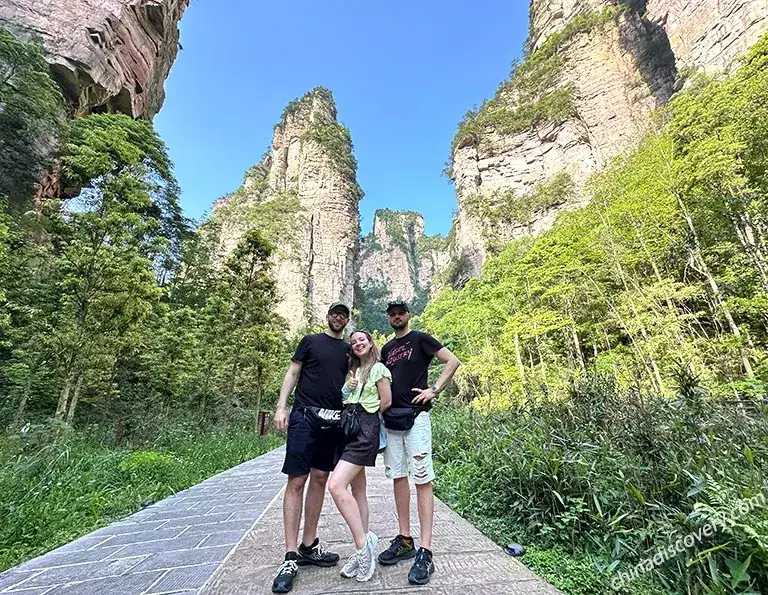
13 Days China Superb Landscape Tour including Zhangjiajie and Guilin
Beijing / Xian / Zhangjiajie / Guilin / Shanghai
Price from $2,695
23 Days Classic Silk Road Tour with China Golden Triangle and Zhangjiajie
Beijing / Xian / Zhangye / Jiayuguan / Dunhuang / Turpan / Urumqi / Kashgar / Chengdu / Zhangjiajie / Shanghai
Price from $5,380
Haven’t found an interesting tour yet? Click here to explore more China Heritage Tours, compare them in detail, and pick the one that suits you best!
Essential Travel Guide
- » Best China Tours
- » China Theme Tours
- » Most Popular China Tourist Destinations
- » China Visa, Passport and Permit
- » Weather & Best Time to Visit China
- » Transportation in China
- » China High-Speed Train Travel
- » China Flight Travel
- » Chinese Food & Cuisines
- » Practical China Travel Faqs & Tips
- » Top 10 Water Towns in China
- » Top 10 Old Towns & Villages in China
- » Top 10 Greatest Museums in China
- Karen
- Wonder
- Jack
- Rita
- Johnson
- Vivien
- Ariel
- Tracy
- Leo
- Wing
- Evelyn
- April
- Phoebe
- Kelly
- Shirley
- Reya
- Elk
- Samantha
- Bliss
- York
- Felix
- Sean
Travel information can change. Check current opening hours, reservations and entry requirements before you travel.
Traveller discussion
Start the conversation with a helpful tip or a question.